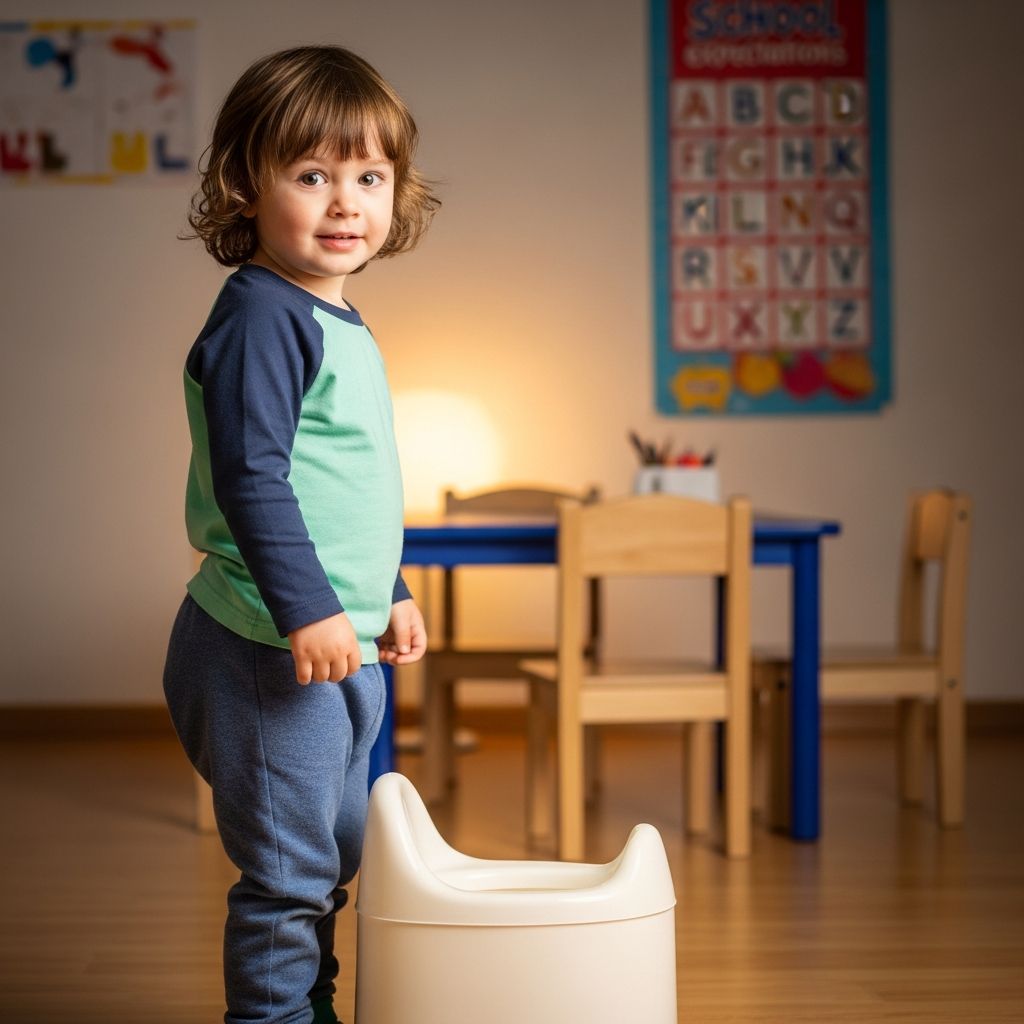
Few parenting milestones create as much stress as potty training, especially when a preschool or daycare insists children be out of diapers by a certain date. You may be staring down a start-of-school deadline while your toddler happily announces, “I like my diapers.” This article explores how to navigate that tension without turning toilet training into a battle zone.
Why Potty Training Feels Like a High-Stakes Deadline
For many families, potty training stops being just about development and suddenly becomes about logistics: enrollment forms, waitlists, and rigid school policies. Instead of following your child’s pace, you might feel pushed into a schedule set by adults who do not actually live with your toddler. It is natural to feel caught in the middle, trying to stay true to your child while also needing childcare.
Understanding what is actually under your control—and what is not—helps lower the emotional temperature. Your child’s readiness is not a reflection of your competence as a parent, and a school’s policy is not a verdict on your family. The more you separate those two realities, the easier it becomes to make calm, practical decisions.
Developmental Readiness vs. Calendar Readiness
There are two timelines in most potty training stories: the one printed on school paperwork and the one unfolding inside your child’s body and brain. Calendar readiness is about dates; developmental readiness is about skills, awareness, and emotional capacity. Confusing one for the other is what often turns an ordinary milestone into an exhausting tug-of-war.
Developmental readiness usually includes basic physical skills (such as staying dry for stretches of time) as well as cognitive and emotional abilities (noticing body signals, following simple instructions, and tolerating change). A child who technically falls within the “typical” age range might still not be ready in these ways, and that is not a problem to fix so much as a reality to work with.
Common Signs Your Child May Be Ready
Every child is unique, but certain behaviors often show that the groundwork for toilet learning is in place. These are not rigid requirements, but helpful signals that potty training may go more smoothly if you start now.
- Stays dry for at least 1.5–2 hours during the day on a regular basis.
- Shows some awareness of peeing or pooping (pausing play, hiding, or announcing “I’m going”).
- Can follow simple directions such as “Please get your shoes” or “Put the book on the table.”
- Can sit on a potty or toilet seat for a minute or two without panic, even if nothing happens.
- Shows interest in others using the toilet, big-kid underwear, or flushing.
- Can pull pants up and down with a little help.
These signs tell you that your child has both some bladder control and the mental tools to understand what the process is about. If only one or two are present, you may decide to gently introduce the idea while keeping expectations low.
Just as Important: Signs Your Child Is Not Ready
Parents tend to look hard for readiness signs, but it can be just as helpful to recognize the “not yet” signs. Paying attention to these helps you avoid getting stuck in a cycle of accidents, power struggles, and mutual frustration.
- Panicking around the toilet, potty chair, or flushing sounds.
- Showing no awareness at all when wet or soiled, and not caring about the discomfort.
- Inability to stay dry for at least an hour, suggesting minimal bladder control.
- Constipation, painful stools, or very irregular bowel movements.
- Major emotional upheavals (new sibling, move, divorce) making other transitions hard.
None of these mean your child will never use the toilet; they simply tell you that pushing hard right now may backfire. In those cases, the wisest move is often to focus on comfort, routine, and trust before chasing dry underwear.
School Policies and Real-World Constraints
Potty training stress often spikes when a school insists on a firm toileting requirement—for example, “All children must be toilet trained by age three to attend this classroom.” These rules typically exist because of staffing ratios, licensing rules, or the desire to keep one classroom from doing diaper changes all day.
Unfortunately, that creates a collision between institutional convenience and individual development. When the school’s deadline and your child’s readiness do not match, it can feel like you are being asked to choose between losing a spot and forcing a milestone your child is not ready for. Understanding why policies exist can make it easier to advocate for exceptions or creative solutions.
Talking to the School: Helpful Scripts and Strategies
Before launching an emergency potty boot camp, consider having a calm, honest conversation with the school. Approach it as a partnership, not a confrontation. You are all invested in the same goal: a confident, successful child.
- Share specific observations: “He is dry for about 90 minutes at a time and sometimes tells us when he’s wet.”
- Ask what “toilet trained” means to them: Does it include naps? Occasional accidents? Help with clothing?
- Explore temporary adjustments: Could your child spend part of the day in a pull-on diaper while still practicing?
- Clarify the real timeline: Is the deadline hard, or is there a grace period if progress is visible?
These conversations can reveal that there is more flexibility than the paperwork suggests, or that another classroom might be a better fit for a child who still needs diaper support for a while.
Balancing School Demands with Your Child’s Needs
If the school truly cannot budge, you face a harder decision: attempt to accelerate toilet learning or look for other care options. Neither path is easy, and both deserve to be treated as valid, not as evidence of parental failure. Your reality might include work schedules, limited local programs, or financial constraints that leave very little room to maneuver.
In that context, the goal shifts from “ideal, perfectly child-led toilet training” to “the kindest, least stressful option available under these circumstances.” Sometimes that means a more structured short-term push; other times it means delaying enrollment or accepting a different classroom until your child is ready. The “right” answer is the one that preserves your child’s sense of safety and love as much as possible.
Skill Readiness vs. Emotional Readiness
It is useful to think of potty training as two parallel tracks: skills and feelings. A child might have the physical skills but not the emotional readiness, or the opposite. Meetings with schools often focus on skills (“Can she use the toilet independently?”), but your daily life will be dominated by feelings—fear, pride, defiance, anxiety, curiosity.
When parents and schools respond only to the skill track, children may appear resistant or stubborn when they are actually anxious, overwhelmed, or worried about losing control over their own bodies. Paying attention to the emotional track allows you to slow down the process enough for your child to feel safe.
Key Elements of Potty-Training Readiness
The following table organizes different aspects of readiness to help you clarify what your child can already do and where they may need more time or support.
| Readiness Area | What Helps Potty Training | What May Signal “Not Yet” |
|---|---|---|
| Physical | Dry for 1.5–2 hours, predictable bowel movements, able to sit and stand independently from potty. | Constantly wet diapers, frequent constipation, distress when sitting on toilet. |
| Cognitive | Understands simple instructions, recognizes bathroom routines, can identify wet vs. dry. | Does not follow one-step directions, seems confused by potty language. |
| Communication | Uses words, signs, or gestures to signal “I need to go” or “I’m wet.” | No signaling before or after urinating or defecating; no interest in communicating about it. |
| Emotional | Curious about toilets or underwear, willing to sit without panic, enjoys praise. | Intense fear or refusal, meltdown at mention of potty, high general anxiety. |
| Social | Likes copying adults or older children, responds to routine and structure. | Strong pushback to adult guidance, conflict around other routines like brushing teeth. |
Creating a Gentle Plan Under Pressure
If you do decide to begin, you can still design a plan that respects your child’s pace as much as possible. Instead of a rigid three-day promise, think of it as a gradual learning project with several small steps. That flexibility can prevent everyone from feeling like the whole venture is a failure if your toddler does not “get it” by Sunday night.
- Start with exposure: Talk about pee and poop in a neutral, matter-of-fact way.
- Let your child see you using the bathroom, if that feels comfortable.
- Invite your child to sit on the potty clothed, with no expectation of results.
- Move to sitting without a diaper at predictable times (after meals, before bath).
- Celebrate attempts and effort, not just successful pees or poops.
- Offer breaks from training if you see escalating tension, resistance, or fear.
This sort of plan cannot guarantee full readiness by a specific school date, but it can help your child move steadily closer while keeping their sense of safety intact.
Avoiding Common Power Struggles
Toilet training touches on control, independence, and bodily autonomy—three areas toddlers care deeply about. That makes it especially vulnerable to power struggles. When adults focus heavily on performance (“You have to use the potty or you cannot go to school!”), children often respond by clinging harder to diapers as one of the few things they can control.
Reducing the struggle often means shifting language and expectations:
- Offer choices that are genuinely optional, such as which potty to use or which book to read while sitting.
- Avoid shaming language about diapers; frame them as something your child will naturally grow out of, not as “babyish.”
- Keep any rewards simple and connected to the process (stickers, praise) rather than large bribes.
- Stay calm about accidents, treating them as information (“Looks like your body is still learning!”) rather than misbehavior.
What If Progress Is Very Slow?
Some children take to potty training in a weekend; others take months or move forward in bursts with long plateaus in between. A slow pace is not automatically a sign that you are doing something wrong. It may reflect your child’s temperament, sensitivity, or developmental profile.
That said, if there is no progress at all after several weeks of patient attempts—especially if your child seems distressed, fearful, or begins withholding stool—it can be wise to pause. You can stay enrolled in school conversations, but dial back the pressure at home and revisit toilet training after several weeks of emotional rest.
When to Ask a Professional for Help
Most potty training challenges are within the range of “typical toddler behavior,” but certain situations call for professional input. Trust your intuition if something feels more intense than a simple developmental delay or personality quirk.
- Persistent constipation or painful bowel movements.
- Frequent daytime wetting past the age when most peers are dry, with no improvement.
- Extreme fear of the toilet that does not ease with gentle exposure.
- Regressive toileting behaviors accompanied by changes in mood, sleep, or appetite.
A pediatrician, occupational therapist, or child psychologist can help identify whether a medical, sensory, or emotional issue is making toilet learning harder and can suggest targeted strategies beyond typical parenting advice.
Protecting Your Relationship While You Navigate Requirements
No preschool policy is worth sacrificing your connection with your child. The way you handle potty training sends strong signals about safety, acceptance, and bodily autonomy. Even if you are under real pressure, you can still make sure your child feels valued and loved regardless of what they do on the potty today.
That might mean telling them, “Your job is to listen to your body. My job is to help you.” It might mean deciding that losing a particular school spot is less costly than turning every day at home into a battlefield. However you proceed, you and your child will be living with each other long after these early years of enrollment requirements have passed.
Frequently Asked Questions
What if my child is almost ready but the school deadline is very soon?
If your child is showing several readiness signs but is not fully trained, you can adopt a hybrid approach: begin low-pressure practice at home, inform the school that your child is actively working on toilet use, and ask what support they can offer. You may find that visible effort and partial independence are enough for them to be flexible.
Is it harmful to start before my child is truly ready?
Starting a little early with exposure and practice is usually fine; what becomes harmful is intense pressure, shaming, or power struggles. If early attempts lead to fear, withholding, or escalating conflict, it is better to pause and return to diapers for a while rather than doubling down on a failing strategy.
Can I train my child in a weekend if we really need to?
Some children do respond well to concentrated, structured efforts over a few days, especially if they were already close to ready. However, short timelines work only when there is a strong foundation in place and the child is emotionally on board. For others, forcing a “boot camp” approach can create more resistance and longer-term setbacks than slow, gradual teaching.
What if different caregivers handle potty training differently?
Inconsistent approaches can confuse children, but a perfect match is rarely possible. Aim for alignment on the basics—no shaming, same words for body functions, similar routines around sitting times—and accept that minor differences (like reward systems) probably will not derail progress. If someone’s approach clashes sharply with your values, a direct conversation is important.
How do I respond when other parents brag about their early-trained toddlers?
It can be tempting to see other children’s timelines as a measure of your own success, but development is not a race. A simple internal reminder—“Every child gets there eventually, including mine”—can help you disengage from the comparison game. You can congratulate other parents without turning their story into a verdict on your family.
Final Thoughts
Potty training sits at the intersection of biology, emotion, and social expectation. Schools and caregivers may have firm rules, but your child still has a unique internal schedule that cannot be legislated by a calendar. By focusing on readiness, communication, and mutual respect, you can navigate even high-pressure situations without turning the bathroom into a battleground.
Whether your child trains early, late, or somewhere in the middle, what will matter most in the long run is not the age printed on a form but the sense of trust they feel in you as they learn what their body can do.