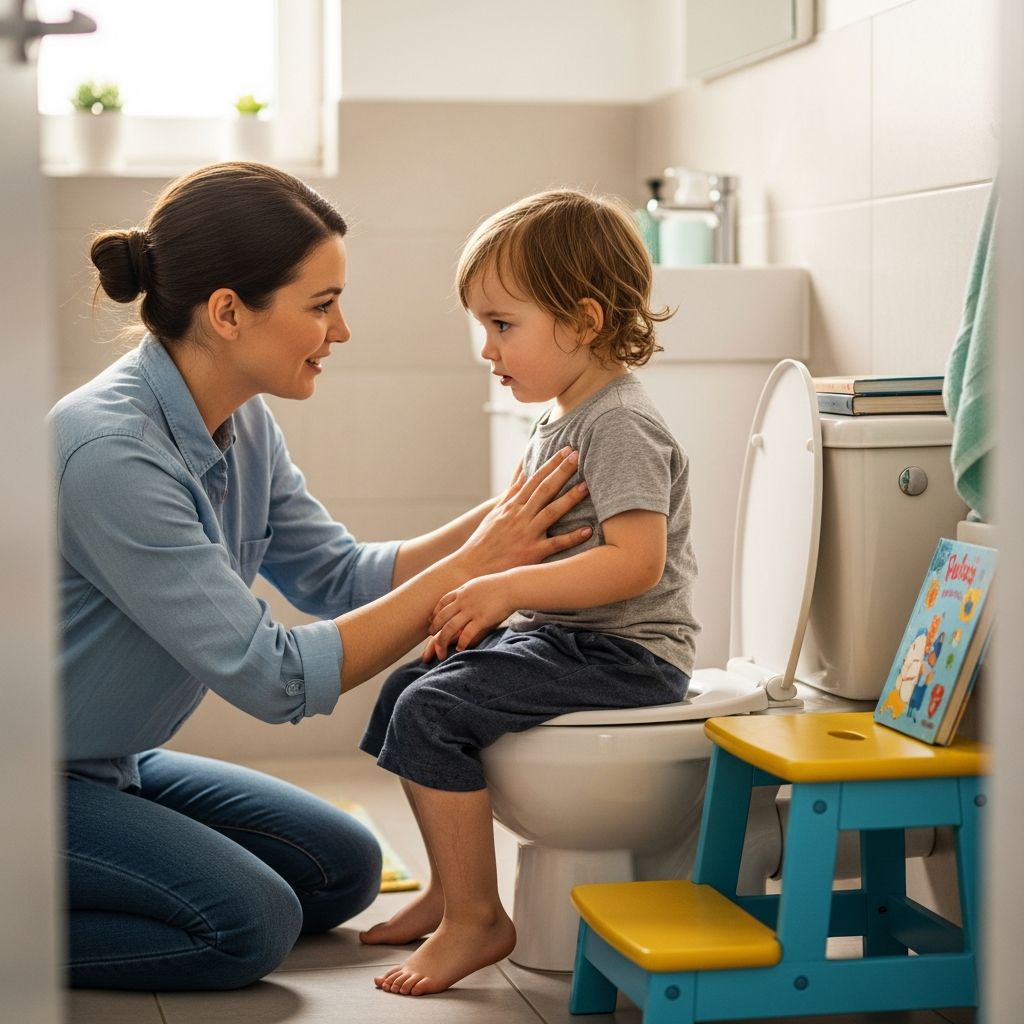
Many parents are surprised when a child who has seemed fully trained suddenly starts having accidents, refusing the toilet, or insisting on diapers again. Potty training setbacks at age four are common, stressful, and very fixable with time, empathy, and the right approach.
This guide explains why setbacks happen, how to tell when it is normal versus concerning, and what you can do to support your child’s body and emotions while protecting their health.
Why Potty Training Can Go Backward at Age Four
By four, most children have the physical skills to use the toilet, but emotional and social changes can still disrupt progress. Professionals emphasize that toilet learning is both a physical and a behavioral process, and stress, pressure, or pain can easily interfere with success.
Common Reasons for Regression
- Stressful changes such as starting preschool, a new sibling, moving, or family tension.
- Constipation or painful stools causing fear of using the toilet.
- Power struggles when children feel pushed, shamed, or controlled around toileting.
- Distractions from play or screens, leading to waiting too long and frequent accidents.
- Developmental leaps that use up emotional energy, making your child temporarily less capable of self-control.
Setbacks are usually a sign that something about the process has become stressful or uncomfortable for the child, not that you or your child have failed.
What Regression Looks Like in a 4-Year-Old
Every child is different, but many parents notice patterns like these when setbacks appear:
- Refusing to sit on the potty or toilet at all.
- Insisting on wearing diapers or pull-ups again.
- Withholding poop, hiding to go in a corner, or waiting for a diaper.
- Frequent pee accidents during the day after months of dryness.
- Sudden bedwetting at night after being dry for some time.
- Crying, screaming, or panic when taken to the bathroom.
These behaviors can be frustrating, but they are your child’s way of communicating that something in the process feels too hard, scary, or pressured.
When to Relax and When to Call the Doctor
Most potty training setbacks in 4-year-olds are emotional or behavioral and improve once pressure is reduced. However, some signs call for a medical check.
| Situation | Usually Normal | Seek Medical Advice |
|---|---|---|
| Occasional daytime accidents | Yes, especially during changes or stress. | No, unless they are constant or your child seems in pain. |
| Sudden fear of the toilet | Common and often emotional. | Yes if fear is linked to pain with urination or bowel movements. |
| Constipation (hard, painful stools) | Common but needs attention. | Yes, to prevent worsening constipation and stool withholding. |
| Blood in urine or stool | No | Yes, get medical care promptly. |
| Fever, vomiting, or severe abdominal pain | No | Yes, could signal infection or other illness. |
| Persistent daytime wetting after age 5–6 | Less typical | Yes, evaluation for bladder or bowel issues is recommended. |
Step One: Remove Pressure and Rebuild Safety
Research and pediatric guidance strongly warn against using force, punishment, or shaming in toilet training, which can trigger constipation, urinary problems, and long-term resistance.
Stop the Power Struggle
You control the environment and routines, but your child controls when pee and poop come out. Trying to “win” this battle usually makes regression worse.
- Pause all rewards charts, bribes, and threats.
- Avoid comments like “big kids don’t do that” or “you know better.”
- If needed, calmly allow diapers or pull-ups again without drama.
- Say less, notice more: describe what you see without judgment (e.g., “You had an accident. Let’s get cleaned up.”).
Use Calm, Neutral Language
Children are highly sensitive to tone. A neutral, matter-of-fact response teaches that accidents are manageable, not shameful.
- Keep your voice slow and steady.
- Offer simple empathy: “It’s hard when your body doesn’t make it in time.”
- Focus on solutions: “Here’s a fresh pair of underwear.”
Step Two: Protect Physical Comfort and Health
Underlying physical discomfort is one of the most common drivers of toileting resistance and regression.
Watch Closely for Constipation
Children who have had even a few painful bowel movements may begin holding stool, which stretches the bowel and makes stooling harder, creating a cycle of fear and avoidance.
Signs can include:
- Hard, dry, or very large stools.
- Pooping every several days instead of daily.
- Streaks of stool in underwear between bigger bowel movements.
- Tensing, hiding, or standing stiffly when they need to go.
If you suspect constipation, contact your child’s doctor. Treatment may include short-term stool softeners, changes in diet, and a plan to empty the bowels safely.
Make the Toilet Physically Comfortable
Children are more successful when they feel supported and stable on the toilet.
- Use a child-size potty or a secure seat insert on the big toilet.
- Provide a footstool so knees are slightly higher than hips, which helps with bowel movements and muscle control.
- Ensure clothing is easy to pull down quickly (avoid complicated snaps and belts).
Step Three: Gently Reintroduce Skills
Once fear and pressure have eased, you can slowly reintroduce toilet habits in a low-stress way. Evidence-based guides recommend gradual exposure and consistent but brief practice sits.
Start with Short, Predictable “Potty Moments”
Instead of demanding results, create regular, relaxed opportunities:
- Invite your child to sit for 1–2 minutes at predictable times (after meals, before bath, before leaving home).
- Allow them to sit with clothes on at first if they are very anxious.
- Stay with them and talk, read a short story, or sing a song so they are not bored or lonely.
The goal is comfort and routine, not immediate output. Many children will begin using the toilet again on their own once they feel safe.
Make the Bathroom a Friendly Place
While avoiding pressure, you can still make the bathroom inviting:
- Keep a small basket of special books or quiet toys that stay in the bathroom.
- Let your child decorate their potty or stool with removable stickers.
- Use soft lighting or music if your child finds the bathroom overstimulating.
Step Four: Support Your Child’s Emotions
Regression is often an emotional signal. Supporting feelings can be as important as any practical strategy.
Connect Before You Correct
Children cooperate better when they feel connected and understood.
- Spend one-on-one time daily doing something your child chooses, unrelated to toileting.
- Offer extra cuddles, stories, or play during big life transitions.
- Use simple language to name feelings: “You look worried about the potty.”
Avoid Shame and Comparison
Health organizations stress that punishment or shaming can worsen anxiety and regression. Comparing your child to siblings or classmates can feel humiliating.
- Skip comments like “Your friends all use the toilet now.”
- Normalise the experience: “Lots of kids need more time to learn this.”
- Praise effort and listening to body cues, not just dry pants.
Step Five: Work with Caregivers and School
Consistency between home and other settings helps children feel secure. Organizations that specialize in children’s continence recommend a coordinated plan when a child has toileting difficulties.
Share a Simple Plan
- Let teachers or caregivers know you are taking a low-pressure, supportive approach.
- Agree on how often your child will be invited to use the toilet (for example, at set times and when they ask).
- Ask that accidents be handled discreetly and calmly.
When adults respond in similar ways, children receive a consistent message: their body is safe, and adults are there to help, not judge.
Helpful Do’s and Don’ts for Potty Setbacks
- Do stay calm and matter-of-fact during accidents.
- Do check for constipation or pain and speak with your child’s doctor if you have concerns.
- Do offer time, presence, and reassurance.
- Do provide a comfortable, child-friendly toilet setup.
- Don’t force your child to sit or stay on the toilet against their will.
- Don’t punish, yell, or shame when accidents happen.
- Don’t assume your child is being lazy or defiant; see the behavior as communication.
Frequently Asked Questions (FAQs)
Q1: Is it normal for a 4-year-old to still have potty training problems?
Yes. While many 4-year-olds are reliably trained, setbacks and ongoing challenges at this age are common, especially around stress, constipation, or big life changes. If you are worried about pain, constant accidents, or medical issues, consult your pediatrician.
Q2: Should I put my 4-year-old back in diapers during a setback?
Temporarily returning to diapers or pull-ups can reduce pressure and anxiety for some children, especially if battles around the toilet are intense. Keep your tone neutral and avoid framing it as a failure; present it as a way to help while their body and feelings catch up.
Q3: How long does potty training regression usually last?
Duration varies widely. For many children, regression improves over a few weeks once pressure eases and underlying stress or constipation is addressed. If problems persist for months without improvement or are getting worse, seek guidance from a health professional familiar with toileting issues.
Q4: Can punishment or rewards fix a potty training setback?
Punishment tends to make setbacks worse by increasing fear and stool or urine holding. Rewards can sometimes motivate but may also increase pressure, especially if a child does not yet feel ready or safe. Evidence-based advice emphasizes empathy, routine, and comfort over external rewards.
Q5: When should I ask for a referral to a continence or behavioral specialist?
Consider a referral if your child has ongoing daytime wetting or soiling beyond age 5–6, repeated urinary infections, severe constipation, or intense, long-lasting fear of toileting despite gentle, consistent support. A specialist can help rule out medical causes and design a structured, child-sensitive plan.
References
- Potty training problems and solutions: An evidence-based guide — Parenting Science (G. T. Gwynne). 2023-06-01. https://parentingscience.com/potty-training-problems-prevention/
- Emotional Issues and Bathroom Problems — HealthyChildren.org (American Academy of Pediatrics). 2022-10-12. https://www.healthychildren.org/English/ages-stages/toddler/toilet-training/Pages/Emotional-Issues-and-Bathroom-Problems.aspx
- Potty Training Regression: What To Do About It — Cleveland Clinic Health Essentials. 2022-03-10. https://health.clevelandclinic.org/what-to-do-when-your-potty-trained-child-suddenly-isnt
- Understanding Toilet Refusal: The child who will only poo in a nappy — Bowel & Bladder UK. 2020-09-01. https://www.bbuk.org.uk/wp-content/uploads/2020/09/Understanding-Toilet-Refusal-The-Child-That-Will-Only-Poo-in-a-Nappy.pdf
- Potty training — ERIC (The Children’s Bowel & Bladder Charity). 2023-04-15. https://eric.org.uk/potty-training/