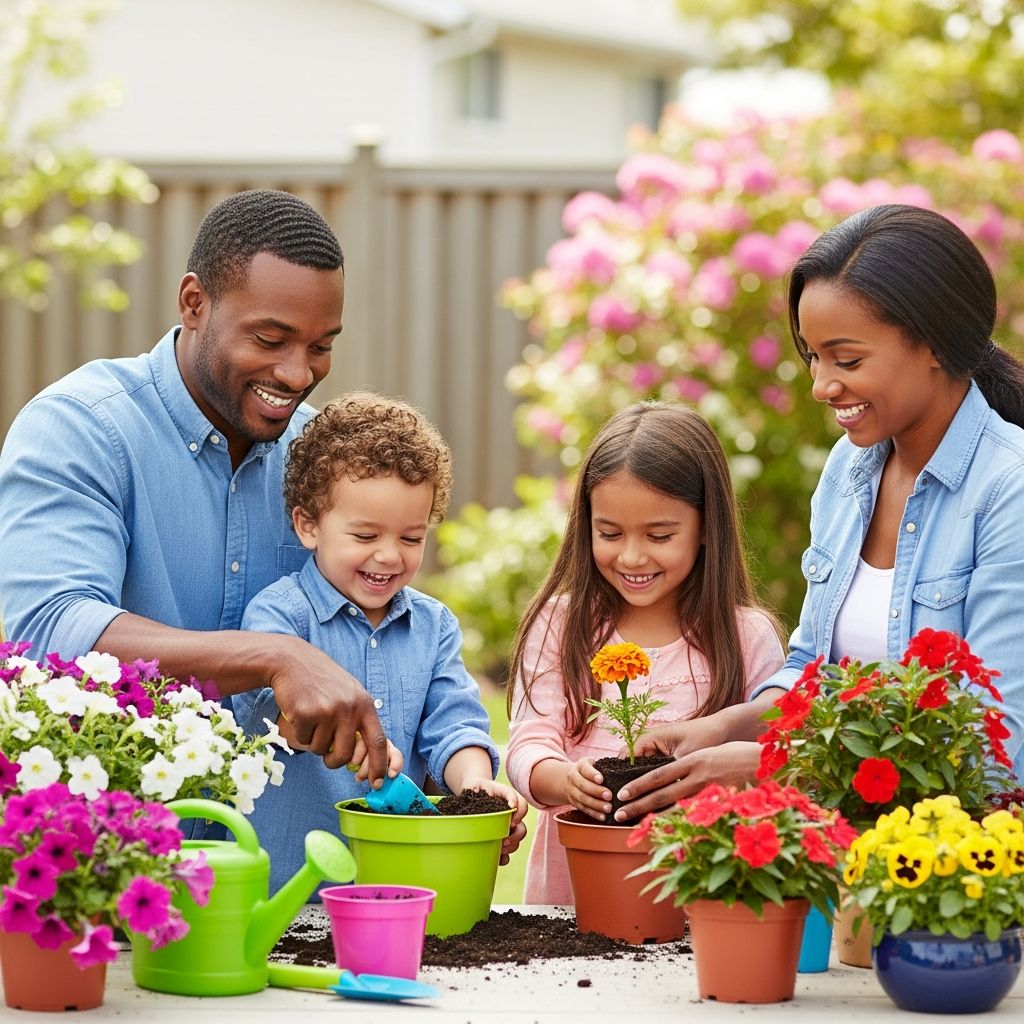
Gardening with children does not have to mean digging up an entire backyard. Container gardening with potted flowers is a flexible, beginner-friendly way to bring nature right onto a porch, balcony, windowsill, or doorstep. With a few simple supplies and a playful mindset, families can create cheerful little flower gardens that fit almost any space and schedule.
Why Potted Flowers Are Perfect for Kids
Flowers in pots offer an ideal starting point for young gardeners because they grow fast, look bright, and provide visible results that keep kids engaged. Containers also allow adults to control soil, water, and sun exposure more easily than in-ground beds, which makes the learning curve gentler for first attempts.
For children, potted gardening can support a wide range of skills: observing how living things change over time, practicing patience as buds open, and building confidence as care routines lead to real blooms. It also offers plenty of chances for sensory exploration, from soil texture and leaf shapes to fragrance and color.
- Low-commitment: A single pot or a small collection is easier to manage than a full garden bed.
- Portable: Move pots to chase the sun or protect them from bad weather.
- Customizable: Let each child choose their own pot color, design, and flower style.
- Visual payoff: Colorful blooms reward consistent watering and care.
Planning Your Kid-Friendly Flower Corner
A little planning helps the project feel fun instead of overwhelming. Before buying any plants, decide where the potted flowers will live, how much time the family can devote to watering, and how many pots will be realistic to maintain. Involve kids in these decisions to give them a sense of ownership from the very beginning.
Take a quick look at the chosen spot several times during the day. Notice when it gets sun, shade, wind, or harsh afternoon heat. These simple observations will guide your plant choices and set you up for better success.
Quick Site Checklist
- Does the spot receive mostly sun, mostly shade, or a mix?
- Is there a nearby water source (hose, watering can, or sink)?
- Can children easily reach the pots without climbing or leaning over railings?
- Is there a surface that can tolerate drips of water and soil?
Choosing Safe, Simple Containers
Almost any container with drainage holes can work for potted flowers, but when kids are involved, safety and ease of handling come first. Look for lightweight materials and smooth edges that small hands can manage without strain or injury.
Adding creative touches like paint, stickers, or handprints makes each pot feel personal and turns the container itself into a keepsake. This decorating step can also serve as a rainy-day extension of the gardening project when outdoor time is limited.
Kid-Friendly Container Options
- Plastic pots: Light, durable, and usually inexpensive.
- Fabric grow bags: Soft-sided, easy to move, and store flat when not in use.
- Repurposed containers: Cleaned buckets, colanders, or tubs, as long as they have drainage holes.
- Window boxes: Great for apartments with balcony railings or wide sills.
Container Sizing Guide
| Container Size | Suitable For | Notes for Families |
|---|---|---|
| Small (4–6 inches) | Single small flowers or herbs | Good for toddlers; light enough for them to carry with help. |
| Medium (8–10 inches) | Mixed flowers or one compact plant | Ideal for preschool and early elementary kids to manage. |
| Large (12 inches+) | Flower combinations or mini themed gardens | Best as a shared family project or for older children. |
Selecting Flowers for Little Gardeners
Colorful, sturdy, and forgiving plants help young gardeners stay motivated. Choose flowers that handle the occasional missed watering and can bounce back from enthusiastic but imperfect care. If possible, prioritize varieties known to be non-toxic and safe around children and pets.
Local garden centers often label plants for sun or shade; turn this label-reading into a mini reading and science lesson. Encourage kids to match plant needs to the conditions in your chosen spot, treating the process like solving a simple puzzle.
Beginner-Friendly Flower Suggestions
- Marigolds: Bright, compact, and usually quick to bloom.
- Pansies and violas: Cheerful faces in cooler weather and varied colors.
- Petunias: Trailing options that spill over the sides of pots for a lush look.
- Geraniums (zonal): Bold blossoms and foliage that tolerates some neglect.
- Mini sunflowers (dwarf varieties): A dramatic option for bigger pots in sunny spots.
Simple Themes Kids Love
- Rainbow pot: One flower in each color of the rainbow, all in a single container.
- Pollinator pot: Flowers that attract bees and butterflies, paired with observation time.
- Scented pot: Fragrant blooms like sweet alyssum or scented geranium varieties.
- Favorite color pot: A mix of flowers all in a child’s chosen color family.
Essential Supplies for a Smooth Start
Once containers and plants are selected, gather the rest of the materials before inviting kids to help. Having everything ready reduces downtime and keeps children focused on the fun, hands-on parts of the activity.
Choose child-sized tools when possible, but remember that even kitchen measuring cups and spoons can double as scoops for potting mix. The goal is to keep tools simple, safe, and easy to manage.
Basic Supply List
- Flowering plants or seed packets suitable for containers
- Potting mix designed specifically for containers
- Containers with drainage holes and saucers or trays
- Small trowel, spoon, or scoop for soil
- Watering can or plastic cup with holes poked in the lid
- Hand wipes or a small basin of water for quick clean-up
- Optional: child-safe gardening gloves and aprons
Step-by-Step: Planting a Flower Pot With Kids
Planting day is the highlight of the project for most children. Walk through the process slowly, letting kids do as many steps as safely possible on their own. Expect some mess and treat it as part of the experience rather than a problem to avoid.
- Prepare the container. Check that drainage holes are clear, then place the pot on a tray or saucer to protect surfaces.
- Add potting mix. Invite kids to fill the container about two-thirds full, gently tapping the sides to settle the soil.
- Plan the layout. Let children arrange plants or plan where seeds will go before any holes are dug.
- Dig planting holes. Show kids how to make small holes in the soil just wide and deep enough for each plant’s root ball.
- Set in the plants. Help gently remove plants from their nursery pots and loosen roots if they are tightly packed, then tuck them into the prepared holes.
- Fill and firm. Add more potting mix around each plant, pressing lightly to remove air pockets while leaving room at the top for watering.
- Water gently. Demonstrate slow, even watering until water begins to drain from the bottom, encouraging kids to notice how the soil darkens as it becomes moist.
- Clean up together. Involve children in sweeping soil, rinsing tools, and washing hands to complete the project.
Daily Care Routines Kids Can Own
Routine care is where children truly become gardeners. Simple, predictable tasks help them understand that living things rely on consistent attention. These habits also give kids chances to practice responsibility and observation skills in a low-stakes way.
Turn maintenance into a quick daily or every-other-day ritual, ideally at the same time, such as after breakfast or before dinner. Short, regular sessions are more sustainable for young attention spans.
Easy Tasks for Different Ages
| Age Range | Suggested Tasks | Adult Role |
|---|---|---|
| Toddlers (2–3 years) | Help pour water, touch soil, observe colors and shapes. | Guide hand-over-hand watering and supervise closely. |
| Preschoolers (4–5 years) | Check soil dryness, help water, remove faded blooms. | Discuss what plants need and model gentle handling. |
| Early elementary (6–8 years) | Measure water, record growth, help with light pruning. | Provide reminders and troubleshoot plant problems. |
Simple Care Checklist
- Check soil with a finger; water when the top inch feels dry.
- Remove wilted or faded flowers to encourage new blooms.
- Look under leaves for insects and observe, rather than fear, garden life.
- Rotate pots occasionally so all sides of the plants receive light.
Weaving Learning Into Flower Time
Potted flowers are more than decoration; they can be miniature classrooms. Each step of the process offers opportunities to connect gardening to reading, math, art, and science in age-appropriate ways without turning the experience into a rigid lesson.
Ask open-ended questions instead of delivering long lectures. Encourage children to be the ones who notice patterns, changes, and small details in their plants over time.
Everyday Learning Ideas
- Math moments: Count petals, compare leaf sizes, track how many days until blooms open.
- Science skills: Talk about what plants need—light, water, air, and nutrients—and predict what will happen if one is missing.
- Language development: Introduce new words like “bud,” “sprout,” “stem,” and “pollinator.”
- Art connections: Draw the same pot once a week and notice how the picture changes over time.
Keeping Things Safe and Stress-Free
With a few thoughtful precautions, container gardening remains a low-risk, enjoyable activity. Choose non-toxic plants whenever possible, store fertilizers and tools safely, and make sure children always wash hands after gardening sessions.
Setting realistic expectations matters just as much as safety. Remind kids that some plants will thrive and others might struggle, and that learning from both outcomes is part of the adventure.
Family Safety Tips
- Research plant toxicity before purchasing, especially if you have curious toddlers or pets.
- Keep sharp tools and any garden chemicals out of children’s direct reach.
- Teach kids to avoid tasting any plant parts unless an adult confirms it is safe and intended as food.
- Have children wear sun hats and sunscreen when gardening outdoors for extended periods.
Fun Variations to Try All Season
Once the first flower pot is thriving, many families find themselves eager to expand the project. Adding a few playful twists keeps kids interested and gives them reasons to revisit their plants throughout the season and beyond.
Not every variation requires new supplies; sometimes simply rearranging pots or renaming them as “gardens” with a theme can provide a fresh burst of enthusiasm.
- Story pot: Choose flowers or small figurines that represent characters from a favorite book and arrange them in a container.
- Celebration pot: Plant flowers in colors that match a birthday party or holiday and use the pot as a living centerpiece.
- Observation journal: Give each child a small notebook to sketch or note changes in their pot over time.
- Season switch: Refresh the pot at the change of seasons, letting kids clear old plants and choose new varieties.
Frequently Asked Questions
How often should kids water potted flowers?
Watering frequency depends on the size of the pot, the type of plant, and the weather, but a common routine is to check the soil every day or two and water when the top inch feels dry. Encourage children to feel the soil rather than follow a strict calendar so they learn to respond to the plant’s actual needs.
Do we need fertilizer for a simple kids’ flower pot?
Many families start with potting mix that already contains a small amount of slow-release fertilizer, which is usually enough for a beginner project. If blooms begin to fade early or the plants seem pale, adults can introduce a gentle, balanced fertilizer following label directions, while explaining to kids that it acts like vitamins for plants.
What if we only have indoor space?
Container flower gardening can work indoors on bright windowsills, especially with compact varieties that tolerate less direct sun. Place a tray under pots to catch drips, rotate containers regularly, and open windows when possible so children can feel a connection between their indoor garden and the outdoor world.
How can busy families keep the project going?
Start small with one or two pots and build a brief daily check-in routine instead of long, occasional sessions. Assign simple roles—such as “water checker” or “flower photographer”—so each child knows what to do without adults needing to remember every detail.
What should we do if a plant dies?
Rather than viewing a dying plant as a failure, treat it as a chance to talk about the life cycle of living things and what might have gone wrong. Invite kids to help remove spent plants, refresh the soil, and choose a new flower, reinforcing that trying again is part of being a gardener.
Container gardening with potted flowers offers families a practical, joyful way to bring nature into everyday life, no matter how small the available space. When children participate in planning, planting, and caring for their own pots, they gain more than pretty blooms—they practice responsibility, creativity, patience, and curiosity that can grow along with every new flower.