Intestinal malrotation is a birth defect in which a child’s intestines do not sit in the normal position inside the belly. This can put the bowel at risk of twisting, a dangerous event called volvulus that can cut off blood flow and cause life-threatening damage if not treated quickly.
Understanding how malrotation happens, how to recognize warning signs, and what treatment involves can help parents act fast and confidently if their child is affected.
How the Intestines Normally Develop Before Birth
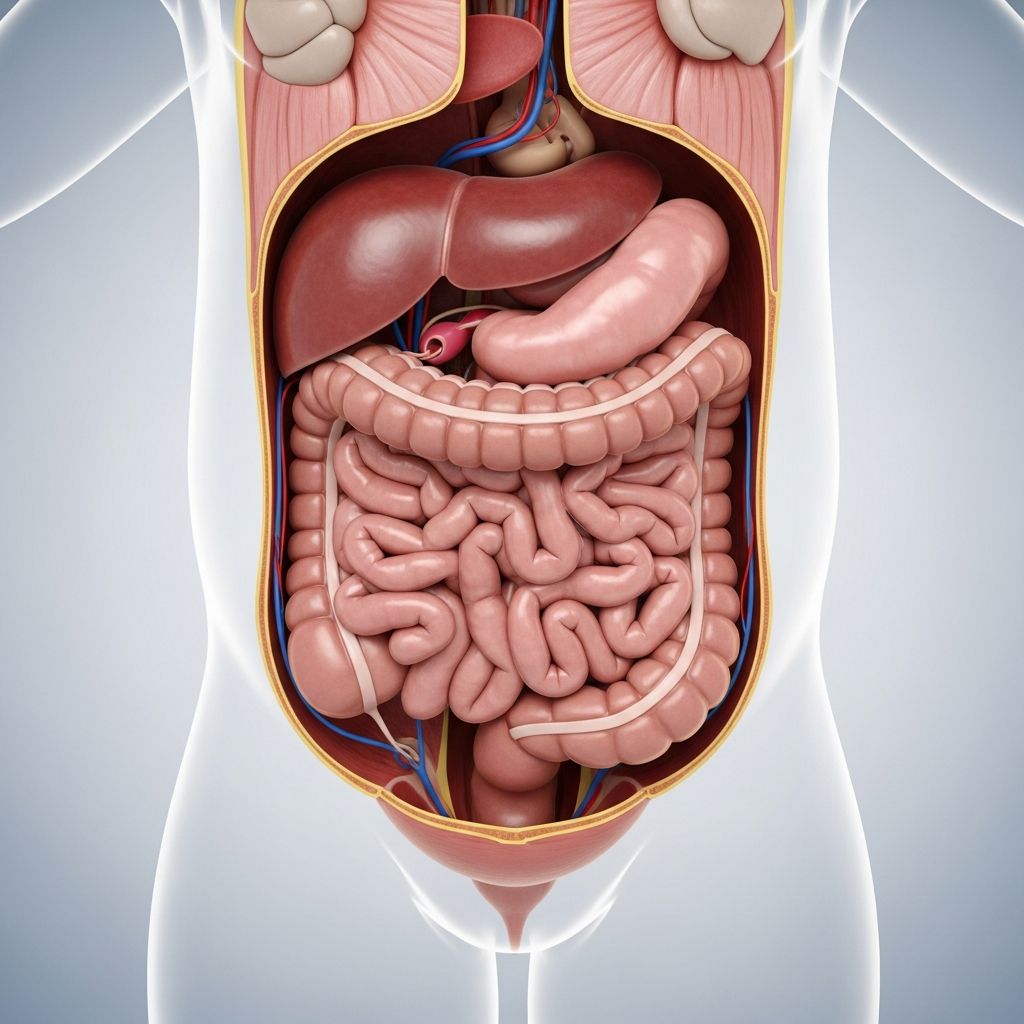
During early pregnancy, a baby’s intestines grow very quickly and follow a precise pattern of movement and rotation before settling into their final place.
- Around the 10th week of gestation, the intestines move back into the baby’s abdomen after briefly growing outside the belly in the umbilical cord area.
- As they move back, they normally make about two full rotations around a central blood vessel called the superior mesenteric artery.
- The small intestine usually ends up in the center of the abdomen, while the large intestine forms a frame around it.
- Thin attachments (the mesentery) anchor the intestine in place and help protect it from twisting.
When this sequence is disrupted, the bowel may end up in an abnormal position and be held in place by a narrow mesentery, which is more vulnerable to twisting.
What Is Intestinal Malrotation?
Intestinal malrotation occurs when this normal rotation and fixation process is incomplete or abnormal. Instead of lying in their usual positions, the intestines are misplaced, and the mesentery is shorter and narrower than usual.
This malposition can lead to two main problems:
- Obstruction by fibrous bands: Strands of tissue called Ladd bands can stretch across the first part of the small intestine (the duodenum) and block the flow of food.
- Midgut volvulus: The small intestine and part of the large intestine can twist around the narrow mesentery like a rope, blocking both the passage of bowel contents and blood flow.
Malrotation is usually present from birth (congenital). Many children show symptoms in the newborn period or early infancy, but in some cases the condition is not recognized until later in childhood or even adulthood.
What Is Volvulus and Why Is It an Emergency?
Volvulus is a twist of the intestine around its own blood supply. When it happens in a child with malrotation, doctors call it midgut volvulus.
Volvulus can cause two serious problems at the same time:
- Blockage of the bowel, so food and gas cannot pass through.
- Loss of blood flow to the twisted segment, which can lead to intestinal tissue death (ischemia and gangrene) within hours if not corrected.
Because of this, midgut volvulus is a surgical emergency. Rapid diagnosis and surgery give the best chance of saving the bowel and preventing life-threatening infection.
Who Is Affected?
Malrotation is considered uncommon, but it is one of the more important causes of bowel obstruction in newborns and infants.
| Age Group | How Malrotation Typically Shows Up |
|---|---|
| Newborns (first month) | Sudden vomiting (often green), abdominal swelling, trouble feeding, signs of pain; often due to volvulus. |
| Infants (under 1 year) | Intermittent vomiting, poor weight gain, irritability, signs of obstruction. |
| Young children | Recurrent belly pain, vomiting, feeding problems, possible acute volvulus episodes. |
| Older children & adults | Chronic or episodic abdominal pain and vomiting, sometimes misdiagnosed as other digestive problems, or sudden emergency with volvulus. |
Common Signs and Symptoms
Not every child with malrotation has symptoms right away. Some remain symptom-free (asymptomatic) for years and are diagnosed only when they have imaging for another reason.
Emergency Warning Signs of Volvulus
Parents should seek urgent medical care if a baby or child with suspected malrotation shows these signs of possible volvulus:
- Green (bilious) vomiting – vomit with a bright yellow-green or dark green color.
- Sudden, severe abdominal pain or intense, inconsolable crying in a baby.
- Pulling up the legs toward the chest during cramps, then briefly calming, with the pattern repeating.
- Abdominal swelling or bloating.
- Bloody stools or dark, tarry stools.
- Lethargy, weakness, or unusual sleepiness.
- Fast heart rate or rapid breathing, which can suggest shock or severe pain.
A child with these symptoms needs immediate evaluation in an emergency department. Volvulus can progress quickly and requires urgent surgery to prevent bowel loss.
Non-Emergency Symptoms of Malrotation
Some children with malrotation without acute volvulus may have more subtle or chronic complaints:
- Frequent or intermittent vomiting (sometimes not green).
- Recurrent abdominal pain or cramping.
- Poor appetite or refusal to feed.
- Constipation or diarrhea, or changes in typical bowel patterns.
- Failure to gain weight or grow as expected.
These symptoms can mimic many other conditions, so imaging tests are usually needed to confirm the diagnosis.
How Doctors Diagnose Malrotation and Volvulus
Diagnosis starts with a careful history and physical exam, followed by imaging studies. When volvulus is suspected, evaluation is done as an emergency.
Key Diagnostic Tests
- Abdominal X-ray: Can show signs of bowel obstruction or abnormal gas patterns but may not clearly confirm malrotation.
- Upper gastrointestinal (GI) contrast study: The child swallows a contrast liquid, and X-rays track its movement through the esophagus, stomach, and small intestine. In malrotation, the first part of the small intestine (duodenum) often does not cross to the left side as expected, suggesting abnormal positioning.
- Ultrasound: Can show a twisted appearance of bowel and abnormal positions of important blood vessels, helping to identify volvulus in experienced hands.
- CT scan: More often used in older children and adults; it can show the abnormal location of the duodenojejunal junction, misplaced colon, and twisted mesenteric vessels.
Doctors interpret these tests together with the child’s symptoms to decide whether emergency surgery is needed.
Treatment: The Ladd Procedure
The standard surgical treatment for intestinal malrotation is called the Ladd procedure.
Goals of Surgery
Surgeons aim to:
- Untwist any volvulus and restore blood flow to the intestine.
- Divide Ladd bands that are compressing the duodenum.
- Broaden the mesentery so the bowel is less likely to twist again.
- Reposition the small intestine on the right side and the colon on the left side of the abdomen, a layout that lowers the risk of future volvulus even though it is not fully “normal.”
- Remove the appendix (appendectomy) because its position will be unusual after surgery, which could make future diagnosis of appendicitis more difficult.
Open vs. Laparoscopic Surgery
The Ladd procedure can be done as a traditional open operation or using minimally invasive (laparoscopic) techniques in selected patients.
| Approach | Key Features |
|---|---|
| Open surgery | Single larger incision; often preferred in unstable infants or when extensive bowel damage is suspected; allows rapid exploration. |
| Laparoscopic surgery | Several small incisions using a camera; may reduce time to feeding and shorten hospital stay in stable patients without severe volvulus. |
When bowel tissue has lost its blood supply and become nonviable, surgeons must remove the damaged segment. The remaining healthy ends are then joined together. In severe cases with major bowel loss, children may develop short bowel syndrome and require long-term nutritional support.
What Happens in the Hospital?
Children with suspected volvulus are managed urgently. Typical steps include:
- Stopping oral feeds to rest the bowel.
- IV fluids to prevent or correct dehydration and support blood pressure.
- Nasogastric (NG) tube passed through the nose into the stomach to remove air and fluid, reducing vomiting and pressure inside the abdomen.
- Antibiotics to help prevent infection if bowel injury is suspected.
- Pain relief and close monitoring of vital signs.
After surgery, babies and children usually stay in the hospital for several days or longer, depending on how sick they were before the operation and whether any bowel had to be removed.
Recovery and Long-Term Outlook
Most children who have a Ladd procedure without major bowel loss recover well and go on to live normal lives.
Short-Term Recovery
- Feeding is restarted gradually once bowel function returns (when gas or stool begins to pass again).
- Some infants may need temporary intravenous nutrition (parenteral nutrition) if it takes time for their intestines to handle full feeds.
- Pain improves over several days, and activity gradually increases.
Long-Term Considerations
- Many children do not have ongoing digestive problems once healed.
- A small number may have recurrent abdominal pain or obstruction from adhesions (scar tissue) later in life.
- Children who lose significant portions of intestine may face long-term issues with nutrient absorption and require specialized care by pediatric gastroenterology and nutrition teams.
When Malrotation Is Found Without Symptoms
Sometimes malrotation is discovered accidentally when imaging is done for another reason and the child has few or no symptoms. In these situations, doctors must decide whether to recommend preventive (prophylactic) surgery.
Important points include:
- Some experts favor elective Ladd surgery to avoid the risk of sudden volvulus later.
- Others may individualize the decision based on age, overall health, and associated conditions such as heterotaxy syndrome.
- Families should discuss risks and benefits with a pediatric surgeon experienced in treating malrotation.
How Parents Can Help Protect Their Child
Parents play a key role in recognizing early signs of trouble and following through with care.
Know the Red Flags
Seek immediate medical attention if your baby or child has:
- Green or yellow-green vomiting.
- Severe or repeated abdominal pain or inconsolable crying.
- Sudden abdominal swelling.
- Bloody or black stools.
- Unusual sleepiness, weakness, or pale, sweaty skin.
Questions to Ask Your Child’s Care Team
- Does my child definitely have malrotation, volvulus, or both?
- Is surgery needed right away, or can it be planned?
- Will you perform an open or laparoscopic Ladd procedure, and why?
- How much intestine appears healthy, and was any removed?
- What should we watch for at home after surgery, and when should we call you or return to the hospital?
Frequently Asked Questions (FAQs)
Can intestinal malrotation be prevented?
No. Malrotation results from how the intestines form and rotate early in pregnancy. There are no known actions during pregnancy that reliably prevent it. Early recognition and prompt treatment are the focus of care.
Is malrotation the same as gastroschisis or omphalocele?
No. Those conditions involve intestines developing outside the abdomen at birth with an opening in the abdominal wall. Malrotation specifically refers to abnormal rotation and positioning of the intestines; it may occur alone or along with other birth defects.
Will my child need special diet changes after surgery?
Many children resume a normal diet after recovery. If a large section of intestine was removed, a pediatric nutrition team may recommend special formulas, supplements, or long-term dietary adjustments to ensure adequate growth.
Can malrotation recur after a Ladd procedure?
The Ladd operation is designed to greatly reduce the risk of volvulus by widening the mesentery and repositioning the intestines. True repeat midgut volvulus after a well-performed Ladd procedure is uncommon, though any child with new, severe abdominal symptoms should still be evaluated urgently.
Is malrotation always diagnosed in infancy?
No. While many cases are found in newborns and infants, some children and even adults are diagnosed later, often after years of intermittent abdominal pain or vomiting. In adults, the diagnosis can be challenging and is sometimes only made when acute volvulus occurs.
References
- Intestinal Malrotation and Volvulus — Children’s Hospital of Philadelphia. 2023-05-01. https://www.chop.edu/conditions-diseases/intestinal-malrotation-and-volvulus
- Malrotation of the Bowel — Merck Manual Professional Edition. 2023-01-10. https://www.merckmanuals.com/professional/pediatrics/congenital-gastrointestinal-anomalies/malrotation-of-the-bowel
- Intestinal Malrotation & Volvulus in Children — Cleveland Clinic. 2022-11-03. https://my.clevelandclinic.org/health/diseases/10029-malrotation
- Intestinal Malrotation & Volvulus: Symptoms, Diagnosis & Treatment — Cincinnati Children’s Hospital Medical Center. 2022-08-15. https://www.cincinnatichildrens.org/health/i/intestinal-malrotation
- Malrotation of the Gut in Adults: An Often Forgotten Entity — K. Dietz et al., Cureus. 2018-06-05. https://pmc.ncbi.nlm.nih.gov/articles/PMC5947924/
- Malrotation — Seattle Children’s Hospital. 2021-04-20. https://www.seattlechildrens.org/conditions/malrotation/