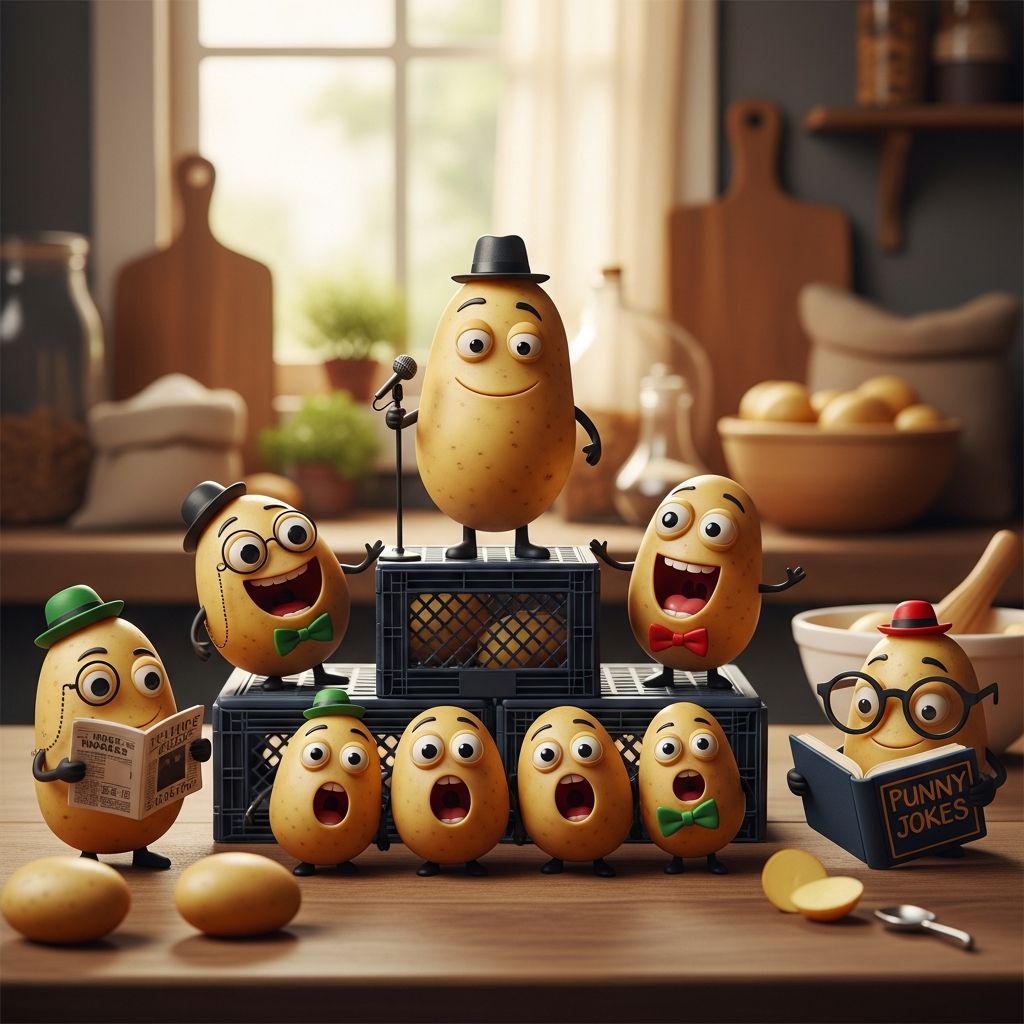
Potatoes might be the most humble vegetable in the pantry, but they are secretly comedy gold. With their funny shapes, infinite recipe possibilities, and delightfully punny name, potatoes are perfect for silly wordplay that kids and grown-ups can enjoy together.
This guide walks you through creative ways to use potato puns and jokes in everyday life, from birthday cards and lunchbox notes to classroom games and social media captions. No peeling required—just a sense of humor.
Why Potato Puns Are So Appealing
Food puns are naturally funny because they take something ordinary and twist the meaning in a surprising way. Potatoes work especially well for this because words like “spud,” “tater,” and “fry” easily blend with common phrases. That makes them perfect for clean, family-friendly jokes.
Another reason potato puns are popular is that they fit almost any situation. You can turn them into compliments, silly roasts, classroom language lessons, or themed party decorations without needing any special props.
Core Ingredients of a Great Potato Pun
While the best jokes feel spontaneous, most potato puns follow a few simple patterns. Once you understand these patterns, you can easily invent your own original lines.
- Sound-alike swaps: Replacing a normal word with a potato term that sounds similar (for example, swapping a part of a word with “tater” or “spud”).
- Food and personality fusion: Giving potatoes human traits, like being shy, grumpy, brave, or overdramatic.
- Cooking twist: Using cooking methods (baked, mashed, fried, roasted) as metaphors for feelings or situations.
- Everyday phrase remix: Taking common sayings and gently twisting them into potato form.
When telling a pun, timing matters. Leave a short pause before the punchline, keep the joke short, and use facial expressions or a playful tone to make it land.
Categories of Potato Jokes You Can Create
To make it easier to brainstorm your own material, think of potato humor in loose categories. Each group has a different tone and works best in certain situations.
| Joke Style | Typical Audience | Best Use Case |
|---|---|---|
| Simple kids’ puns | Young children, early readers | Lunchbox notes, classroom warm-ups, bedtime giggles |
| Playful family banter | Parents, caregivers, older kids | Mealtime conversations, road trips, family game nights |
| Flirty or affectionate wordplay | Partners and close friends | Cards, cute text messages, anniversary or Valentine jokes |
| Social media captions | Teens and adults | Food photos, cooking reels, party snapshots |
| Classroom or group activities | Teachers, group leaders | Language lessons, icebreakers, creative writing prompts |
Kid-Friendly Potato Pun Ideas and Formats
For children, the goal is to keep jokes short, easy to understand, and free of anything that depends on complicated word origins. Focus on clear question-and-answer formats and simple visual humor.
- Classic riddle style: Start with “What do you call…?” and end with a playful twist on a familiar term.
- Exaggerated situations: Imagine a potato going to school, playing sports, or becoming a superhero.
- Animal mash-ups: Combine potatoes with kids’ favorite animals to create extra-silly characters.
- Action-based humor: Have the potato run, jump, hide, or dance in unexpected ways.
When telling potato puns to young kids, encourage them to add sound effects, gestures, or small drawings. This helps turn a simple joke into a mini performance.
Family Mealtime: Turning Dinner into a Tater Comedy Show
Potato nights—whether it’s fries, mash, or baked potatoes—are a natural stage for cheesy humor. Turning dinner into a pun-filled conversation makes the meal more memorable and can help picky eaters relax and engage.
Consider choosing a “pun host” for the evening who is responsible for opening with a joke and inviting everyone else to add one of their own. You can even award a silly “Golden Spud” title to the best original pun of the night.
Simple Mealtime Pun Prompts
- Ask each person to name a “superhero potato” and describe its powers.
- Challenge everyone to rename the dish using only potato puns.
- Invite kids to act out what a “shy potato” or “brave potato” would do at the table.
- Use a timer and see how many different potato-themed phrases the family can invent in one minute.
Party and Event Ideas with a Potato Pun Theme
If you are planning a birthday party, movie night, or game evening, a potato theme is surprisingly flexible. You can lean into chips and dip for a casual vibe or build a fully loaded baked potato bar for a more substantial meal.
Humor can tie the theme together in your invitations, decorations, and activities. A handful of puns on banners, labels, and name tags can transform a simple snack table into a smile-inducing “pun station.”
Fun Ways to Use Potato Puns at Parties
- Print small cards with different potato puns and scatter them across the tables.
- Label each topping at your potato bar with a playful description instead of a plain name.
- Create a “Pun Booth” where guests draw a word and must invent a potato pun around it.
- Let children decorate paper potatoes and add speech bubbles filled with their own jokes.
School and Classroom Uses for Potato Jokes
Potato puns can be a gentle introduction to concepts like homophones, word roots, and figurative language. Because the content is lighthearted, students often feel more comfortable taking creative risks.
Teachers can also use puns as brain breaks between more demanding tasks. A quick round of “who can come up with the silliest vegetable joke” helps students reset their focus without derailing the entire lesson.
Classroom Activity Ideas
- Pun posters: Have students design posters combining a drawing of a potato with a short, original joke.
- Vocabulary swap: Give learners a list of common phrases and challenge them to replace one word with a potato-related option while keeping the meaning close enough to understand.
- Story chains: Start a story about a potato on an adventure. Each student adds one sentence that includes a new pun.
- Partner riddles: Pairs create a question-and-answer joke and then present it dramatically to the class.
Social Media and Caption Ideas
Potato puns are also a fun way to add personality to your photos and short videos. Whether you are posting a shot of homemade fries or a cozy winter stew, a little wordplay can catch attention in a crowded feed.
When crafting captions, shorter is usually better. Aim for one or two lines that combine a playful remark with a light nod to the food or activity shown in the photo.
Tips for Crafting Captions
- Pair the pun with an emoji only if it truly adds clarity (for example, a potato or fry icon).
- Keep the tone consistent with your usual style, whether that is cute, sarcastic, or wholesome.
- Try seasonal twists, such as wintry jokes around comfort food or summer puns about cookouts.
- Use hashtags sparingly so the pun remains the star of the caption.
How to Invent Your Own Potato Puns
Creating new potato jokes does not require professional comedy skills. A simple step-by-step approach can help children and adults come up with lines that feel fresh instead of recycled.
- Start with a common phrase: Choose something people say often, such as a compliment, greeting, or short proverb.
- Identify a target word: Pick the part of the phrase you might be able to bend into a potato term.
- Brainstorm potato words: List anything related to potatoes, including cooking methods, shapes, dishes, and nicknames.
- Experiment with combinations: Say the phrase out loud while swapping in different potato words until one feels just silly enough.
- Test and refine: Try the joke on a friendly audience and adjust the wording or timing based on their reactions.
Encourage kids to keep a small “joke notebook” where they write their best experiments. Over time, they will develop a sense of which wordplay tricks usually work for them.
Gentle “Roast” Jokes That Stay Kind
Because potatoes are often roasted, it is tempting to turn every joke into a mock insult. There is nothing wrong with a little friendly teasing, but it should always remain light and affectionate, especially with young children.
Before telling a joke that pokes fun at someone, check whether the punchline targets the situation or the person. Aim your humor at shared experiences—like being tired after school or feeling lazy on the couch—instead of focusing on appearance or sensitive topics.
- Use “we” instead of “you” when joking about habits, so everyone is in on the fun.
- Switch roles and let children tease the grown-ups in a safe, structured way.
- Balance teasing jokes with clearly warm, positive puns so the overall tone stays encouraging.
Keeping Potato Humor Inclusive and Age-Appropriate
Spud-themed jokes can be tailored to almost any age, but the details should shift as your audience changes. What works in a group of preschoolers may fall flat with tweens or feel too silly for a professional setting.
When in doubt, choose the gentler version of any line you are considering. Clean, simple wordplay is far more versatile than jokes that rely on sarcasm or adult themes.
Guidelines for Different Age Groups
- Preschool through early elementary: Focus on clear, concrete images and quick question-and-answer jokes.
- Upper elementary and middle school: Introduce more complex wordplay, like mix-and-match rhymes.
- Teens and adults: Add layers of reference (for example, to movies, hobbies, or social media) while still keeping the tone respectful.
Practical Ways to Use Potato Jokes in Daily Life
Once you start looking for it, you will find countless places to tuck in a quick potato pun. These tiny moments of humor can become traditions that family members look forward to.
- Slip a mini potato pun into a child’s lunchbox on days when they might need extra encouragement.
- Add a joke to the back of a chore chart or weekly planner as a low-pressure reward.
- Write a pun inside greeting cards or thank-you notes to make them more memorable.
- Use a potato joke as the “password” children must say before starting a board game or movie.
Frequently Asked Questions About Potato Puns and Jokes
Are potato puns suitable for very young children? Yes. As long as the language is simple and the humor is kind, potato jokes are safe for toddlers and preschoolers. Keeping punchlines short and adding gestures or props makes the jokes even easier for them to follow. Can potato puns be educational? Absolutely. They are an easy tool for teaching homophones, rhyming, and figurative language. Turning grammar points into playful examples often helps students remember them better. How do I avoid overusing the same jokes? Rotate through different joke formats, such as riddles, short one-liners, and mini stories. Encourage family members or students to bring their own creations, so the material grows naturally over time. Is it okay to use potato puns in professional settings? In relaxed workplaces or informal team-building events, light food puns can break the ice. However, it is best to know your audience and save the silliest jokes for social occasions rather than serious meetings. What if my jokes do not get a big laugh? Puns often earn groans as well as giggles, and that reaction is part of the fun. Treat each attempt as practice and enjoy the shared moment, even if the punchline lands softly.
Final Thoughts: Celebrate the Joy of Silly Spuds
At their heart, potato puns and jokes are about connection. They turn ordinary moments—like standing over a pot of boiling water or sharing a plate of fries—into chances to laugh together.
Whether you are prepping for a themed party, brightening a classroom, or simply trying to coax a smile out of a tired family member, a sprinkle of tater-themed humor can go a long way. With the patterns in this guide as your base, you can keep inventing your own fresh, good-natured spud jokes for years to come.