After giving birth, many new mothers seek ways to return to their pre-pregnancy shape while managing the demands of caring for a newborn. Sustainable weight loss during this period requires a focus on nutrient-rich foods that support recovery, milk production if breastfeeding, and steady energy levels. This guide outlines practical meal planning approaches, drawing from evidence-based nutrition principles to help you create satisfying, effective daily routines.
Understanding Your Postpartum Nutritional Needs
The postpartum body undergoes significant changes, including hormonal shifts, tissue repair, and potentially increased caloric demands from lactation. Breastfeeding mothers typically need an extra 300-500 calories per day to maintain milk supply, making crash diets counterproductive. Instead, emphasize whole foods that provide sustained energy and promote gradual fat loss—aiming for 0.5-1 pound per week to avoid nutrient deficiencies.
Key principles include prioritizing protein for muscle repair and satiety, incorporating fiber-rich vegetables to aid digestion, and including healthy fats for hormone balance. Hydration is crucial, as dehydration can mimic hunger and impair recovery. Aim for at least 8-10 glasses of water daily, more if nursing.
Building a Balanced Plate for Lasting Results
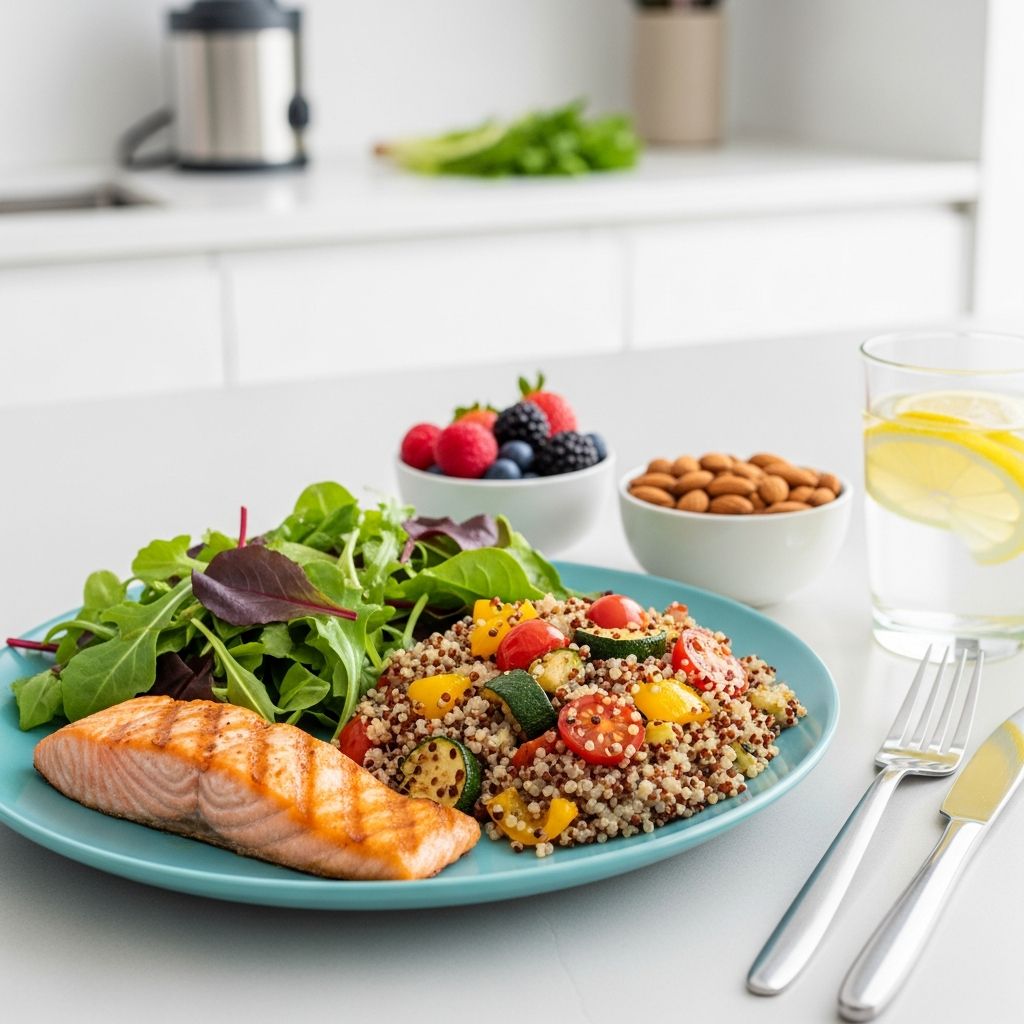
A simple template for meals ensures balance without complexity. Divide your plate as follows: half non-starchy vegetables, a quarter lean protein (palm-sized portion), a quarter complex carbohydrates, and a thumb-sized amount of healthy fats. This method stabilizes blood sugar, reduces cravings, and supports weight management.
- Proteins: Chicken, fish, eggs, tofu, legumes, Greek yogurt—include at every meal to boost metabolism.
- Vegetables: Leafy greens, broccoli, peppers—fill half your plate for fiber and volume with low calories.
- Carbs: Quinoa, sweet potatoes, whole grains—limit to 0-2 servings daily for controlled energy.
- Fats: Avocado, nuts, olive oil—100-200 calories per meal for fullness.
For breakfast, prioritize protein and fiber to break the overnight fast effectively. Lunches and dinners follow the plate model closely, while snacks bridge meals with 150-200 calorie options like nuts or yogurt.
Sample 7-Day Meal Plan for Postpartum Weight Loss
This plan totals around 1,800-2,200 calories daily, adjustable for activity level. Each day features simple, prep-friendly recipes using whole ingredients. Portions support breastfeeding without excess.
| Day | Breakfast (~350 cal) | Snack 1 (~150-200 cal) | Lunch (~400 cal) | Snack 2 (~150 cal) | Dinner (~450 cal) | Snack 3 (~150 cal) |
|---|---|---|---|---|---|---|
| Day 1 | 2 scrambled eggs with spinach and mushrooms, 1 slice whole-grain toast, handful berries | 1 boiled egg, carrot sticks | Grilled chicken salad with greens, cucumber, 1/4 avocado, olive oil dressing, quinoa | Hummus with celery | Baked salmon, roasted veggies, side salad | Greek yogurt with chia |
| Day 2 | Oatmeal with flaxseeds, berries, 1 boiled egg | Apple, handful almonds | Turkey salad with tomatoes, avocado, lemon dressing | Boiled egg | Grilled cod, Brussels sprouts, sweet potato | Dark chocolate square |
| Day 3 | Cottage cheese with berries, almonds, herbal tea | Pear, baby carrots | Quinoa bowl with chickpeas, veggies, lemon-olive oil | Hummus with cucumber | Chicken breast, zucchini, brown rice | Greek yogurt |
| Day 4 | Smoothie: spinach, banana, almond butter, almond milk, boiled egg | Mixed nuts, apple | Salmon salad with greens, feta sprinkle | Boiled egg | Turkey stir-fry with peppers, quinoa | Chia pudding |
| Day 5 | Scrambled eggs with tomatoes, feta, toast, orange | Banana, almonds | Chicken with mixed greens, quinoa | Greek yogurt with seeds | Baked shrimp, asparagus, salad | Berry mix |
| Day 6 | Greek yogurt parfait with nuts, berries | Apple, hummus veggies | Tofu salad with avocado, balsamic | Handful nuts | Grilled fish, broccoli, sweet potato | Dark chocolate |
| Day 7 | Eggs with veggies, whole-grain roll, pear | Carrots, boiled egg | Chickpea salad, pita | Yogurt | Salmon with roasted roots, greens | Almonds |
Customize based on preferences—swap proteins for vegetarian options like tofu. Prep salads and proteins in advance for busy days.
Essential Tips for Successful Meal Prepping
Meal planning saves time and prevents impulsive eating. Batch-cook proteins and chop veggies on weekends. Use glass containers for portion control. Consistent meal timing—3 meals plus 1-2 snacks—maintains energy and curbs hunger.
- Shop with a list: Focus on perimeter aisles for fresh produce, proteins.
- Early dinners: Eat by 6 PM to improve sleep and digestion.
- Track intuitively: Use an app initially, then rely on hunger cues.
- Incorporate movement: Pair diet with daily walks—no gym needed.
Nutrition Focus: Proteins, Fiber, and Hydration
Protein at every meal enhances satiety and preserves muscle during calorie deficits. Fiber from veggies combats constipation common postpartum. Healthy fats support brain health for both mom and baby via breast milk. Avoid processed foods; opt for whole sources to prevent inflammation and stalls in progress.
Include nutrient-dense picks: vitamin C-rich citrus for immunity, zinc from seafood for wound healing, selenium in nuts for thyroid function. Carbs are vital for lactation—don’t eliminate, but choose fibrous ones.
Common Challenges and Solutions
Fatigue and time constraints derail plans. Solution: Quick assemblies like smoothies or overnight oats. Cravings? Balance plates preempt them. Plateaus? Assess sleep and stress—cortisol hinders loss.
| Challenge | Solution |
|---|---|
| Low energy | Protein-fiber breakfasts, hydration |
| No time to cook | Batch prep, 10-min salads |
| Milk supply worries | Don’t drop below 1,800 cal; add oats, fenugreek |
| Plateaus | Vary routine, check portions |
Frequently Asked Questions
How soon after birth can I start weight loss?
Wait 6-8 weeks or until cleared by your doctor, especially if breastfeeding. Focus on healing first.
Will this plan affect my milk supply?
No, if calories stay adequate (2,000+ for nursing). Prioritize hydration and carbs.
Can non-breastfeeding moms use this?
Yes, reduce by 300-500 calories. Consult a professional for personalization.
What if I hate cooking?
Emphasize no-cook options: salads, smoothies, pre-chopped produce.
How much weight loss is safe?
0.5-1 lb/week to protect health and milk production.
Lifestyle Integration for Optimal Results
Diet alone isn’t enough—pair with gentle activity like stroller walks, aiming for 150 minutes weekly. Prioritize 7-9 hours sleep; poor rest elevates hunger hormones. Stress management via short meditations supports adherence.
Track non-scale victories: energy, mood, clothing fit. Patience is key—postpartum bodies need 6-12 months for full recovery.
References
- Healthy Diet Plan for Breastfeeding Moms to Lose Weight — Momcozy. 2023. https://momcozy.com/blogs/breastfeeding/diet-plan-for-breastfeeding-mothers-to-lose-weight
- A Dietitian’s Postpartum Weight Loss Plan — Abigail Taft Nutrition. 2024. https://www.abigailtaftnutrition.com/post/post-partum-weight-loss-plan
- Postpartum Diet Plan: Tips for Healthy Eating After Giving Birth — Healthline. 2025-08-29. https://www.healthline.com/health/postpartum-diet
- Tweaking Your Postpartum Diet to Help with Weight Loss — The Bloom Method. 2024. https://thebloommethod.com/blogs/blog/tweaking-your-postpartum-diet-to-help-with-weight-loss
- Postpartum Nutrition Guidelines — American College of Obstetricians and Gynecologists (ACOG). 2023-10-01. https://www.acog.org/womens-health/faqs/nutrition-during-pregnancy