Experiencing a positive pregnancy test following a miscarriage can evoke confusion, hope, or anxiety. This common occurrence stems primarily from residual human chorionic gonadotropin (hCG), the hormone detected by tests, which does not vanish immediately after pregnancy tissue expulsion. Understanding the biological processes, testing timelines, and emotional aspects empowers individuals to navigate this phase effectively.
Understanding hCG Persistence Post-Miscarriage
Human chorionic gonadotropin (hCG) is produced by placental cells during pregnancy. After a miscarriage, whether complete or incomplete, hCG levels decline gradually as the body clears pregnancy hormones and tissue. The half-life of hCG averages 24 to 36 hours, meaning levels halve roughly every day or so, but full clearance varies by individual factors like miscarriage gestational age, completeness of expulsion, and personal metabolism.
For early losses before 6 weeks, hCG may drop to undetectable within 2-4 weeks. Later miscarriages, especially those requiring intervention like dilation and curettage (D&C), often prolong this period up to 6-8 weeks. Serial blood tests measuring beta-hCG quantitatively track this decline; levels should fall by at least 50% every 48 hours post-loss. Persistent elevation beyond expected timelines warrants medical evaluation to rule out retained tissue or other issues.
Timeline for hCG Clearance and Test Negativity
The duration until a home pregnancy test turns negative depends on initial hCG peak and decline rate. Most sensitive tests detect as low as 10-25 mIU/mL, so faint lines may appear even as levels wane.
- Early miscarriage (4-6 weeks): Negative test typically within 2-3 weeks.
- Mid-first trimester loss (7-10 weeks): 4-6 weeks for negativity.
- Post-D&C or medication abortion: 3-8 weeks, with blood monitoring essential.
Urine tests lag behind blood assays by a few days due to lower sensitivity. Avoid testing too soon to prevent false positives; wait at least one full menstrual cycle or until bleeding ceases for accuracy.
Possible Reasons for Prolonged Positive Results
Beyond simple hormone persistence, several scenarios explain ongoing positives:
| Scenario | Description | Action Needed |
|---|---|---|
| Residual hCG | Normal after complete miscarriage; levels drop naturally. | Monitor with serial tests; retest in 1-2 weeks. |
| Retained Products of Conception (RPOC) | Placental fragments remain, sustaining hCG. | Ultrasound and possible D&C. |
| Molar Pregnancy | Abnormal tissue growth; rare but hCG stays high. | Immediate specialist referral. |
| New Pregnancy (Rare) | Conception shortly after loss. | Confirm with ultrasound after 6 weeks. |
| Ectopic or Chemical Pregnancy | Implantation outside uterus or very early loss. | Blood tests and imaging. |
Consult a healthcare provider if positives persist beyond 6 weeks, accompanied by pain, heavy bleeding, or fever, signaling potential complications like infection.
Interpreting Faint or Darkening Lines on Tests
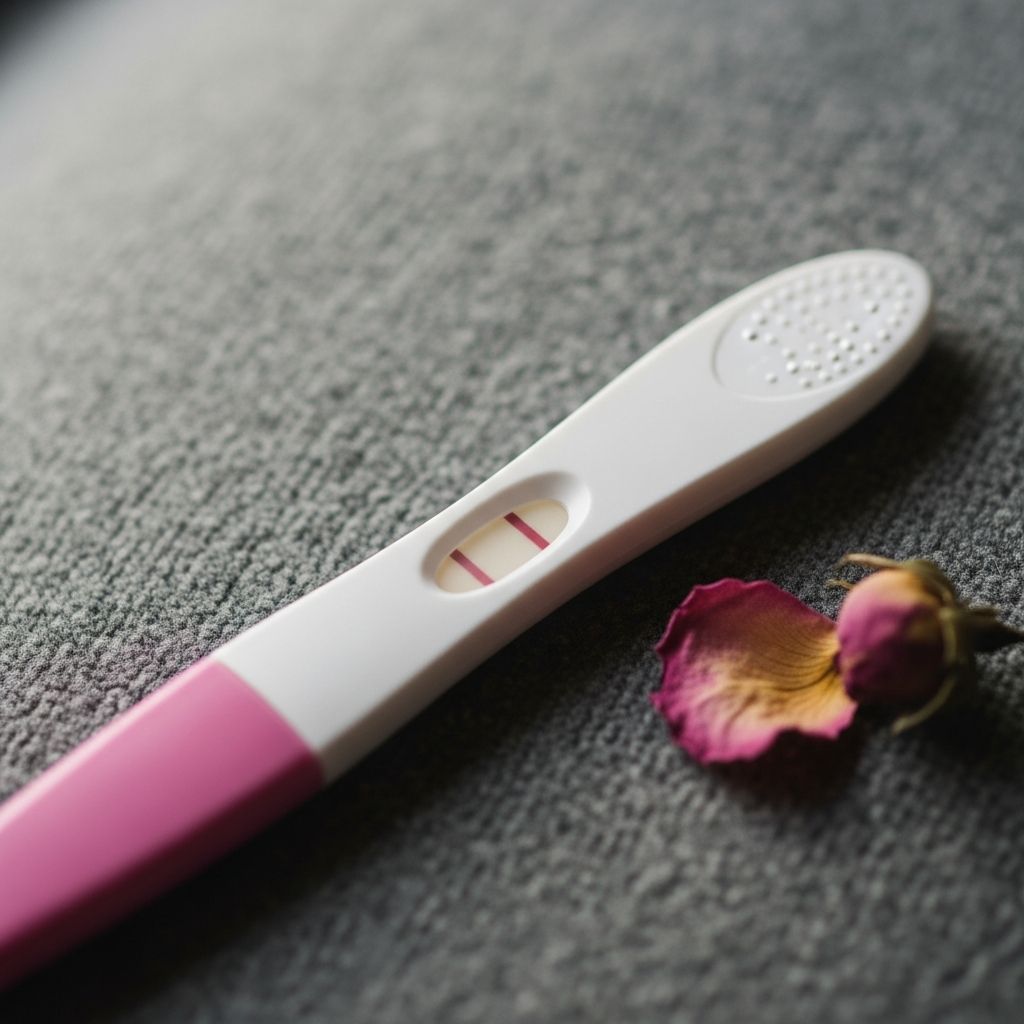
Faint lines indicate declining hCG, a reassuring sign of resolution. Darkening lines, conversely, suggest rising levels, possibly from new conception or pathology. Test progression offers clues:
- First test post-loss: Strong positive expected.
- 7-10 days later: Fainter line if resolving.
- Consistent or stronger: Seek evaluation.
Use first-morning urine for consistency, as it’s most concentrated. Digital tests provide clear ‘pregnant/not pregnant’ readouts, minimizing interpretation stress.
Emotional Impact and Coping Strategies
A positive test after loss reignites grief, blending hope with fear of recurrence. Hormonal fluctuations exacerbate mood swings, mimicking postpartum blues. Support strategies include:
- Joining miscarriage support groups for shared experiences.
- Journaling emotions to process loss.
- Practicing mindfulness or therapy focused on perinatal bereavement.
- Communicating openly with partners about readiness for future tries.
Studies affirm emotional recovery timelines vary; many feel prepared to try again within 3-6 months, aligning with physical readiness.
When to Resume Trying for Pregnancy
Traditional advice urged waiting 3 months for uterine healing and folate stores replenishment, but recent evidence challenges this. A landmark NIH-funded study in the EAGeR trial found women attempting conception within 3 months post-loss achieved higher live birth rates (53% vs. 36%) and faster pregnancies compared to those delaying. Similarly, 80% of women conceive successfully post-miscarriage, with sooner tries yielding better outcomes.
ACOG guidelines support resuming after one normal cycle if hCG normalizes, emphasizing emotional readiness. Risks like preterm birth or low birthweight do not increase with short intervals. Post-one miscarriage, future loss risk remains ~20%; after two, ~25%.
Fertility Outlook After One or More Losses
Reassuring statistics highlight resilience: Over 85% of women post-single miscarriage achieve successful pregnancies, dropping to 75% after two. Recurrent loss affects <5%; investigations probe genetics, clotting disorders, or uterine anomalies only after three losses.
Preconception care boosts odds: Folic acid 400-800 mcg daily, lifestyle optimizations (no smoking, moderate weight), and partner semen analysis if indicated.
Medical Monitoring and Interventions
Blood hCG tracking post-loss confirms resolution: Expect >50% drop every 48 hours until <5 mIU/mL. Ultrasound verifies empty uterus. If levels plateau, misoprostol or D&C evacuates retained tissue.
For recurrent cases, tests include karyotyping products of conception, antiphospholipid syndrome screening, and hysteroscopy. Low-dose aspirin or progesterone may aid select high-risk pregnancies per evidence.
Recognizing Signs of New Healthy Pregnancy
Distinguishing new from residual positivity requires caution. Viable pregnancies show doubling hCG every 48-72 hours early on, visible heartbeat by 6-7 weeks ultrasound. Symptoms like nausea may recur, but bleeding warrants prompt check.
Frequently Asked Questions
Can a positive test mean I’m pregnant again right after miscarriage?
Possible but uncommon; ovulation resumes 2 weeks post-loss, allowing quick conception. Confirm with doctor via quantitative hCG and ultrasound.
How long should I wait before testing again?
Wait 2-4 weeks post-loss or until one period; earlier tests likely positive from hCG tail.
Is it safe to try conceiving immediately?
Yes, per NIH research: Short intervals (<3 months) link to higher live birth rates without added risks.
What if hCG doesn’t drop?
May indicate retained tissue; seek ultrasound and possible intervention.
Does one miscarriage raise future risks?
Slightly; ~20% risk vs. 10-15% baseline, but most proceed to healthy births.
Building Resilience for Future Pregnancies
Armed with knowledge, individuals transform uncertainty into empowerment. Track cycles via apps, prioritize nutrition, and foster support networks. Success stories abound: 70% with up to three losses birth healthily. Patience, paired with proactive care, paves paths to rainbow pregnancies.
References
- Pregnancy After Miscarriage: The Sooner The Better, Study Says — Intermountain Healthcare. 2023. https://intermountainhealthcare.org/blogs/article/pregnancy-after-miscarriage
- Pregnancy After a Miscarriage — Henry Mayo Newhall Hospital. 2021-04-01. https://www.henrymayo.com/news-publications/news/2021/pregnancy-after-a-miscarriage/
- What are the Chances of Pregnancy after Miscarriage? — Clearblue (citing ACOG). 2024. https://www.clearblue.com/how-to-get-pregnant/chances-of-pregnancy-after-miscarriage
- Trying to Conceive After an Early Pregnancy Loss — National Institutes of Health (PMC). 2016-03-09. https://pmc.ncbi.nlm.nih.gov/articles/PMC4780347/
- Pregnancy after miscarriage: What you need to know — Mayo Clinic. 2024. https://www.mayoclinic.org/healthy-lifestyle/getting-pregnant/in-depth/pregnancy-after-miscarriage/art-20044134
- Pregnancy After Miscarriage — American Pregnancy Association. 2024. https://americanpregnancy.org/getting-pregnant/pregnancy-loss/pregnancy-after-miscarriage/