Mastering Mobile Lactation: A Comprehensive Guide for On-the-Go Mothers
For many lactating mothers, maintaining milk supply while managing work commitments, travel schedules, or active lifestyles presents a significant challenge. The ability to pump effectively outside the home environment requires thoughtful planning, appropriate equipment selection, and practical strategies tailored to individual circumstances. Understanding how to navigate portable breast pumping enables mothers to continue providing breastmilk to their infants while pursuing their professional and personal goals without sacrificing their well-being or their baby’s nutrition.
The transition from exclusive home-based nursing to managing pumping sessions across multiple environments demands a shift in mindset and preparation approach. Rather than viewing portable pumping as an obstacle, successful mobile mothers approach it as a logistics challenge with practical solutions. With the right combination of equipment, scheduling strategies, and organizational systems, pumping on the move becomes a manageable routine that fits seamlessly into a mother’s daily life.
Selecting the Right Pumping Equipment for Your Lifestyle
Equipment choice represents the foundation of successful portable pumping, as different pump styles offer distinct advantages depending on a mother’s specific situation. The variety of pumping options available today means that nearly every mother can find a solution matching her lifestyle, work environment, and personal preferences.
Understanding Different Pump Categories
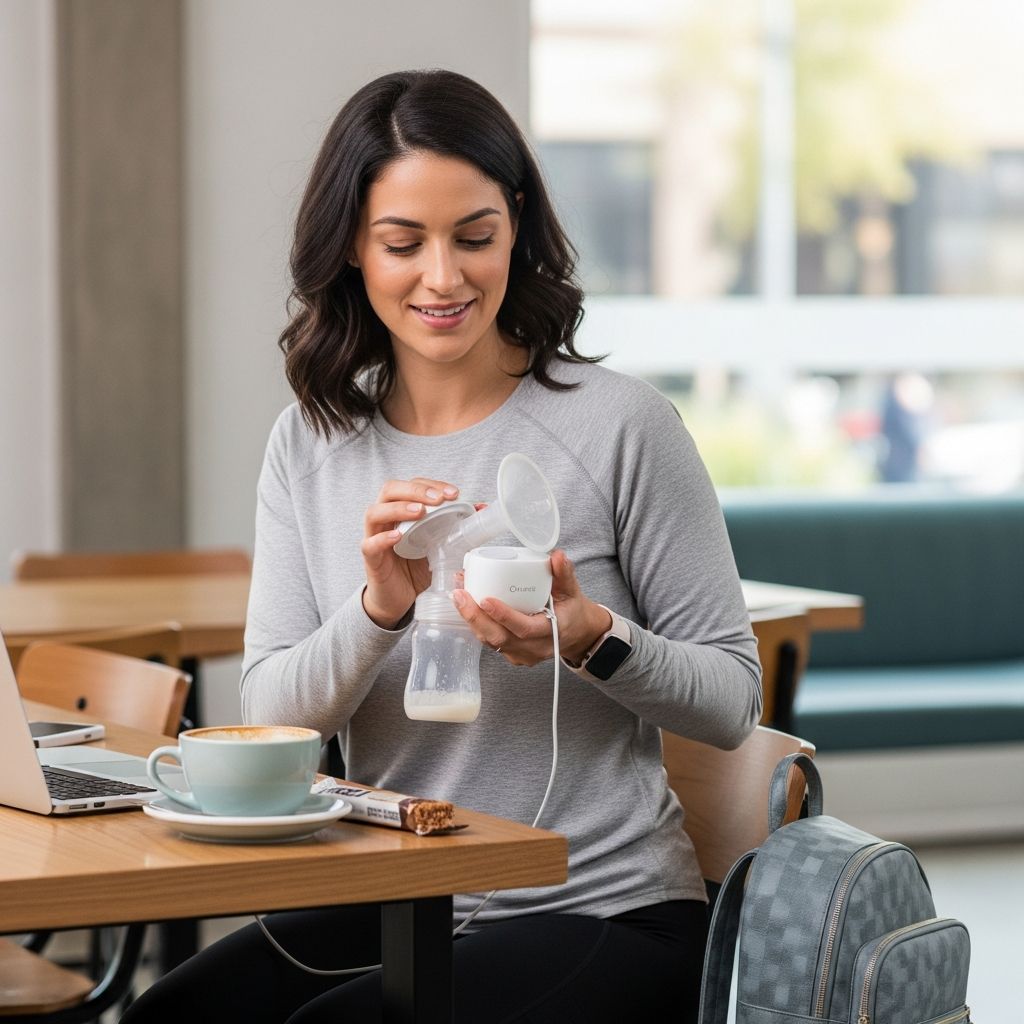
Wearable pumps have revolutionized on-the-go pumping by eliminating the need for external motors and hand-held components. These hands-free devices fit discreetly inside a nursing bra and allow mothers to move around, work, or attend meetings while expressing milk without visible equipment or cords. The streamlined design makes wearable pumps particularly valuable for mothers who pump frequently throughout their day or who need to pump in non-traditional settings.
Battery-powered electric pumps offer efficiency comparable to plug-in models while providing flexibility for mothers without consistent access to electrical outlets. These pumps deliver reliable suction and expression rates, making them suitable for extended work days or travel situations where outlet access may be limited. Ensuring the pump arrives fully charged and carrying backup batteries prevents interruptions to pumping schedules.
Manual pumps serve as valuable backup options or primary pumps for mothers who only occasionally need to pump outside the home. While manual pumping requires more physical effort than electric alternatives, these lightweight, portable devices require no charging and provide genuine flexibility for emergency situations or brief trips away from home.
Car adapters expand the functionality of plug-in electric pumps by enabling mothers to pump while driving during extended road trips. These practical accessories eliminate the need to compromise between portable pumping capability and the efficiency of full-powered electric expression.
Matching Equipment to Your Specific Circumstances
Mothers who maintain consistent office-based work schedules benefit from keeping a dedicated pump at their workplace, eliminating the daily transport burden while ensuring equipment availability during predictable pumping times. For mothers managing variable locations throughout their day—such as those attending multiple meetings, traveling between sites, or combining office and remote work—wearable or fully portable pumps offer superior flexibility and discretion.
International travel introduces additional considerations, including the need for universal power adapters to maintain electric pump functionality across different electrical systems. Mothers planning frequent or long-distance travel investment in a wireless or wearable pump prevents the complications associated with locating compatible outlets in unfamiliar environments.
Strategic Planning and Scheduling for Consistent Expression
The distinction between chaotic, stressful pumping experiences and manageable, integrated routines often comes down to advance planning. Mothers who establish clear schedules and communicate their pumping needs proactively experience significantly less stress and maintain more consistent milk supply.
Establishing Your Personal Pumping Timeline
A foundational principle guiding successful portable pumping involves matching expression frequency to your baby’s typical feeding schedule. This approach maintains milk production at levels sufficient to meet your infant’s nutritional needs while establishing predictable patterns that facilitate scheduling.
For mothers separated from their infants during extended work hours, creating a detailed schedule that specifies pumping times prevents the constant mental burden of determining when to express milk. Digital tools simplify this process—mothers can input their work itineraries into phone reminders or note-taking applications, pre-planning their pumping sessions alongside other commitments. This advance scheduling transforms pumping from an unexpected disruption into an anticipated, integrated part of the daily routine.
For mothers traveling across time zones, maintaining milk supply requires strategic thinking about when to pump relative to the original feeding schedule and the destination time zone. Synchronizing pumping sessions with the original time zone, when possible, supports optimal milk expression. This coordinated approach requires flexibility and advance consultation with any childcare providers managing the infant during travel.
Communicating Your Pumping Needs
Proactive communication with employers, meeting coordinators, and travel companions prevents scheduling conflicts and locates appropriate pumping environments. Mothers who provide advance notice about pumping requirements find that colleagues and supervisors readily accommodate these needs, while unexpected pump-timing announcements create unnecessary friction and stress.
When pumping in public venues, asking staff members about available private or semi-private spaces—such as unused offices, family restrooms, or dedicated lactation rooms—identifies comfortable pumping locations while avoiding the inadequate alternative of bathroom stalls. Many workplaces now recognize the legal rights and practical benefits of supporting nursing mothers, making such requests increasingly standard and expected.
Comprehensive Packing Systems and Supply Organization
The logistical challenge of portable pumping centers on ensuring all necessary supplies remain accessible without creating an overwhelming burden to transport. A methodical approach to packing and organizing pumping equipment prevents forgotten items and reduces daily stress.
Essential Pumping Supply Components
A functional portable pumping kit includes specific components that work together to support successful milk expression and storage:
- The breast pump itself, whether wearable, battery-powered, or manual
- Power cord, batteries, or manual mechanism appropriate to your pump type
- Collection bottles or containers compatible with your specific pump
- Flanges in appropriate sizes matching your individual breast anatomy
- Connectors, membranes, and tubing components specific to your pump model
- Dedicated cooler or insulated bag for storing expressed milk
- Ice packs or cooling elements designed for milk storage
- Storage bags or screw-top containers for longer-term milk preservation
- Hands-free pumping bra enabling comfortable, efficient expression
- Small cleaning supplies for washing pump components between sessions
Developing Your Personal Packing Routine
Mothers who assemble their complete pumping kit the evening before their departure day eliminate morning scrambling and reduce the likelihood of forgotten components. Designating a specific location—such as near the front door or in the car—for the assembled pumping bag ensures the kit remains accessible when departing for work or travel.
Maintaining duplicate sets of pump parts deserves special consideration in any portable pumping strategy. Extra flanges, valves, membranes, and tubing provide flexibility by allowing mothers to skip midday cleaning or pump multiple times without immediately cleaning components in public restrooms or inadequate facilities. This redundancy transforms cleaning from an urgent necessity into a manageable task completed in a more appropriate setting.
Establishing a dedicated pumping bag specifically designed for portable milk expression differs significantly from generic diaper bags. Specialized pumping bags feature interior organization compartments that keep pump components secure and separate from other items, prevent damage during transport, and enable rapid access during time-limited pumping sessions.
Addressing Milk Storage Realities
Successfully maintaining milk safety while pumping away from home requires understanding proper storage temperatures and timeframes. Insulated coolers with appropriate cooling elements preserve expressed milk quality throughout workdays, travel periods, and other extended outings. Investing in quality insulation prevents the common problem of milk spoilage due to inadequate temperature control during transportation.
Adapting Pumping to Diverse Travel Scenarios
Different travel contexts present unique pumping challenges requiring customized approaches and specific equipment considerations.
Air Travel Pumping Considerations
Flying while pumping introduces specific challenges around equipment security, electrical access, and privacy. Mothers traveling by air benefit from manual pumps or battery-powered devices that don’t require outlet access during flight hours. TSA regulations allow breast pumps and expressed milk through security screening with appropriate documentation, and many airports now feature dedicated lactation rooms providing private, comfortable spaces for nursing mothers and those pumping.
Extended Road Trip Strategies
Car-based travel offers different advantages and challenges compared to air travel. Car adapters enable mothers to use full-powered electric pumps during driving hours, though safe pumping requires pulling over or utilizing hands-free wearable pumps that don’t compromise driving attention. Battery-powered or manual alternatives support safe, manageable pumping during road trips when electrical access isn’t feasible.
International Travel Preparation
Travel beyond domestic borders introduces power compatibility challenges requiring advance preparation. Universal power adapters enabling international electric pump use should be packed in carry-on luggage rather than checked baggage, preventing complications from unexpected delays or layovers that could necessitate emergency pumping access.
Optimizing Pump Customization and Individual Preferences
Breast pumping effectiveness varies considerably among individuals, making pump customization and personal preference exploration essential components of successful portable pumping strategies. Different flange sizes accommodate individual anatomical variations, while suction strength preferences influence comfort and milk output.
Mothers benefit from practicing new pumping equipment at home before relying on portable pumps during work or travel situations. This practice period builds confidence, allows identification of comfortable settings and techniques, and prevents the frustration of troubleshooting unfamiliar equipment during time-limited pumping sessions in non-ideal environments.
Combining different pump types serves many mothers effectively—maintaining a traditional electric pump as a primary home option while using a wearable pump for portable situations optimizes both efficiency and convenience. This multi-pump approach accommodates varying circumstances without forcing mothers to compromise between ideal home pumping experiences and necessary portable functionality.
Managing Physical Well-Being During Portable Pumping
Successful portable pumping extends beyond equipment and scheduling to encompass the physical and nutritional support mothers require to sustain milk supply and overall health during pumping and travel.
Adequate hydration represents a critical but often overlooked aspect of maintaining milk supply. Nursing and pumping mothers require approximately 16 cups of water daily to support proper milk production and overall health maintenance. Mothers managing portable pumping schedules benefit from carrying reusable water bottles and intentionally consuming fluids throughout their day alongside regular meals and snacks.
Sufficient rest and stress management influence milk supply and overall maternal well-being during periods involving increased activity, travel, or schedule changes. Mothers managing return-to-work transitions or extended travel benefit from recognizing that milk supply may temporarily fluctuate due to stress and schedule changes, with recovery typically occurring as routines stabilize.
Practical protective measures prevent discomfort and embarrassment between pumping sessions. Disposable nursing pads in thicknesses matching individual milk flow patterns protect clothing from unexpected leakage, allowing mothers to maintain professional appearance and comfort throughout their day.
Addressing Common Portable Pumping Challenges
Lost or Forgotten Equipment
Maintaining backup pump components—extra flanges, valves, tubing, and membranes—prevents equipment loss or damage from compromising pumping schedules. Small carrying cases within the primary pumping bag organize these backup components, ensuring availability during supply emergencies.
Inadequate Pumping Facilities
While bathroom stalls represent a less-than-ideal pumping location, sometimes these spaces become necessary options during travel or in locations lacking dedicated lactation facilities. Portable wipes, hand sanitizer, and compact mirror attachments help mothers maintain hygiene in less-than-optimal environments.
Maintaining Milk Supply During Schedule Disruptions
Travel, work schedule changes, or unexpected complications occasionally disrupt established pumping routines. Maintaining consistency when possible—and then re-establishing normal patterns as circumstances permit—typically restores milk supply relatively quickly. Communicating schedule changes to childcare providers and adjusting expectations during transition periods reduces stress and supports successful return to normal patterns.
Frequently Asked Questions About Portable Breast Pumping
Can I use a wearable pump exclusively if I’m pumping frequently?
While many mothers successfully use wearable pumps as their primary pumping method, some find that combining a wearable pump with a traditional electric pump at home provides optimal efficiency and comfort. Individual experiences vary, so experimenting with different pump combinations helps identify your ideal solution.
How often should I clean pump parts when pumping multiple times daily?
Maintaining multiple sets of pump parts allows skipping between-session cleaning, with thorough washing and sterilization occurring once daily in a proper setting. This approach accommodates portable pumping situations where adequate cleaning facilities aren’t available during the workday.
What should I do if my milk supply decreases while pumping on the go?
Increased hydration, improved nutrition, adequate rest, and stress management support milk supply restoration. Maintaining consistent pumping frequency matching your baby’s typical feeding schedule also helps maintain adequate production.
Is it safe to store expressed milk in a regular cooler during work?
Yes, expressed milk can safely remain at room temperature for up to four hours, in an insulated cooler with ice packs for up to one day. Using a dedicated cooler with proper ice pack maintenance ensures milk safety during extended work and travel periods.
Can I pump while driving, or should I wait until stopped?
Hands-free wearable pumps can be used while driving since they require no hand-holding or attention. Traditional pumps should only be used when the vehicle is safely stopped to prevent accidents or safety compromises.
What’s the best pump for mothers who travel frequently?
Wireless, wearable, or lightweight portable pumps with battery operation provide maximum flexibility for frequent travelers. Having a backup manual pump ensures functionality even if batteries deplete or electrical systems fail.
References
- Tips and Tricks for Pumping and Storing Milk On-the-Go — Ameda. 2024. https://www.ameda.com/blogs/posts/tips-and-tricks-for-pumping-and-storing-on-the-go
- Tips for Pumping on the Go & Pumping in Public — YouTube, International Board Certified Lactation Consultant Bri. 2024. https://www.youtube.com/watch?v=231fn8K9Zpc
- 6 Moms Share Tips to Make On-the-Go Pumping Easier — Babylist. 2024. https://www.babylist.com/hello-baby/pumping-storage-travel-tips
- Nailing Pumping on The Go During Holiday Travel — Acelleron. 2024. https://acelleron.com/blog/nailing-pumping-on-the-go-during-holiday-travel/
- Tips and tricks for pumping on the go — The Lactation Network. 2024. https://lactationnetwork.com/blog/tips-and-tricks-for-pumping-on-the-go/
- 6 tips for using a breast pump on-the-go — Edgepark HealthInsights. 2024. https://www.edgepark.com/healthinsights/breast-pump/6-tips-for-using-a-breast-pump-on-the-go/
- A Stress-Less Guide to Pumping or Breastfeeding While Traveling — Happiest Baby. 2024. https://www.happiestbaby.com/blogs/parents/pumping-while-traveling