Discover how the Ponseti casting phase gradually reshapes a baby’s clubfoot using gentle, repeated casts instead of major surgery. This guide walks parents through the process in clear language, from the first appointment to the final cast and what comes next.
What Is Clubfoot and Why Casting Helps
Clubfoot is a condition present at birth in which a baby’s foot is turned inward and often downward, making it difficult or impossible for the sole to rest flat on the ground. The bones, tendons, and ligaments are normal tissues, but they are positioned and tightened in a way that causes a twisted shape.
The Ponseti method uses a series of gentle stretches and casts to gradually shift the foot into a better position while a baby’s tissues are still soft and flexible. Instead of forcing a single big change, the treatment relies on many small, safe adjustments over several weeks.
Overview of the Ponseti Casting Phase
The casting phase is usually the first step in Ponseti treatment and often begins within the first weeks of life. During this time, your baby will receive new casts on a regular schedule until the foot is corrected as much as possible.
- Gentle stretching of the foot at each visit.
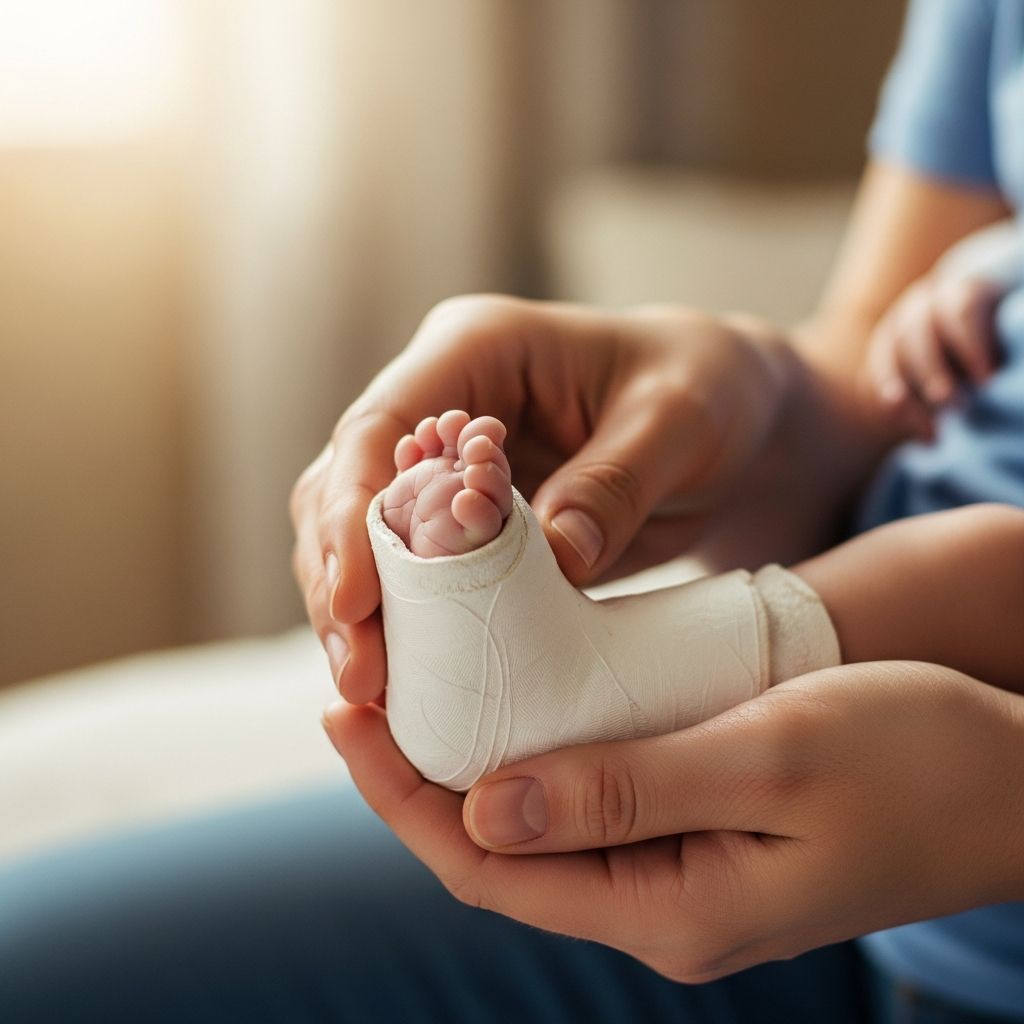
- Application of a new plaster or fiberglass cast from toes to thigh.
- Regular cast changes, often about once a week, for several weeks.
- Possible minor procedure on the Achilles tendon near the end of casting.
Starting Treatment: The First Visit
At the first appointment, the care team examines your baby’s feet, legs, hips, and overall health, and explains the Ponseti plan. Many parents feel nervous at the idea of casting a newborn, so this visit is also a chance to ask questions and understand each step.
Before the first cast goes on, the clinician gently massages and positions the foot toward a more natural alignment. No sharp or sudden movements are used; instead, the foot is guided just far enough so that the new position can be safely held in a cast.
How Each Weekly Cast Works
Each new cast builds on the correction achieved by the previous one. The process follows a sequence, usually addressing the inward twist and high arch first, then the heel and ankle position.
- Before casting, the provider stretches the foot toward the desired direction.
- The cast is applied in layers, starting at the toes and moving up the leg.
- The knee is typically bent to help keep the cast in place and improve the correction.
- Once the cast dries, it holds the new position until the next visit.
Typical Casting Timeline
Every child is different, but most babies need several casts to achieve full correction. The total time in casts is usually measured in weeks rather than months.
| Week | What Usually Happens |
|---|---|
| Week 1 | Initial evaluation, first gentle stretch, and first long-leg cast applied. |
| Week 2 | First cast removed, foot inspected, second cast applied with improved alignment. |
| Week 3–5 | Ongoing weekly cast changes with progressive straightening of the forefoot and heel. |
| Week 5–7 (often) | Final corrective casts; many babies have a minor Achilles tendon procedure and one last cast. |
Some babies need fewer casts, while others require a couple more, depending on how stiff the foot is and how early treatment begins. Your provider will adjust the pace and number of casts to your child’s specific needs.
The Achilles Tendon Procedure (Tenotomy)
Even after several casts, many babies still have a tight Achilles tendon, which limits the ankle’s ability to flex upward. To correct this, a brief procedure called a tenotomy is often performed near the end of casting.
During a tenotomy, the tendon at the back of the ankle is carefully cut so it can lengthen as it heals. The foot is then placed into a final cast that holds the ankle in a more upward (dorsiflexed) position while the tendon regrows at a better length.
What Parents Can Expect at Each Visit
Ponseti casting visits are usually short outpatient appointments, but they follow a predictable rhythm. Knowing what to expect can make the experience less stressful for both you and your baby.
- Cast removal, often with a special saw that vibrates but is designed not to cut skin.
- Skin check to look for redness, sores, or irritation.
- Assessment of how well the foot is correcting and planning of the next adjustment.
- Gentle stretching and positioning, followed by application of the new cast.
- Time for questions about cast care, comfort, and next steps.
Your Role in Cast Care at Home
Between visits, your main job is to keep the cast dry, clean, and intact, and to watch for signs of trouble. Good cast care helps prevent skin problems and ensures the foot remains in the correct position.
- Keep the cast dry during diaper changes by folding the top edge of the diaper away from the cast and using barriers if needed.
- Avoid bathing that immerses the cast; sponge baths are usually safer.
- Never insert objects or powders down the cast to relieve itching.
- Check toes several times a day for warmth, color, and movement.
Warning Signs: When to Call the Clinic
While problems are uncommon, a cast that is too tight, too loose, or damaged needs prompt attention. Early contact with your care team can prevent complications and keep treatment on track.
- Swollen, very pale, blue, or cold toes.
- Persistent crying that seems related to the cast or leg discomfort.
- Strong or worsening odors, drainage, or signs of skin breakdown at the cast edges.
- Cracks, soft spots, or slipping of the cast on the leg.
Comforting Your Baby During Casting
Babies usually tolerate Ponseti casting very well, especially when parents stay close, hold them, and help keep them calm. The stretching and casting may cause brief fussiness, but the procedure is not meant to be painful.
- Feed or offer a pacifier during casting if the clinic allows it.
- Bring a favorite blanket or toy for familiarity.
- Hold, rock, or gently talk to your baby after the cast is applied.
- Dress your baby in loose clothing that fits easily over the casts.
Living Life With Casts On
Daily routines will change a bit while your baby is in casts, but most families quickly adapt. Babies can still be cuddled, taken out for walks, and included in normal family activities with small adjustments.
- Use wider clothing, such as larger onesies or sleeping sacks, to fit over both legs.
- Try different carrying positions to support the weight of the casts.
- Use extra padding in car seats or strollers as recommended by your care team to protect the casts and keep the hips well aligned.
From Casting to Bracing: What Comes Next
When the casting phase is complete and the foot looks straight, treatment is not truly over. To keep the correction, most babies transition to a special brace that holds both feet in an outward, slightly upward position.
This bracing phase usually starts immediately after the final cast is removed. Proper use of the brace is essential because clubfoot has a strong tendency to drift back toward its original position if the brace is not worn as directed.
Benefits of Ponseti Casting Compared With Major Surgery
For most children, Ponseti casting greatly reduces the need for extensive reconstructive surgery. Instead of cutting and rearranging many structures at once, the method relies on gradual remodeling as the child grows.
- Typically less scarring and fewer long-term stiffness problems than large operations.
- High success rates when treatment begins early and bracing instructions are followed.
- Feet that are usually flexible, functional, and able to fit in regular shoes as the child grows.
Frequently Asked Questions About Ponseti Casting
Is Ponseti casting painful for my baby?
The stretching used in Ponseti casting is gentle and controlled, and most babies tolerate it very well. Your baby may fuss from being handled or held still, but the goal is to avoid pain, and any strong discomfort should be reported to the care team.
How long will my baby need casts?
Many babies complete the casting phase in several weeks, often with one cast per week. The exact number of casts depends on the initial severity of the clubfoot, how quickly the tissues respond, and whether any additional adjustments are needed.
Can my baby move and grow normally while in casts?
While the lower legs and feet are held in place, babies still move their hips, arms, and trunk freely. Growth continues normally, and the casts are changed often enough to accommodate your child’s rapid early growth.
What if the cast gets wet or soiled?
A wet cast can soften, lose its shape, and irritate the skin underneath. If the cast becomes very wet, heavily soiled, or develops a strong odor, contact your care team for advice or an earlier cast change.
Will my child need treatment again later in life?
When casting and bracing are done correctly, many children grow up with feet that function much like those of their peers. Some may need checkups or minor adjustments as they grow, but the goal is long-term, stable correction that allows normal walking, running, and play.
Key Takeaways for Parents
- Ponseti casting corrects clubfoot gradually through repeated gentle stretches and long-leg casts.
- Most babies need several weeks of casting, sometimes followed by a brief Achilles tendon procedure and a final cast.
- Careful cast care at home and prompt reporting of concerns keep treatment safe and effective.
- After casting, a bracing phase is critical to maintain the correction and reduce the chance of relapse.