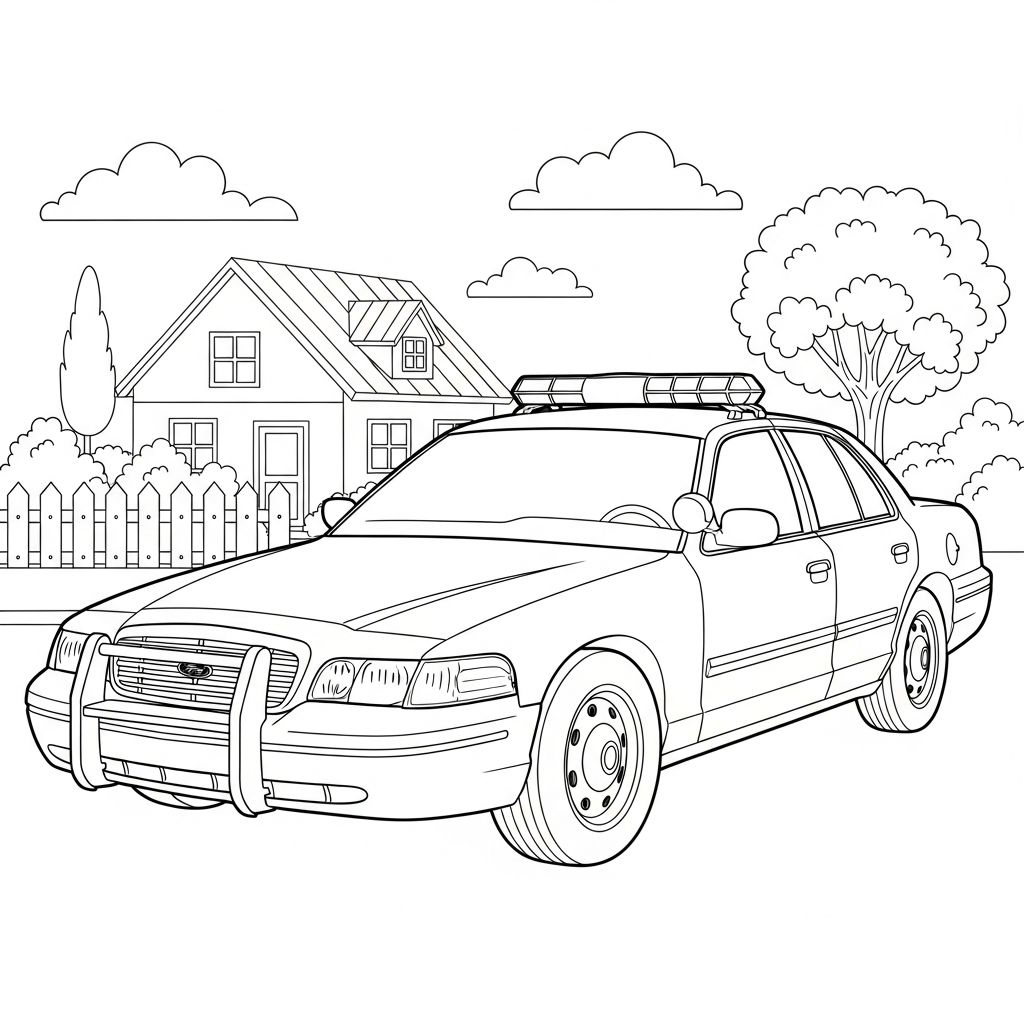
Police car coloring pages can do far more than fill a rainy afternoon; they can spark conversations about safety, introduce children to community helpers, and build essential early-learning skills. When used thoughtfully, a simple outline of a patrol car becomes a gateway to curiosity, creativity, and calm family time.
Why Kids Love Police Car Coloring Pages
Children are naturally fascinated by loud sirens, flashing lights, and vehicles with important jobs, which makes police car coloring pages instantly engaging. These pages connect what kids see in real life, books, or cartoons with something they can touch and change using their own color choices.
Because police cars symbolize action and protection, many children enjoy imagining the stories behind the picture while they color: where the car is going, who it might be helping, and what the officers’ day is like. That imaginative layer keeps them focused longer and makes coloring feel like play, not work.
Developmental Benefits of Police-Themed Coloring
Coloring might look simple, but it supports a wide range of important skills for toddlers, preschoolers, and early elementary children. When kids color police cars, they practice careful hand movements, visual tracking, and planning, all at once.
As they stay inside the lines of doors, windows, wheels, and sirens, children develop the fine motor control and hand–eye coordination that later support writing, cutting, and other classroom tasks. Choosing colors and deciding where to place them also builds early decision-making and problem-solving skills.
Cognitive and Language Skills
- Learning and using new words like “patrol,” “badge,” “sirens,” “emergency,” and “radio.”
- Practicing counting (wheels, windows, lights) and comparing shapes (round wheels vs. rectangular doors).
- Strengthening attention span as children stick with a single picture until it feels “finished.”
Emotional and Social Benefits
- Coloring can be calming, giving kids a quiet way to unwind after school or before bedtime.
- Talking about police officers while coloring helps children explore feelings about safety, rules, and fairness.
- Collaborating on a shared picture with siblings or friends encourages turn-taking and cooperation.
Teaching About Community Helpers Through Coloring
Police car coloring pages are a gentle way to introduce the idea that people in the community have different jobs that help keep everyone safe and organized. The police car becomes a symbol of responsibility, teamwork, and service.
Instead of focusing only on sirens and speed, you can emphasize positive roles: directing traffic near schools, helping people who are lost, or responding when someone calls for help. This framing builds trust and appreciation for community helpers while remaining age-appropriate.
Key Concepts to Discuss While Coloring
- What police officers do every day (helping, protecting, giving directions, responding to emergencies).
- How and when to call emergency numbers in a calm, simple way appropriate to your child’s age.
- The idea that rules—like traffic laws—exist to keep everyone safer, not just to punish.
Creative Variations on Police Car Coloring Pages
To keep kids excited, treat police car coloring pages as a starting point, not the final product. You can easily turn a single printable into a mini art project, storytelling prompt, or early science and social studies lesson.
Below is a table of simple twist ideas you can apply to almost any police car coloring page.
| Activity Idea | What to Do | Skills Supported |
|---|---|---|
| Design a New Patrol Car | Invite kids to add extra tools, different colors, or new logos to the police car. | Creativity, design thinking, flexible problem-solving. |
| Draw the Neighborhood | Have children draw buildings, trees, roads, or a park around the car. | Spatial awareness, storytelling, environmental awareness. |
| Make a Police Fleet | Print multiple pages and color each car for a different job (traffic, K-9, highway). | Categorization, vocabulary, comparison skills. |
| Turn It Into a Comic | Cut out finished cars and glue them onto folded paper to make a short picture story. | Narrative skills, sequencing, imagination. |
| Lights and Sirens Challenge | Use only certain colors (like blue, red, yellow) for lights and accessories. | Color recognition, following directions, self-control. |
Adapting Pages for Different Ages
Police car coloring pages can work for a wide age range if you match the level of detail and the kind of challenge to your child’s stage of development. Younger kids need large, simple shapes, while older kids can handle complex details and extra tasks layered onto the page.
You can even use the same basic design in multiple ways: toddlers may dab color loosely inside big shapes, while older children create realistic shading, patterns, or backgrounds that show time of day and weather.
Toddlers (Ages 2–3)
- Choose bold outlines with large areas like the car body and windows.
- Offer chunky crayons or washable markers that are easy to grip.
- Focus on naming simple features: “wheel,” “door,” “light,” “car.”
Preschoolers (Ages 3–5)
- Add simple instructions like “Color the lights red and blue” or “Circle the wheels.”
- Invite kids to draw a police station, road signs, or people near the car.
- Start short conversations about how officers help children and families.
Early Elementary (Ages 6–8)
- Offer more detailed police cars with mirrors, logos, and equipment visible.
- Encourage careful coloring, shading, and adding license plates or numbers.
- Combine coloring with short writing prompts like “Write a sentence about where this car is going.”
Simple Safety and Respect Messages to Add
While kids are relaxed and focused on coloring, they are often more open to short, clear safety reminders. Integrating these messages into the activity prevents them from feeling like a lecture and helps children connect abstract rules to concrete images.
Choose one or two ideas at a time so your child does not feel overwhelmed, and keep the tone calm, reassuring, and age-appropriate.
Ideas for Gentle Safety Talks
- Explain that police officers can be people to turn to if a child is lost or in trouble.
- Talk about crossing the street safely and how officers may help at crosswalks or busy intersections.
- Introduce the concept of emergency numbers, emphasizing they are for real emergencies only.
Using Police Car Pages in Homeschool and Classrooms
Police car coloring pages pair easily with lessons on transportation, community helpers, or safety in both homes and classrooms. Because coloring is low-pressure and familiar, it works well as a warm-up, a center activity, or a transition between more demanding tasks.
Educators and caregivers can link the coloring sheet to books about community workers, short videos, role-play corners, or visits from local officers to reinforce learning through multiple senses.
Lesson Tie-In Ideas
- Community Helpers Week: Color different helper vehicles (police, fire, ambulance) and compare their roles.
- Traffic and Signs: Add stop signs, crosswalks, and traffic lights to the page, then practice what each symbol means.
- Story Time: After reading a book about police officers, let kids color while discussing the main events of the story.
Making Coloring Time Calm and Enjoyable
To get the most from police car coloring pages, set up an environment that feels inviting rather than rushed. A small basket of coloring tools, comfortable seating, and a flat surface can make a big difference in whether kids linger and relax.
Let children lead when possible: they may want a pink police car, rainbow sirens, or a nighttime scene. Giving them ownership over those choices encourages creative risk-taking and shows that art is about expression, not perfect realism.
Quick Setup Tips for Caregivers
- Print a few extra pages in case kids want to start over or try a new idea.
- Offer a mix of tools—crayons, colored pencils, washable markers—so kids can experiment with different textures.
- Display finished pages on the fridge or a bulletin board to celebrate effort and persistence.
Eco-Friendly and Organized Printing Habits
When printing multiple police car coloring pages, small choices can help reduce waste and keep clutter under control. Printing two pages per sheet when appropriate or reusing the blank side of older printouts are simple options that still give children plenty of space to create.
Keeping printed pages and completed artwork in a folder or binder also makes it easier for kids to revisit favorite designs or see how their coloring skills improve over time.
Frequently Asked Questions
1. At what age can kids start using police car coloring pages?
Most children can begin using very simple police car coloring pages around age two, as soon as they show interest in holding crayons and making large marks on paper. For younger toddlers, choose big, uncomplicated outlines and focus on exploring color rather than staying inside the lines.
2. How can I use these pages to teach respect for police?
Use the coloring time to talk about how officers help keep neighborhoods safe, protect people, and respond when someone needs help. Share calm, positive examples—like directing traffic near schools or helping someone who is lost—so children associate the police car with care and responsibility.
3. What if my child is nervous or fearful of police cars and sirens?
If your child is anxious, move slowly and let them set the pace, starting with quiet conversations while coloring a police car parked calmly rather than racing with sirens on. Emphasize the helpful side of their work and reassure your child that loud sirens are signals used to reach people who need help faster.
4. Can older kids still benefit from coloring police cars?
Yes, many older children and even adults appreciate coloring as a way to unwind and express creativity. For bigger kids, choose more detailed designs and invite them to experiment with shading, realistic color schemes, or even designing their own fictional police departments and logos.
5. How often should we use coloring pages as an educational tool?
There is no strict rule, but weaving coloring into your weekly routine a few times can balance fun with subtle skill-building. Alternating themes—police cars one day, other community helpers or nature scenes another—keeps interest high while reinforcing a wide range of concepts.