Pneumonia can be frightening, especially when it strikes someone young and usually healthy. For teenagers, this common lung infection can range from mild and annoying to serious and exhausting. Knowing how to recognize symptoms early, when to seek help, and how to support recovery makes a big difference.
What Exactly Is Pneumonia?
Pneumonia is an infection that causes inflammation and fluid buildup in the tiny air sacs of the lungs called alveoli. When these air sacs fill with fluid or pus, it becomes harder for oxygen to move into the blood, leading to cough, fever and trouble breathing.
In teens, pneumonia is most often caused by:
- Viruses – such as flu or other respiratory viruses, which are the most common cause in school-aged children.
- Bacteria – including Streptococcus pneumoniae and Mycoplasma pneumoniae, which may cause more severe or “walking” pneumonia.
- Rarely, fungi – usually in people with weakened immune systems.
The infection can affect one lung (sometimes called unilateral) or both lungs, and can be mild enough to manage at home or serious enough to require hospital care.
How Teens Get Pneumonia
The germs that cause pneumonia spread easily, especially in crowded places like schools, dorms, buses or sports teams.
Common ways pneumonia starts include:
- Breathing in droplets from someone who is coughing, sneezing or talking nearby.
- Developing pneumonia as a complication after a cold, flu, COVID-19 or another respiratory infection.
- Less commonly, from inhaling food, drink or stomach contents into the lungs (aspiration pneumonia), usually in people who are drowsy or have swallowing problems.
Although pneumonia itself is not considered directly contagious, the viruses and bacteria that cause it are. That means you can catch the underlying infection, but not everyone who gets it will go on to develop pneumonia.
Types of Pneumonia You Might Hear About
| Type | What It Means | Typical Features in Teens |
|---|---|---|
| Community-acquired pneumonia | Infection caught outside a hospital or health facility. | Most common in otherwise healthy teens; often follows a cold or flu. |
| Hospital-acquired pneumonia | Develops during or after a hospital stay. | Less common in teens; tends to be more serious, often in people who are already very ill. |
| Walking pneumonia | Milder pneumonia, often caused by Mycoplasma pneumoniae. | Persistent cough and fatigue but symptoms may be mild enough to stay active; can still feel very run down. |
| Viral pneumonia | Pneumonia caused by viruses like flu or COVID-19. | Flu-like symptoms; often improves with rest and supportive care. |
| Bacterial pneumonia | Pneumonia caused by bacteria, often more intense. | Higher fever, faster breathing, more severe illness; usually needs antibiotics. |
Common Signs and Symptoms in Teens
Symptoms can come on suddenly or build up over a few days. They also vary depending on whether the cause is viral or bacterial.
Main Symptoms to Watch For
- Cough – may be dry or produce yellow, green or occasionally bloody mucus.
- Fever – often with chills and sweating.
- Shortness of breath – feeling winded or breathing faster than usual, especially with activity.
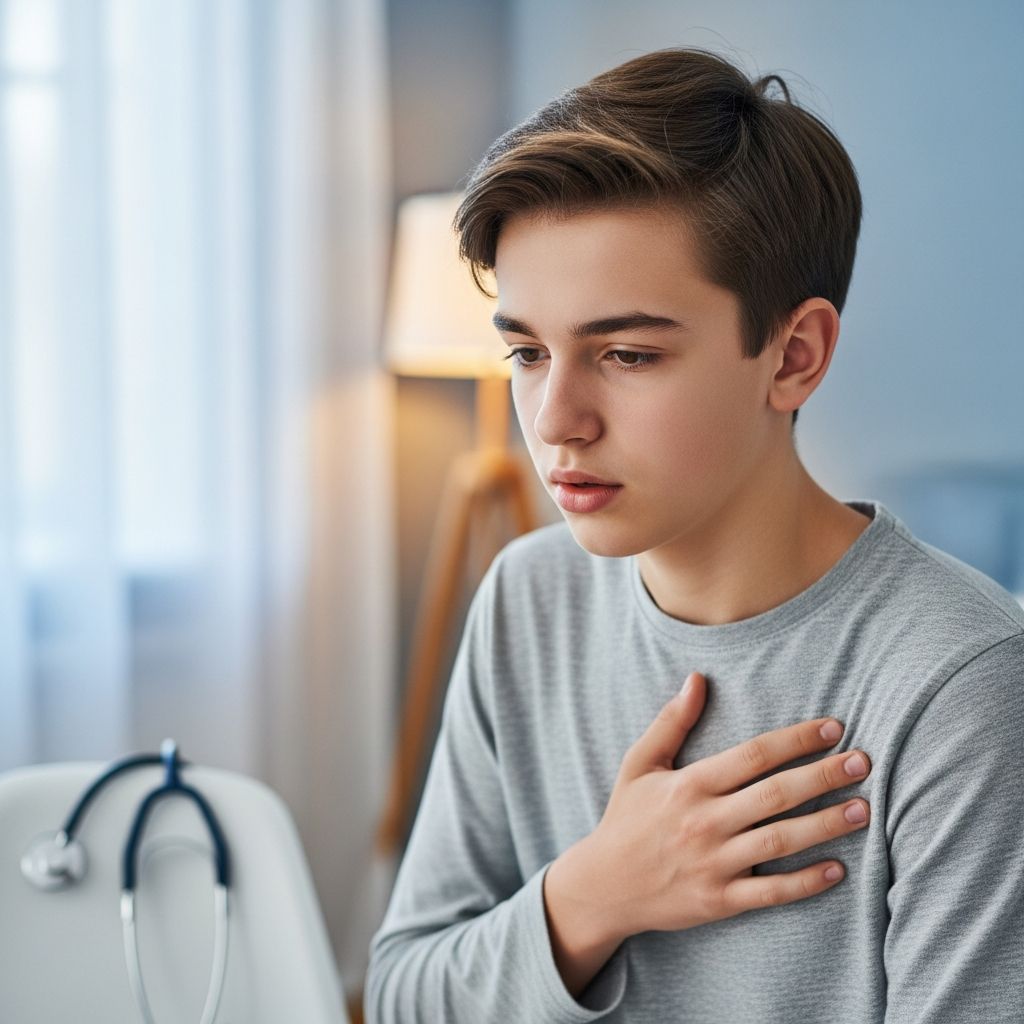
- Chest pain – may feel sharp and worse when breathing deeply or coughing.
- Fatigue and weakness – feeling unusually tired, even with simple activities.
Other Possible Symptoms
- Headache, muscle aches and an overall achy body.
- Loss of appetite, nausea, vomiting or diarrhea.
- Feeling confused or out of it – more common in older adults, but severe infections can cause this in younger people too.
- Bluish lips or fingertips, which can signal not enough oxygen and is an emergency sign.
Some teens with walking pneumonia might have milder symptoms, such as a nagging cough and tiredness that last for weeks, without very high fever.
When to Seek Medical Help
Because pneumonia can become serious, especially if ignored, it is important to know when to see a doctor.
Call a Doctor or Clinic Soon If a Teen:
- Has a cough with fever that lasts more than a day or two.
- Feels short of breath or is breathing faster than normal, even at rest.
- Has chest pain when breathing in or coughing.
- Feels unusually tired or weak, or cannot manage normal school or activities.
- Is vomiting or unable to drink enough fluids.
Seek Emergency Care Right Away If:
- Breathing is very difficult, fast or noisy.
- Lips, face or fingertips look blue or gray.
- There is confusion, extreme sleepiness or difficulty waking the person.
- Chest pain is severe or suddenly worse.
- There is a very high or rapidly rising fever that does not improve with fever-reducing medicine.
Teens with long-term health conditions (such as asthma, heart disease or immune problems) may need medical assessment sooner, even if symptoms appear mild.
How Doctors Diagnose Pneumonia
Diagnosis usually starts with questions about symptoms, how long they have been present and any recent illnesses or exposures. A physical exam focuses on breathing and the chest.
Doctors may:
- Listen to the lungs for crackles, wheezing or decreased breath sounds using a stethoscope.
- Check heart rate, breathing rate, oxygen levels and temperature.
Additional tests may be needed, especially if a teen is very unwell or not improving:
- Chest X-ray – looks for areas of infection or fluid in the lungs.
- Blood tests – can show signs of infection and, sometimes, the likely cause.
- Sputum (mucus) tests – may identify specific bacteria or other germs.
- Pulse oximetry – a small sensor on the finger that checks how much oxygen is in the blood.
In many mild cases, especially in otherwise healthy teens, doctors can diagnose pneumonia based on history and physical exam alone.
Treatment Options for Teens with Pneumonia
Treatment depends on what caused the pneumonia, how sick the teen is and whether they have any other medical problems.
At-Home Treatment for Mild Cases
Most otherwise healthy teenagers with mild pneumonia can be treated at home with:
- Antibiotics – if a bacterial cause is likely. It is important to take the full course exactly as prescribed, even if symptoms start to improve early.
- Rest and sleep – the body needs extra energy to fight infection.
- Fluids – water, soup, and other drinks help prevent dehydration and keep mucus looser and easier to cough up.
- Fever and pain relief – medications like paracetamol (acetaminophen) or ibuprofen may be recommended to reduce fever and chest discomfort, following medical advice and package directions.
- Cough support – sometimes, a mild cough medicine or honey (for teens, not infants) may be suggested, but cough is part of clearing the lungs, so strong cough suppressants are usually avoided unless prescribed.
Viral pneumonia does not improve with antibiotics. In that case, treatment focuses on managing symptoms while the immune system clears the infection.
Hospital Treatment for More Serious Illness
Some teens need hospital care, particularly if they:
- Have trouble breathing or low oxygen levels.
- Are dehydrated or cannot keep down fluids.
- Have very high fever, confusion or other signs of severe infection.
- Have serious underlying health conditions.
In hospital, treatment may include:
- Antibiotics through a vein (IV) for bacterial pneumonia.
- Oxygen through a mask or nasal tubes to help with breathing.
- IV fluids if drinking is not enough or not possible.
- More detailed testing to check for complications like fluid around the lungs (pleural effusion) or lung abscess.
Recovery: What to Expect
Recovery times vary. Many teens begin to feel much better within 2–4 weeks, but cough and tiredness can last longer, especially after a more serious infection.
Typical Recovery Timeline
- First few days: fever and worst symptoms gradually start to ease after treatment begins, especially with bacterial pneumonia and antibiotics.
- 1–2 weeks: breathing improves; energy slowly returns but heavy exercise may still feel difficult.
- Several weeks: lingering cough and fatigue may continue, but should steadily improve.
In some cases, particularly after severe pneumonia or in teens with other medical conditions, full recovery can take several months.
Tips to Support Healing
- Follow medicine instructions carefully; never stop antibiotics early unless a doctor advises.
- Prioritize sleep and rest; schedule lighter days as energy comes back.
- Drink enough fluids so urine stays pale yellow.
- Avoid smoking and vaping entirely; both irritate the lungs and slow healing.
- Ease back into sports and workouts gradually, starting with light activity.
- Return for follow-up appointments if recommended, especially after more severe pneumonia.
Possible Complications (and Why Follow-Up Matters)
Most teens recover fully, but pneumonia can sometimes lead to complications. These are more likely if treatment is delayed or the infection is very severe.
- Pleural effusion – fluid buildup around the lungs. If infected, it may need to be drained.
- Lung abscess – a pocket of pus in the lung that may require longer antibiotics or drainage.
- Worsening breathing problems – especially in teens who already have asthma or chronic lung disease.
- Spread of infection – very rarely, infection can spread into the bloodstream (sepsis) and cause serious illness.
Prompt medical care and sticking with treatment significantly reduce the chance of these complications.
How Teens Can Help Prevent Pneumonia
Not every case of pneumonia can be prevented, but healthy habits and vaccines make it less likely and can reduce how severe it becomes.
Protection Through Vaccines
- Flu vaccine every year – reduces the risk of flu-related pneumonia.
- COVID-19 vaccine – lowers the chance of serious lung infection from the virus.
- Pneumococcal vaccines – recommended for certain high-risk groups and younger children; they help prevent infections from Streptococcus pneumoniae.
Everyday Habits That Lower Risk
- Wash hands often, especially after school, sports and public transport.
- Avoid close contact with people who are very sick when possible.
- Cover coughs and sneezes with a tissue or elbow.
- Do not smoke or vape; avoid secondhand smoke where possible.
- Maintain a balanced diet, regular sleep and physical activity to support the immune system.
Frequently Asked Questions About Pneumonia in Teens
Q1: Can a healthy teen really get very sick from pneumonia?
Yes. While most healthy teenagers recover well, pneumonia can sometimes become serious and require hospital care, especially if treatment is delayed or the infection is caused by aggressive bacteria.
Q2: Is it okay to go to school or practice with pneumonia?
Usually no. A teen with pneumonia needs rest and is often contagious in the early stages, depending on the cause. Returning too soon can slow recovery and spread infection to others. A healthcare professional should guide when it is safe to go back.
Q3: How do I know if it is just a bad cold or pneumonia?
Colds often cause a stuffy nose and mild cough, but pneumonia is more likely when there is a persistent fever, fast or difficult breathing, chest pain with breathing or a cough that keeps worsening instead of improving. Any of these signs should be checked by a doctor.
Q4: Can pneumonia come back?
Yes, it can. Having pneumonia once does not guarantee it will never return. Teens with asthma, immune problems or exposure to smoke may be at higher risk of repeated infections. Good prevention habits and managing underlying conditions help lower this risk.
Q5: Does everyone with pneumonia need an X-ray?
No. In some mild cases, especially in otherwise healthy teens, doctors may diagnose and treat pneumonia based on symptoms and examination alone. Chest X-rays are more often used when symptoms are severe, unusual or not improving as expected.
References
- Pneumonia – Symptoms and causes — Mayo Clinic. 2023-04-13. https://www.mayoclinic.org/diseases-conditions/pneumonia/symptoms-causes/syc-20354204
- Pneumonia — NHS. 2023-10-18. https://www.nhs.uk/conditions/pneumonia/
- Pneumonia: Causes, Symptoms, Diagnosis & Treatment — Cleveland Clinic. 2024-02-08. https://my.clevelandclinic.org/health/diseases/4471-pneumonia
- Pneumonia Symptoms and Diagnosis — American Lung Association. 2023-05-02. https://www.lung.org/lung-health-diseases/lung-disease-lookup/pneumonia/symptoms-and-diagnosis
- Pneumonia in Teens: Care Instructions — MyHealth Alberta. 2022-11-01. https://myhealth.alberta.ca/Health/aftercareinformation/pages/conditions.aspx?hwid=ug5934
- Pneumonia in children and teenagers — Raising Children Network. 2023-07-07. https://raisingchildren.net.au/guides/a-z-health-reference/pneumonia
- Understanding Walking Pneumonia in Kids — Ann & Robert H. Lurie Children’s Hospital of Chicago. 2023-09-15. https://www.luriechildrens.org/en/blog/understanding-walking-pneumonia-in-kids/