Families go through what feels like a mountain of kid cups every day. Between constant refills, misplaced cups, and mystery dishes piling up in the sink, it is easy to feel like drinks alone create half the daily chaos. A simple switch to hangable kid cups on your fridge can dramatically reduce mess, encourage independence, and streamline your routine.
Why Kid Cups Create So Much Chaos
Young children rarely finish a full cup of water or milk in one sitting, which leads to half-full cups scattered across counters, tables, and floors. Every time a child wants a drink, an adult often has to stop what they are doing to find a clean cup, fill it, and then later track it down again. Over the course of a day, this cycle turns into a surprising amount of clutter and extra dishes.
When each child has multiple cups in rotation, it becomes almost impossible to remember whose drink is whose. This can result in kids constantly asking, “Is this mine?” and parents unsure whether to keep the drink, toss it, or wash the cup again. By the end of the evening, the sink holds a row of barely used cups that still need to be washed.
The Big Idea: Hang Cups Where Kids Can Reach
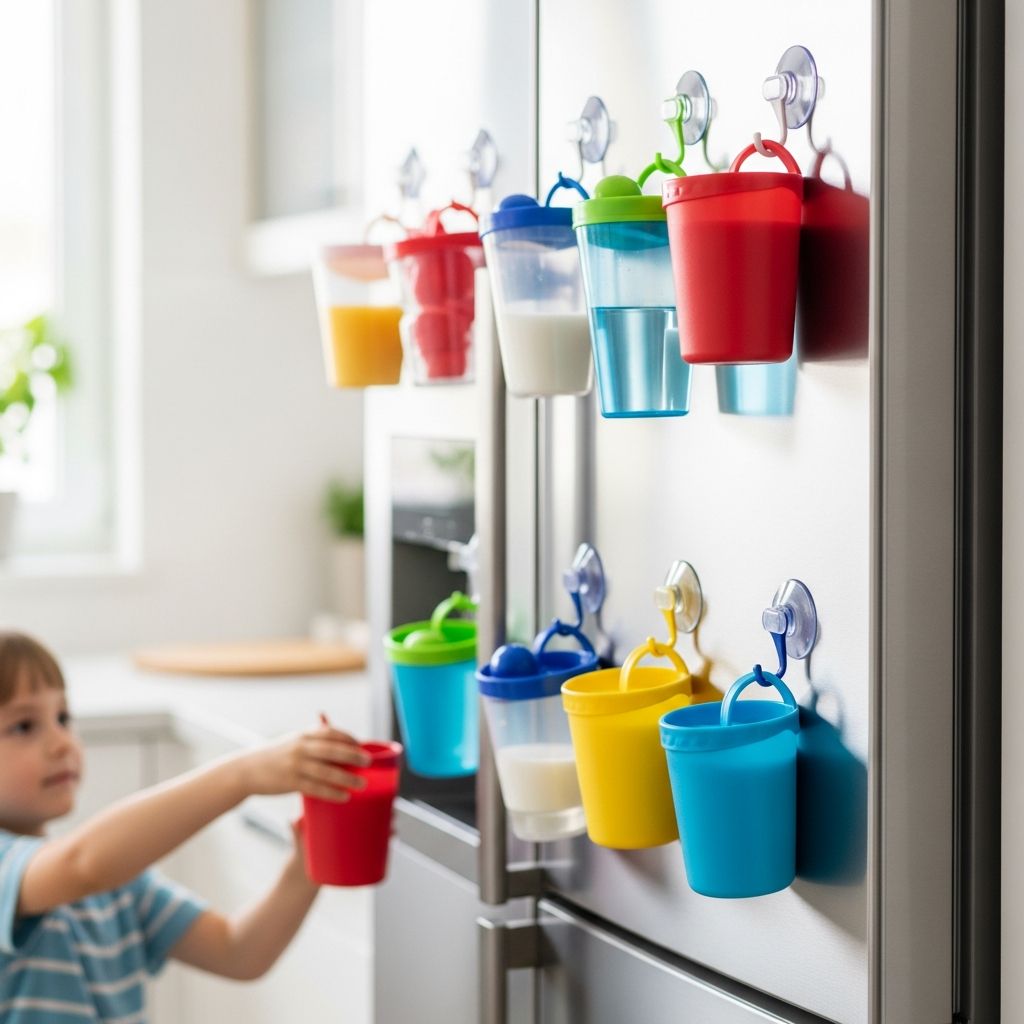
Instead of storing children’s cups in cabinets or drawers, hang them on the refrigerator or another accessible vertical surface. The cup and its hook live together in one consistent spot, at a height where children can easily grab and return their own cup. This simple change creates a “home base” for drinks that every family member can quickly understand and use.
When kids know exactly where their one daily cup hangs, they no longer need to ask for a fresh cup each time they want a sip of water. Parents gain a clear visual cue: if the cup is hanging, it is ready to use; if it is missing, it is somewhere in the house and should be returned when the child is done drinking.
Key Benefits Of Fridge-Hanging Kid Cups
Hanging kid cups provide more than a clever storage idea. They change how kids interact with the kitchen, how parents manage clutter, and how often dishes pile up. The benefits show up quickly in everyday routines and can make mornings and evenings feel easier.
Parents of toddlers and young school-age children often notice less arguing over cups, fewer spills from kids reaching into high cabinets, and a smoother flow around the kitchen during busy times like breakfast and bedtime.
Benefits For Parents
- Fewer dirty dishes, because each child uses one main cup through the day instead of several.
- Less visual clutter across counters and tables as cups return to their hooks instead of lingering everywhere.
- Easier tracking of drinks, since one dedicated spot makes it obvious who owns which cup.
- Quicker clean-up at night, as parents collect the hanging cups and place them directly into the dishwasher.
- More mental bandwidth, with fewer interruptions for “Can I have a drink?” every hour.
Benefits For Kids
- Increased independence as children learn to get their own water within safe limits.
- Clear responsibility for their own cup, including hanging it up after each use.
- Visual cues, such as color and placement, that help even very young kids identify their cup.
- Confidence from successfully managing a small daily task without help.
Features To Look For In Hangable Cups
Not all kid cups are designed to hang, but a growing number are made specifically for this purpose. When selecting a system, it helps to think about durability, kid-friendliness, and how well the hooks will work in your particular kitchen. Some products combine the cup and hanger as a single set, while others let you mix and match hooks with existing cups.
Parents who choose cups with strong but flexible materials, simple shapes, and secure hooks usually find the system lasts longer and stands up to enthusiastic kid handling. Taking a few minutes to compare features can prevent frustration later.
Essential Design Details
- Kid-safe materials: Look for cups labeled BPA-free and made from food-safe plastics or silicone that can handle daily use.
- Comfortable grip: A slightly textured or soft exterior makes it easier for small hands to hold, especially when cups are wet.
- Sturdy hook or loop: The hanging mechanism should be strong enough to handle repeated use without tearing or bending.
- Simple shape: A straightforward design without complicated lids or valves encourages kids to manage the cups on their own.
- Easy cleaning: Cups that are top-rack dishwasher safe or have wide openings simplify sanitizing at the end of the day.
Setting Up A Kid-Friendly Hydration Station
Choosing the right spot is one of the most important steps. The goal is a location that kids can comfortably reach but that does not interfere with opening the fridge or using other kitchen appliances. Many families find that the lower half of the refrigerator door works well, while others prefer a nearby wall, cabinet side, or magnetic board.
Once you know where the cups will hang, decide how many hooks your family needs and what arrangement makes the most sense. The setup can be as simple as two hooks for two kids or a full row for a large family with frequent visitors.
Step-By-Step Setup
- Pick a surface that kids can reach easily while standing safely on the floor.
- Clean the area thoroughly with a mild cleaner and let it dry to help adhesive hooks stick properly.
- Place each hook at a consistent height so all cups line up neatly and are easy to locate.
- Assign a specific hook and cup color to each child to prevent mix-ups.
- Show kids how to remove the cup, get water, drink, and hang it back up after every use.
Color-Coding And Labelling For Multiple Kids
Color-coding is one of the most effective ways to keep track of which cup belongs to which child. When each child has a unique cup color or pattern, even toddlers quickly learn which one is theirs. This reduces arguments, confusion, and the habit of picking up whatever cup is within reach.
For families with more than four children or for homes where cousins or neighborhood kids visit often, labeling might work better than relying on color alone. Simple labels or small icons can help both children and adults keep the system running smoothly.
Practical Labeling Ideas
- Use a waterproof label with the child’s name placed near the base or handle of the cup.
- Apply a small sticker or symbol and teach young children to recognize their special picture.
- Use different shapes for each child on the hooks themselves, such as stars, circles, or hearts.
- Pair each child’s hook with a matching color magnet or tape strip to reinforce whose spot is whose.
Daily Routines That Make The System Work
Hangable cups work best when they become part of your predictable daily rhythm. If the routine is clear and consistent, kids quickly learn what to do without repeated instructions. Over time, the system becomes almost automatic, freeing up time and energy for other parts of family life.
Consider anchoring cup use to existing routines like meals, teeth brushing, and bedtime. These natural transition points are ideal for reminding kids to refill, drink, and rehang their cups.
Sample Daily Flow
| Time Of Day | Cup Routine |
|---|---|
| Morning | Kids take their cups from the hooks and fill them after breakfast. |
| Midday | Cups are used for water refills and returned to hooks between meals. |
| Afternoon | After playtime or school, kids check their cups, refill if needed, and rehang them. |
| Evening | After dinner, cups are either washed for the next day or left hanging if still clean and only used for water. |
| Bedtime | Older kids may take their cup for a final sip, then return it to the hook for the night. |
Teaching Responsibility Through Small Tasks
A single cup might not seem significant, but for young children, managing it is a meaningful responsibility. Learning to care for one object, keep it in its place, and use it throughout the day builds habits that easily transfer to toys, school supplies, and clothing. Parents can reinforce this by treating the cup as “their job” rather than something adults always handle.
Positive reinforcement helps the routine stick. Instead of stepping in every time the cup is left on the table, a quick reminder like “Where does your cup live?” encourages the child to complete the process and feel proud of doing it without help.
Safety And Hygiene Considerations
While encouraging independence is important, safety should always come first. For very young children, it is wise to keep only water accessible, while milk or juice remains something an adult pours. This ensures that drinks that spoil quickly are monitored and not left out for long periods.
Regular cleaning keeps the system healthy. Even if cups are primarily used for water, washing them daily or every other day prevents buildup and keeps them fresh. Hooks and surrounding surfaces should also be wiped down occasionally, especially if sticky little hands reach for the cups frequently.
Simple Hygiene Rules
- Assign one main cup per child per day to limit sharing of germs.
- Wash cups at least once a day if they are used regularly.
- Inspect hooks and hanging loops for cracks or wear that could trap residue.
- Encourage kids to drink from their own labeled cup only.
Choosing The Right Spot In Different Homes
Not every kitchen has a magnetic fridge door, and not every family wants items on display. Fortunately, the same hanging concept can be adapted to many layouts. Some systems use adhesive hooks that stick to smooth surfaces like tile, glass, or laminate, allowing you to create a hydration station on a cabinet side or nearby wall.
Families in small apartments might prefer to keep cups inside the fridge door instead, hanging them from internal hooks or a small rail. In larger homes with playrooms or basement snack areas, duplicate hooks and cups in those zones give kids easy access without constant trips to the kitchen.
Alternative Mounting Ideas
- Mount adhesive hooks on the side of a pantry cabinet at child height.
- Use a magnetic strip or bar on the fridge to hold metal-backed hooks.
- Attach hooks inside a low cabinet door to hide the cups when not in use.
- Create a portable board with hooks for use in a playroom or homeschool area.
Common Challenges And How To Fix Them
As with any new system, there may be a few bumps in the beginning. Hooks might loosen if the surface was not properly cleaned, kids may forget to rehang their cups, or siblings might trade colors just for fun. Taking a problem-solving approach helps keep the idea working instead of abandoning it at the first sign of difficulty.
It often helps to expect an adjustment period. The first week is about teaching and reminding; after that, most children fall into the routine, and the benefits begin to outweigh the small issues.
Quick Troubleshooting Tips
- Hooks keep falling: Clean the surface thoroughly, let it dry, and press the adhesive hook firmly for the recommended time before hanging any weight.
- Kids forget to hang the cups: Add a simple verbal cue after meals or snacks, such as “Hang your cup, please,” until it becomes habit.
- Siblings fight over colors: Rotate cup colors weekly or label cups with names so the color itself matters less.
- Cups get lost in other rooms: Do a quick “cup hunt” before bedtime, turning it into a game to find and return every cup to its hook.
How Hanging Cups Compare To Other Solutions
Families often experiment with various approaches to managing kid cups, such as placing them in a low drawer, using straw cups with lids, or designating special shelves for kid dishes. Each method has advantages and drawbacks. Hanging cups stand out because they combine storage, access, and visual clarity in one visible location.
The table below summarizes how fridge-hanging cups differ from a few common alternatives parents may already know.
| Solution | Main Advantage | Main Drawback |
|---|---|---|
| Fridge-hanging kid cups | Cups are always visible, organized, and within easy reach for kids. | Requires suitable surface and initial setup of hooks. |
| Low drawer of cups | Kids can access many different cups on their own. | Often leads to multiple cups used per day and more dishes. |
| Closed cabinet shelf | Kitchen looks tidy with cups hidden behind doors. | Kids may need help reaching cups, limiting independence. |
| Labeled water bottles | Good for travel and on-the-go use. | Can be bulky, harder to clean, and less convenient for quick sips at home. |
Making The System Your Own
No two families use their kitchens in exactly the same way, so it makes sense to adapt the hanging cup concept to your unique needs. Some parents use the cups only for water to keep things simple, while others allow different beverages at set times of day. You might add a small tray or bin under the hooks to store reusable napkins or snack bowls for an even more complete kid station.
Over time, you may discover that your children are ready for more responsibility, such as refilling a water filter pitcher or helping to load the dishwasher with their own cups. Treat the hanging cups as a starting point for a broader system of independence, not just a single product.
Frequently Asked Questions About Fridge-Hanging Kid Cups
How many cups does each child need?
Most families find that one main cup per child per day works well, especially for water. You can keep an extra backup cup stored elsewhere for travel, daycare, or times when the main cup is in the dishwasher.
Are these systems only for toddlers?
While hanging cups are excellent for toddlers, older children benefit too. Preschoolers and elementary-age kids appreciate the independence of managing their own hydration, and the clear visual system helps them stay organized just as much as younger siblings.
What if my fridge is not magnetic or has an uneven surface?
If your fridge does not work with magnets, choose strong adhesive hooks rated for the weight of the cups and attach them to a smooth nearby surface. Cabinet sides, tiles, or a dedicated board can serve as a sturdy base for the hanging system.
Can I use regular cups with separate hooks?
Yes, you can adapt plain cups by adding a looped strap or handle that hooks securely. Just make sure the connection is sturdy enough to hold the cup when it is full and that the materials are safe for daily contact with food and drink.
How do I keep kids from overfilling or spilling?
Set clear rules about how much water they may pour at once and practice together a few times. Showing kids how to hold the cup with two hands, place it carefully on the counter while filling, and walk slowly helps reduce accidents.