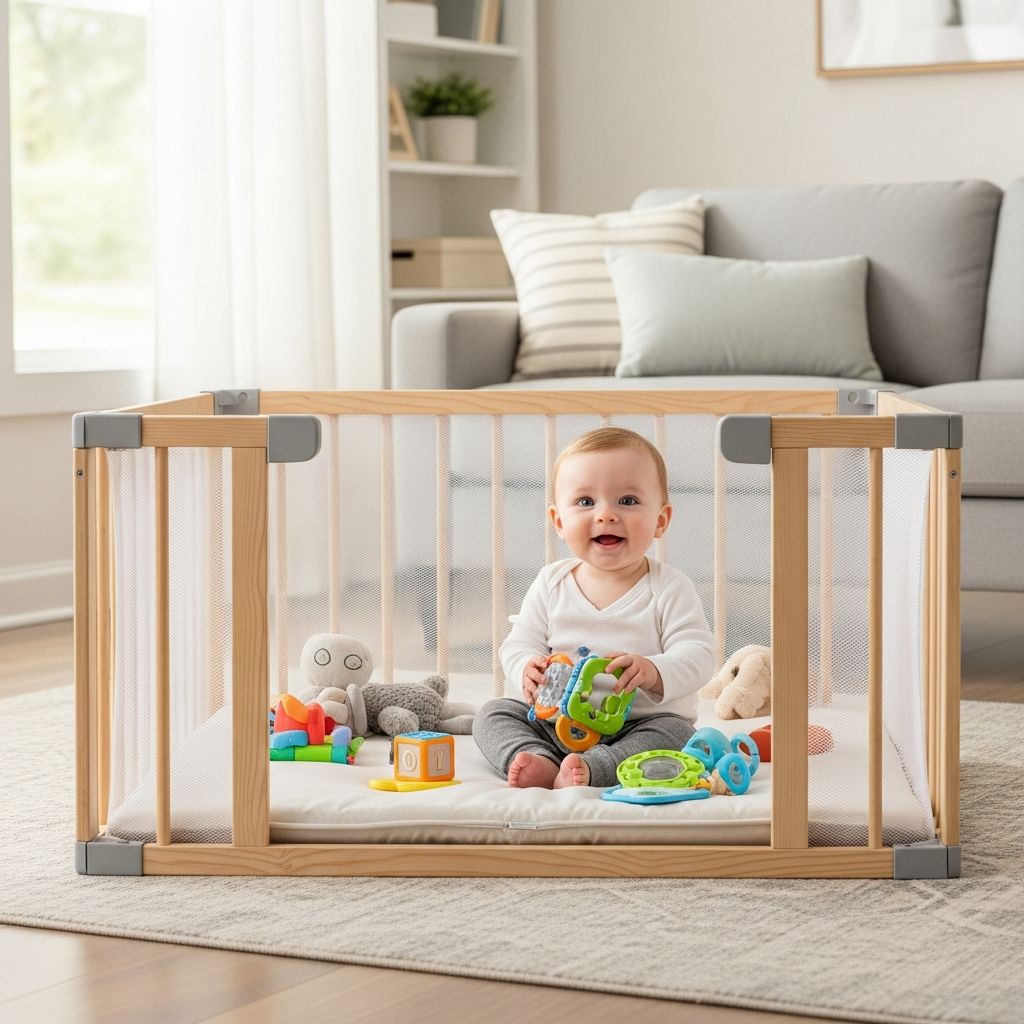
Playpens, also known as play yards, provide a contained area where infants and toddlers can explore safely while parents handle other tasks. When chosen and used correctly, they reduce risks from household dangers like stairs or sharp objects. However, improper selection or setup can lead to injuries from falls, entrapment, or collapse. This guide draws from official health guidelines to help parents make informed decisions.
Understanding Playpen Basics and Benefits
These enclosures typically feature mesh or slatted sides, a floor pad, and locking mechanisms. They offer parents brief respite without constant hovering, fostering independent play that supports motor skill development. Benefits include limiting access to unsafe areas and preventing wandering during short absences. Always prioritize models meeting rigorous safety standards to maximize these advantages.
- Promotes safe exploration in a bounded space.
- Allows supervised independence.
- Versatile for play, naps, or travel.
Key Criteria for Selecting a Secure Playpen
Start with certification: Look for compliance with standards like those from the Consumer Product Safety Commission (CPSC) in the US or equivalent bodies elsewhere. Walls should stand at least 60cm high to deter climbing, with slats no more than 6cm apart or mesh holes under 0.6cm to avoid head or limb entrapment.
Opt for sturdy frames with secure latches out of reach. Avoid designs with drop-sides, banned due to collapse risks. Materials must be non-toxic, free from BPA, lead, and phthalates.
| Feature | Safe Standard | Risk if Ignored |
|---|---|---|
| Side Height | ≥60cm | Climbing out, falls |
| Slat/Mesh Spacing | ≤6cm slats; ≤0.6cm mesh | Entrapment |
| Locking Mechanism | Secure, child-proof | Collapse |
| Materials | Non-toxic, BPA-free | Chemical exposure |
Optimal Placement and Initial Setup
Position the playpen on a flat, level surface like carpet or a play mat, never on tiles or uneven floors which cause instability. Keep at least 1 meter clearance from hazards: cords, blinds, heaters, outlets, furniture edges, or curtains that could strangle.
Assemble per instructions, ensuring all joints lock firmly. Test stability by pressing sides. Remove any packaging or plastic immediately. For portable models, verify weight limits and fold/unfold mechanisms.
- Choose hazard-free spot.
- Unpack and inspect parts.
- Assemble on stable floor.
- Engage all locks.
- Test for wobbles.
Daily Use Guidelines to Minimize Risks
Supervise actively; stay within earshot even for “quiet time.” Limit sessions to avoid restricting natural movement—infants need tummy time on open floors. Never use as a sleep substitute unless specified; follow safe sleep rules like back-sleeping on firm, bare mattresses.
Inside, limit to 2-3 soft toys rotated regularly. Avoid hard items that could injure if thrown or stepped on, or large stuffies for climbing. Remove extras like pillows, blankets, or bumpers increasing suffocation risk.
Essential Maintenance and Inspection Routine
Weekly checks prevent wear-related accidents. Examine for tears in mesh/vinyl, loose screws, frayed seams, or sagging floors that heighten suffocation dangers. Tighten connectors and replace damaged pads promptly.
- **Floor Pad:** Firm, no bunching.
- **Sides:** No rips, stable hinges.
- **Top Rails:** Secure covers, no gaps.
- **Accessories:** Properly attached.
Disinfect regularly with mild soap; air dry fully.
Common Hazards and Prevention Strategies
Top risks include structural failure, positional asphyxia from soft bedding, and climbing injuries. Accessories like bassinets or changers must detach fully before play—gaps can trap heads. Mobiles go once baby pushes up; strings pose strangulation threats.
Adult errors contribute too: Use doors for entry/exit to avoid back strain, not lifting over sides. Transition out when child climbs consistently or shows disinterest.
| Hazard | Prevention |
|---|---|
| Collapse | Lock all mechanisms; inspect regularly |
| Suffocation | Bare firm mattress; no soft items |
| Entrapment | Proper spacing; no gaps |
| Climbing/Falls | High sides; minimal climb aids |
Age-Specific Usage Recommendations
Newborns (0-6 months): Low sides, minimal toys, bassinet if certified. Focus on sensory play.
Mobile infants (6-12 months): Full enclosure, soft toys, supervise rolling/crawling.
Toddlers (12+ months): Active setups if sturdy; watch for escape attempts. Modular designs adapt to gates.
Retire by 2-3 years or 15-20kg, per manufacturer limits.
Regulatory Updates and Recalls Awareness
Standards evolve; recent CPSC rules address accessory gaps and play yard durability. Check registries like CPSC or Health Canada for recalls. Buy from reputable sellers; avoid secondhand without full history.
Frequently Asked Questions
Can playpens be used for overnight sleep?
Not recommended unless labeled for sleep. Use cribs for naps with firm, flat surfaces and no extras.
How often should I inspect the playpen?
Before each use and weekly deep checks for wear.
Are mesh-sided playpens safe?
Yes, if holes <0.6cm and no tears; slats ≤6cm also safe.
What if my child climbs out?
Discontinue use; transition to gated areas or supervision.
Are add-ons like changers safe?
Only if compliant; always remove before placing baby inside.
Empowering Parents for Confident Use
Combining certified products, vigilant setup, and routine care creates reliable safety nets. Educate caregivers on rules. Playpens enhance family life when hazards are proactively managed, allowing joyful exploration.
References
- Playpen Safety Checklist: 9 Essentials Every Parent Should Know — Toddler Tough Blog. 2023-05-15. https://blog.toddlertough.com.au/playpen-safety-checklist-9-essentials-every-parent-should-know/
- Playpen Safety: Everything You Need to Know — The Muse Edition. 2024-02-10. https://themuseedition.com/blogs/the-muse-journal/playpen-safety
- Child Safety When Using a Play Pen — Safetots Blog. 2023-08-22. https://www.safetots.co.uk/safetots-blog/child-saftey-when-using-a-play-pen/
- Playpen Safety — Health Canada. 2024-11-01. https://www.canada.ca/en/health-canada/services/infant-care/playpens.html
- Playpen Safety — HealthyChildren.org (American Academy of Pediatrics). 2023-06-12. https://www.healthychildren.org/English/safety-prevention/at-home/Pages/Playpen-Safety.aspx
- New Play Yard Standards — U.S. Consumer Product Safety Commission. 2022-09-01. https://www.cpsc.gov/s3fs-public/playyard.pdf
- Safety Standard for Play Yards — Federal Register (CPSC). 2025-01-29. https://www.federalregister.gov/documents/2025/01/29/2025-01658/safety-standard-for-play-yards