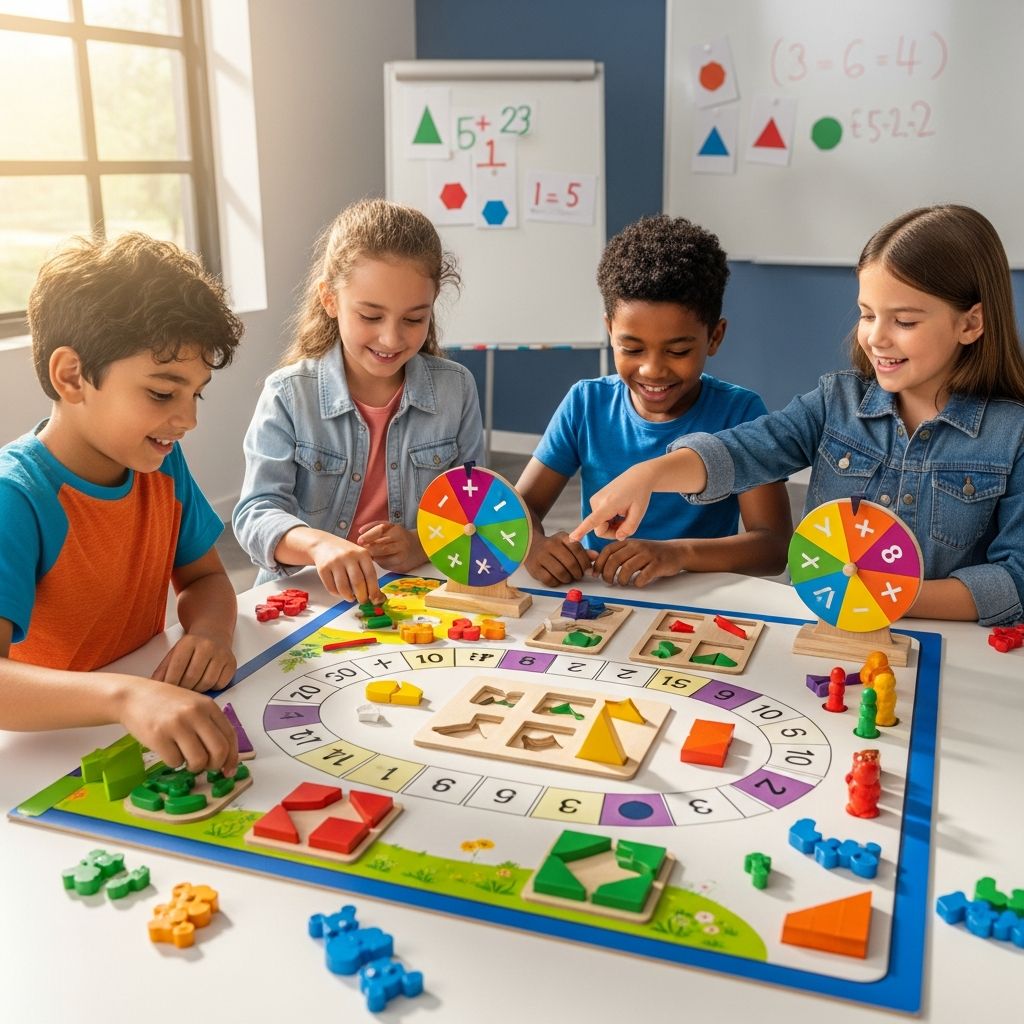
Mathematics forms the foundation for critical thinking and problem-solving throughout a child’s educational journey. Yet for many young learners, traditional math instruction can feel disconnected from their everyday experiences. The most effective approach to developing mathematical competence involves weaving numerical concepts into play-based activities that feel natural and enjoyable. When children engage with math through interactive experiences, they develop stronger conceptual understanding while building confidence in their abilities.
Research demonstrates that playful learning experiences activate multiple pathways in the brain, making mathematical concepts more memorable and transferable. Children who encounter math through hands-on activities develop deeper comprehension compared to those who rely solely on worksheets and memorization. This approach also cultivates positive attitudes toward mathematics, which research shows is critical for long-term academic success.
Building Number Sense Through Tactile Exploration
Developing strong number sense—the intuitive understanding of quantity and numerical relationships—is the cornerstone of mathematical development. Rather than presenting numbers as abstract symbols, engaging activities allow children to manipulate physical objects and observe how quantities change and relate to one another.
One foundational approach involves using natural materials to represent numerical concepts. Collecting items from outdoor environments like twigs, pebbles, or leaves gives children tangible objects to arrange and count. When a child creates the number five using five sticks arranged in a particular pattern, they form a visual and tactile memory of that quantity that connects directly to the numeral. This multi-sensory engagement strengthens neural connections associated with number recognition.
Exploration-based number activities can be adapted across difficulty levels. Younger children benefit from simple counting experiences with small quantities, while older learners can create numbers using larger collections and even explore quantities like one hundred by grouping objects into sets of ten. This progression builds from concrete understanding to more abstract thinking.
Practical Number Exploration Methods
- Object arrangement activities – Provide various materials (beads, coins, buttons) and ask children to arrange them to represent specific numbers, then count to verify accuracy
- Quantity-based hunts – During walks or car rides, identify numbers in the environment and discuss what those quantities represent
- Dice and die games – Rolling dice and identifying the resulting number combines chance with number recognition practice
- Sorting and grouping – Organizing objects by quantity helps children understand that the same number can be represented in different ways
- Building height challenges – Stack blocks or other objects to heights corresponding to specific numbers, creating visual representations of magnitude
Developing Sequencing and Order Understanding
Beyond recognizing individual numbers, children must develop understanding of numerical order and sequence. Sequencing activities build the foundation for later work with place value, comparison, and more complex mathematical reasoning.
Sequencing can be practiced through games and activities that feel like play rather than formal instruction. Arranging numbered cards in order from smallest to largest engages children in decision-making about numerical relationships. Physical movement activities reinforce this learning, as children naturally remember sequences better when their bodies are involved in the learning process.
Outdoor stone-based activities provide a particularly engaging approach. Collecting rocks and numbering them from one to ten creates a tactile, reusable learning tool that children can manipulate repeatedly. Each session reinforces understanding while allowing children to work at their own pace.
Sequencing Activity Ideas
- Card arrangement races – Time children as they arrange numbered cards in proper sequence to add a playful competitive element
- Nature-based sequencing – Collect rocks or sticks and arrange them in numerical order, then reorganize them in reverse sequence
- Floor-based patterns – Create number sequences on the floor and have children jump or walk along the sequence while saying numbers aloud
- Missing number games – Display a sequence with intentional gaps and ask children to identify which numbers are missing
Introducing Addition and Subtraction Through Concrete Manipulation
Addition and subtraction represent abstract concepts—putting together and taking away—that become concrete and understandable when children can physically manipulate objects. Rather than memorizing facts, children who work with tangible materials develop genuine conceptual understanding of what these operations mean.
The key to effective addition and subtraction learning is allowing children to see the action occurring. When a child places two groups of objects together and counts the total, they witness addition happening. When they remove objects from a pile and count what remains, they experience subtraction directly. This concrete foundation makes later abstract symbol work much more meaningful.
Household items can be repurposed for these activities, making them accessible and relevant to children’s daily lives. Egg cartons, pompoms, beads, and similar materials provide perfect manipulatives for exploring these fundamental operations. The tactile experience of handling these materials, combined with the visual feedback of seeing quantities change, creates powerful learning experiences.
Addition and Subtraction Activity Approaches
- Container-based combining – Use egg cartons, cups, or boxes to hold objects and practice combining different quantities
- Block building for operations – Stack blocks representing each number in an addition problem, then count the combined stack
- Removal and counting activities – Place objects in a container, remove some while children observe, then count what remains
- Visual problem display – Create simple addition and subtraction problems using cards or drawn illustrations for children to solve using objects
- Play-based decomposition – Explore different ways to make the same total (four can be 2+2, 1+3, or 4+0)
Shape Recognition Through Environmental Exploration
Geometric understanding develops when children encounter shapes in meaningful contexts rather than through isolated flashcards. Identifying shapes in the environment—circles in coins, rectangles in books, triangles in roof peaks—helps children recognize that geometry exists all around them.
Shape exploration becomes more engaging when children actively search for shapes or create their own. Interactive games that combine movement with shape recognition keep children engaged while building spatial awareness and geometric vocabulary. This approach also helps children understand that shapes can vary in size and orientation while remaining fundamentally the same shape.
Creating shapes using household materials or outdoor resources transforms shape learning from passive observation to active creation. When children make circles using string or triangles using sticks, they develop tactile understanding of geometric properties that complements visual recognition.
Shape Exploration Strategies
- Environmental scavenger hunts – Provide a list of shapes and ask children to find real-world examples throughout the home or classroom
- Shape matching activities – Draw outlines of shapes on paper and ask children to match objects to the corresponding shapes
- Material-based creation – Use string, blocks, or other materials to construct different shapes
- Interactive observation games – Play “I Spy” variations focused specifically on identifying shapes in the environment
Measurement Understanding Through Estimation and Comparison
Measurement concepts often feel abstract to young learners, but hands-on estimation and comparison activities make these ideas concrete and practical. When children estimate measurements and then verify their estimates, they develop intuition about length, capacity, and other measurable attributes.
Estimation games build mathematical reasoning by encouraging children to think about relationships between objects. Before measuring, children must observe and think about what they’re estimating, engaging cognitive skills beyond simple number recognition. The verification step—actually measuring and comparing their estimate to reality—provides immediate feedback and reinforces learning.
Measurement activities naturally extend into other mathematical areas like data collection and graphing, creating opportunities for integrated learning experiences that feel purposeful and connected.
Measurement and Estimation Activities
- Length estimation challenges – Ask children to estimate which objects in a room might equal one meter or one foot in length, then verify with measuring tools
- Capacity exploration – Compare how many different items fit into containers, making predictions before filling
- Size comparison games – Sort objects by size categories and discuss the attributes that determine size differences
- Growth observation – Measure plants or other growing things regularly and track changes over time
Game-Based Learning for Skill Practice
While foundational conceptual work happens through exploratory activities, skill practice becomes necessary as children develop more sophisticated mathematical abilities. Games provide engaging frameworks for repeated practice without the tedium of worksheets. When practice feels like play, children willingly engage with material multiple times, building fluency naturally.
Game-based practice works particularly well when it incorporates movement, competition, or interactive elements. These components activate engagement systems in the brain that make repetition feel purposeful rather than monotonous. Games also allow for differentiation—the same basic game structure can be simplified or complexified based on individual student needs.
Skill-Building Game Formats
| Game Type | Best For | How It Works |
|---|---|---|
| Bingo Variations | Addition, subtraction, multiplication, division fact practice | Create cards with answers; call out problems instead of numbers; students mark correct answers |
| Movement Games | Building fluency while incorporating physical activity | Students move to answer problems (jumping, dancing, running) based on the mathematics involved |
| Circle Games | Practicing any math skill in dynamic group settings | Students stand in circle; pass object while solving problems; incorrect answer means sitting down |
| Scavenger Hunts | Shape recognition, number identification, measurement practice | Students search environment for items matching specific mathematical criteria and record findings |
| Playground Games | Mental math and fact fluency in outdoor settings | Write answers on playground surface; call out problems; students run to correct answers |
Supporting Different Learning Styles Through Varied Approaches
Children demonstrate mathematical thinking through different modalities. Some children develop understanding primarily through visual input, while others benefit most from tactile manipulation or kinesthetic engagement. Offering variety in activity types ensures all learners find approaches that resonate with their natural learning preferences.
Rotating through different activity types throughout the week provides multiple entry points to the same mathematical concepts. A child who struggles with abstract number cards might excel when working with physical objects. Another child who finds manipulatives confusing might thrive with visual representations or movement-based games. Exposure to varied approaches allows each child to discover their strengths while building skills in less-preferred areas.
This differentiated approach also prevents boredom by maintaining novelty while reinforcing core concepts. When children encounter the same mathematical idea through multiple activities and contexts, deeper understanding develops naturally.
Integrating Mathematics Into Daily Routines
The most powerful mathematical learning often happens incidentally, when children encounter numbers and mathematical thinking during everyday activities. Rather than cordoning off math into specific lesson times, weaving numerical thinking into daily routines helps children understand that mathematics exists everywhere and serves practical purposes.
Cooking provides natural opportunities for measurement, sequencing, and quantification. Setting a table involves counting and one-to-one correspondence. Playing board games integrates number recognition, counting, and strategic thinking. Shopping trips become opportunities to discuss quantities, comparisons, and basic operations. When children see mathematics as a tool for solving real-world problems, they develop more motivated and sustained engagement with mathematical thinking.
Frequently Asked Questions
At what age should children begin formal math instruction?
Mathematical thinking develops long before formal instruction. Even toddlers benefit from exposure to quantities, counting, and basic number language. Formal instruction can begin when children demonstrate readiness, typically around ages four to five, but playful exploration should continue alongside any structured learning.
How can parents support math learning at home?
Parents can incorporate mathematical thinking into daily activities, provide access to materials for exploration, play math-based games together, and model positive attitudes toward mathematics. The most important element is creating a low-pressure environment where children feel safe experimenting with mathematical ideas.
What should parents do if their child seems frustrated with math activities?
Frustration often indicates the activity is either too difficult or not engaging enough. Simplify the task, change the materials, or shift to a different activity type. Keep sessions short and end on a positive note. Math anxiety can develop early, so maintaining enthusiasm and patience is essential.
Are online math games effective substitutes for hands-on activities?
Online games can supplement learning but shouldn’t replace hands-on exploration. The tactile and kinesthetic elements of physical manipulation provide important learning benefits that screen-based activities cannot fully replicate. A balanced approach combining various activity types works best.
How much time should children spend on math activities daily?
Rather than focusing on duration, prioritize consistency and engagement. Even fifteen to twenty minutes of meaningful mathematical exploration daily provides more benefit than longer but infrequent sessions. Quality matters more than quantity.
References
- 50 Hands-on Math Activities for Preschool and Kindergarten — Treehouse Schoolhouse. Accessed January 16, 2026. https://treehouseschoolhouse.com/blog/hands-on-math-activities-preschool-kindergarten
- Math Games – Free Online for Grades K–6 — Math Playground. Accessed January 16, 2026. https://www.mathplayground.com/math-games.html
- 22 Fun Math Activities for Your Classroom — Prodigy Math. Accessed January 16, 2026. https://www.prodigygame.com/main-en/blog/fun-math-activities
- Pre-K Math Activities: Hands-On Learning for Kids — Brighter Futures Indiana. Accessed January 16, 2026. https://brighterfuturesindiana.org/blog/pre-k-math-activities-hands-on-learning-for-kids-2