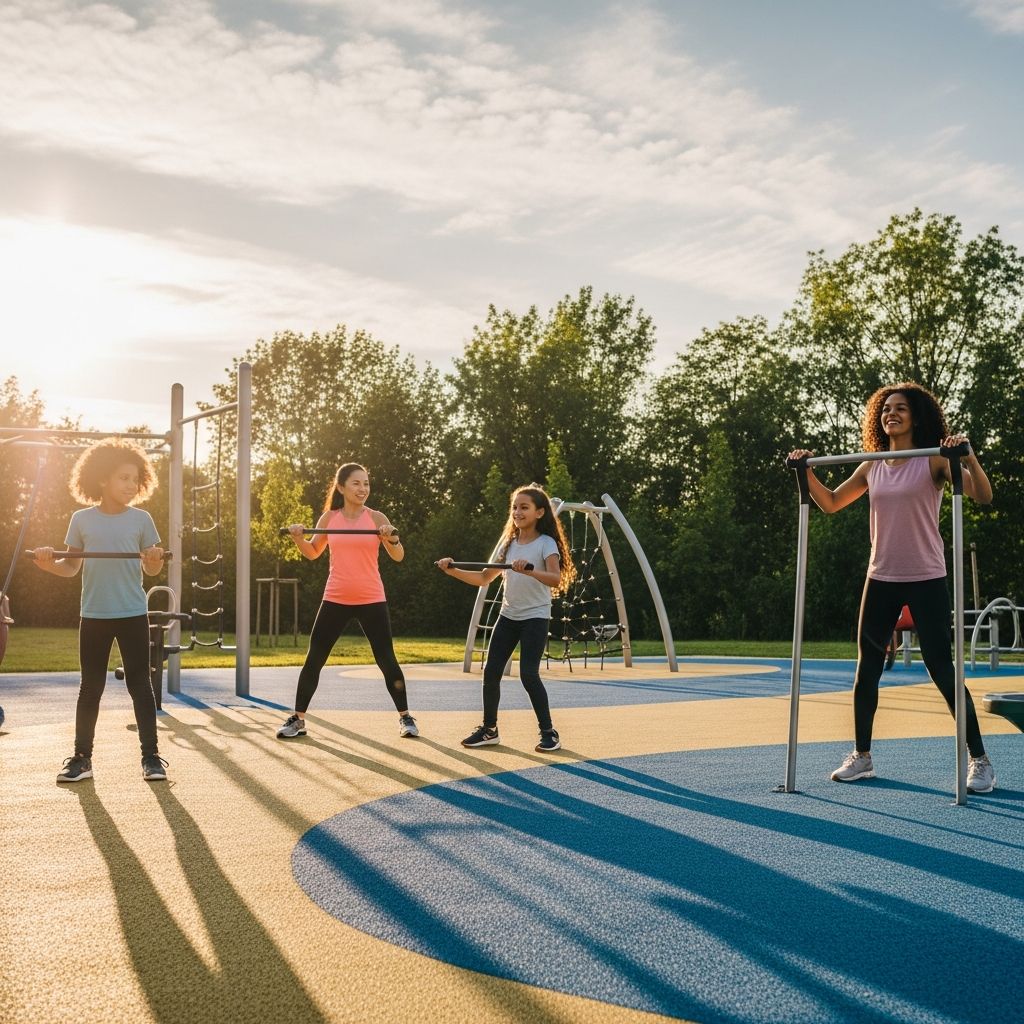
Transforming Playgrounds Into Active Fitness Spaces
The modern fitness industry often emphasizes expensive gym memberships, personal trainers, and sophisticated equipment as prerequisites for staying healthy. However, a resource that has existed in nearly every community for decades remains largely underutilized as a fitness venue: the local playground. What was once considered primarily a space for children’s recreational activity has evolved into a versatile fitness facility that can accommodate people of all ages and ability levels. This shift represents a fundamental change in how communities can approach health and wellness without financial barriers or intimidating environments.
Public playgrounds contain an unexpected variety of exercise opportunities. From climbing structures to balance components, swings to horizontal bars, these spaces provide legitimate platforms for building strength, endurance, and coordination. The key difference between using a playground for fitness and traditional gym workouts lies in the approach: combining functional movement patterns with the accessibility and social environment that outdoor spaces naturally provide.
The Science Behind Outdoor Fitness Performance
Research consistently demonstrates that exercising outdoors produces distinct physiological and psychological advantages compared to indoor gym environments. Studies have found that outdoor exercise contributes to increased energy levels while reducing anger, tension, and depression more effectively than equivalent indoor workouts. This phenomenon extends beyond simple mood elevation; the mechanisms involve multiple biological systems responding to natural daylight and fresh air exposure.
One significant factor is vitamin D production. When skin exposure to sunlight occurs during outdoor fitness activities, the body synthesizes vitamin D more efficiently than any supplement can provide. Beyond bone health, vitamin D plays crucial roles in immune function, mood regulation, and cognitive performance. Recent research suggests these health benefits from natural daylight extend far beyond traditional vitamin D considerations, indicating that outdoor exposure itself offers protective health properties.
Mental health improvements from outdoor exercise prove particularly substantial. Physical activity triggers the release of endorphins—neurochemicals that naturally improve mood and general well-being while simultaneously reducing stress, anxiety, and depression. When combined with outdoor settings, these effects intensify, offering adults and children alike a powerful tool for mental health management that costs nothing and requires no special equipment.
Complete Body Strengthening With Standard Playground Equipment
Playground equipment, when approached with intentional exercise programming, engages virtually every major muscle group. The following equipment types offer specific strengthening benefits:
Upper Body Development
Monkey bars and horizontal ladders represent one of the most effective upper body tools available in playgrounds. These structures facilitate pulling motions that build back strength, shoulder stability, and grip endurance. Unlike home workout environments where performing pull-ups may require improvised solutions, playground bars offer multiple grip positions and heights, allowing progressive training from assisted positions to full pull-ups. Additionally, bars accommodate rows, flies, and other upper body movements by adjusting body position relative to the structure.
Swings provide more than childhood joy; they offer legitimate core and upper body engagement opportunities. The back-and-forth motion activates core muscles significantly, while adults can incorporate variations such as push-ups while holding the swing handles or performing abdominal walkouts to intensify the core engagement.
Cargo nets and rope structures deliver comprehensive full-body workouts specifically designed for older children and adults. These climbing features build pulling strength, core stability, and problem-solving abilities simultaneously, as users must navigate coordinate movements and manage body positioning while ascending.
Lower Body and Core Training
Climbing walls provide age-appropriate opportunities for full-body workouts across different fitness levels. Different age groups can participate at their appropriate challenge level, building leg strength, core engagement, and mental focus through the climbing experience.
Step platforms enable straightforward lower body training through step-ups or dynamic movements like jumping from step to step, working leg muscles effectively while remaining accessible to various fitness levels.
Balance beams address an often-neglected fitness component: balance and proprioception. Traversing a balance beam develops coordination while engaging stabilizer muscles throughout the legs and core. Connecting multiple balance beam components creates progressively complex exercise experiences that challenge users physically and mentally.
Ab benches specifically target core muscles through traditional crunches, reverse crunches, and similar movements, providing dedicated core training stations within the playground environment.
Vertical ladders facilitate exercises like knee tucks and leg lifts, engaging the lower abdomen and hip flexors through vertical movement patterns.
Multi-Generational Fitness Opportunities
One of playground fitness’s most significant advantages involves its capacity to accommodate multiple age groups simultaneously. Historically, parents and caregivers viewed playground time as an opportunity to sit passively while children played. Modern playground design increasingly incorporates equipment specifically designed for adults alongside children’s play structures, fundamentally changing family dynamics at these spaces.
This multi-generational approach serves several purposes. First, it allows adults to maintain or improve their fitness while remaining present and engaged with their children. Second, it models active behavior for children, establishing the foundation for lifelong physical activity habits. Third, it creates opportunities for family-oriented workouts where different members participate at their appropriate intensity levels, building shared experiences around health and movement.
Certain equipment types accommodate multiple ages effectively. Bars at varying heights, climbing structures with different difficulty levels, and balance components that scale in complexity all enable families to work out together while maintaining appropriate challenge levels for each participant.
Accessibility and Barrier Elimination
Traditional fitness pursuits present two primary obstacles that prevent many people from exercising consistently: time commitment and financial cost. Gym memberships require monthly fees, travel time, and membership commitments. Personal training adds significant expense. Childcare during workouts creates additional financial and logistical barriers for parents.
Playground fitness eliminates these barriers entirely. There are no membership fees, no travel beyond the local neighborhood, and no requirement to arrange childcare, as children can play in the immediate vicinity while parents work out. This accessibility proves particularly important for communities with limited financial resources, making health and fitness genuinely available to all community members regardless of economic status.
Beyond financial accessibility, playground fitness equipment accommodates people of all ages, abilities, and activity levels. Beginners can start with movements that feel manageable, while advanced exercisers can modify techniques to increase intensity. People recovering from injury can use equipment at reduced capacity, progressively building function. Elderly individuals can maintain strength and balance through age-appropriate activities. This inclusive design represents a fundamental shift from fitness environments that often make people feel excluded or intimidated.
Cognitive Development and Mental Sharpness
Playground fitness offers cognitive benefits that extend beyond simple physical health. Exercise activates brain function, enhancing cognitive abilities, memory, and focus across all ages. For children, playground activities that incorporate problem-solving components—such as navigating obstacle courses or coordinating movements through complex structures—strengthen cognitive development alongside physical development. Every climb, jump, and swing presents fresh cognitive challenges that build spatial awareness, decision-making abilities, and motor control.
For adults, these cognitive benefits prove equally significant. Physical activity challenges requiring body coordination and spatial navigation stimulate different neural pathways than static gym exercise, providing mental engagement alongside physical exertion. Additionally, the outdoor environment itself enhances cognitive function beyond what indoor workouts provide, offering the dual benefit of mental stimulation through problem-solving movements combined with natural environment cognitive enhancement.
Building Sustainable Healthy Habits
One of the most powerful outcomes of playground-based fitness involves establishing lifelong health patterns. Children who grow up engaging in active play develop exercise habits they carry into adulthood. Rather than viewing physical activity as an obligation or chore performed in institutional gym settings, these children learn to associate movement with enjoyment, social connection, and time in nature. This foundational perspective significantly reduces the likelihood of developing chronic illnesses including obesity, diabetes, and heart disease later in life.
For adults, playground workouts offer a refreshing alternative to gym monotony. The variety of challenges, outdoor environment, and social aspects make exercise feel less like obligation and more like recreation. This psychological shift increases consistency with fitness routines, as people naturally return to activities they enjoy rather than those they feel they must do.
Social Connection and Community Building
Outdoor fitness spaces create increased opportunities for social interaction and community engagement that indoor gyms cannot replicate. Parents connecting while children play, neighbors discovering shared fitness interests, and diverse community members gathering around shared health goals all strengthen social bonds. This social dimension provides motivation that extends beyond physical health benefits, addressing mental health through connection and reducing isolation.
Community access to outdoor fitness equipment makes health and wellness exploration accessible for families and schools, fostering a culture of physical activity at the grassroots level. When schools incorporate playground fitness programming and families recognize their local playground as a viable fitness venue, entire communities gradually shift toward more active lifestyles.
Practical Playground Workout Programming
Successfully using playground equipment for fitness requires intentional programming rather than haphazard activity. Start by surveying your local playground to identify available equipment types. Plan workouts that incorporate equipment serving different purposes—upper body pulling stations, lower body stepping platforms, balance challenges, and climbing structures. Rotate through these station areas, spending 2-3 minutes at each location performing appropriate movements.
Progression represents a critical programming element. As certain movements become manageable, increase difficulty through body positioning adjustments, reducing support, increasing repetitions, or adding dynamic components. Movement doesn’t need structured exercise format—balancing on beams, climbing play structures, and crawling through tunnels during active play deliver equivalent physical benefits while remaining engaging and enjoyable.
Establishing Community Fitness Areas
Communities seeking to maximize their playgrounds’ fitness potential should consider dedicated space allocation for adult fitness equipment areas alongside children’s play zones. This separation allows adults to focus on workouts without disrupting children’s play while preventing younger children from accessing equipment designed for older participants. Signage indicating proper equipment use and exercise possibilities helps community members recognize fitness potential they might otherwise overlook.
Frequently Asked Questions
Q: Can playground workouts provide sufficient exercise for fitness goals?
A: Yes, playground equipment offers legitimate strength training, cardiovascular conditioning, and functional movement work comparable to traditional gym equipment when used with intentional programming and progressive challenge. Many people find playground workouts more sustainable due to the outdoor environment and reduced cost barriers.
Q: Is playground fitness safe for older adults?
A: Absolutely. Playground equipment accommodates people of all ages and abilities. Older adults can use balance beams for coordination training, step platforms for lower body strength, and pulling bars for upper body work at modified intensity levels. The outdoor environment and social aspects often appeal particularly to older adults seeking exercise alternatives.
Q: How do I modify exercises for beginners?
A: Start with movements using increased support—holding swing chains more firmly, using bars at lower heights, walking rather than running between stations, and performing movements slowly with controlled positions. Progress gradually as strength and confidence increase.
Q: Can families really work out together effectively?
A: Yes. Family members exercise at their appropriate challenge levels while remaining in the same space. Parents can perform advanced variations while children practice modified versions, creating shared time around health and movement that builds lasting habits.
Q: What mental health benefits does playground fitness offer?
A: Outdoor exercise reduces stress, anxiety, and depression more effectively than indoor workouts while improving mood and cognitive function through endorphin release and natural environment exposure. The social connection opportunities further enhance mental wellness outcomes.
References
- Benefits of Outdoor Fitness Playgrounds — Landscape Structures. 2024. https://www.playlsi.com/en/playground-planning-tools/fitness-playground-design/fitness-playground/
- What are the Benefits of Playground Fitness Equipment? — Exergame. 2024. https://exergame.com/what-are-the-benefits-of-playground-fitness-equipment/
- Forms of Exercise on the Playground — Little Tikes Commercial. 2024. https://littletikescommercial.com/blog/forms-of-exercise-on-the-playground/
- The Benefits and Reasons You Should Have an Outdoor Fitness Park — MRC Recreation. 2024. https://mrcrec.com/blog/outdoor-fitness-equipment
- Outdoor Fitness Parks Help Adults Maintain Health and Wellness — GameTime. 2024. https://www.gametime.com/news/outdoor-fitness-for-adult-health
- Why Playground Workouts Can Be a Parent’s Best Fitness Friend — Girls Gone Strong. 2024. https://www.girlsgonestrong.com/blog/articles/why-playground-workouts-can-be-a-parents-best-fitness-friend/
- Benefits of Exercising Outdoors — KOMPAN Fitness Institute. 2024. https://www.kompan.com/en/us/research/kompan-fitness-institute/benefits-of-exercising-outdoors
- Get Out! 5 Benefits of Outdoor Exercise — American Council on Exercise. 2024. https://www.acefitness.org/resources/everyone/blog/6360/get-out-5-benefits-of-outdoor-exercise/