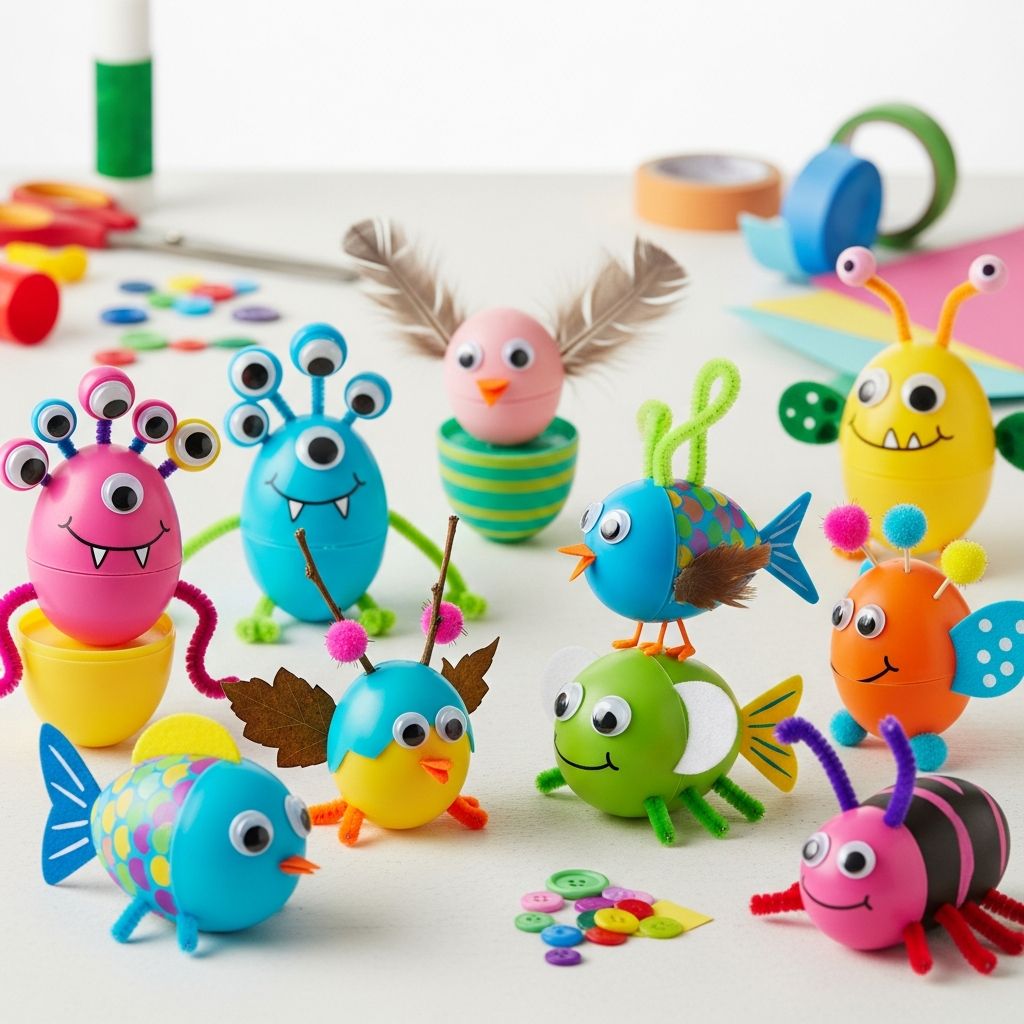
Those colorful plastic Easter eggs don’t have to disappear into storage once the egg hunt is over. With a few basic craft supplies, you can transform them into playful creatures and characters that double as toys, place cards, party favors, and festive décor.
Why Craft with Plastic Easter Eggs?
Plastic eggs are light, durable, and already shaped like tiny bodies, which makes them perfect foundations for imaginative critters. Instead of throwing them away or stuffing them in a closet, you can upcycle them into something your kids will proudly display.
- Encourages fine motor skills, creativity, and storytelling for kids.
- Reduces waste by reusing seasonal items you already own.
- Easy to customize for different ages, themes, and holidays.
Essential Supplies for Egg Creatures
You do not need an overflowing craft room to make egg creatures. Most of the supplies listed below are common household items or low-cost materials from any craft or discount store.
- Plastic Easter eggs (any size or color)
- Craft glue or low-temp hot glue (for adults to handle)
- Permanent markers or paint pens
- Acrylic paint (optional for full-coverage color)
- Googly eyes in various sizes
- Pipe cleaners (for arms, legs, tails, antennae)
- Felt or foam sheets (for ears, wings, fins, and accessories)
- Small pom-poms and beads
- Scissors (kid-safe scissors for children, precision scissors for adults)
- Optional: mini clothespins, string, washi tape, glitter, stickers
Gather supplies in small bowls or bins so children can see their options and mix elements freely. This open-ended setup helps spark new ideas and character combinations.
Basic Steps: From Egg to Character
Although the possibilities are nearly endless, most plastic egg creatures follow a simple process. Once everyone understands the basics, they can easily branch out and invent their own designs.
- Clean and dry the eggs. Wipe the surface to remove dust or leftover candy residue so glue and paint stick well.
- Decide on orientation. Place the egg vertically (tall creature), horizontally (animal or bug), or even upside down (funny faces and hanging ornaments).
- Plan the features. Ask: Where will the eyes go? Does it need ears, wings, a tail, or legs? Sketch on paper if it helps kids visualize.
- Attach the eyes. Glue googly eyes or draw eyes with markers. The eyes instantly give personality and guide the rest of the design.
- Add limbs and details. Use pipe cleaners for legs and arms, felt for ears, foam for fins and wings, and pom-poms for noses or tails.
- Finish with color and patterns. Add stripes, polka dots, freckles, or tiny hearts using markers or paint.
Helping younger children follow these steps in order keeps the project manageable while still leaving plenty of room for imagination.
Design Ideas for Egg Creatures
To spark creativity, start with a few themed ideas and then encourage kids to invent their own hybrids. You can group eggs by style and display them as a mini menagerie on a shelf or table.
1. Forest and Farm Friends
Animal-inspired egg creatures are always a hit because kids recognize familiar shapes and features. They are also a great way to talk about habitats and animal sounds with younger children.
- Bunnies: Use a pastel egg, add felt ears, a pom-pom tail, and a tiny drawn-on nose and whiskers.
- Chicks: Choose yellow eggs, glue on a small felt beak and feather-like wings, and add wide, curious eyes.
- Piglets: Use a pink egg, add felt ears and a spiral pipe cleaner tail, and draw a circular snout.
- Owls: Give the egg big eyes, felt wings, and a V-shaped felt piece on the chest to suggest feathers.
2. Under-the-Sea Critters
Underwater themes turn classic eggs into colorful ocean dwellers. Vary shades of blue, turquoise, and green, and add shimmering details for a playful, aquatic look.
- Fish: Position the egg sideways, add a triangle tail and fins cut from foam, and decorate with stripes or scales.
- Octopus: Use the bottom half of the egg as a head and glue on eight curled pipe cleaner tentacles.
- Jellyfish: Suspend the egg upside down and hang ribbons or yarn from the opening as drifting tentacles.
- Sea turtles: Glue the egg onto a flat foam shell shape and add four stubby legs and a head.
3. Friendly Monsters and Aliens
Monsters and aliens are perfect for hesitant crafters because there is no wrong way to design them. Odd mismatched eyes and uneven limbs only add charm.
- Multi-eyed monsters: Cover the egg in small googly eyes of different sizes and add a big toothy smile.
- Antenna aliens: Attach pipe cleaners with beads or mini pom-poms on top for quirky antennae.
- Fuzzy creatures: Wrap the egg with yarn or fuzzy pipe cleaners for a soft, textured look.
- Shape-shifters: Stack two eggs together to build a taller alien with a separate head and body.
4. Storybook People and Mini Figures
Character eggs can represent family members, favorite book heroes, or completely invented personalities. Kids enjoy building small “worlds” for them, like cardboard houses and tiny cars.
- Superheroes: Draw a mask, add a felt cape at the back, and decorate with a bold symbol on the front.
- Princesses and princes: Use glittery tape as a belt, felt for hair, and a small foam crown.
- Everyday people: Turn eggs into mini versions of friends and relatives with hair, glasses, and outfits.
- Occupations: Add details like a paper stethoscope, mini felt apron, or tiny paper book to suggest careers.
Simple Table: Egg Creature Inspiration
This quick-reference table pairs basic egg positions with creature styles and suggested materials. Use it as a starting point for planning your craft session.
| Egg Position | Creature Style | Key Materials |
|---|---|---|
| Vertical (tall) | People, bunnies, owls | Felt ears or hair, markers for faces, googly eyes |
| Horizontal (on side) | Fish, pigs, turtles | Foam tails/fins, pipe cleaner tails, side-placed eyes |
| Upside down | Jellyfish, hanging monsters | Ribbon or yarn tentacles, string for hanging |
| Stacked (two eggs) | Aliens, snowmen, tall robots | Glue to secure stack, contrasting colors for head and body |
Kid-Friendly Crafting Tips
A smooth crafting session depends more on set-up than on perfect artistic skills. Prepare the workspace so kids can focus on creativity rather than searching for materials.
- Cover the table with a wipeable cloth or craft paper for easy clean-up.
- Pre-cut small pieces of felt and foam for very young children.
- Organize supplies by type in bowls or muffin tins so everyone can reach what they need.
- Offer a few samples or photos for inspiration, but avoid strict templates so kids feel free to experiment.
Safety Considerations for Families
As with any small craft project, a few simple precautions ensure that egg creature sessions stay fun and safe for all ages. Always supervise young children closely around tiny parts and strong adhesives.
- Use low-temperature glue guns and let adults handle the actual gluing when needed.
- Keep beads, googly eyes, and other small pieces away from toddlers who still put objects in their mouths.
- Remind kids not to twist the eggs open too aggressively once creatures are assembled, especially if delicate details are glued across the seam.
- If you plan to hang the egg creatures, secure any string or ribbon tightly and check the knots for durability.
Creative Uses for Finished Egg Creatures
Once your plastic egg creatures are complete, they can brighten far more than just the craft table. Think beyond toys and use them as playful touches throughout your home and celebrations.
- Table decorations: Place creatures at each plate for family dinners or holiday brunch, and let guests take them home.
- Story prompts: Ask kids to invent a story featuring three of their egg characters, then act it out or write it down.
- Learning games: Add letters, numbers, or simple words on the back of each egg for matching or reading activities.
- Mini gifts: Tuck tiny notes, jokes, or stickers inside the eggs and give them to classmates or neighbors.
Variations for Different Ages
Adjusting the complexity of the craft makes it appealing for toddlers, older children, and even adults who enjoy DIY projects. The same basic egg can look dramatically different depending on the level of detail.
- Toddlers: Stick to large googly eyes, simple drawn-on smiles, and minimal small pieces.
- Elementary-age kids: Introduce pipe cleaners, layered felt, and more complex color patterns.
- Tweens and teens: Encourage intricate painting, tiny accessories, and themed collections (like a whole team of superhero eggs).
- Adults: Focus on cohesive color palettes and refined details so creatures double as stylish seasonal décor.
Frequently Asked Questions
How do I keep the egg halves from popping open?
If you want a creature to stay permanently closed, add a thin bead of strong craft glue along the inner rim before snapping the egg shut. For toys you may want to reopen, skip the glue and instead reinforce any decorations that cross the seam so they do not pull apart easily.
What type of paint works best on plastic eggs?
Water-based acrylic paint usually adheres well to clean plastic surfaces and dries quickly. For very smooth eggs, lightly scuffing the surface with fine sandpaper before painting may help the paint grip better.
Can these egg creatures go outdoors?
Most egg creatures are best kept indoors because moisture and direct sunlight can loosen glue and fade colors. If you want to display them outside, consider using weather-resistant adhesive and outdoor-safe paint or sealant and bring them in during rain or heavy dew.
How should I store egg creatures after the holiday?
Place finished creatures in a shallow, lidded box lined with tissue paper to protect delicate parts. Label the box clearly so you can find your collection easily next year and add new characters over time.
Can I recycle the plastic eggs after crafting?
Local recycling rules for small plastic items vary, so check guidelines in your area. Because the eggs are reusable, the most eco-friendly option is often to keep them for future craft sessions or donate them to schools and community centers that run craft programs.
Final Thoughts: From Hunt to Keepsake
With a bit of imagination, plastic Easter eggs can move from one-time use to long-lasting keepsakes that appear year after year. Each creature tells a small story about the child or adult who created it, capturing a moment in time along with the spirit of playful creativity.
Gather your leftover eggs, lay out a few simple supplies, and invite everyone to invent a new character. Before long, you will have a colorful crowd of whimsical egg creatures ready to brighten shelves, tables, and holiday traditions.