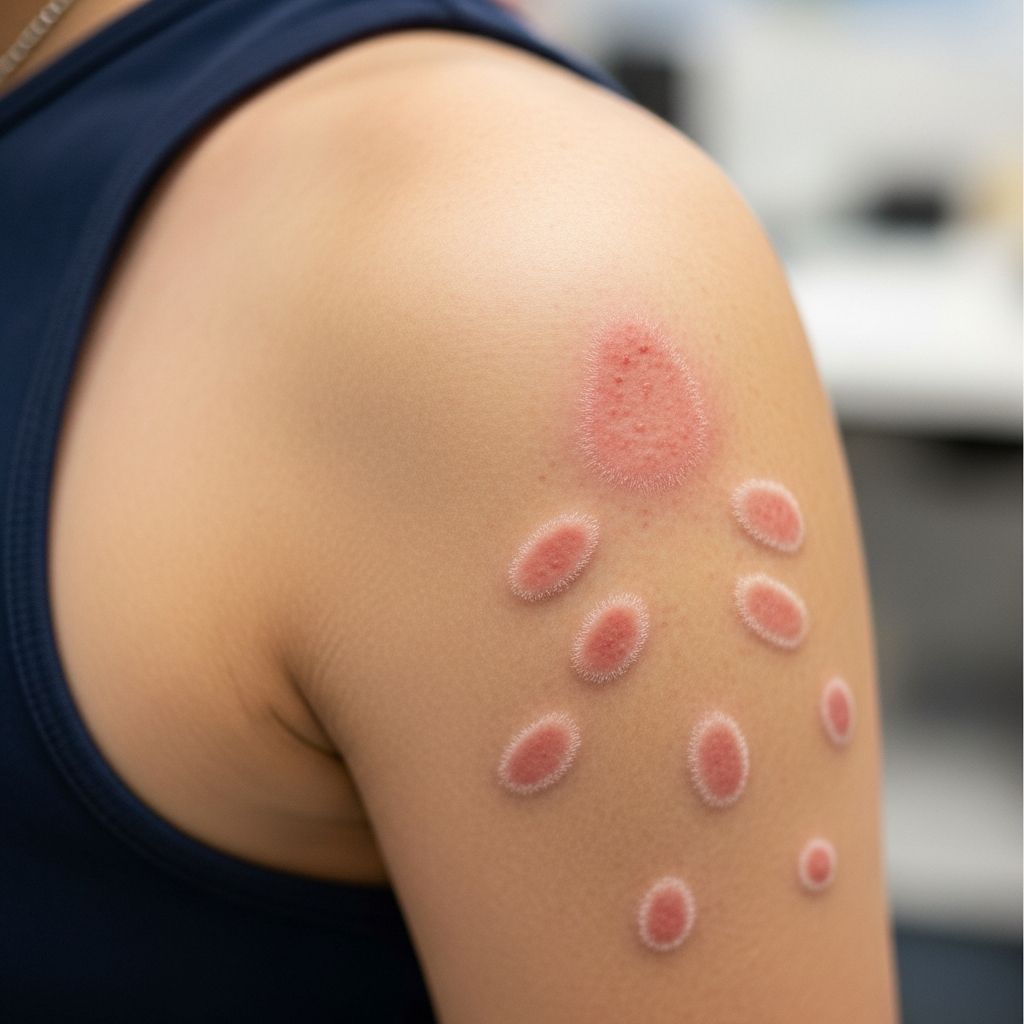
Pityriasis rosea is a temporary skin condition that often appears out of nowhere and can look more alarming than it actually is. It usually shows up as a patchy, scaly rash that spreads over the body for several weeks, then fades away on its own without leaving scars or permanent damage.
Because the rash can be itchy, noticeable, and sometimes appears on the chest, back, or stomach, many teens worry that it may be contagious or related to poor hygiene. In reality, pityriasis rosea is not caused by dirt, bad habits, or anything you did wrong, and it typically does not signal a serious illness.
What Is Pityriasis Rosea?
Pityriasis rosea is a type of skin eruption that follows a fairly typical pattern: a single larger spot often appears first, then many smaller spots follow days or weeks later. Doctors consider it a self-limited condition, which means the body usually clears it on its own without strong treatment.
This condition is more common in older kids, teens, and young adults. While anyone can get it, it tends to occur once in a lifetime, and repeat episodes are uncommon. The main issues it causes are cosmetic worries and itch, not long-term health damage.
Common Signs and Symptoms
Pityriasis rosea has some features that make it easier to recognize. Still, it can look different from person to person, especially in different skin tones, so a medical professional is the only one who can diagnose it for sure.
- A single larger patch (often called a “herald” or first patch) that appears on the chest, back, neck, or upper arm.
- Smaller oval spots that show up a few days to two weeks later, usually on the trunk and upper parts of the body.
- Fine, dry, or scaly surface on the patches.
- Mild to intense itching, especially when the skin is warm or sweaty.
- Sometimes mild tiredness, headache, or feeling a bit run-down around the time the rash first appears.
On lighter skin, the patches may look pink or reddish, while on darker skin they may appear darker brown, purple, or grayish. The rash can form patterns on the back that look like branches or a rough “tree” outline, which is one of the reasons doctors recognize it quickly.
How the Rash Usually Progresses
Although everyone’s experience is a bit different, most teens follow a similar timeline when they develop pityriasis rosea. Understanding this progression can make the condition feel less mysterious and easier to tolerate.
| Stage | What Often Happens | What It Feels Like |
|---|---|---|
| Early stage | One larger patch appears on the trunk, neck, or upper arm and slowly enlarges over several days. | You may barely notice it, or you might think it is ringworm or eczema. |
| Spreading stage | Within about 1–2 weeks, many smaller oval patches appear, usually on chest, back, and sometimes upper arms or thighs. | Itch often increases; you may become more aware of how the rash looks. |
| Peak stage | The rash reaches its full spread and stays fairly stable for a few more weeks. | Itch can come and go, often worse with heat, exercise, or hot showers. |
| Fading stage | Patches gradually shrink and lighten; new spots stop appearing. | Itching lessens and the skin slowly returns to its usual color, sometimes leaving faint marks for a short time. |
On average, the entire cycle often lasts around 4–8 weeks, though some people have a shorter or longer course. The skin usually returns to normal without scarring.
Possible Causes and Triggers
The exact cause of pityriasis rosea is not completely understood, but many experts think it may be linked to a temporary reaction of the immune system, possibly triggered by certain viruses. It is not the same as common viral rashes like chickenpox or measles and does not behave like those infections.
There is no strong evidence that the condition is related to food, allergies, or hygiene. It is also not considered a sexually transmitted infection. In most cases, the rash appears once, runs its course, and then does not come back.
Is It Contagious?
Pityriasis rosea is not thought to be highly contagious in everyday life. People who live in the same home do not usually all develop the rash, and normal contact like hugging, sharing a couch, or going to school is generally safe.
Because the cause is not fully known, doctors may still suggest basic good habits such as not sharing personal items like towels and keeping your skin clean and moisturized. However, there is usually no need for isolation from school, sports, or social activities solely due to this rash, unless your healthcare provider gives specific instructions.
Getting a Diagnosis
Many rashes can look similar, so it is important not to assume that any scaly patch is pityriasis rosea. A healthcare professional can usually make the diagnosis by examining your skin and asking a few questions about your symptoms and recent health.
In some cases, if the rash looks unusual or if there is a chance it could be another condition (such as ringworm, an allergic reaction, or a different infection), the provider may order additional tests. These might include a small skin scraping, blood tests, or rarely a tiny skin sample (biopsy) to be sure of the diagnosis.
Treatment Options and Home Care
Because pityriasis rosea almost always clears on its own, treatment usually focuses on making you more comfortable while your skin heals. For many teens, simple steps at home are enough to manage the itch and irritation.
- Gentle skincare: Use mild, fragrance-free cleansers and lukewarm water instead of hot showers, which can dry and irritate the skin.
- Moisturizing: Apply a bland, fragrance-free moisturizer after bathing and whenever your skin feels dry or itchy.
- Anti-itch creams: Over-the-counter creams with soothing ingredients or low-strength hydrocortisone may help calm the itch when used as directed.
- Oral antihistamines: Some people benefit from allergy tablets recommended by a healthcare provider, especially at night if itch keeps them awake.
- Cool comfort: Cool compresses or a fan on the skin can reduce the urge to scratch.
In more severe cases, or if the rash covers a large area and the itch is intense, a doctor might prescribe stronger creams, short-term medications, or light-based treatments. These options aim to reduce symptoms and sometimes shorten the duration of the rash.
Everyday Tips to Reduce Itch and Irritation
Even without prescription medicine, small changes to your daily routine can make pityriasis rosea easier to live with. The goal is to protect your skin barrier and avoid things that trigger more redness and itching.
- Wear soft, loose-fitting clothing made of cotton or other breathable fabrics.
- Avoid rough seams, scratchy tags, and tight sports gear that rubs directly on the rash.
- Skip heavily perfumed body sprays, lotions, and detergents that may irritate sensitive skin.
- Choose short, lukewarm showers instead of long, hot baths or very hot water.
- Pat your skin dry gently with a towel instead of rubbing vigorously.
- Try not to scratch, since scratching can make the rash more inflamed and lead to broken skin or infection.
When exercising, you might notice that sweat makes the rash more noticeable or itchy. Taking a quick rinse afterward and applying moisturizer can help soothe the skin.
Emotional Side: Feeling Self-Conscious
For many teens, the hardest part of pityriasis rosea is not the physical itch, but the emotional impact of having a visible rash. Spots on the chest, stomach, or back may feel embarrassing during gym class, swimming, or changing clothes in front of others.
It may help to remember that this condition is temporary and common among young people. Wearing clothing you feel confident in, using light, non-irritating makeup on areas your doctor says are safe, and talking openly with trusted friends or adults can all reduce the stress of coping with a short-term skin condition.
School, Sports, and Social Life
Most teens with pityriasis rosea can continue regular activities, including school, clubs, and sports. The rash itself does not usually limit physical ability, but itch and self-consciousness can make participation feel harder.
- Let a coach or PE teacher know if the rash or clothing rub is causing discomfort, so you can adjust uniforms or activities if needed.
- If sweat triggers more itch, ask about short breaks to cool down or drink water.
- Plan outfits that cover areas you prefer not to show but still stay breathable and comfortable.
Staying engaged in normal life activities can actually help distract from the rash and reduce anxiety. If you feel overwhelmed, a school counselor, nurse, or mental health professional can offer extra support.
When to See a Doctor
Although pityriasis rosea is usually mild, it is important to involve a healthcare professional rather than trying to diagnose yourself. Several other conditions can look similar but may need completely different treatment.
See a doctor or other qualified provider if:
- The rash is very painful, oozing, or has blisters.
- You have a high fever, feel extremely unwell, or notice other severe symptoms.
- The patches appear on the face or near the eyes.
- The rash lasts much longer than a couple of months without any sign of fading.
- You are unsure whether it is pityriasis rosea or something else, such as a fungal infection or an allergic reaction.
The healthcare provider can confirm the diagnosis, discuss options to reduce itching, and make sure there is no other explanation for your symptoms.
Possible Complications and Skin Changes
Most people recover fully from pityriasis rosea without any long-term problems. However, there are a few temporary changes you might notice as the rash heals.
- The spots may leave slightly lighter or darker marks than your normal skin tone for a short time.
- Areas that were scratched heavily can take longer to fade and be more noticeable.
- If the skin barrier was damaged by harsh products or heavy scratching, it may feel extra sensitive for a while.
Using sunscreen on exposed areas and treating your skin gently can help these marks fade more smoothly. If color changes or scarring worries you, ask a dermatologist for personalized advice.
Frequently Asked Questions
Can pityriasis rosea come back?
Most people only experience pityriasis rosea once. A second episode is possible but considered uncommon. If a similar rash appears again, have a healthcare professional confirm what it is rather than assuming it is the same condition.
Is pityriasis rosea related to allergies?
Current knowledge suggests that pityriasis rosea is not primarily an allergic reaction. While allergies can also cause itchy, red skin rashes, the pattern, timing, and triggers are usually different. If you suspect allergies, discuss your history and symptoms with a healthcare provider.
Can I go to school or hang out with friends?
In most cases, there is no medical reason to stay home from school or avoid friends because of pityriasis rosea. As long as you feel well enough and your provider has not given special instructions, you can continue your normal routine.
Will it leave permanent scars?
Pityriasis rosea usually heals without permanent scars. Some people notice temporary changes in skin color where the patches were, but these differences tend to fade with time, especially if you protect your skin from unnecessary irritation and sunburn.
Can I use makeup or self-tanner over the rash?
Some gentle, non-irritating products may be safe, but heavy or fragranced cosmetics can bother already sensitive skin. Before using makeup, self-tanner, or cover-up products on the rash, ask a healthcare professional for guidance and test any product on a small area first.
Key Takeaways for Teens
- Pityriasis rosea is a temporary rash that usually clears on its own in a matter of weeks.
- It is not caused by poor hygiene, and it usually is not highly contagious.
- Treatment focuses on easing itch and protecting your skin, rather than curing the rash instantly.
- Most teens can keep up with school, sports, and social life while it heals.
- Talking with a healthcare professional can provide reassurance and specific advice for your situation.
While the rash may be annoying and sometimes embarrassing, it is generally a short chapter in your health story. With patience, good skin care, and support from the adults around you, pityriasis rosea can come and go without leaving a lasting mark on your life.