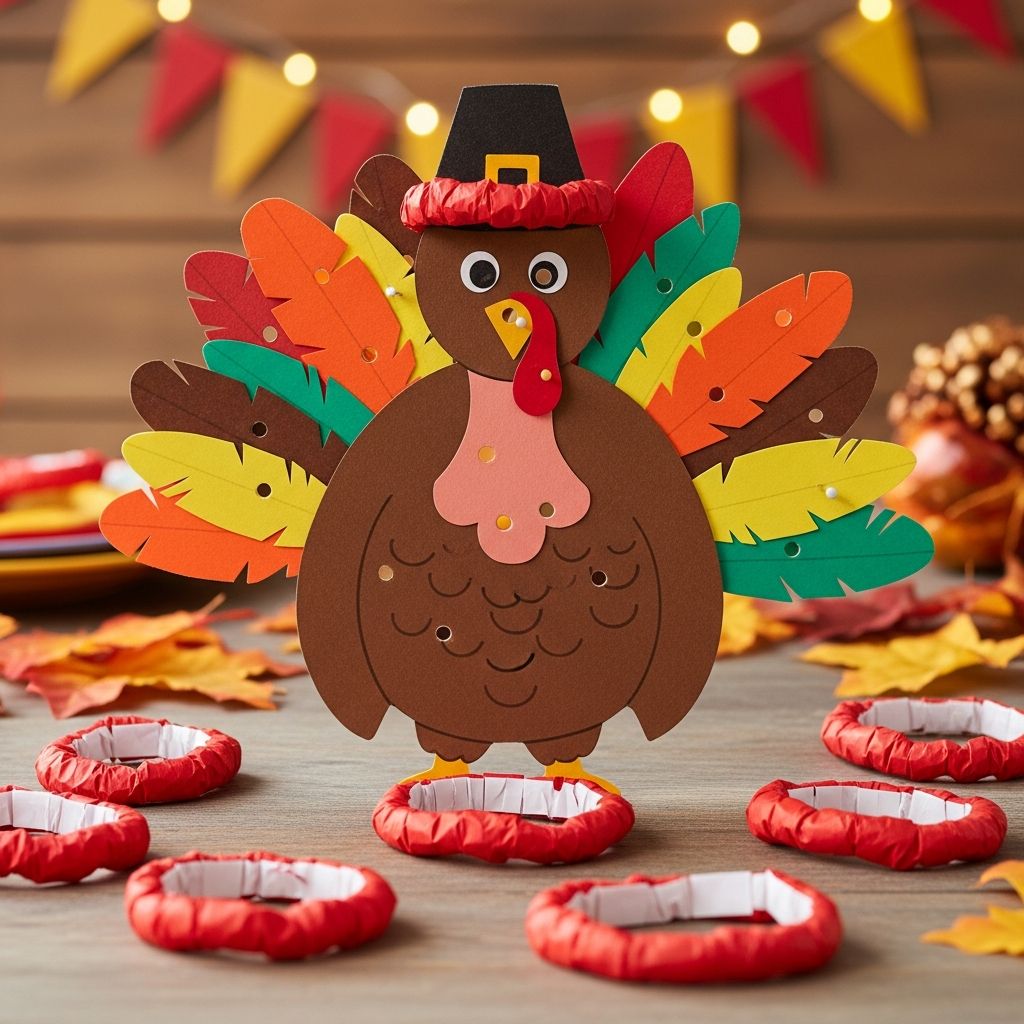
Thanksgiving gatherings are the perfect time for relaxed, goofy games that keep everyone laughing between courses. One of the easiest activities to set up is a playful twist on a classic party favorite: Pin the Snood on the Turkey. With a simple printable turkey, a handful of paper snoods, and a blindfold, you can turn any wall or door into a Thanksgiving game station that appeals to kids, teens, and adults alike.
This guide walks you through everything you need to know: what a turkey snood actually is, how to create your own game poster and pieces, setup tips, game variations, and ways to weave gratitude and learning into the fun.
Understanding the Turkey: What Is a Snood, Anyway?
Before you start pinning body parts onto cartoon birds, it helps to know what you are aiming for. Turkeys have a few distinctive facial features that often get mixed up:
- Beak – the hard, pointed mouth used for pecking and eating.
- Wattle – the fleshy flap of skin hanging from the neck or throat area.
- Snood – the fleshy extension that droops over the turkey’s beak, lengthening and brightening in color when the turkey is excited or courting.
In most children’s drawings, the snood and the wattle are often combined or confused, but in this game, you will focus on the snood as the small, soft, colorful piece that belongs on the turkey’s face near the beak.
Why This Game Works So Well for Thanksgiving
Seasonal games are more than a way to fill time; they help create shared memories and keep guests of different ages engaged. Family traditions and playful activities are associated with stronger family bonds and can support children’s social and emotional development. A simple, low-tech game like Pin the Snood on the Turkey has several advantages:
- Inclusive – children, grandparents, and everyone in between can play with minimal instructions.
- Low cost – you can print a turkey at home and use basic supplies you likely already own.
- Flexible timing – the game can run as an open station guests visit between cooking, football, and dessert.
- High laughter factor – watching people try to hit the right spot while blindfolded never really gets old.
- Easy to adapt – you can adjust difficulty, add educational twists, or turn it into a team challenge.
Materials You Need to Make the Game
You can keep the supply list short or add optional touches for extra flair. Here is a straightforward setup:
| Item | Purpose | Tips |
|---|---|---|
| Printable turkey image (no snood) | Main poster for players to aim at | Print on letter-size or enlarge to poster size for big groups. |
| Printable snoods or paper cutouts | Pieces players will try to pin in the right place | Use different colors or number them so you can tell whose is whose. |
| Cardstock or heavy paper | Makes the poster and snoods sturdier | Heavy paper resists tearing if kids are excited. |
| Adhesive (tape, removable putty, or Velcro dots) | Temporarily attaches snoods to the turkey | Use low-tack options to protect walls and the poster. |
| Blindfold | Adds challenge and comedy | Bandanas, scarves, or soft sleep masks all work well. |
| Poster board or foam board (optional) | Backing board for stability | Ideal if your wall surface is textured or uneven. |
| Markers or pens | Label snoods and decorate the poster | Add names, numbers, or tiny doodles for fun. |
Step-by-Step: Building Your Pin the Snood on the Turkey Game
Once you have gathered supplies, follow these steps to create your custom game. Feel free to adapt the details to fit your art style and printer size.
1. Choose or Draw Your Turkey
You have two main options:
- Use a printable design
Search for a kid-friendly outline or illustrated turkey that deliberately leaves off the snood. Resize it in your print settings so that the face area is large enough for players to aim at. - Create your own artwork
Draw a big turkey on paper or poster board, emphasizing the head and beak area. Leave some obvious space above the beak where the snood belongs. Simple shapes and bold outlines work best for kids.
2. Print and Mount the Turkey Poster
- Print the turkey on sturdy paper or glue the printout onto poster board.
- Trim any white borders if you want a clean edge.
- Attach the turkey to a wall, door, or foam board at eye level for most players. For mixed ages, aim around the height of older kids, and shorter players can reach up.
3. Design and Cut the Snoods
The snoods are the hero of this game, so make them bright and noticeable.
- Sketch a simple, curved teardrop shape that fits proportionally on the turkey’s face.
- Trace that shape multiple times onto colored cardstock or patterned paper.
- Cut out enough snoods for all players, plus a few extras for mistakes and latecomers.
- Label each snood with a name, number, or initial so you can tell which player placed which one.
4. Add Adhesive to the Snoods
- Place a small loop of painter’s tape, rolled tape, or a removable putty dot on the back of each snood.
- For a reusable version, attach soft Velcro dots to the snoods and hook-side dots to the turkey’s face area.
- Test one snood on a corner of the poster to make sure it sticks firmly without tearing when removed.
5. Set Up a Safe Play Zone
Because players will be blindfolded and turning around, clear space matters.
- Remove chairs, toys, and any tripping hazards from the area in front of the turkey poster.
- Mark a standing line with painter’s tape on the floor about 4–8 feet away, depending on players’ ages.
- Designate one adult or older teen as the spotter to guide players gently and prevent collisions.
How to Play Pin the Snood on the Turkey
The rules are intentionally simple so that everyone can join quickly, even if they arrive late.
Basic Rules
- Write each player’s name on a snood.
- Have the first player stand on the floor mark and show them exactly where the snood should go on the turkey.
- Blindfold the player, making sure they cannot see.
- Spin the player gently 1–3 times (fewer spins for younger children).
- Hand the player their snood and point them toward the wall.
- The player walks forward and tries to place the snood where they think it belongs.
- Once they stick the snood, remove the blindfold so everyone can see the result.
- Continue until everyone has had a turn (or multiple turns in small groups).
Scoring Options
You can keep the game casual and just admire the funniest placements, or add a light competition element:
- Bullseye scoring – Draw faint rings around the correct snood spot before the game. Closest ring earns the most points (e.g., 10 points for the bullseye, 5 for the next ring, 2 for the outer ring).
- Closest snood wins – Use a ruler or string to measure the distance from each snood to the correct spot. The shortest distance wins a small prize.
- Kids vs. adults – Divide players into two teams. Add up total points for each group and crown a winning side.
Age-Based Variations and Accessibility Tips
Adapting games for developmental stages helps all children feel included and successful. Try these modifications for different ages and abilities.
For Preschoolers
- Skip the spinning or limit it to one gentle turn.
- Allow them to peek slightly if being completely blindfolded causes distress.
- Place the starting line closer to the turkey.
- Use oversized snoods that are easy to grasp with small hands.
For School-Age Kids
- Increase the number of spins to make the challenge sillier.
- Add time pressure: each player has 15 seconds from first step to sticking the snood.
- Invite them to design their own snoods with glitter, stickers, or patterned paper.
For Teens and Adults
- Add humorous handicaps, such as walking backward for three steps before turning around.
- Require players to answer a Thanksgiving trivia question correctly to earn a turn.
- Make the target smaller by drawing a precise outline where the snood should sit.
Accessibility and Sensory-Friendly Adjustments
- Offer an alternative to the blindfold, such as closing eyes while a spotter gently guides the player’s arm.
- Allow seated play for anyone using a wheelchair or who prefers not to stand and spin.
- Turn down background noise (like TV or loud music) to help players focus.
Adding Learning and Gratitude to the Fun
You can turn this lighthearted activity into a chance to teach, connect, and reflect on the holiday’s themes.
Mini Turkey Science Lesson
As you introduce the game, briefly explain a few fun turkey facts:
- Wild turkeys can fly short distances and run at impressive speeds; some can reach up to 20–25 miles per hour on the ground.
- The snood and wattle can change color based on the turkey’s emotional state, becoming brighter during courtship.
- Only male turkeys (toms) typically have the large fan-shaped tail associated with the classic Thanksgiving image.
Gratitude Prompts Between Turns
Family rituals that include expressions of gratitude have been linked with improved well-being and stronger family relationships. Use the natural pauses between turns to encourage thankfulness:
- Before a player gets blindfolded, ask them to share one thing they are grateful for.
- Let each snood color correspond to a category, such as family, friends, health, or small joys.
- Invite kids to draw something they are thankful for on the back of their snood.
Decorating Ideas and Themed Game Station Setup
Presentation makes the game feel special and photo-ready. Consider setting up a small “Turkey Corner” where the game lives for the day.
- Hang the turkey poster on a solid-colored background (like kraft paper or a fabric curtain) so it stands out.
- String a simple banner above it with a phrase like “Turkey Time” or “Find the Snood.”
- Place a small basket or tray nearby to hold snoods, markers, and the blindfold.
- Add paper leaves, mini pumpkins, or handprint turkeys as extra decorations that kids helped create.
Making the Game Reusable Year After Year
With a few tweaks, your Pin the Snood on the Turkey setup can become a long-term family tradition.
- Lamination – Laminate the turkey poster and snoods to protect them from sticky fingers and tape damage.
- Storage – Store the poster rolled loosely in a cardboard tube and place snoods in a labeled envelope or small box.
- Annual signatures – Ask each player to sign the back of the poster each year; it becomes a visual record of your Thanksgiving guests over time.
- Rotating roles – Let a different child or relative be the “Game Captain” each year, in charge of setup and explaining rules.
Frequently Asked Questions (FAQs)
How big should the turkey poster be?
For small gatherings, a standard letter-size printout can work, but a larger poster (around 18–24 inches tall) is easier for kids to aim at and more visible across the room. You can print a tiled version on multiple sheets and tape them together if you do not have large-format printing.
What if I do not have a color printer?
A black-and-white turkey outline is perfectly fine. Children can color the turkey before the game starts, which doubles as a calm pre-dinner activity. Use brightly colored paper for the snoods to keep them easy to see.
Can I play without blindfolding young children?
Yes. For toddlers and preschoolers, you can skip the blindfold and spinning entirely. Instead, turn it into a simple placement game where they try to match the snood to a lightly drawn outline on the turkey’s face. Older kids and adults can still use blindfolds for added challenge.
How many players can join in?
The game works for any number of people. For large gatherings, keep the line moving by limiting each player to one or two attempts before rotating. You can run multiple rounds or create small teams if there is a long wait.
What kinds of prizes are best?
Small, low-pressure rewards keep the focus on fun rather than competition. Consider Thanksgiving stickers, bookmarks, mini notepads, or simply the honor of picking the next game or dessert. You can also skip prizes altogether and emphasize laughter and shared photos.
Can I adapt this idea for other holidays?
Absolutely. The same basic mechanic works year-round. For example, you can pin a nose on a snowman in winter, a heart on a Valentine’s card in February, or a tail on a bunny in spring. Swap out the central picture and the movable piece while keeping the rules the same.
References
- Wild Turkey: Habitat, Diet, and Behavior — National Park Service. 2022-11-10. https://www.nps.gov/articles/wild-turkey.htm
- Wild Turkey (Meleagris gallopavo) — U.S. Fish & Wildlife Service Species Profile. 2021-09-01. https://www.fws.gov/species/wild-turkey-meleagris-gallopavo
- Children’s Involvement in Family Activities and Their Development — National Institute of Child Health and Human Development (NICHD). 2019-03-15. https://www.nichd.nih.gov/newsroom/news/030119-family-activities
- Play in Children’s Development, Health and Well-Being — Lester, S., Russell, W., Toy Industries of Europe. 2010-06-01. https://www.playengland.org.uk/wp-content/uploads/2020/03/play-childrens-development-health-and-well-being-feb-2010.pdf
- Gratitude in Family Life: A Pathway to Well-Being — American Psychological Association. 2018-11-20. https://www.apa.org/news/press/releases/2018/11/gratitude-family