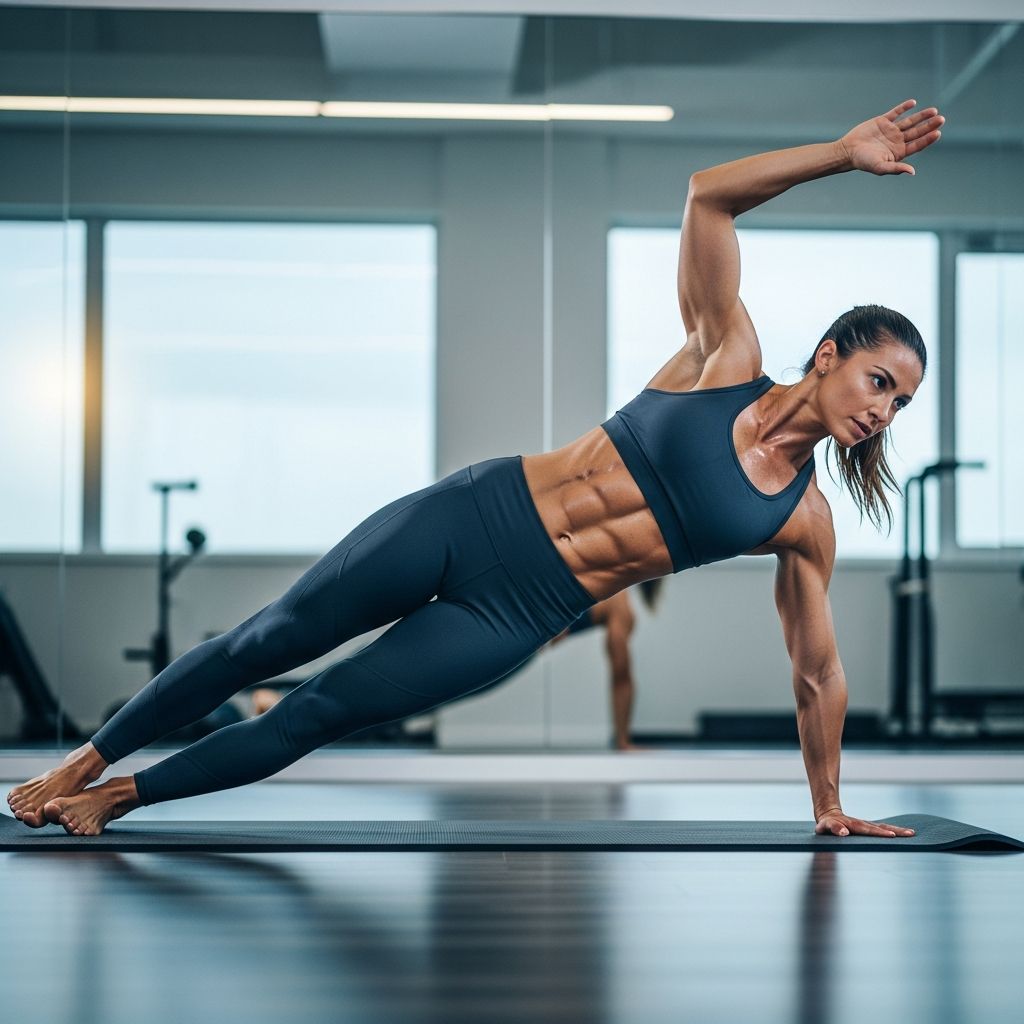
Pilates has a reputation for being gentle, slow, and beginner-friendly. Combine its precision with circuit-style training, however, and you get one of the toughest bodyweight workouts you can do—no equipment, no running, and no jumping required.
This guide explains how to build a challenging Pilates circuit, why it works so well, and how to adapt it for different fitness levels while staying safe and motivated.
Why Pilates Circuit Training Feels So Hard (and Works So Well)
Pilates focuses on controlled movement, deep core engagement, and alignment. Circuit training strings multiple exercises together with minimal rest, keeping your heart rate elevated and muscles under tension for long stretches. Combine the two and you create a low-impact workout that challenges strength, mobility, and cardiovascular fitness simultaneously.
- Continuous effort: Moving from exercise to exercise with short rest periods improves muscular endurance and cardiorespiratory fitness.
- Deep core activation: Pilates targets the deep abdominal and spinal stabilizers that support posture, movement control, and spinal health.
- Joint-friendly intensity: Bodyweight and low-impact positions reduce stress on hips, knees, and ankles while still challenging muscles significantly.
- Whole-body focus: Circuits naturally rotate between upper body, lower body, and core work, giving you a full-body session in less time.
For busy people, this format offers serious training benefits in 20–40 minutes, making it easier to meet weekly strength and cardio recommendations.
Core Principles of an Effective Pilates Circuit
To get the most from this style of training, build your circuit around a few simple principles. Think quality over quantity and control over chaos.
1. Alignment First
Pilates emphasizes putting your body in strong, well-aligned positions and then maintaining that alignment as you move. This protects your joints and helps recruit the right muscles.
- Neutral spine (natural curves of the spine maintained)
- Ribs gently connected (not flaring upward)
- Shoulders drawn away from ears
- Neck long, gaze soft—not craning or collapsing
2. Deep Core Engagement
In Pilates, the “core” includes the abdominals, back muscles, pelvic floor, and diaphragm, all working together to stabilize the trunk. You will:
- Exhale to engage the deep abdominals before moving
- Keep your pelvis steady during arm and leg motions
- Avoid letting your low back arch excessively under load
3. Continuous, Controlled Movement
Circuit training keeps rest short and work intervals consistent. Unlike chaotic high-intensity training, a Pilates circuit maintains control even when your heart rate climbs.
- Move smoothly—a “quiet” body except for what is supposed to move
- Use a steady breath pattern to avoid holding your breath
- Stop when form breaks rather than chasing more repetitions
4. Balanced Exercise Selection
A smart circuit hits all major regions in each round, which also helps reduce overuse and fatigue in any single area.
- Lower body (hips, glutes, thighs)
- Upper body (shoulders, back, chest, arms)
- Core and spine (flexion, extension, rotation, and anti-rotation)
- Mobility and stretching woven between strength moves
Building Your Own Pilates Circuit
Before trying a sample circuit, it helps to understand how to design one that suits your goals, space, and schedule.
Step 1: Choose Your Duration
Decide how long you can train today. For most people:
- 20 minutes: Short, intense, perfect for busy days
- 30 minutes: Balanced session with warm-up and cool-down
- 40 minutes: Longer endurance and strength focus
Step 2: Set Intervals and Rounds
Using time instead of rep counts improves pacing and helps you focus on form.
| Level | Work Interval | Rest Between Moves | Rounds |
|---|---|---|---|
| Beginner | 25–30 seconds | 20–30 seconds | 2–3 |
| Intermediate | 35–40 seconds | 15–20 seconds | 3–4 |
| Advanced | 45–50 seconds | 10–15 seconds | 4–5 |
Step 3: Pick Exercise Categories
Select one exercise from each category, then string them together in this order:
- Core activation
- Lower-body strength
- Upper-body strength
- Dynamic core or rotation
- Glute/hip endurance
- Full-body integration or cardio-style move
This layout alternates muscle groups to allow local recovery while maintaining whole-body effort, a hallmark benefit of circuit training.
A Sample Pilates Bodyweight Circuit
Use this template as a starting point. Adjust the work/rest intervals from the table above according to your level.
Warm-Up (4–6 Minutes)
- Cat–cow spinal mobility
- Pelvic tilts lying on your back
- Standing roll-downs through the spine
- Hip circles and gentle lunges
Circuit Structure
Perform each exercise for your chosen work interval with controlled breathing, followed by brief rest. After all 6 moves, rest 60–90 seconds, then repeat for 2–4 total rounds.
1. Dead Bug Variation (Core Activation)
Lie on your back with legs in tabletop and arms pointing to the ceiling. Slowly extend one leg and the opposite arm away from center while keeping your low back close to the floor. Alternate sides.
- Focus: Deep abdominals and spinal stability
- Modification: Keep toes on the ground and slide the heel instead of lifting the leg
2. Pilates Lunge with Hinge (Lower Body)
Step one leg back into a long stance. Bend both knees into a lunge while keeping your torso upright, then hinge slightly forward from the hips as you straighten the front leg, maintaining a long spine.
- Focus: Quads, hamstrings, glutes, and balance
- Modification: Shorten the range of motion or hold onto a stable surface
3. Triceps Press in Plank (Upper Body)
From hands-and-knees or full plank, bend the elbows close to your ribs and lower your chest slightly, then press back up with control.
- Focus: Triceps, chest, and shoulder stability
- Modification: Perform against a wall or countertop
4. Side Plank Hip Lift (Lateral Core)
Lie on your side, forearm under shoulder. Lift hips into a straight line from head to heels (or knees). Lower hips with control and lift again.
- Focus: Obliques, shoulder stabilizers, and lateral hip
- Modification: Keep bottom knee on the floor and only lift partially
5. Single-Leg Bridge March (Glutes & Hamstrings)
On your back, feet hip-width apart, lift into a bridge. Alternate lifting one knee toward your chest, keeping hips level.
- Focus: Posterior chain strength and pelvic control
- Modification: Keep both feet on the ground and hold a static bridge
6. Standing Pilates Squat Reach (Integrated / Cardio-Style)
Stand tall, feet hip-width. Sit into a squat with arms reaching forward, then stand and sweep arms overhead with a strong exhale. Keep the movement continuous and fluid.
- Focus: Full-body coordination, leg strength, and elevated heart rate
- Modification: Limit depth of the squat or pause between reps
Cool-Down (4–5 Minutes)
- Supine spinal twist, both sides
- Figure-four stretch for hips
- Chest and shoulder stretch against a wall
- Slow diaphragmatic breathing in a comfortable position
Key Benefits of a Pilates Circuit Workout
Done consistently, this style of training supports several important aspects of health and performance.
1. Stronger, More Enduring Muscles
Circuit training with bodyweight resistance can increase muscular endurance and strength by keeping muscles under tension with limited rest. Pilates adds a stability challenge, recruiting small stabilizers that are often missed in traditional lifting.
2. Improved Heart and Lung Health
Because your heart rate stays elevated during circuits, these workouts can improve markers of cardiovascular fitness and lung capacity over time. Research suggests circuit formats can be as effective as continuous cardio for improving cardiorespiratory fitness while also developing strength.
3. Better Posture and Movement Efficiency
Pilates is frequently used to correct muscle imbalances, improve alignment, and refine movement patterns, all of which support better posture and reduced injury risk. When you work through a circuit in good alignment, those posture benefits show up in daily life—sitting, lifting, running, and even playing with your kids.
4. Joint-Friendly Weight Management
Circuit training can burn substantial calories and support body weight and fat loss, especially when combined with nutrition and sleep habits that support a calorie deficit. Because Pilates circuits are low-impact and modifiable, they are an option for people who cannot tolerate high-impact workouts but still need metabolic challenge.
5. Mental Focus and Stress Relief
The mindful breathing and concentration required in Pilates can help reduce stress and cultivate body awareness. Regular exercise more broadly has been linked to improved mood and quality of life in a wide range of populations, including those dealing with chronic illness.
Progressions: Making Your Circuit Even Tougher
Once the basic version feels manageable with good form, you can increase difficulty without adding external weights.
- Add instability: Narrow your stance, move to single-leg variations, or use staggered hand positions in planks.
- Increase time under tension: Slow down the lowering phase of each move or pause at the most challenging point.
- Reduce rest: Shorten your rest intervals by 5 seconds every few weeks while maintaining form.
- Layer complexity: Combine movements—for example, a lunge with a rotation or a bridge with arm reach.
Progress gradually and change only one variable at a time so you can see how your body responds.
Safety Guidelines and Who Should Be Cautious
Although low impact, a demanding Pilates circuit is still serious exercise. Basic precautions make it safer and more effective.
- Get clearance: People with cardiovascular, metabolic, or orthopedic conditions should consult a healthcare provider before starting new vigorous exercise, in line with general exercise guidelines from organizations such as the American College of Sports Medicine.
- Respect pain: Sharp or sudden pain is a stop sign. Modify or skip the move and seek professional advice if symptoms persist.
- Support your back: If you have a history of back issues, emphasize neutral spine, smaller ranges of motion, and core bracing. Supervised Pilates is often used in rehabilitation settings to safely enhance core strength and mobility.
- Prioritize recovery: Allow at least one day between intense circuit sessions for the same muscle groups, especially when you are new to training.
How Often Should You Do a Pilates Circuit?
Major exercise guidelines typically recommend at least 150 minutes of moderate-intensity aerobic activity per week plus 2 or more days of strength training for major muscle groups. A Pilates circuit can contribute to both, depending on intensity.
- 2 sessions per week: Good starting point for beginners or as a complement to walking, cycling, or running.
- 3–4 sessions per week: Provides significant strength and conditioning stimulus if you vary intensity and moves.
- Daily movement: On non-circuit days, use gentler Pilates, mobility work, or walking to support recovery.
FAQ: Pilates Circuit & Bodyweight Training
Is a Pilates circuit enough to build strength without weights?
For many people, yes—especially beginners and intermediates. Circuit-style bodyweight training can increase muscular strength and hypertrophy when you train close to fatigue, keep rest short, and progress over time. Eventually, advanced trainees may add external resistance to keep progressing.
Can a Pilates circuit replace my cardio workouts?
If your heart rate is elevated throughout and the effort feels moderate to vigorous, a Pilates circuit can count toward your weekly aerobic activity goals. That said, combining it with other forms of cardio (like brisk walking, cycling, or running) offers variety and further benefits for heart and lung health.
How is a Pilates circuit different from standard HIIT?
Traditional high-intensity interval training often focuses on all-out efforts and explosive movements. A Pilates circuit emphasizes control, posture, and joint alignment, using mostly low-impact moves. It can still be intense, but the stress is shifted from impact and speed to precision and sustained muscular effort.
What if my core feels like the weak link?
That is common in Pilates, where deep trunk muscles are heavily targeted. You can shorten work intervals for core moves, add more rest, or perform regressed variations (e.g., knees down, smaller ranges). Over time, improved core strength typically translates into better balance, posture, and performance in other activities.
Is this style of training appropriate after injury?
Pilates-based exercise is often used in rehabilitation to improve strength, mobility, and balance in a controlled, low-impact way. However, post-injury circuits should be designed or approved by a qualified health or rehab professional who understands your specific condition.
References
- The Top 5 Benefits of Pilates for Athletes — The Pilates Circuit. 2023-05-01. https://www.thepilatescircuit.com/blog/the-top-5-benefits-of-pilates-for-athletes
- The Benefits of Circuit Classes – And How to Adapt Them for Pilates, Cancer Rehab & Gentle Movement — Pilates Therapy & Bodywork. 2023-09-15. https://pilatestherapyandbodywork.com/the-benefits-of-circuit-classes/
- 9 Science-Backed Benefits of Circuit Training — Healthline. 2024-01-10. https://www.healthline.com/health/fitness/benefits-of-circuit-training
- Pilates Circuit – Class Description & Benefits — RTR Pilates. 2022-06-20. https://rtrpilates.com/classes/pilates-circuit/