Physical activity is crucial for children’s growth, health, and happiness. Parents play a key role in fostering habits that last a lifetime by integrating movement into daily routines.
Why Movement Matters for Growing Bodies
Regular physical activity supports children’s overall development in multiple ways. It strengthens the heart and lungs, helping maintain a healthy weight and improving cardiovascular fitness. Active kids experience better sleep, higher self-esteem, improved concentration, and stronger bones and muscles.
Beyond physical gains, exercise enhances balance, flexibility, and social skills through play and teamwork. It reduces depression symptoms, boosts brain function, and aids academic performance. Early habits combat inactivity risks, promoting lifelong wellness.
Official Activity Recommendations by Age
Health authorities provide clear benchmarks to guide parents. These ensure children get enough moderate-to-vigorous movement for optimal benefits.
| Age Group | Daily Recommendation | Key Components |
|---|---|---|
| 3-5 years (Preschoolers) | Active throughout the day (about 3 hours total, including light, moderate, vigorous) | Active play like jumping, tricycle riding; encourage unstructured movement |
| 6-17 years (School-age & Teens) | At least 60 minutes moderate-to-vigorous | Aerobic (most days), muscle-strengthening (3+ days), bone-strengthening (3+ days) |
For children 5-18, spread activity across the week, minimizing sedentary time. School-aged kids benefit from several 15-minute bouts daily. Preschoolers thrive on caregiver-encouraged play.
Types of Activities to Prioritize
Diverse movements build well-rounded fitness. Focus on age-appropriate options that kids enjoy.
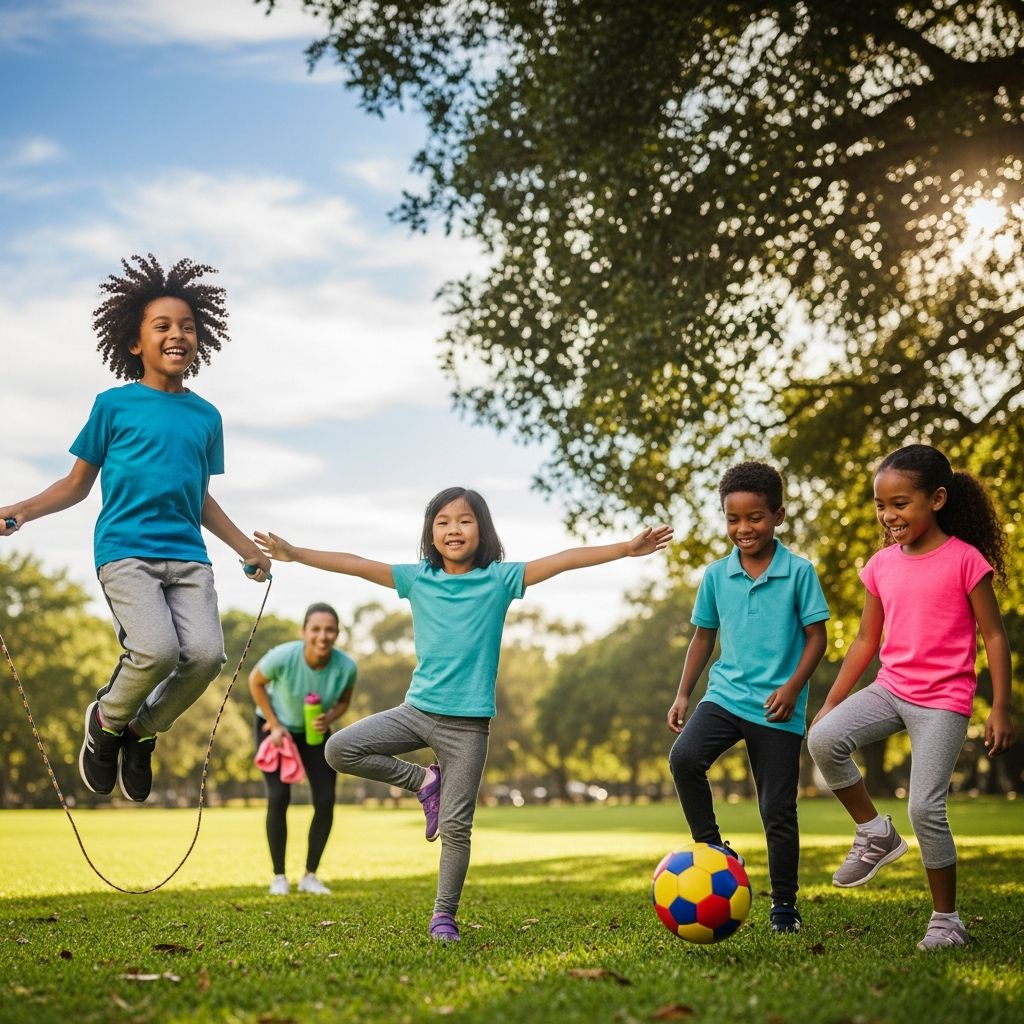
- Aerobic: Walking, running, biking, swimming—raises heart rate for endurance.
- Muscle-Strengthening: Climbing, push-ups, gymnastics for younger kids; weights for supervised teens.
- Bone-Strengthening: Jumping rope, running, sports like basketball.
Intermittent play counts—tag, hide-and-seek, or playground fun adds up quickly. Variety prevents boredom and develops skills.
Practical Strategies for Busy Families
Integrate activity without overhauling schedules. Parents modeling behavior is most effective.
- Walk or bike to school; park farther away for extra steps.
- Family outings: hikes, park visits, backyard games.
- Home chores: gardening, cleaning count as movement.
- Limit screens; replace with active play.
For toddlers, teach basics like throwing or skipping to build confidence. Join classes in dance or soccer adapted for young ages.
Seasonal and Everyday Adaptations
Weather shouldn’t halt activity. In cold months, indoor options like dancing or obstacle courses work well.
- Summer: Swimming, outdoor sports.
- Winter: Mall walking, indoor gyms.
- Rainy days: Follow-the-leader games indoors.
Active travel—walking neighborhoods or pram strolls for babies—builds routines early.
Overcoming Common Hurdles
Barriers like time or motivation are surmountable.
| Challenge | Solution |
|---|---|
| Child resists structured sports | Opt for free play; let them choose interests. |
| Busy schedules | Short bursts: 10-15 min play multiple times daily. |
| Overweight concerns | Focus on fun, not weight; model healthy habits. |
| Disability or health issues | 20 min daily, adapted strength activities 3x/week; consult doctor. |
Emphasize fun and social perks to boost buy-in.
Role Modeling and Family Involvement
Kids mimic parents. Regular family activity strengthens bonds and habits.
- Play together: Toss balls, race, dance parties.
- Set family challenges: Step goals or weekend hikes.
- Promote body positivity; celebrate effort.
Schools contribute via PE, but home reinforcement is vital.
Safety First: Guidelines for Healthy Play
Protective measures ensure fun stays safe.
- Age-appropriate gear: Helmets for biking.
- Supervise weights for older kids.
- Gradual buildup for new activities.
- Medical clearance for conditions.
Hydrate, use sunscreen, dress suitably.
Lifelong Advantages of Early Fitness
Childhood activity predicts adult health. It cuts risks of chronic diseases, supports mental well-being, and fosters discipline.
Active youth avoid risky behaviors, sleep better, and excel academically. Invest now for their future.
Frequently Asked Questions
What’s the minimum daily activity for school kids?
At least 60 minutes of moderate-to-vigorous activity, mostly aerobic, with muscle and bone work 3+ days weekly.
How active should preschoolers be?
Throughout the day via play, totaling ~3 hours of varied intensities.
Do video games count as exercise?
No—replace screen time with real movement; active games can supplement.
Can overweight kids exercise safely?
Yes, start slow with enjoyable activities; consult professionals if needed.
How to motivate reluctant children?
Let them pick activities, join in, focus on fun and friends.
References
- Child Activity: An Overview | Physical Activity Basics — Centers for Disease Control and Prevention (CDC). 2023. https://www.cdc.gov/physical-activity-basics/guidelines/children.html
- Children – keeping them active — Better Health Channel, Victoria Government. 2023. https://www.betterhealth.vic.gov.au/health/healthyliving/children-keeping-them-active
- Physical activity guidelines for children and young people — National Health Service (NHS). 2023. https://www.nhs.uk/live-well/exercise/physical-activity-guidelines-children-and-young-people/
- Physical Activity for Children 5-12 — SHAPE America. 2023. https://www.shapeamerica.org/MemberPortal/standards/guidelines/pa-children-5-12.aspx
- AHA Recommendations for Physical Activity in Kids — American Heart Association. 2023. https://www.heart.org/en/healthy-living/fitness/fitness-basics/aha-recs-for-physical-activity-in-kids-infographic
- Physical Activity Guidelines for School-Age Children — American College of Sports Medicine (ACSM). 2023. https://acsm.org/physical-activity-guidelines-children/