Choosing a baby bottle can feel surprisingly complicated, especially when you want to support breastfeeding, reduce colic, and keep feeding as simple as possible. Philips Avent offers several bottle styles designed to meet different feeding needs, which can be a real help once you understand how they differ.
Why Philips Avent Bottles Are So Popular
Philips Avent bottles are widely used because they focus on two goals that matter to most parents: keeping babies comfortable and making feeding easier for caregivers. Their product range is built around thoughtful details such as anti-colic valves, breast-shaped nipples, and a small number of parts to wash after every feed.
Instead of offering one universal bottle, Philips Avent splits its lineup into designs that emphasize different priorities, such as minimizing swallowed air or mimicking the feel of breastfeeding. This approach gives parents flexibility as their baby’s feeding style changes over time.
Main Philips Avent Bottle Families
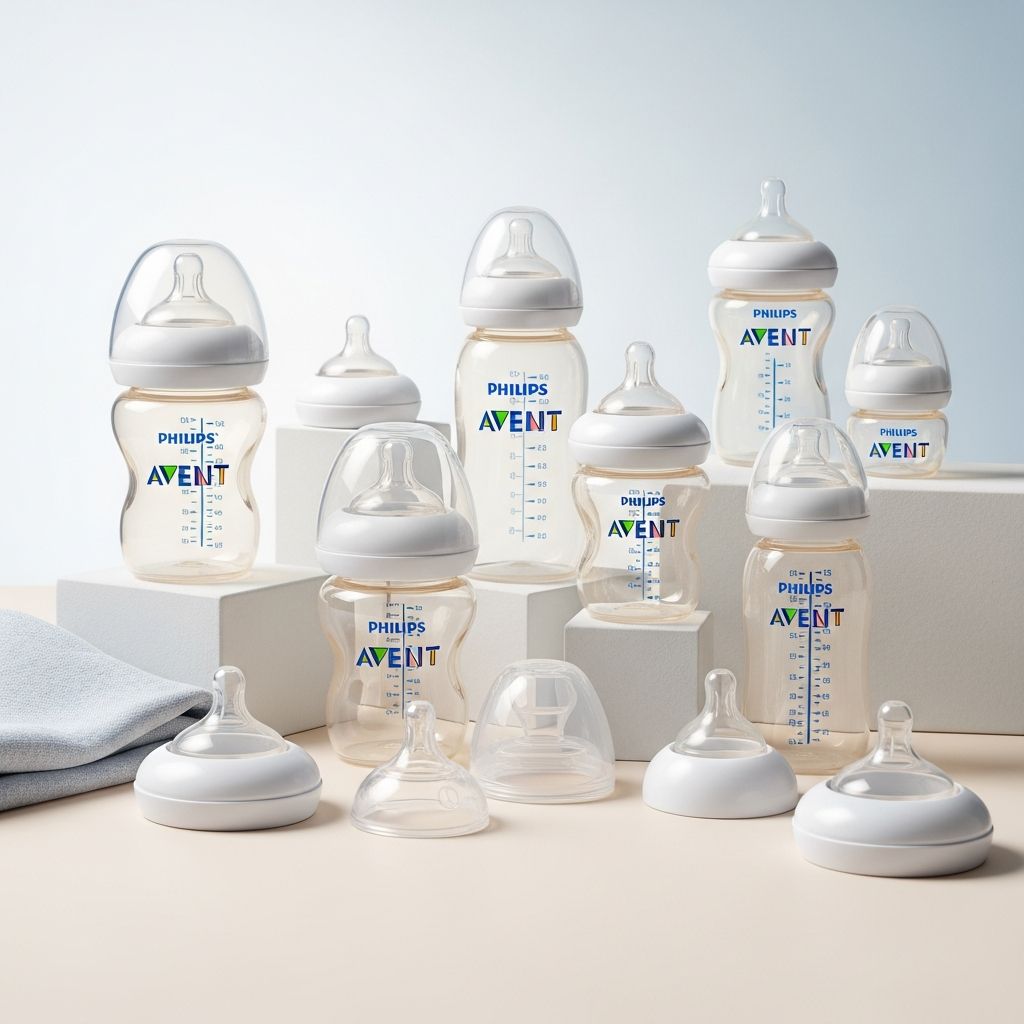
Philips Avent bottles fall into a few main families, each designed with a specific purpose in mind. Understanding these families will help you decide which one best matches your baby’s needs and your own routine.
Anti-Colic Bottles
Anti-colic bottles are built for babies who are especially gassy or prone to fussiness after feeds. They include a venting system that directs air away from your baby’s tummy, helping to reduce spit-up and discomfort.
- Integrated vent in the nipple or bottle to reduce swallowed air.
- Typically a slimmer, more traditional bottle shape that many babies accept easily.
- Often fewer parts than complex vented bottles from other brands, which makes cleaning easier.
Natural-Style Bottles
Natural-style bottles are designed to feel more like breastfeeding, which can be helpful for parents who are combining nursing with bottle feeds. These bottles focus on a wide, breast-shaped nipple and a gentle flow to encourage an open, deep latch.
- Wide, breast-inspired nipple that helps baby open the mouth wide.
- Soft, flexible silicone that moves with your baby’s sucking pattern.
- Good option for babies who switch back and forth between breast and bottle.
Glass and Specialty Bottles
In addition to standard plastic options, Philips Avent also offers glass bottles and specialized bottle sizes for different ages. Glass appeals to parents who prefer a more durable, scratch-resistant surface and who want to avoid plastic altogether.
- Glass bottles are heavier but very sturdy and resistant to staining.
- Smaller bottles around 60–125 ml are convenient for newborn feeds and for packing in a diaper bag.
- Larger bottles are useful later in infancy when your baby takes more milk per feed.
Quick Overview: Avent Bottle Types
The table below summarizes the main differences you are likely to notice when comparing Philips Avent bottle lines side by side. This high-level view can make it easier to narrow your options before you buy a full set.
| Bottle family | Main purpose | Nipple shape | Venting style | Best for |
|---|---|---|---|---|
| Anti-colic line | Reduce gas, spit-up, and fussiness by limiting swallowed air. | More traditional, narrower nipple that many bottle-fed babies accept easily. | Built-in vent system that channels air away from your baby’s stomach. | Babies with frequent gas, reflux, or colic-like symptoms. |
| Natural-style line | Mimic the feel of breastfeeding to support combination feeding. | Wide, breast-shaped nipple that encourages a deep latch. | Venting integrated into the nipple to keep milk flowing smoothly. | Breastfed babies who also take bottles. |
| Glass versions | Provide a durable, non-plastic bottle option. | Usually shares the same nipple designs as the main lines. | Uses the same venting approach as the corresponding plastic series. | Parents who prefer glass or plan to use bottles for multiple children. |
How Philips Avent Nipples and Flow Rates Work
Even the best bottle will not work well if the nipple flow is too slow or too fast for your baby. Philips Avent organizes its nipple options by both age and flow type, making it simpler to pick something appropriate for your baby’s current stage.
Age-Based Sizes and Flows
While every baby is different, there are typical ranges that can help you choose a starting point. If your baby struggles or chokes at the bottle, the nipple flow is often the first thing to adjust.
- Newborn and preemie: Extra-slow or newborn flow nipples with very small holes.
- 0–3 months: Slow-flow nipples that still limit the amount of milk per suck.
- 3–6 months: Medium-flow nipples for babies who finish small bottles quickly and seem frustrated.
- 6+ months: Faster flows for older babies, especially when they take larger volumes per feed.
Specialty Nipples for Different Feeds
As your baby grows, you may introduce thicker feeds such as formula with added cereal (when recommended by your pediatrician) or nutrient-rich supplements. Standard nipples may not work well with these thicker liquids, which is why Philips Avent also offers specialized versions.
- Variable-flow nipples to adjust the flow by rotating the nipple so thicker feeds can pass through.
- Thick-feed nipples with a larger opening for specially thickened liquids.
- Spout and training tops that can transition a bottle into a trainer cup for older babies and toddlers.
Choosing the Right Philips Avent Bottle for Your Baby
When comparing Philips Avent bottles, begin with your baby’s feeding style and any specific concerns, then layer on your own preferences about materials and cleaning. No single bottle works for every family, but a few guiding questions can help you narrow the field.
Questions to Ask Yourself
- Is my baby primarily breastfed, primarily formula-fed, or a mix of the two?
- Do we struggle with gas, spit-up, reflux, or colic-like crying?
- How sensitive is my baby to nipple shape and texture?
- Do I prefer glass or plastic based on weight, durability, and personal comfort?
- How much time am I willing to spend cleaning extra venting parts?
Simple Recommendation Paths
While each baby is unique, certain patterns do show up again and again. The following simple paths can help you decide which Avent line to try first, knowing that you may need to experiment.
- If you are breastfeeding and introducing occasional bottles, start with a natural-style bottle and a slow-flow nipple to encourage a similar latch.
- If your baby seems very gassy or uncomfortable after feeds, consider an anti-colic bottle design that channels air away from the milk.
- If you dislike plastic or plan to keep bottles for multiple children, explore glass versions that use the same nipple and venting technology.
- If you are unsure, purchase a small starter set or a couple of single bottles in different lines and see which your baby prefers.
Pairing Philips Avent Bottles with Breastfeeding
Many parents use Philips Avent bottles during a period when they are also nursing, whether because of work schedules, pumping, or simply wanting flexibility. Thoughtful bottle choice can make it easier to move between breast and bottle without confusing your baby.
Supporting a Breast-Like Latch
To protect breastfeeding, the goal is to encourage your baby to open wide, take in a good portion of the nipple, and use a similar tongue and jaw motion to what happens at the breast. Wide, breast-inspired nipples and slow flows both support this goal.
- Choose a nipple that encourages a wide latch rather than a narrow, straw-like suck.
- Use paced bottle-feeding techniques: hold the bottle more horizontal and offer frequent breaks so baby works for the milk.
- Start with the slowest flow that still allows your baby to feed comfortably, reducing the risk that baby will prefer the faster, easier bottle.
Matching Bottles with Breast Pumps
Philips Avent bottles are intended to integrate with compatible breast pumps and storage systems, which can save time during pumping sessions. Attaching a compatible bottle directly to the pump allows you to store or feed from the same container without extra transfers.
- Check which pump flanges and adapters fit your chosen bottles before you purchase a large set.
- Consider marking pumped milk volumes directly on the bottle if the measurement lines are clear enough.
- Dedicate a few bottles specifically for pumping and storage to keep your system organized.
Cleaning and Caring for Philips Avent Bottles
Even the most advanced anti-colic or natural-style bottle will not perform well if it is not cleaned thoroughly. With Philips Avent bottles, paying attention to all the tiny vents and creases is essential to avoid residue buildup.
Daily Cleaning Routine
For everyday use, a simple but consistent routine keeps bottles in good condition. Many families find it helpful to wash and reassemble parts immediately after each feed, rather than letting milk dry onto the surfaces.
- Rinse bottles, nipples, rings, and any vent parts with cool water immediately after feeding.
- Wash in hot, soapy water using a bottle brush, paying attention to tiny openings in the vent system.
- Allow parts to air-dry fully on a clean rack before storing or reassembling.
Sterilizing and Part Replacement
During the newborn months and anytime your baby has been sick, extra sterilization can provide peace of mind. Over time, nipples and valves may become cloudy, sticky, or misshapen; swapping them out regularly helps maintain performance.
- Sterilize using boiling water, microwave sterilizer, or electric sterilizer following the instructions on both the device and the bottle packaging.
- Inspect nipples frequently for thinning or cracks and replace them when they show signs of wear.
- Replace any venting components that seem warped or discolored so the anti-colic system keeps working properly.