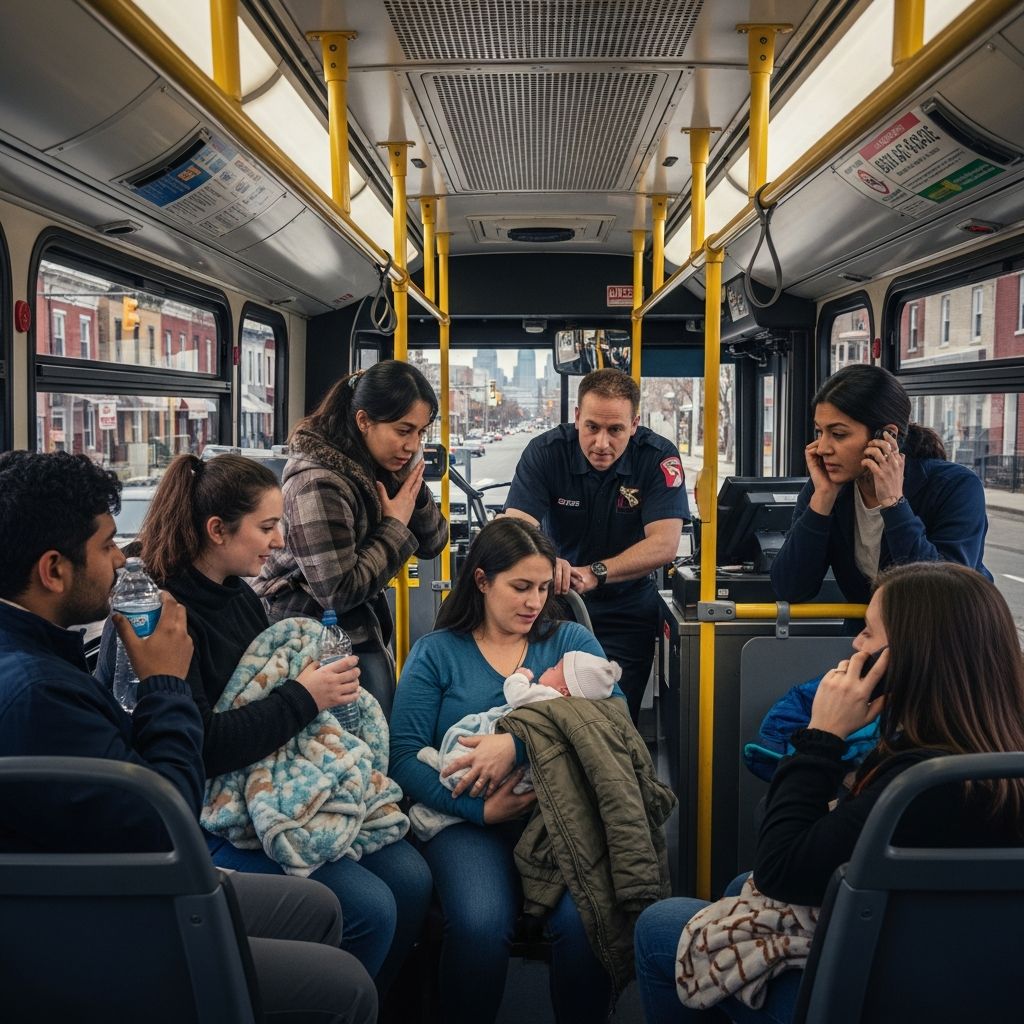
In an era where public transportation often gets a bad rap, one Philadelphia SEPTA bus became the stage for an unforgettable act of human kindness and resilience. Makira Williams, a resident of West Oak Lane, experienced the shock of her life when labor struck suddenly aboard a bustling Route 55 bus. What followed was a rapid chain of events that highlighted the power of community support during life’s most vulnerable moments.
The Sudden Onset of Labor in Transit
Makira Williams was simply commuting on June 26, around 9 a.m., when contractions hit without warning. Her due date was still weeks away on July 21, making this premature arrival all the more surprising. ‘I am still in shock actually,’ Williams later shared, struggling to process the whirlwind ordeal. ‘I can’t believe I just had a baby on the bus.’
Public buses like SEPTA’s Route 55 are designed for daily commutes, not medical emergencies. Yet, this ordinary morning ride transformed into an impromptu delivery room. Williams described how everything unfolded ‘very quickly,’ leaving no time for panic or preparation. The baby, named Mazir, weighed in at a healthy 5 pounds 12 ounces despite the early arrival.
Driver’s Quick Actions Anchor the Response
The bus driver’s response was pivotal. Upon realizing the situation, he immediately pulled over, creating a safe space amid the urban bustle. SEPTA spokesperson Shwana Rogers noted this was unprecedented in her 27 years with the agency: ‘I have never heard of an occasion… that someone actually had a baby on board the bus.’ The driver’s quick thinking earned commendations, even though such scenarios aren’t part of standard training.
- Pulled vehicle to a safe stop promptly.
- Alerted authorities and passengers.
- Maintained calm to prevent chaos.
This level-headedness set the tone for passenger involvement, turning potential disorder into coordinated aid.
Strangers Unite: Passenger Heroes Emerge
As the driver secured the bus, passengers sprang into action. Several individuals offered assistance, but one woman stood out as the de facto delivery expert. Acting as an ‘impromptu obstetrician,’ she guided Williams through the process. After just two pushes, baby Mazir entered the world.
Williams recounted tense moments, like when someone produced scissors for the umbilical cord, prompting her alarmed reaction: ‘Oh no.’ Despite the improvisation, the delivery succeeded without complications. Williams was whisked away by ambulance shortly after, missing the chance to thank her primary helper. She continues searching for this mystery woman’s identity to express gratitude.
| Key Contributors | Role | Impact |
|---|---|---|
| Bus Driver | Pulled over & coordinated | Ensured safety & space |
| Mystery Woman | Led delivery | Guided birth successfully |
| Other Passengers | Assisted with tools & support | Provided immediate aid |
| EMS Team | Post-birth transport | Rushed mom & baby to hospital |
Baby Mazir’s Nicknames and New Life
Mazir quickly became a local celebrity. Passengers and onlookers dubbed him ‘Baby 55’ after the bus route and affectionately ‘Bus.’ Williams embraces these monikers, turning a dramatic event into a badge of honor. Both mother and child are reported healthy, with Mazir thriving post-delivery.
This premature yet robust arrival underscores neonatal resilience. Babies born around 34-36 weeks, like Mazir, often do well with proper care, as supported by medical guidelines from authoritative health bodies.
Public Transit and Emergency Preparedness: Lessons Learned
SEPTA’s rarity of such incidents prompts questions about readiness. While not routine, transit emergencies highlight the need for basic first-aid training among drivers and staff. Rogers emphasized the driver’s commendable actions, suggesting potential for enhanced protocols.
Broader implications extend to urban mobility. Public transport serves diverse populations, including expectant mothers. Simple measures like emergency kits or rapid EMS links could mitigate risks.
- Stock buses with basic medical supplies (gloves, clamps, blankets).
- Train staff in childbirth basics via simulations.
- Install panic buttons for swift authority alerts.
Cities worldwide could draw from this, improving safety without overhauling systems.
Psychological Impact on New Mom and Witnesses
For Williams, the trauma mixes with triumph. ‘That happens in movies… not in real life,’ she reflected, capturing the surreal quality. Post-event shock is common in precipitous births, where adrenaline surges aid delivery but delay emotional processing.
Witnesses likely share similar feelings. Helping in crises fosters bonds but can trigger stress. Community stories like this reinforce social trust, vital in anonymous urban settings.
Historical Echoes of Bus and Public Births
Philadelphia’s tale joins a select history. Globally, vehicles have hosted surprise births—from taxis to trains. In the U.S., SEPTA’s event stands unique per records. These anecdotes celebrate human adaptability, often going viral for inspiration.
Media coverage amplified the story, with outlets like 6ABC and Inquirer detailing heroism. Viral YouTube clips further spread awareness, turning personal milestone into public uplift.
Medical Insights: Precipitous Labor Explained
Precipitous labor—birth in under three hours—affects 2-3% of pregnancies. Factors include multiparity, prior fast labors, or uterine hyperstimulation. Williams’ case fits: rapid progression post-contraction onset.
Risks include perineal tears or newborn respiratory issues, yet outcomes are often positive with aid. Mazir’s weight indicates good gestation, aligning with survival stats over 95% for such preemies per CDC data.
Community Support Networks for Expectant Riders
Stories like this spotlight needs for transit-user resources. Programs offering free rides for prenatal visits exist in some cities. Philadelphia could expand, partnering with health departments.
- Priority seating for pregnant women.
- Apps for real-time medical routing.
- Peer support groups for transit moms.
FAQs: Unpacking the Bus Birth Phenomenon
What triggered the sudden labor on the bus?
Exact causes remain private, but precipitous labor often stems from efficient uterine contractions, common in later pregnancies.
Is SEPTA prepared for medical emergencies like this?
No formal childbirth training exists, but drivers handle basics. This incident prompts protocol reviews.
How is baby Mazir doing now?
Mom reports both are fine; Mazir gained strength quickly despite prematurity.
Has Makira found the helping passenger?
As of reports, the search continues; public appeals aim to connect them.
Are bus births common historically?
Rare but documented worldwide; Philly’s adds to heroic transit lore.
Long-Term Reflections: Strength in Unexpected Moments
Weeks later, Williams views the event as destiny. Mazir’s nicknames symbolize communal embrace. For families, it reminds: help arrives in unlikely places.
This narrative transcends one bus, illustrating urban solidarity. As cities grow denser, such bonds remain essential. Williams’ quest for her helper embodies ongoing gratitude, ensuring the story endures.
References
- Baby on board! Philadelphia woman gives birth on SEPTA bus — 6ABC Philadelphia. 2023-07-02. https://6abc.com/post/septa-bus-birth-baby-on-woman-gives-route-55-delivered/10851115/
- Woman gives birth in bus, passengers assist in delivery — Inquirer.net. 2023-07-05. https://newsinfo.inquirer.net/1456862/woman-gives-birth-in-bus-passengers-assist-in-delivery
- Baby on board! Woman gives birth on SEPTA bus — 6abc Philadelphia (YouTube). 2023-07-02. https://www.youtube.com/watch?v=2zOv10alQJg
- Philly Woman Gives Birth on Bus — Complex. 2023-07-03. https://www.complex.com/life/a/brad-callas/philly-woman-gives-birth-on-bus