Navigating Personal Grooming in the Early Parenting Years
Becoming a mother fundamentally transforms how women approach their daily routines, including personal grooming and style maintenance. The transition from a lifestyle centered around personal preferences to one dictated by an infant’s schedule creates significant challenges that extend far beyond what many expecting mothers anticipate. What once seemed like a straightforward morning routine—including hair styling, makeup application, and outfit selection—becomes a complex puzzle that must be solved within narrow windows of available time. Understanding how to adapt personal care practices during these transformative years allows new mothers to maintain a sense of identity and self-care while meeting their child’s needs.
The Time Constraint Reality for New Parents
The fundamental challenge facing new mothers involves a dramatic reduction in discretionary time. Unlike previous life stages where personal grooming could be approached leisurely, early parenthood operates within rigid temporal boundaries. An infant’s sleep schedule, typically consisting of multiple short naps throughout the day, creates limited windows for any activity not directly related to childcare. These intervals—often lasting only 30 minutes to an hour—require strategic prioritization.
This time scarcity forces mothers to make difficult decisions about which personal care activities to maintain and which to modify or eliminate entirely. Elaborate grooming routines that previously took an hour or more must be condensed into fragments of available time. The stress of working against the clock creates pressure that compounds the fatigue already present from interrupted nighttime sleep and constant vigilance required during waking hours.
Hair Care Modifications and Practical Styling Choices
Hair maintenance represents one of the most visible personal care challenges for new mothers. Traditional hairstyles requiring daily blow-drying, styling products, and careful arrangement become impractical when styling time must occur during infant naptime. The unpredictability of how long a child will sleep means that even planned grooming sessions may be interrupted or cut short unexpectedly.
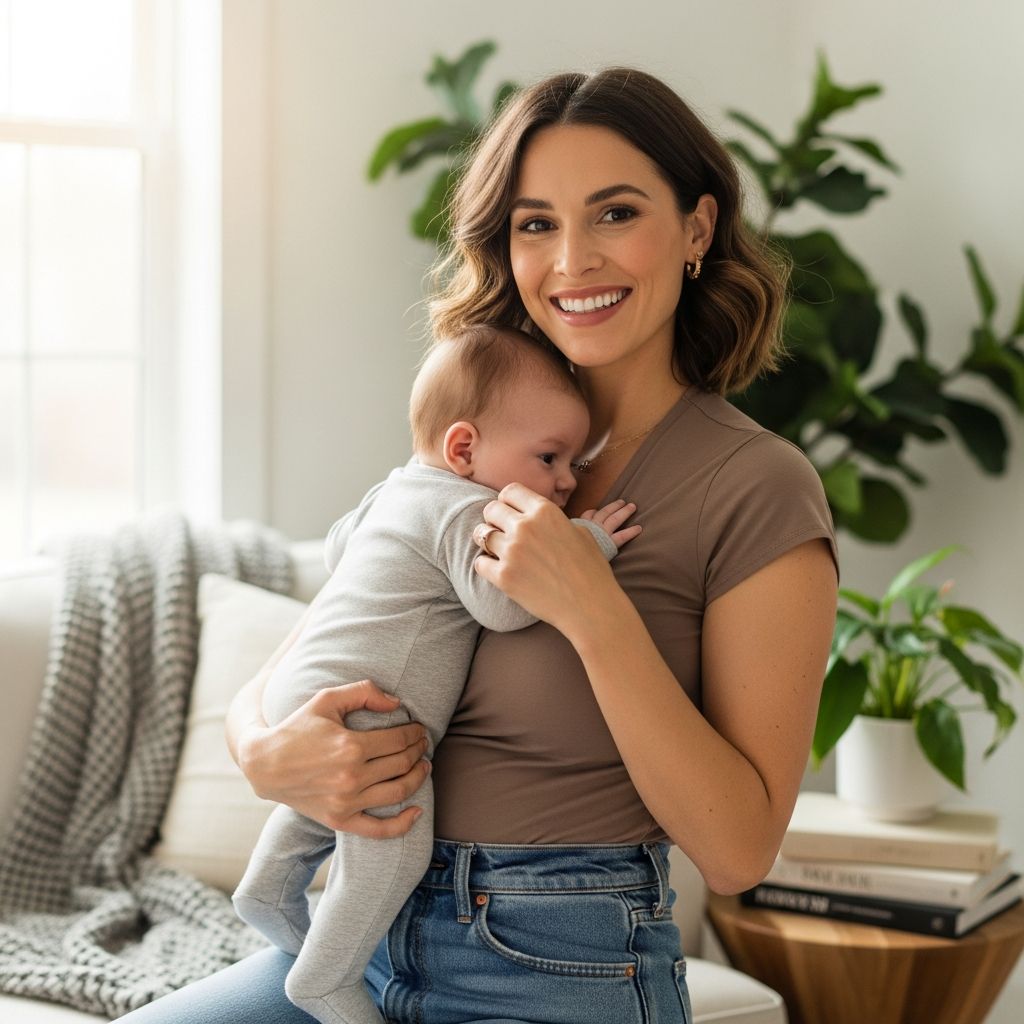
Many mothers respond to these constraints by reconsidering their fundamental approach to hair length and style. Shorter haircuts emerge as a practical solution that addresses multiple challenges simultaneously. Reduced hair volume requires less time under a blow dryer, fewer styling products, and minimal daily maintenance. This approach maintains a polished appearance while dramatically reducing the time investment required.
Beyond length, texture also plays an important role in practical styling during this life stage. Styles that work with natural texture patterns rather than requiring heat styling or chemical treatments become increasingly appealing. Layered cuts, textured styles, and cuts that enhance natural wave or curl patterns all offer ways to maintain attractive appearance while minimizing daily grooming time.
The Broader Shift in Personal Care Priorities
Hair management represents only one component of a larger reassessment that new mothers undergo regarding personal care priorities. The fundamental question becomes: which grooming and styling practices provide the most benefit relative to the time and energy investment required? This calculation differs significantly from pre-parenthood thinking, where time constraints rarely forced such stark trade-offs.
Mothers begin evaluating their personal care routines through a new lens focused on sustainability rather than aesthetic ideals. Makeup routines may be simplified to essentials like moisturizer and mascara rather than full application. Clothing choices shift toward comfort and practicality, with particular attention to fabrics that can withstand frequent washing and physical demands of childcare. Skincare regimens become streamlined to address only essential needs rather than aspirational beauty goals.
Psychological Impact of Maintaining Personal Identity
The decisions mothers make about personal grooming and style carry psychological significance beyond mere practicality. Maintaining some form of personal care ritual, however simplified, serves important functions in preserving sense of self and managing the psychological demands of early parenthood. Research consistently demonstrates that small investments in personal appearance and grooming contribute meaningfully to maternal mental health and emotional regulation.
When mothers completely abandon personal care practices in favor of pure functionality, the psychological cost often exceeds any time saved. Even minimal attention to personal appearance—a quick shower, basic hair styling, or wearing clothes beyond pajamas—can provide psychological benefits that support overall wellbeing. The key involves finding a sustainable balance that acknowledges both the legitimate time constraints and the genuine need for self-care practices that preserve individual identity.
Social Expectations and Personal Choice
New mothers navigate complex social expectations regarding appearance while simultaneously managing unprecedented time constraints. Cultural messages emphasizing the importance of maintaining attractiveness and personal style conflict sharply with the reality of time scarcity. Some social circles expect mothers to maintain pre-parenthood appearance standards, creating guilt or shame when this becomes impossible. Other communities celebrate more relaxed appearance standards during early parenting years.
The healthiest approach involves recognizing that personal grooming choices during early parenthood represent legitimate decisions based on actual circumstances rather than failures to maintain pre-baby standards. Making intentional choices about which grooming practices to prioritize, modify, or temporarily set aside differs fundamentally from neglecting self-care due to depression or overwhelm. Distinguishing between these scenarios helps new mothers make decisions aligned with their values rather than external expectations.
Practical Strategies for Efficient Personal Care
Several evidence-based approaches help new mothers maintain personal care within realistic time constraints:
- Investing in haircuts specifically designed to require minimal daily maintenance and styling time
- Selecting clothing primarily for comfort and practicality while maintaining a polished appearance
- Using multi-purpose grooming products that combine functions to reduce the number of steps required
- Scheduling personal grooming during predictable infant sleep windows rather than spontaneously attempting to fit it in
- Accepting that some days will involve minimal personal grooming and recognizing this as temporary rather than permanent
- Communicating with partners about the need for uninterrupted time for personal care as essential self-care
- Exploring low-maintenance beauty options like tinted moisturizers rather than full makeup application
The Evolution of Personal Style During Parenthood
Personal style naturally evolves throughout life stages, with early motherhood representing a particularly significant transition point. Rather than viewing this evolution as loss or compromise, many mothers discover that simplified grooming practices align better with their authentic preferences than pre-parenthood routines that reflected social expectations or aspirational ideals. The forced simplification of early parenting can paradoxically lead to a clearer sense of personal style based on what actually works for individual bodies, lifestyles, and preferences rather than what magazines or social media suggest should work.
This evolution extends beyond hair and makeup to encompass broader lifestyle choices. Mothers often find that the practical necessities of early parenting create an unexpected opportunity to strip away non-essential elements from their lives, revealing what genuinely matters. The resulting streamlined approach to personal appearance frequently persists even after time constraints ease, suggesting that the changes reflect deeper shifts in priorities rather than temporary accommodations.
Support Systems and Shared Responsibility
One factor that significantly impacts how new mothers approach personal grooming involves the support systems available to them. Mothers with partners, family members, or friends who provide regular childcare breaks have opportunities to invest more time in grooming and self-care than mothers without such support. Access to childcare, even for short periods, transforms what becomes possible in terms of personal care practices.
Recognizing that personal grooming time requires external support systems challenges the cultural narrative that mothers should manage all childcare responsibilities independently. Framing personal care time as a legitimate need rather than an indulgence creates space for mothers to ask for and accept help. Partners can assume childcare duties specifically to allow their co-parent dedicated grooming time, a practice that benefits overall family wellbeing by supporting maternal mental health and self-care.
Long-term Perspective on Parenting and Personal Care
The intensive period of early parenthood—typically considered the first two to three years—represents a temporary life stage rather than a permanent condition. Recognizing this reality helps mothers make decisions about grooming and personal care that acknowledge genuine current constraints without assuming these limitations will persist indefinitely. Choices made during early infancy, such as adopting a shorter, lower-maintenance hairstyle, can be reconsidered as circumstances change and more time becomes available.
This perspective also reduces the guilt or shame that sometimes accompanies simplified grooming routines during early parenthood. Understanding that reduced attention to personal appearance reflects temporary circumstances rather than permanent character changes allows mothers to make practical decisions without psychological burden. Many mothers discover that they return to more elaborate grooming practices as their children grow and time constraints ease, while others find that they genuinely prefer the simplified approach and maintain it by choice.
Societal Support and Structural Change
While individual mothers can implement numerous strategies to manage personal grooming within time constraints, broader societal support would significantly ease this challenge. Parental leave policies that provide adequate time for adjustment, affordable childcare options that provide regular respite, and workplace flexibility for ongoing parental responsibilities all create conditions under which mothers could prioritize personal care more readily. The burden of managing personal grooming during early parenthood currently falls almost entirely on individual mothers rather than being addressed through structural support systems.
Frequently Asked Questions
Q: When is the best time to change hair length or style during early parenthood?
A: Making significant hair changes when comfortable—whether before the baby arrives or after establishing some routine—allows adjustment without adding stress. Many mothers find that early postpartum represents an ideal time to transition to lower-maintenance styles.
Q: How can I maintain personal grooming without reducing time with my baby?
A: Personal grooming during scheduled infant sleep times, requesting partner support for designated grooming periods, or accepting that grooming will be minimized temporarily all represent valid approaches. These decisions need not involve guilt or shame.
Q: Does investing in personal grooming during early parenthood benefit maternal mental health?
A: Yes, research indicates that maintaining some form of personal care routine, however simplified, supports emotional wellbeing and helps preserve sense of self during the intensive early parenting period.
Q: What are practical hairstyle options for busy mothers?
A: Shorter cuts, layered styles, textured cuts that enhance natural patterns, and styles designed to look attractive with minimal daily styling all offer practical options requiring less maintenance time.
References
- Postpartum Mental Health: What New Mothers Should Know — American College of Obstetricians and Gynecologists. 2024. https://www.acog.org/womens-health/faqs/postpartum-care
- The Impact of Self-Care on Maternal Wellbeing — National Institute of Child Health and Human Development. 2023. https://www.nichd.nih.gov
- Parental Leave Policies and Family Wellbeing — U.S. Department of Labor. 2024. https://www.dol.gov/agencies/whd/fmla