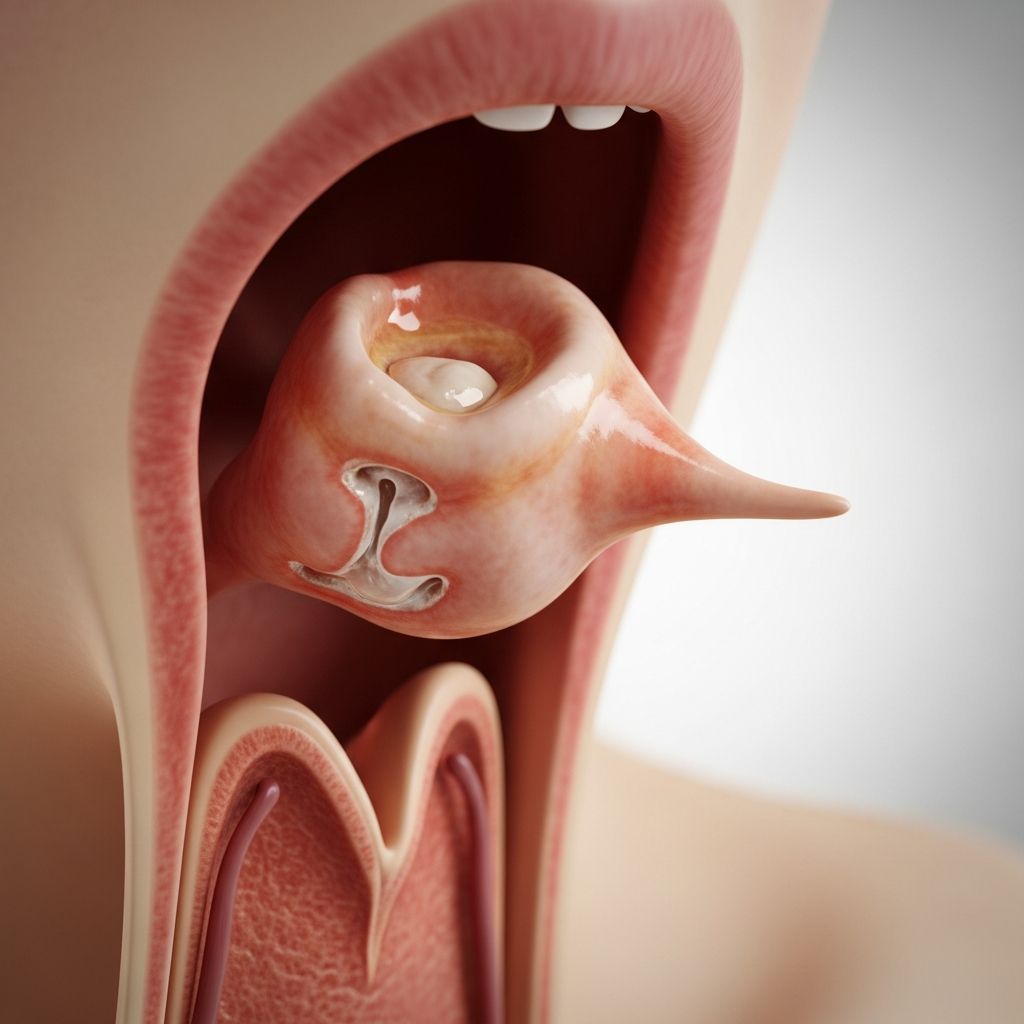
A peritonsillar abscess is a painful throat infection that can happen when tonsillitis or strep throat spreads beyond the tonsil and forms a pocket of pus nearby. It is uncommon but can become serious if not treated quickly, especially in older children and teenagers.
This guide explains what peritonsillar abscess is, how it develops, the symptoms to watch for, how doctors treat it, and what teens and families can do to lower the risk of complications.
Understanding Peritonsillar Abscess
The term peritonsillar abscess describes a collection of pus in the tissues next to a tonsil, often on just one side of the throat. The pus forms when the body tries to wall off a bacterial infection instead of letting it spread.
How It Relates to Tonsillitis and Strep Throat
Most peritonsillar abscesses begin as a typical throat infection, such as:
- Acute tonsillitis (inflamed, infected tonsils)
- Strep throat caused by group A beta-hemolytic streptococci
When these infections are not treated promptly or do not fully clear, bacteria can move from the tonsil into the tissues around it and form an abscess. Thanks to widespread use of antibiotics for tonsillitis, peritonsillar abscess has become less common, but it still occurs, especially in adolescents and young adults.
Who Is Most at Risk?
Peritonsillar abscess is seen most often in:
- Older children
- Teenagers
- Young adults
Certain habits and conditions make it more likely:
- Smoking or vaping, which irritates throat tissues and affects immunity
- Gum disease or poor oral hygiene, which lets harmful bacteria thrive
- Frequent or severe tonsillitis episodes
- Prior strep throat not fully treated with the full antibiotic course
Causes and How the Infection Forms
A peritonsillar abscess is almost always caused by bacteria. The most common organisms are the same germs that cause strep throat, but many abscesses contain a mix of bacteria, including those that grow without oxygen (anaerobes).
Step-by-Step Development
Doctors believe the infection develops through several stages:
- Initial throat infection – tonsillitis or pharyngitis leads to swollen, red tonsils and sore throat.
- Spread into surrounding tissue – the infection moves from the tonsil capsule into the nearby peritonsillar space.
- Pus pocket forms – the immune system walls off bacteria, creating a localized abscess.
In some cases, infectious mononucleosis or dental and gum infections can also be linked to abscess formation.
Key Symptoms: When a Sore Throat Is More Than Just a Cold
A peritonsillar abscess usually starts with a sore throat that gradually becomes much worse on one side. Over a few days, additional warning signs appear.
Common Symptoms in Teens
- Severe one-sided throat pain, often much worse than a usual sore throat
- Red, swollen tonsil that looks larger on one side
- Difficulty and pain when swallowing food, drinks, or even saliva
- Trouble opening the mouth fully (called trismus)
- Fever and chills
- Tender, swollen lymph nodes along the jaw or side of the neck
- Headache or general feeling of being unwell
- Ear pain on the same side as the throat pain (referred pain)
- Muffled or “hot potato” voice, as if speaking with a mouthful of food
- Drooling or inability to swallow saliva
- Bad breath caused by infected tissue and pus
Physical Changes Doctors Look For
During an exam, a clinician may see:
- Bulging of the soft palate near one tonsil
- The affected tonsil pushed toward the middle of the throat
- The uvula (the small tissue that hangs down) pulled toward the opposite side
- Visible pus or thick mucus on or near the tonsil
Symptoms That Mean You Need Emergency Help
Because the abscess is close to the airway, some symptoms are emergencies and require immediate care:
- Struggling to breathe or noisy breathing
- Inability to swallow or control saliva, with constant drooling
- Sudden worsening of pain and swelling
- Confusion, extreme fatigue, or very high fever
If any of these appear, calling emergency services or going to the nearest emergency department is crucial.
Diagnosis: How Doctors Confirm a Peritonsillar Abscess
Diagnosis is largely based on the teen’s symptoms and a careful throat and neck exam. In many cases, the appearance of the throat is enough for an experienced clinician to recognize a peritonsillar abscess.
Typical Evaluation Steps
- Medical history – recent tonsillitis, strep throat, mononucleosis, dental problems, or antibiotic use
- Physical exam – inspection of the mouth, tonsils, palate, and neck lymph nodes
- Vital signs – checking temperature, heart rate, and breathing
Tests That May Be Used
Not every teen needs imaging or lab tests, but doctors may order them in certain situations:
- Throat or abscess culture – to identify the exact bacteria and guide antibiotic choice
- Blood tests – to look for signs of more widespread infection
- Imaging (ultrasound or CT scan of the neck) – if the diagnosis is unclear or if deeper neck infections are suspected
| Condition | Main Features | Key Differences from Peritonsillar Abscess |
|---|---|---|
| Acute tonsillitis | Both tonsils red and swollen, sore throat, fever | Usually affects both sides; no localized pus pocket or uvula deviation |
| Peritonsillar cellulitis | Inflammation around the tonsil without a true pus cavity | Tissue is swollen and red but may not yield pus when drained |
| Peritonsillar abscess | Pus-filled pocket next to one tonsil, severe one-sided pain, trismus | Fluctuant area with pus, often needs drainage |
Treatment: How Doctors Drain and Control the Infection
A peritonsillar abscess almost always requires medical treatment. Home remedies alone cannot cure it and can allow the infection to spread.
Main Treatment Goals
- Open and drain the pus pocket
- Clear bacteria with antibiotics
- Protect the airway and make breathing safe
- Relieve pain and help the teen stay hydrated
Drainage Procedures
The cornerstone of treatment is drainage, usually done by an ear, nose, and throat (ENT) specialist or an emergency physician.
- Needle aspiration – a thin needle is inserted into the abscess to draw out pus; this can be done under local anesthesia, sometimes with mild sedation.
- Incision and drainage – a small cut is made in the abscess to allow pus to drain more freely.
- Tonsillectomy – in some cases, especially with repeated abscesses or chronic tonsillitis, the tonsils are removed during or shortly after treatment.
Antibiotic Therapy
Because peritonsillar abscess often involves a mix of bacteria, including strep and anaerobes, doctors choose antibiotics that cover several types at once. These may be given:
- Intravenously (IV) in the hospital, especially if the teen is very sick or cannot swallow
- By mouth at home after initial drainage and improvement
Finishing the entire antibiotic course is critical, even if symptoms improve quickly, to lower the risk of recurrence or serious complications.
Pain and Symptom Relief
Alongside drainage and antibiotics, doctors may recommend:
- Prescription or over-the-counter pain relievers, as directed
- Cool or room-temperature fluids that are easier to swallow
- Soft foods until swallowing is more comfortable
- Rest and avoiding irritants like cigarette smoke or vaping aerosols
Possible Complications if Not Treated
If a peritonsillar abscess is ignored or treatment is delayed, the infection can spread beyond the immediate area around the tonsil. This can be life-threatening.
Local and Systemic Complications
- Airway blockage from swelling in the throat, making breathing difficult
- Spread into deeper neck tissues, forming more abscesses
- Pneumonia or lung infection if infected material is inhaled
- Infection in the chest beneath the breastbone (mediastinitis)
- Sepsis, a serious bloodstream infection that can affect multiple organs
Rapid medical care greatly reduces the chance of these outcomes. With proper treatment, most teens recover fully.
Recovery and Follow-Up for Teens
After the abscess is drained and antibiotics have started working, most teens feel noticeably better within a few days, though full recovery can take longer.
What to Expect After Treatment
- Pain and swelling usually decrease over 24–48 hours after drainage.
- Fever should improve as the infection comes under control.
- Swallowing becomes easier, allowing normal eating and drinking again.
A follow-up visit is often scheduled to make sure the abscess is gone and to discuss whether chronic tonsillitis or repeated abscesses might make a future tonsillectomy a good option.
Home Care Tips During Recovery
- Take all medicines exactly as prescribed, without skipping doses.
- Drink plenty of fluids to prevent dehydration, even if only small sips are possible at first.
- Choose soft foods, such as yogurt, smoothies, or soups, until throat pain improves.
- Avoid smoking, vaping, and secondhand smoke, which can irritate healing tissues.
- Get adequate sleep and rest, especially in the first few days after treatment.
Prevention: Lowering the Risk of Peritonsillar Abscess
Not every case can be prevented, but certain habits and choices significantly reduce the chance of developing an abscess.
Protecting Throat Health
- Treat strep throat and tonsillitis promptly – see a doctor if a sore throat lasts more than a few days, worsens, or is accompanied by high fever or swollen glands.
- Finish prescribed antibiotics – stopping early can leave stronger bacteria behind and allow complications.
- Practice good oral hygiene – regular brushing, flossing, and dental visits help reduce harmful mouth bacteria linked to abscesses.
- Avoid smoking and vaping – tobacco and other inhaled irritants damage the lining of the mouth and throat and weaken defense against infection.
When Tonsil Removal May Be Considered
Some teens experience frequent, severe tonsillitis or more than one peritonsillar abscess. In these situations, an ear, nose, and throat specialist may recommend tonsillectomy to prevent further problems.
Frequently Asked Questions (FAQs)
Is a peritonsillar abscess contagious?
The abscess itself is not contagious, but the bacteria that cause the original throat infection, such as strep, can spread from person to person. Good handwashing, not sharing drinks or utensils, and staying home when sick help protect others.
How can I tell the difference between strep throat and a peritonsillar abscess?
Both can cause sore throat and fever. With a peritonsillar abscess, pain is usually much worse on one side, the voice may sound muffled, swallowing can become extremely painful, and the uvula may be pushed to one side. Any suspicion of abscess should be evaluated by a clinician quickly.
Will I always need surgery if I get a peritonsillar abscess?
Most teens need a drainage procedure, such as needle aspiration or a small incision. A full tonsillectomy is not always required but may be recommended if there are repeated abscesses or longstanding tonsil problems.
Can a peritonsillar abscess come back?
Recurrence is possible, especially in people with chronic tonsillitis or ongoing risk factors like smoking or poor oral hygiene. Following through with treatment, practicing good mouth care, and discussing tonsillectomy with an ENT specialist when appropriate can lower the risk.
When should I go to the emergency room?
Go to the emergency department or call for urgent help if there is trouble breathing, inability to swallow saliva, rapidly increasing swelling, or signs of severe illness such as confusion or very high fever. These can signal airway blockage or a spreading infection.
References
- Peritonsillar Abscess (Quinsy): Symptoms, Treatments & Causes — Cleveland Clinic. 2022-06-30. https://my.clevelandclinic.org/health/diseases/22817-peritonsillar-abscess-quinsy
- Peritonsillar Abscess (For Teens) — Nemours KidsHealth. 2022-03-01. https://kidshealth.org/en/teens/peritonsillar-abscess.html
- Peritonsillar Abscess — StatPearls, NCBI Bookshelf. 2024-01-05. https://www.ncbi.nlm.nih.gov/books/NBK519520/
- Peritonsillar Abscess — MedlinePlus Medical Encyclopedia, U.S. National Library of Medicine. 2023-07-10. https://medlineplus.gov/ency/article/000986.htm
- Peritonsillar Abscess — Children’s National Hospital Health Library. 2022-11-15. https://www.childrensnational.org/get-care/health-library/peritonsillar-abscess
- Peritonsillar Abscess: Symptoms, Causes, and Treatments — WebMD. 2022-08-19. https://www.webmd.com/oral-health/peritonsillar-abcess
- Tonsillitis: Symptoms & Causes — Mayo Clinic. 2023-01-21. https://www.mayoclinic.org/diseases-conditions/tonsillitis/symptoms-causes/syc-20378479