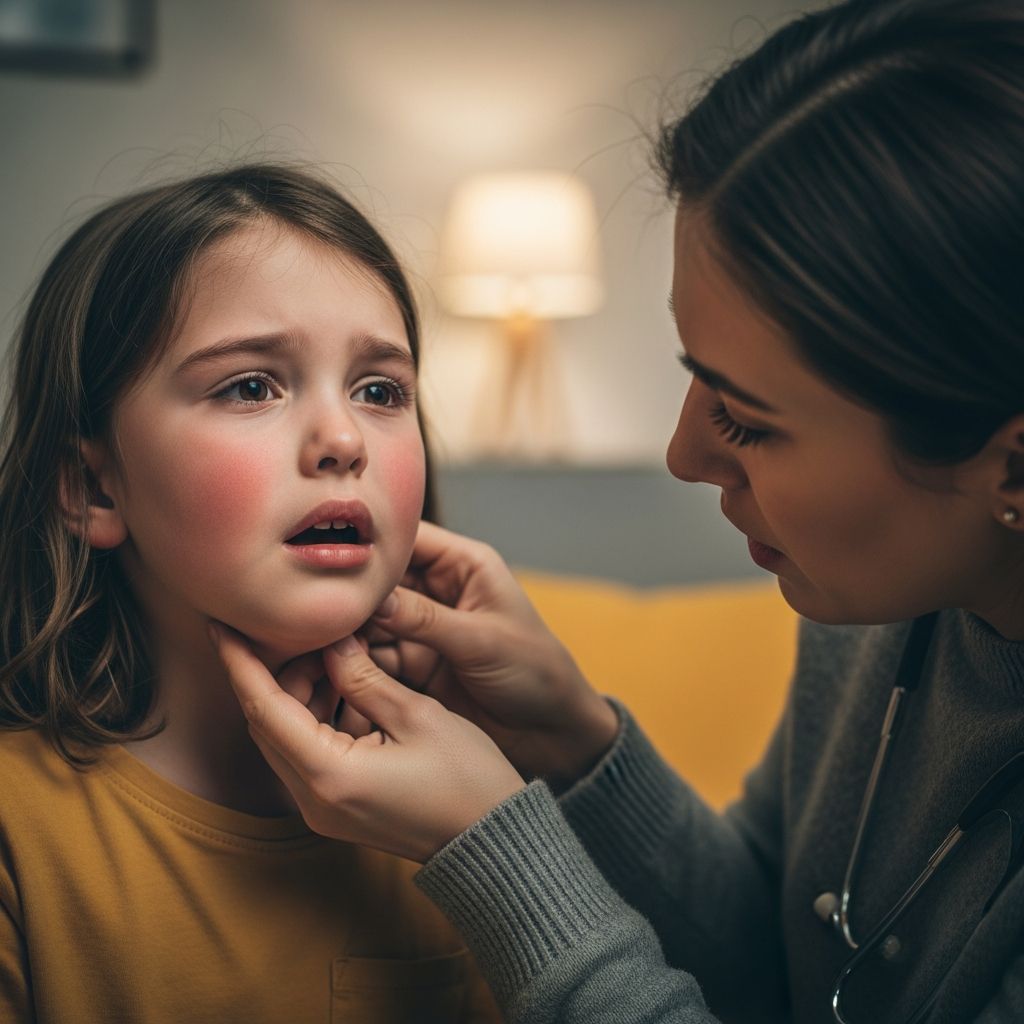
A peritonsillar abscess is a painful pocket of pus that forms beside a tonsil, usually as a complication of a throat infection. It is considered an urgent medical problem because it can interfere with swallowing and, in severe cases, with breathing.
For parents, recognizing when a routine sore throat may be turning into something more serious is essential. This guide explains in simple language how peritonsillar abscesses develop, what symptoms to watch for, how doctors treat them, and what you can do at home to support your child’s recovery.
Understanding the Condition
What Is a Peritonsillar Abscess?
The tonsils sit at the back of the throat and are part of the immune system, helping to trap germs. When bacteria cause a significant infection, pus can collect in the tissues next to a tonsil rather than inside the tonsil itself.
This collection of pus is called a peritonsillar abscess. It usually affects only one side of the throat and can push the tonsil toward the middle, making the throat look uneven or swollen.
Who Is Most at Risk?
Peritonsillar abscesses are more common in older children, teenagers, and young adults, but they can occur at almost any age. Children who have frequent tonsil infections or who delay treatment for bad sore throats may be at higher risk.
- Older kids and teens with repeated tonsillitis.
- Children who have had recent untreated or partially treated strep throat.
- Kids with poor dental hygiene or gum disease.
- Adolescents exposed to tobacco smoke or who smoke.
How and Why It Develops
From Simple Sore Throat to Abscess
Most peritonsillar abscesses begin with a bacterial throat infection, often tonsillitis or strep throat. If the infection spreads beyond the tonsil into nearby tissues, pus can build up in a confined pocket.
Sometimes the infection causes widespread swelling and inflammation around the tonsil first, and the abscess forms as a later step. In a smaller number of cases, an abscess may arise without obvious tonsillitis, especially in children with other risk factors.
Common Triggers and Contributing Factors
- Untreated bacterial tonsillitis or stopping antibiotics too early.
- Certain bacteria that are more aggressive or resistant to typical treatments.
- Chronic mouth or gum infections that allow bacteria to spread to the throat region.
- Immune system challenges, such as ongoing illness, poor nutrition, or certain medical conditions.
Key Warning Signs in Children
Symptoms You Might Notice at Home
A peritonsillar abscess usually causes more severe and more one-sided symptoms than a typical sore throat. Parents often describe their child as suddenly looking much sicker compared with earlier in the illness.
- Very bad sore throat, usually worse on one side.
- Pain that may spread to the ear on the same side.
- Fever, chills, or feeling very unwell.
- Difficulty or pain when swallowing, sometimes refusing to eat or drink.
- Drooling or trouble handling saliva because swallowing hurts.
- Muffled, thick, or “hot potato” voice.
- Bad breath that is stronger than with an ordinary sore throat.
- Swelling of the neck on one side or tender glands under the jaw.
Emergency Red-Flag Symptoms
Because the abscess forms near the airway, serious complications are possible if it grows or spreads. Certain warning signs require urgent medical attention and should never be watched at home.
- Struggling to breathe or noisy breathing.
- Inability to swallow at all, or constant drooling.
- Severe difficulty opening the mouth fully.
- Fast heart rate, extreme sleepiness, or confusion.
- Neck swelling that seems to be rapidly increasing.
What Doctors Look For
Medical History and Physical Exam
The doctor will ask when the sore throat started, how quickly symptoms worsened, and what treatments have already been tried. Any history of frequent tonsillitis or previous abscesses is also important to share.
During the exam, the child’s throat is checked with a light. One tonsil may appear pushed toward the center, and the soft palate or uvula can be shifted away from the affected side.
Tests and Imaging
In some cases, the diagnosis is clear from the physical exam alone. When there is doubt, further tests help confirm whether there is an abscess or only severe inflammation.
- Throat swabs to look for strep or other bacteria.
- Blood tests to evaluate infection and dehydration.
- Ultrasound of the neck to see if a fluid pocket is present.
- CT scan in complicated or unclear cases, especially if spread to deeper neck spaces is suspected.
| Step | Purpose | What Parents Can Expect |
|---|---|---|
| History and symptoms review | Understand onset, severity, and prior infections | Questions about sore throat duration, fever, swallowing, breathing, and past tonsil problems |
| Throat and neck exam | Look for one-sided swelling and abscess signs | Doctor uses a light and tongue depressor; may gently feel the neck and jaw areas |
| Lab tests | Assess infection level and hydration | Possible blood draw and throat swab; results may guide antibiotic choice |
| Imaging (when needed) | Confirm presence and size of abscess | Ultrasound or CT scan; young children may need extra support or sedation for comfort |
Treatment Options
Hospital or Home?
Many children with a peritonsillar abscess need hospital care at least briefly, especially if they cannot swallow or are in a lot of pain. Hospital treatment allows for close monitoring, intravenous fluids, and fast-acting medications.
Older children with smaller abscesses who can drink and breathe comfortably may sometimes receive treatment in an outpatient setting. The decision depends on the child’s age, symptoms, and overall health.
Draining the Abscess
Because an abscess is a pocket of pus, draining it is usually the key step in treatment. Removing the pus relieves pressure, eases pain, and helps antibiotics work more effectively.
- Needle aspiration: A thin needle is used to draw out pus after numbing the area.
- Incision and drainage: A small cut is made to open and drain the abscess.
- Tonsillectomy during infection: In some situations, the surgeon may remove the tonsils at the same time, especially if infections are frequent.
Younger children often require sedation or general anesthesia so they remain still and comfortable during the procedure. Your child’s team will discuss the safest option for age and condition.
Antibiotics and Other Medications
Antibiotics are given to control the infection and prevent it from spreading. Many children receive the first doses through a vein, then switch to liquid or pill forms at home.
- Broad-spectrum antibiotics that cover the main bacteria involved in throat abscesses.
- Pain relievers to reduce throat pain and help with swallowing.
- Fever-reducing medicines, often the same drugs used for pain.
- Occasionally, steroids to decrease severe swelling and improve comfort.
Recovery and Aftercare
What to Expect After Treatment
Most children feel noticeably better within a day or two after the abscess is drained and antibiotics are started. Sore throat and fatigue can still linger for several days, and full recovery can take about a week.
Follow-up visits allow the doctor to make sure the abscess does not return and that the throat is healing properly. Some children will be referred to an ear, nose, and throat (ENT) specialist about possible tonsil removal in the future.
Home Care Tips for Parents
- Offer cool drinks, ice pops, or soft foods that are easy to swallow.
- Avoid sharp, spicy, or acidic foods that may irritate the throat.
- Encourage small, frequent sips of fluid to prevent dehydration.
- Use pain medicine only as prescribed and on schedule, especially in the first days.
- Keep your child resting at home until fever is gone and swallowing is more comfortable.
- Complete the full antibiotic course, even when your child is already feeling better.
Possible Complications
Short-Term Problems if Untreated
Without proper care, a peritonsillar abscess can grow larger, making breathing and swallowing more difficult. The infection may also spread to deeper spaces of the neck or into the bloodstream, leading to a serious, body-wide infection.
Early medical treatment greatly lowers these risks. This is why sudden, severe throat symptoms, especially on one side, should always be taken seriously.
Risk of Recurrence
Some children experience more than one peritonsillar abscess, particularly if they often have tonsillitis. In those cases, an ENT specialist may recommend tonsillectomy to reduce future problems.
Removing the tonsils does not eliminate all throat infections, but it can decrease the chance that another abscess will form. The decision is made case by case, balancing risks, benefits, and the child’s history.
Prevention Strategies
Reducing the Risk at Home
Not every peritonsillar abscess can be prevented, but focusing on throat health can help lower the odds. Good hygiene and timely medical attention for sore throats play a major role.
- Teach regular handwashing, especially during cold and flu season.
- Encourage your child not to share drinking glasses, utensils, or straws.
- Seek care for very painful or long-lasting sore throats, especially with fever.
- Follow the full course of any prescribed antibiotics for throat infections.
- Keep up with routine dental checkups and daily brushing and flossing.
- Avoid exposure to cigarette smoke; for teens, strongly discourage smoking or vaping.
SEO-Friendly FAQs for Parents
Is a peritonsillar abscess in a child an emergency?
A peritonsillar abscess can become an emergency when it interferes with breathing or swallowing. Any child who appears to struggle for air, drools constantly, or cannot swallow fluids should be evaluated in urgent or emergency care right away.
How is a peritonsillar abscess different from tonsillitis?
Tonsillitis is an infection of the tonsil tissue itself, while a peritonsillar abscess is a pocket of pus that forms in the space next to a tonsil. An abscess usually causes more intense, one-sided pain and can push the tonsil out of its normal position.
Will my child need surgery for a peritonsillar abscess?
Most children need a procedure to drain the abscess, which might involve a needle or a small incision. Tonsil removal is considered if infections are frequent or the abscess is severe, and this decision is usually made with an ENT specialist.
How long does it take to recover from a peritonsillar abscess?
After drainage and appropriate antibiotics, many children show clear improvement in one to two days. Most return to usual activities within about a week, although some throat tenderness and tiredness can last a little longer.
Can peritonsillar abscesses be completely prevented?
It is not possible to prevent every case, but early care for sore throats and strict completion of antibiotic courses reduce the risk that a simple infection will turn into an abscess. Supporting good oral hygiene and staying away from tobacco smoke also helps protect throat health.
When to Call the Doctor
Contact your child’s health care provider if a sore throat is severe, lasts more than a few days, or is accompanied by high fever, difficulty swallowing, or one-sided throat pain. Seek emergency help immediately for trouble breathing, inability to swallow, or rapid swelling in the throat or neck.
Prompt attention can turn a potentially serious infection into a manageable problem. Parents who stay alert to changes in their child’s symptoms play a crucial role in keeping small illnesses from becoming emergencies.