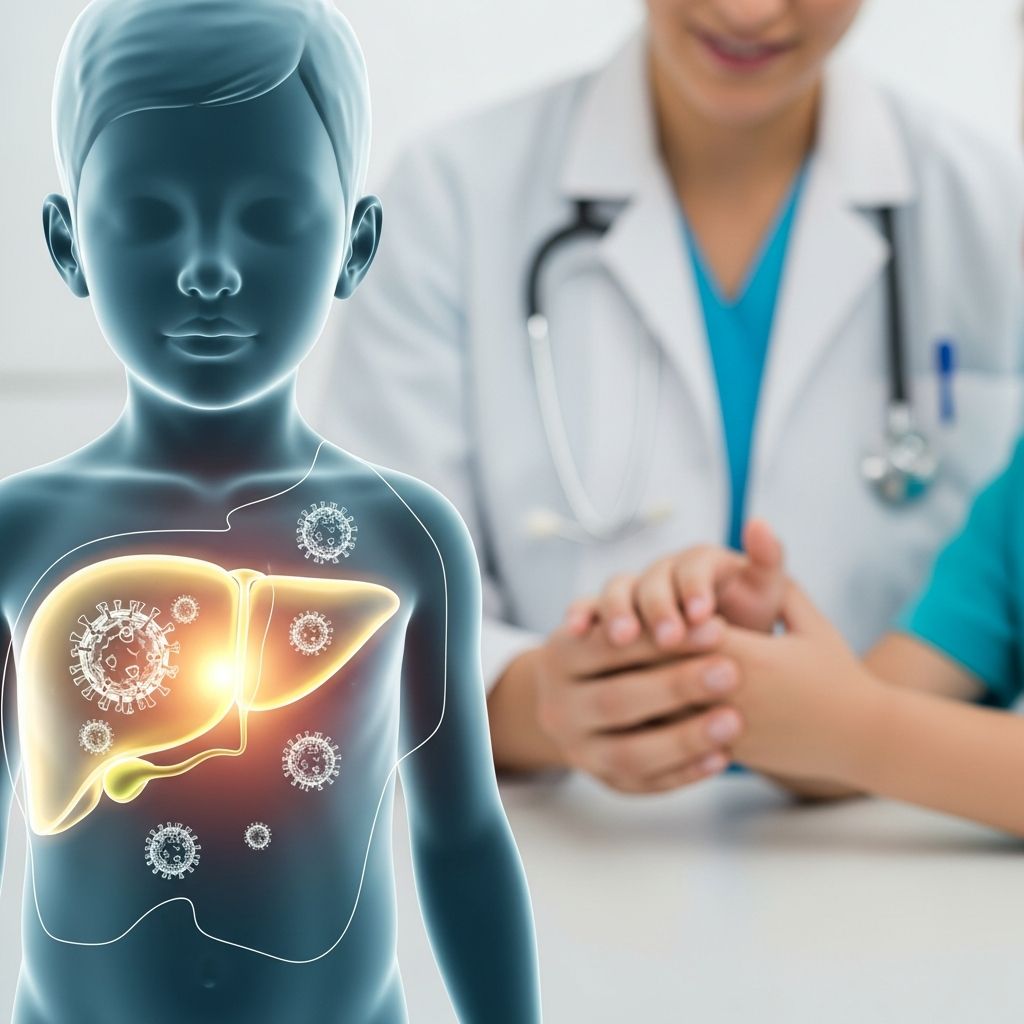
Hepatitis in children means the liver is inflamed, which can happen for many reasons, from viruses to immune system problems. While some cases are mild and go away on their own, others need careful monitoring and treatment to protect the liver. This guide explains what parents should know about causes, warning signs, how doctors diagnose it, and what treatment and prevention look like in real life.
What Is Hepatitis in Kids?
Hepatitis simply means inflammation of the liver, an organ that helps process nutrients, filter toxins, and make proteins important for blood and immunity. In children, this inflammation can be short-term (acute) or long-lasting (chronic), and it can range from barely noticeable to serious liver damage .
The liver is resilient, but ongoing inflammation can lead to scarring (fibrosis), cirrhosis, or even liver failure if not managed. Hepatitis in kids is not one single disease; it’s a sign that something is irritating or damaging the liver, and the cause determines how it’s treated .
Common Causes of Liver Inflammation
Many different things can trigger hepatitis in children, and identifying the cause is the first step toward the right care. The main categories include viral infections, immune system disorders, medicines or toxins, and some inherited or metabolic conditions.
Viral Hepatitis
Viruses are among the most frequent causes of hepatitis in kids. The main types are:
- Hepatitis A – Spread through contaminated food, water, or close contact with an infected person; usually causes a short-term illness that resolves without long-term damage .
- Hepatitis B – Can be passed from mother to baby at birth, through blood, or close contact with body fluids; some children clear it quickly, while others develop chronic infection .
- Hepatitis C – Less common in children, usually spread through blood (e.g., from birth or unsafe medical procedures); can become chronic and may need antiviral treatment .
- Hepatitis D – Only occurs in people already infected with hepatitis B; it can make the illness more severe .
- Hepatitis E – Rare in many countries, usually spread through contaminated water; often mild in children but can be serious in pregnant teens or adults .
Other Infections
Many common childhood viruses can also cause temporary liver inflammation, even though they’re not called “hepatitis viruses.” These include:
- Epstein-Barr virus (the cause of mono)
- Cytomegalovirus (CMV)
- Adenovirus
- Parvovirus B19 (fifth disease)
- Coxsackievirus and other enteroviruses
These infections often cause mild, short-lived hepatitis that improves as the main illness resolves .
Autoimmune Hepatitis
In autoimmune hepatitis, the child’s immune system mistakenly attacks the liver, causing ongoing inflammation. It’s more common in older children and teens, especially girls, and often requires long-term medication to calm the immune response and prevent scarring .
Medications, Toxins, and Metabolic Issues
Some medicines (like certain antibiotics, antiseizure drugs, or high doses of acetaminophen) can harm the liver and cause hepatitis. Exposure to toxins, heavy alcohol use (in teens), or rare inherited conditions that affect how the liver processes metals (like Wilson disease) or fats can also lead to liver inflammation .
Recognizing the Warning Signs
Many children with hepatitis have no symptoms at all, especially in the early stages. When symptoms do appear, they often start like a mild flu and then progress to more specific liver-related signs.
Early and General Symptoms
- Feeling unusually tired or weak
- Fever
- Loss of appetite
- Nausea, vomiting, or stomach pain
- General “not feeling well” (malaise)
- Joint or muscle aches
These early signs can be mistaken for a stomach bug or cold, which is why hepatitis is sometimes only discovered during routine blood tests or when more obvious liver symptoms appear .
Classic Liver-Related Symptoms
- Jaundice – Yellowing of the skin and the whites of the eyes, often one of the clearest signs of liver trouble .
- Dark urine – Urine that looks tea-colored or very dark yellow.
- Pale or clay-colored stools – Stools that are unusually light, which suggests bile isn’t flowing normally from the liver .
- Itchy skin – Widespread itching without a rash, caused by bile products building up in the blood.
- Swelling – In more advanced cases, swelling in the belly (from fluid buildup) or legs can occur .
How Doctors Diagnose Hepatitis
Diagnosing hepatitis in children usually starts with a detailed history (recent illnesses, travel, medicines, family history) and a physical exam, followed by tests to confirm liver inflammation and find the cause.
Key Tests and Exams
- Liver function tests (LFTs) – Blood tests that measure enzymes (like ALT, AST) and bilirubin to see how inflamed or damaged the liver is .
- Viral hepatitis panels – Blood tests to check for hepatitis A, B, C, and sometimes D and E antibodies or viral RNA/DNA .
- Other blood work – Tests for autoimmune markers, metabolic disorders, or other infections that can affect the liver .
- Imaging – An ultrasound of the liver and abdomen to look for swelling, scarring, or other structural issues .
- Liver biopsy (if needed) – In some cases, a small sample of liver tissue is taken to check the type and severity of inflammation, especially in chronic or autoimmune hepatitis .
When to See a Specialist
Most mild cases can be managed by a pediatrician, but more complex or chronic hepatitis often requires a pediatric gastroenterologist or hepatologist. These specialists can interpret test results, decide if treatment is needed, and monitor for complications over time .
Approaches to Treatment and Management
Treatment depends entirely on the cause, how severe the inflammation is, and whether the hepatitis is acute or chronic. The main goals are to stop further liver damage, relieve symptoms, and prevent long-term problems like cirrhosis or liver failure .
Supportive Care for Mild Cases
For many children with mild, short-term hepatitis (like hepatitis A or hepatitis from another virus), the main treatment is supportive care:
- Rest and reduced activity until energy returns
- Plenty of fluids to prevent dehydration, especially if there’s vomiting or fever
- A balanced, nutritious diet; sometimes a lower-fat diet is recommended if nausea is severe
- Avoiding medicines that can stress the liver (like high-dose acetaminophen or certain antibiotics) unless approved by the doctor
In these cases, the liver often heals on its own over weeks to months, and no specific antiviral drugs are needed .
Medications for Specific Causes
- Antiviral drugs – For chronic hepatitis B and C, newer antiviral medicines can suppress or clear the virus, reducing the risk of long-term liver damage .
- Immune-suppressing medicines – For autoimmune hepatitis, drugs like corticosteroids and azathioprine are used to calm the immune system and protect the liver .
- Medicines for symptoms – Antihistamines or other drugs may be used to control severe itching, and sometimes medications are needed to manage fluid buildup in advanced cases .
When Hospitalization or Transplant Is Needed
Most children with hepatitis do not need hospital care, but severe cases with very high liver enzymes, signs of liver failure (like confusion, severe bleeding, or extreme swelling), or complications may require hospitalization. In rare cases of end-stage liver failure, a liver transplant may be considered as a life-saving option .
Preventing Hepatitis in Children
Many forms of hepatitis can be prevented through vaccines, good hygiene, and safe practices, especially in households and childcare settings.
Vaccines That Help
- Hepatitis A vaccine – Given in two doses, usually starting at age 1; highly effective at preventing hepatitis A .
- Hepatitis B vaccine – Part of the routine childhood immunization schedule, given at birth, 1–2 months, and 6–18 months; prevents hepatitis B and its complications .
These vaccines are among the safest and most effective tools for protecting children from serious liver disease .
Everyday Prevention Tips
- Teach frequent handwashing with soap and water, especially after using the bathroom, before eating, and after changing diapers .
- Ensure safe food and water, especially when traveling to areas where hepatitis A or E are common .
- Avoid sharing personal items like toothbrushes, razors, or nail clippers that could carry blood or body fluids .
- Follow safe medication practices: give only the recommended dose of acetaminophen and other medicines, and never share prescription drugs .
- For teens, avoid alcohol, recreational drugs, and unsafe body piercings or tattoos, which can damage the liver or spread hepatitis B and C .
When to Call the Doctor
Parents should contact a pediatrician if a child shows any of the following:
- Yellow skin or eyes (jaundice)
- Very dark urine or pale stools
- Persistent nausea, vomiting, or stomach pain
- Unusual tiredness that doesn’t improve with rest
- Swelling in the belly or legs
- Fever that lasts several days with no clear cause
Even if symptoms seem mild, it’s important to get checked, because liver problems can worsen silently before obvious signs appear .
Living with Chronic Hepatitis
Children with chronic hepatitis (such as chronic hepatitis B or autoimmune hepatitis) can usually lead normal, active lives with proper care. Regular follow-up with a specialist, routine blood tests, and adherence to treatment are key to keeping the liver healthy over time .
What Parents Can Do
- Keep all scheduled appointments and lab visits as recommended by the care team .
- Follow the treatment plan exactly, including medication doses and timing .
- Encourage a healthy lifestyle: balanced meals, regular physical activity, and plenty of sleep .
- Protect siblings and others by practicing good hygiene and ensuring they are up to date on hepatitis vaccines .
- Stay informed and ask questions; understanding the diagnosis and treatment helps reduce anxiety and supports better outcomes .
FAQs About Hepatitis in Children
Can hepatitis go away on its own?
Yes, many cases of acute hepatitis (especially hepatitis A and hepatitis from other viruses) resolve on their own with rest, fluids, and supportive care. Chronic hepatitis, however, usually requires ongoing monitoring and sometimes long-term treatment .
Is hepatitis contagious?
Some forms are contagious. Hepatitis A and E spread through contaminated food or water, while hepatitis B, C, and D spread through blood and body fluids. Good hygiene and vaccines greatly reduce the risk of spreading these infections .
Can a child get hepatitis more than once?
A child who has had hepatitis A usually becomes immune to that virus and won’t get it again, but they can still get other types of viral hepatitis (like B or C) if exposed. Vaccination helps protect against the most common preventable forms .
How long does recovery take?
Recovery time varies. Mild acute hepatitis often improves in a few weeks to a couple of months. Chronic hepatitis may require months or years of treatment and monitoring, but many children do very well with modern therapies .
Are there long-term effects?
Most children with mild, short-term hepatitis recover fully with no lasting problems. In chronic cases, ongoing inflammation can lead to scarring or cirrhosis over time, which is why early diagnosis and consistent care are so important .