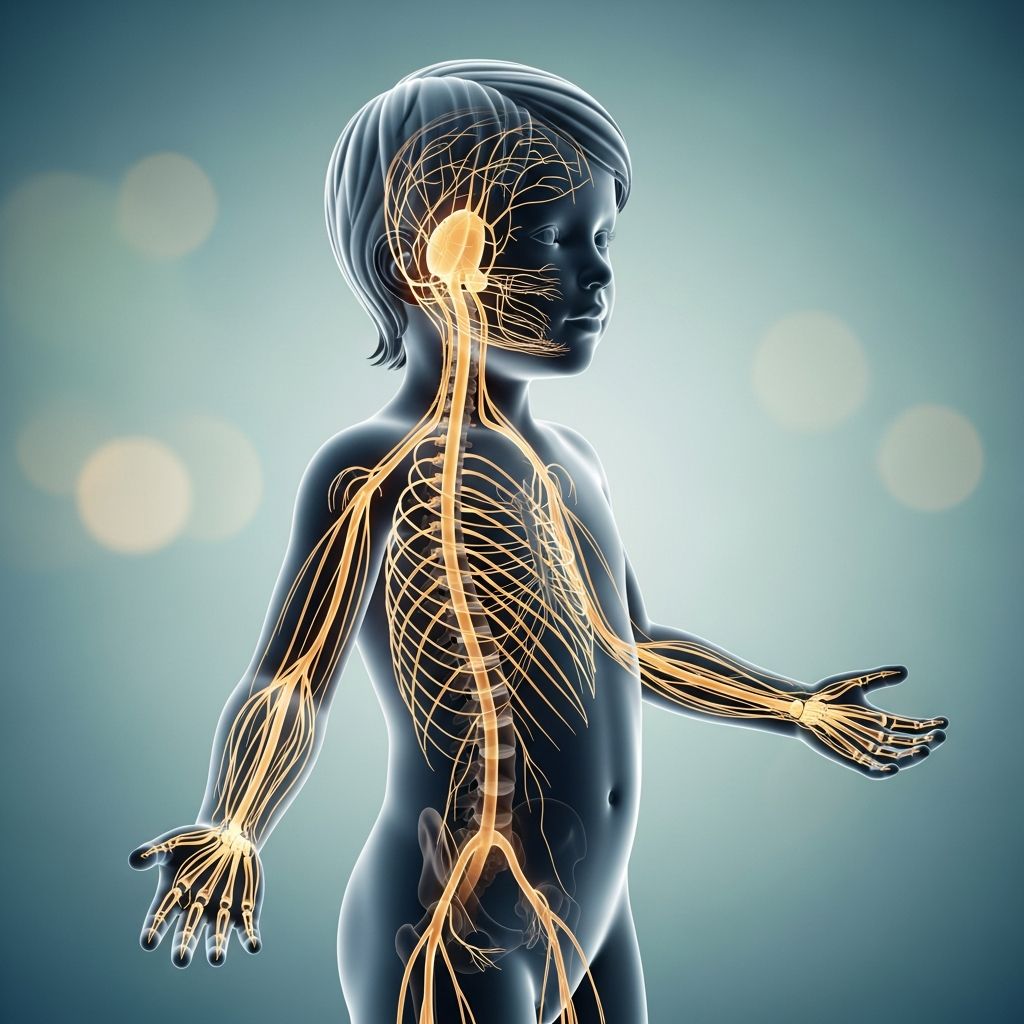
The peripheral nervous system is your child’s built-in wiring that carries messages between the brain, spinal cord, and the rest of the body. Understanding the basics helps you support healthy development, spot warning signs early, and explain body signals to your child in simple language.
What Is the Peripheral Nervous System?
The nervous system has two big parts: the central nervous system (CNS), which includes the brain and spinal cord, and the peripheral nervous system (PNS), which includes all the nerves that branch out to the skin, muscles, and organs. While the CNS acts like the control center, the PNS acts like a network of roads carrying information to and from that center.
Every time your child wiggles their toes, feels a hug, or notices a sharp pain, the PNS is at work sending signals back and forth. Without this system, the brain would have no way to know what is happening in the body or to tell the body how to respond.
Major Jobs of the Peripheral Nervous System
Parents often think of nerves only when something hurts, but the PNS does much more than signal pain. It constantly carries information that keeps your child safe, active, and in balance.
- Collects sensory information: Touch, temperature, pain, body position, and special senses like vision and hearing are sent to the brain through sensory nerves.
- Controls movement: Motor nerves tell muscles when to contract so your child can walk, write, jump, and smile.
- Runs automatic body functions: Autonomic nerves quietly manage heart rate, breathing patterns, digestion, and more without conscious effort.
- Coordinates quick protective responses: Reflex pathways allow the body to react quickly to dangers, such as pulling away from something hot, often before your child is fully aware of the threat.
Main Divisions of the Peripheral Nervous System
The PNS can be thought of in terms of what it does: sensing the world, moving the body, and handling automatic functions. Each of these roles comes from a specific division.
- Sensory (afferent) division: Brings information from receptors in the skin, muscles, joints, and sense organs to the brain and spinal cord.
- Motor (efferent) division: Carries instructions from the CNS to muscles and glands, telling them how to respond.
- Autonomic division: Controls involuntary activities like heartbeat, blood vessel tone, and digestive movements.
Somatic vs. Autonomic Systems
Another useful way to group the PNS is by what your child can consciously control versus what happens automatically. These two branches often work side by side.
| System | What It Controls | Conscious? | Kid-Friendly Example |
|---|---|---|---|
| Somatic nervous system | Skeletal muscles used for posture and movement | Yes, mostly voluntary | Deciding to kick a ball or write a sentence |
| Autonomic nervous system | Organs, glands, smooth muscle in blood vessels and airways | No, mostly automatic | Heart beating faster during tag, stomach churning during lunch |
Types of Nerves in Everyday Language
The PNS is made up of bundles of nerve fibers called nerves, which can be compared to cables carrying electrical messages. Those cables reach almost every part of your child’s body.
- Cranial nerves: Emerge directly from the brain and mainly serve the head and neck, handling tasks like facial movement, eye motion, hearing, and taste.
- Spinal nerves: Branch off from the spinal cord, leaving the backbone at different levels to supply the trunk, arms, and legs.
- Mixed nerves: Many nerves contain both sensory and motor fibers, allowing a body part to both send information to the brain and receive commands.
Sensory vs. Motor Nerve Fibers
Inside each nerve are many individual nerve fibers, some geared toward sensing and others toward moving. Understanding the difference can clarify symptoms if something goes wrong.
- Sensory fibers: Carry information such as pressure, vibration, pain, temperature, and body position back to the CNS.
- Motor fibers: Bring signals out to muscles, telling them when and how strongly to contract.
How Nerve Messages Travel
Nerve cells (neurons) communicate using tiny electrical signals that move rapidly along their length. Many peripheral nerve fibers are wrapped in a fatty coating called myelin, which helps signals travel faster and more efficiently.
At connection points between neurons, called synapses, the electrical signal triggers chemical messengers to cross a very small gap. These messengers then start a new electrical signal on the next cell, allowing messages to move from one part of the pathway to another.
Reflexes: Fast Protective Shortcuts
Reflexes are built-in shortcuts that allow a very rapid response to certain stimuli, such as pain or stretch, without waiting for the brain to process the situation fully. This is especially important in children who are curious and may touch or bump into things as they explore.
In a simple reflex, a sensory nerve detects something (like extreme heat), carries that message into the spinal cord, and an interneuron immediately activates motor nerves that cause the muscle to move, often pulling the body part away. The brain receives the message shortly after and becomes aware of what happened, but the protective action has already begun.
The Autonomic System: Behind-the-Scenes Controller
The autonomic part of the PNS keeps your child’s internal environment stable even as activity levels, emotions, and surroundings change. It manages heart rate, breathing pattern, blood pressure, digestion, and temperature regulation.
This system has two main branches that often have opposite effects, providing balance depending on whether your child needs to be more energized or more relaxed.
Sympathetic vs. Parasympathetic Branches
| Branch | Main Role | Typical Effects | Everyday Kid Example |
|---|---|---|---|
| Sympathetic | Prepares the body for action and stress | Speeds up heart rate, widens airways, may slow digestion | Racing heart and quick breathing before a big game or school play |
| Parasympathetic | Promotes rest, recovery, and digestion | Slows heart rate, stimulates digestion, supports energy storage | Feeling calm and sleepy after a warm meal and quiet story time |
How the PNS Helps Kids Grow and Learn
During childhood, sensory and motor experiences shape how nerve pathways strengthen and connect. Repeated activities such as practicing handwriting or playing a musical instrument reinforce certain connections and improve skill and coordination.
Rich, varied play—climbing, drawing, building, and sports—gives the PNS plenty of opportunities to relay information and refine responses. Over time, tasks that were once difficult become smoother and faster because the nervous system becomes more efficient at handling those specific messages.
Common Signs of Peripheral Nerve Problems in Children
Peripheral nerve issues are less common in children than in adults, but they do occur and can affect movement, sensation, or both. Early recognition allows for timely assessment and treatment.
- Frequent numbness, tingling, or burning sensations in hands or feet.
- Unusual weakness, clumsiness, or loss of skills such as buttoning or using utensils.
- Pain along a limb, especially if it follows the path of a nerve and is worsened by certain movements.
- Changes in sweating, skin color, or temperature in a particular area.
- Difficulty standing on toes or heels, or repeated tripping for no clear reason.
Any sudden or progressive change in strength, sensation, or coordination should be discussed with a pediatrician, who can determine whether referral to a specialist is needed.
Everyday Ways to Protect Your Child’s Nerves
Many healthy habits that protect the heart and muscles also support the peripheral nerves. Parents can weave these practices into everyday routines without making them feel like medical tasks.
- Balanced nutrition: Provide a variety of fruits, vegetables, whole grains, lean proteins, and healthy fats to supply vitamins and minerals important for nerve function.
- Regular physical activity: Encourage active play and sports appropriate for your child’s age to keep circulation, muscles, and nerves in good condition.
- Protective gear: Use helmets, wrist guards, knee pads, and proper sports equipment to reduce the risk of injuries that could harm nerves.
- Healthy posture and ergonomics: Ensure backpacks are not overly heavy and that screens are used at a comfortable height to decrease strain on neck and shoulder nerves.
- Sleep routines: Adequate sleep supports overall nervous system recovery and helps prevent irritability and clumsiness that raise injury risk.
Helping Kids Understand Their Own Nerves
Children often feel less anxious about body sensations when they understand what is happening. Simple explanations can turn scary feelings into manageable experiences.
- Describe nerves as “message wires” that tell the brain what the body feels and help the brain tell muscles what to do.
- When a child reports pain or numbness, reassure them that this is the body’s way of asking for attention, rest, or protection.
- Encourage kids to describe sensations in their own words (tingly, prickly, hot, tight) to improve communication with you and healthcare providers.
When to Seek Medical Advice
Mild, brief tingling after sitting awkwardly or minor bumps is usually harmless and resolves quickly. Persistent or worsening symptoms, however, deserve prompt medical attention.
- Sudden weakness in a limb or face.
- Trouble walking or frequent falls that are new or getting worse.
- Ongoing burning or shooting pain that interrupts play, sleep, or school.
- Loss of bladder or bowel control associated with back pain or leg weakness.
In urgent situations—such as severe injury, sudden inability to move a limb, or difficulty breathing—emergency care is needed immediately.
FAQs About the Peripheral Nervous System in Kids
Is the peripheral nervous system still developing in children?
Yes. While the basic structures are present at birth, nerve pathways continue to refine their connections throughout childhood and adolescence. Repetition, practice, and play strengthen certain routes, allowing skills to become quicker and more accurate over time.
Can peripheral nerves heal if they are injured?
Peripheral nerves have more potential to recover than nerves in the brain and spinal cord, especially in younger people. Recovery depends on the type and severity of injury, how quickly it is treated, and whether the damaged area is protected during healing.
What everyday activities support healthy nerve development?
Active play that challenges balance, coordination, and fine motor skills, combined with good sleep and nutrition, supports healthy nerve signaling. Creative tasks such as drawing, building, and playing instruments provide repeated practice for precise nerve pathways in hands and fingers.
Do screen habits affect the peripheral nervous system?
Long periods of screen time can contribute to poor posture and repetitive movements, which may strain muscles and the nerves that pass through tight spaces. Building in regular breaks, stretching, and varying activities helps reduce this type of stress on the body’s wiring.
How can I tell if my child’s clumsiness is normal or nerve-related?
Mild clumsiness is common when children are going through growth spurts or learning new skills. If you notice clear loss of previously mastered abilities, asymmetry between the two sides of the body, or clumsiness accompanied by pain, numbness, or weakness, a medical evaluation is important.
Final Thoughts for Parents
The peripheral nervous system is central to how your child explores, plays, and interacts with the world. By recognizing its role in movement, sensation, and automatic functions, you can better understand your child’s experiences and support healthy habits.
You do not need to memorize every nerve name to be an effective advocate. Paying attention to changes in strength, sensation, coordination, or comfort—and asking questions when something seems off—goes a long way toward protecting your child’s remarkable network of nerves.