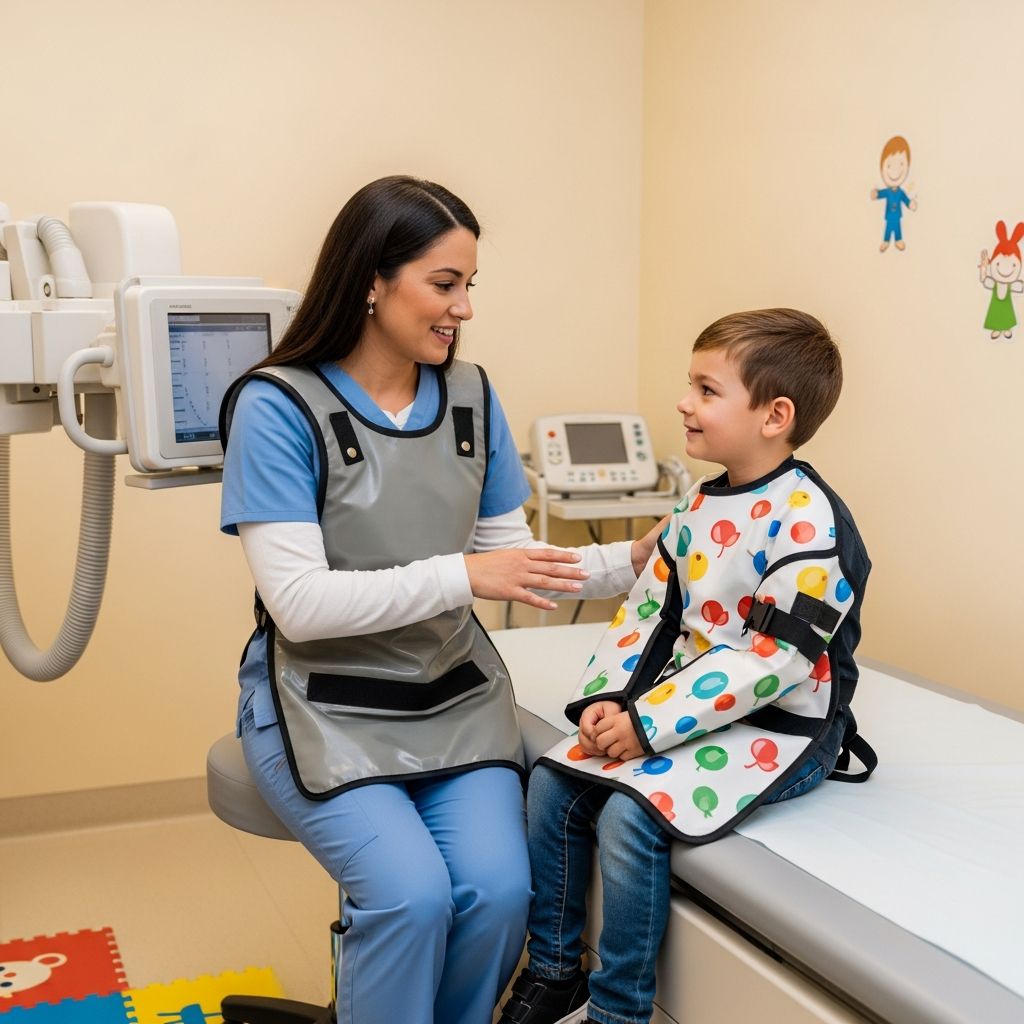
X-rays are a fundamental diagnostic tool in pediatric care, providing quick insights into a child’s internal structures, especially bones and chest areas. Parents often encounter them during injury assessments or routine checkups, making understanding their process crucial for confident decision-making.
Understanding the Basics of X-Ray Technology
X-rays utilize low-dose ionizing radiation to create images of the body’s interior. When X-ray beams pass through the body, denser tissues like bones absorb more radiation, appearing white on the film, while softer tissues and air-filled areas like lungs appear darker. This contrast helps healthcare providers visualize issues without invasive procedures.
In children, X-ray machines are calibrated for smaller bodies to minimize exposure. Digital detectors capture images instantly, reducing the need for repeat scans and further limiting radiation.
Why X-Rays Are Essential in Pediatric Diagnostics
X-rays play a pivotal role in identifying a range of conditions in kids. They excel at detecting bone fractures, a common need after playground falls or sports injuries. Beyond bones, chest X-rays reveal lung infections like pneumonia or signs of respiratory distress.
- Bone and Joint Issues: Fractures, infections, arthritis progression, dental cavities, osteoporosis screening, and bone tumors.
- Chest and Respiratory: Pneumonia, tuberculosis, enlarged heart, or blocked vessels with contrast.
- Abdominal Scans: To check for obstructions or foreign objects in the digestive tract.
- Dental Health: Spotting decay or misalignment in developing teeth.
Specialized X-rays like mammograms (though rare in kids) or fluoroscopy provide real-time imaging for dynamic assessments.
How X-Rays Work: A Step-by-Step Breakdown
The process begins with radiation beams emitted from a tube passing through the body onto a detector. Variations in absorption create the grayscale image: bones white, fat/muscle gray, air black. For enhanced detail, contrast agents like barium or iodine highlight specific areas, such as the gastrointestinal tract or blood vessels.
Modern systems use computed radiography or direct digital methods, allowing immediate image review by radiologists. This efficiency is vital in pediatrics, where quick diagnosis can expedite treatment.
| Body Part | Common Findings | Example Conditions |
|---|---|---|
| Bones/Teeth | White dense areas | Fractures, cavities, tumors |
| Chest/Lungs | Black air spaces | Pneumonia, heart enlargement |
| Soft Tissues | Gray shades | Infections, foreign objects |
Preparation Tips for Your Child’s X-Ray
Preparation varies by scan type. For most, remove clothing over the area, jewelry, and metal objects to avoid image artifacts. Provide a hospital gown if needed. Explain the process simply to your child: “It’s like a quick camera flash that helps the doctor see inside without touching.”
For contrast studies, fasting may be required, or allergies to iodine checked. Comfort items like a favorite toy can ease anxiety. Arrive early to complete forms.
The X-Ray Experience: What Happens During the Scan
Conducted in radiology departments, ERs, or clinics, scans last seconds to minutes. A technologist positions your child—standing, sitting, or lying—using pillows for stability. Hold breath briefly to prevent blurring.
No pain involved; radiation is imperceptible. For young kids, parents may stay nearby, wearing lead aprons. Multiple views ensure comprehensive imaging.
Radiation Safety: Protecting Children
Children are more sensitive to radiation due to developing tissues, so the ALARA principle (As Low As Reasonably Achievable) guides use. A single chest X-ray equals 10 days of natural background radiation.
Lead shields protect gonads and thyroid. Digital tech reduces doses by up to 90% vs. film. Benefits always outweigh minimal risks when medically necessary.
- Shield sensitive organs.
- Use child-sized protocols.
- Avoid unnecessary repeats.
Interpreting Results and Next Steps
Images appear on computers within minutes; radiologists analyze and report to your doctor. Normal results mean no action; abnormal ones prompt further tests like MRI.
Discuss findings openly with your pediatrician for clarity.
Special Considerations for Infants and Toddlers
Immobilization aids like swaddling or feed-and-sleep techniques minimize movement. Parental holding with shielding is common. Sedation is rare, only for complex cases.
Alternatives to X-Rays When Possible
Ultrasound or MRI offer no radiation for soft tissues. Reserve X-rays for bone/chest needs where they’re most effective.
Common Myths About X-Rays Debunked
- Myth: X-rays cause cancer. Fact: Risk is negligible; benefits dominate.
- Myth: All scans are risky for kids. Fact: Doses are tiny and optimized.
Frequently Asked Questions (FAQs)
Is X-ray radiation safe for my child?
Yes, doses are very low, comparable to background exposure, with shields enhancing safety.
How long does a pediatric X-ray take?
Usually under 15 minutes, with exposure fractions of a second.
Can I be in the room during my child’s X-ray?
Often yes, with protective gear.
What if my child moves during the scan?
Technologists use positioning aids; repeats are minimized.
Are there side effects from contrast dye?
Rare; inform of allergies beforehand.
Empowering Parents: Questions to Ask Your Doctor
- Is this X-ray essential, or is there a non-radiation alternative?
- What body parts will be imaged and shielded?
- How will results guide treatment?
Stay involved for optimal care.
References
- X-ray: Imaging test quickly helps find diagnosis — Mayo Clinic Staff. 2024-01-20. https://www.mayoclinic.org/tests-procedures/x-ray/about/pac-20395303
- X-Ray: What It Is & What It Can Show — Cleveland Clinic. https://my.clevelandclinic.org/health/diagnostics/21818-x-ray
- X-ray (Radiography) — RadiologyInfo.org. https://www.radiologyinfo.org/en/x-ray
- X-Rays — MedlinePlus. https://medlineplus.gov/xrays.html
- Facts About X-Rays — Centers for Disease Control and Prevention (CDC). https://www.cdc.gov/radiation-health/data-research/facts-stats/x-rays.html
- Medical X-ray Imaging — U.S. Food and Drug Administration (FDA). https://www.fda.gov/radiation-emitting-products/medical-imaging/medical-x-ray-imaging