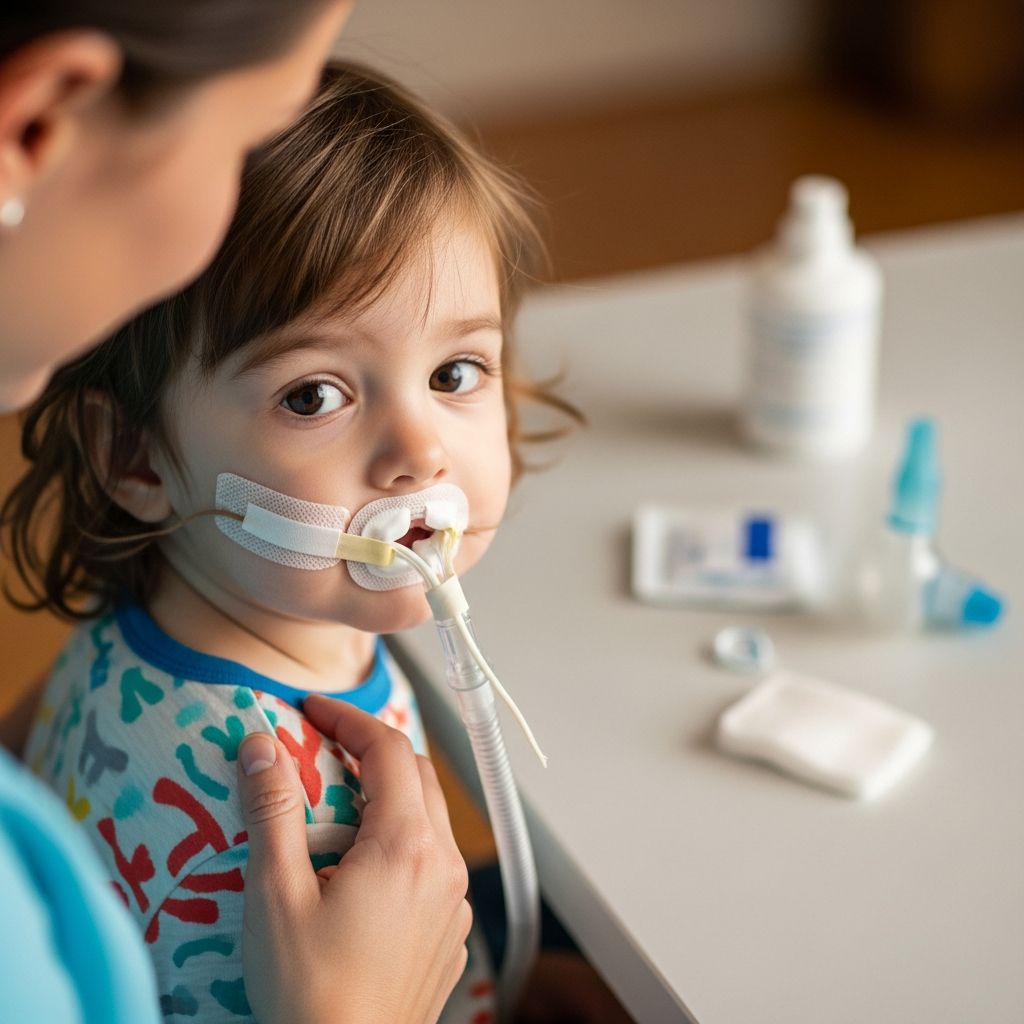
A tracheostomy creates a direct opening in a child’s windpipe to aid breathing when natural airways are blocked or insufficient. This procedure, involving a tube inserted through the neck, supports kids with chronic respiratory issues, enabling better ventilation and secretion management.
Understanding Tracheostomy in Pediatric Patients
In children, tracheostomies address conditions like congenital airway malformations, severe infections, or trauma obstructing the upper airway. The tube bypasses the nose, mouth, and throat, delivering air straight to the lungs and facilitating ventilator use if required. Unlike adults, pediatric cases often stem from developmental anomalies or neuromuscular disorders, requiring tailored sizing and monitoring.
The stoma, or surgical opening, typically sits between the second and third tracheal rings to minimize complications like narrowing. Parents must grasp that while life-sustaining, it alters breathing, speech, and daily activities, demanding vigilant home oversight.
Reasons Children Require Tracheostomies
- Airway Obstruction: From birth defects like laryngomalacia or acquired issues such as tumors and swelling.
- Prolonged Ventilation: Needed post-surgery or during recovery from respiratory failure in premature infants.
- Secretion Control: Essential for kids unable to clear mucus due to weak cough reflexes in conditions like cerebral palsy.
- Neuromuscular Support: Aids breathing in disorders like muscular dystrophy where respiratory muscles falter.
These indications ensure stable oxygenation, reducing reliance on less effective oral airways.
Surgical Approaches for Kids
Pediatric tracheostomies prioritize precision due to smaller anatomies. Two primary methods exist: open surgery in an operating room and percutaneous techniques, often bedside with bronchoscopic guidance.
| Method | Description | Best For Children |
|---|---|---|
| Open Tracheostomy | Horizontal neck incision exposes trachea; cartilage is incised or flapped for tube entry under general anesthesia. | Complex cases or emergencies needing robust stoma. |
| Percutaneous | Needle puncture, guidewire dilation, tube insertion visualized via bronchoscope. | Stable kids avoiding full OR procedures. |
Post-insertion, confirmation via capnography ensures correct placement. Initial tube changes occur around day 5, with stay sutures aiding stability in active children.
Types of Tracheostomy Tubes for Young Patients
Tubes vary by material, cuff presence, and features. Uncuffed tubes suit most kids to avoid tracheal damage; cuffed ones for ventilator-dependent cases with low-pressure balloons. Fenestrated designs permit vocalization by allowing air upward.
- Silicone or PVC: Flexible, hypoallergenic for long-term use.
- With Inner Cannula: Removable for easy cleaning without full tube removal.
- Cuffed vs. Uncuffed: Uncuffed preferred in pediatrics to support growth and speech.
Proper sizing prevents leaks or pressure sores, adjusted as the child grows.
Daily Home Care Routines
Caregivers perform suctioning every 4-6 hours or as secretions build, using sterile technique: wash hands, don gloves, instill saline if needed, suction gently to avoid trauma. Clean the stoma site twice daily with half-strength hydrogen peroxide and swabs, patting dry.
Tube security via twill ties or Velcro straps, changed weekly. Humidification via mist collars or room devices prevents crusting, vital in dry climates. Monitor for skin irritation, applying barriers like zinc ointment.
Cleaning Supplies Checklist
- Suction catheters (appropriate sizes)
- Sterile saline bullets
- Gloves, hydrogen peroxide, cotton swabs
- Spare tubes, obturators, ties
- Portable suction machine
Recognizing and Handling Complications
Common issues include tube displacement, bleeding, or infections. Accidental decannulation demands immediate reinsertion attempts with smaller tube or obturator before calling emergency services. Infections show as redness, pus, or fever—treat with antibiotics after swab cultures.
Granulation tissue or stenosis requires ENT review; tracheomalacia may need resizing. Regular follow-ups track growth impacts.
Facilitating Communication and Eating
Speech uses speaking valves like Passy-Muir, one-way devices capping the tube to redirect air for voicing during exhalation. Introduce post first tube change, ensuring cuff deflation and strong cough.
Swallowing evaluations by speech therapists guide safe oral intake. Many kids eat normally, but some need thickened liquids or NG tubes initially. Monitor for aspiration via blue-dye tests or fiberoptic scopes.
Safety Precautions in Everyday Scenarios
- Bathing: Cover tube with waterproof dressing; avoid submersion.
- Play: Neck plates protect stoma; supervise active play.
- Sleep: Elevate head; use pulse oximeters for monitoring.
- Travel: Carry emergency kit with extra supplies.
School integration involves care plans and trained aides.
Long-Term Outlook and Decannulation
Many children outgrow tracheostomy needs as airways mature or conditions resolve. Decannulation process: capping trials, polysomnography for unobstructed breathing, then tube removal with stoma closure observation. Success rates exceed 70% in select cases with multidisciplinary assessment.
Emotional Support for Families
Adjusting involves grief, anxiety, and empowerment through training. Connect with support groups, respite care. Celebrate milestones like first words via valve or ventilator weaning.
Frequently Asked Questions
Can children with tracheostomies attend regular school?
Yes, with individualized education plans, trained staff, and emergency protocols ensuring safe participation.
How often should the tracheostomy site be cleaned?
Twice daily, or more if soiled, using gentle antiseptics to prevent infection.
What if the tube falls out at home?
Stay calm, attempt reinsertion with spare tube; if unsuccessful, cover stoma and seek immediate medical help.
Does a tracheostomy affect a child’s growth?
Not directly, but regular resizing and nutritional support maintain development.
Are speaking valves safe for all kids?
Only when cleared by specialists, ensuring no airway compromise.
References
- Tracheostomy Basic Information — Tracheostomy Education. 2023. https://tracheostomyeducation.com/tracheostomy-basic-information/
- Tracheostomy – StatPearls — NCBI Bookshelf. 2023-09-04. https://www.ncbi.nlm.nih.gov/books/NBK559124/
- Tracheotomy — Wikipedia. 2024. https://en.wikipedia.org/wiki/Tracheotomy
- Tracheostomy — Florida Health Finder. 2023. https://quality.healthfinder.fl.gov/health-encyclopedia/HIE/1/002955
- Tracheostomy — Mayo Clinic. 2023-07-22. https://www.mayoclinic.org/tests-procedures/tracheostomy/about/pac-20384673
- Tracheostomy — NHS. 2023. https://www.nhs.uk/tests-and-treatments/tracheostomy/
- Tracheostomy: What It Is, Purpose & Procedure — Cleveland Clinic. 2023-12-04. https://my.clevelandclinic.org/health/procedures/tracheostomy