Head computed tomography (CT) scans provide detailed images of a child’s brain, skull, and surrounding structures using X-rays, helping doctors diagnose various conditions quickly and accurately. This non-invasive imaging tool is especially valuable in pediatric care for its speed and ability to detect issues like injuries or abnormalities without surgery.
Understanding the Purpose of Pediatric Head CT Scans
Pediatric head CT scans are recommended when rapid assessment of brain health is critical. They create cross-sectional images that reveal internal details not visible on standard X-rays, aiding in the diagnosis of acute problems.
Common reasons include:
- Head trauma from falls or accidents to check for bleeding or swelling.
- Suspected infections, tumors, or hydrocephalus (fluid buildup in the brain).
- Evaluation of congenital defects, seizures, or shunt malfunctions in children with prior brain surgery.
- Assessment of abnormal head growth, neurological symptoms like headaches or fainting, or stroke-like events.
These scans excel at detecting blood collections, brain shifts, edema, fractures, and calcifications, making them indispensable in emergencies.
When Doctors Choose CT Over Other Imaging
CT is preferred for urgent cases where MRI might be unavailable or when sedation is risky. Unlike MRI, CT takes seconds to minutes, ideal for restless children or critical situations like herniation or hemorrhage.
| Imaging Type | Strengths | Best For |
|---|---|---|
| CT Scan | Fast, detailed bone/bleed images, no sedation often needed | Trauma, acute bleeds, shunts |
| MRI | Superior soft tissue detail, no radiation | Chronic issues, tumors if time allows |
| X-ray | Quick skull fracture check | Initial bone screening |
This comparison highlights CT’s role in time-sensitive pediatric scenarios.
Preparation Steps for Your Child’s Head CT
Preparation minimizes stress and ensures clear images. Remove metal objects like hair clips or jewelry from the head area, as they can interfere.
- Discuss with your doctor: Inform about allergies, pregnancy, or claustrophobia.
- Fasting if contrast used: No food/drink for a few hours if intravenous dye is planned.
- Comfort measures: Bring a favorite blanket; explain the process simply to reduce anxiety.
- For infants: Use feed-and-wrap techniques—feed during setup to promote sleep.
Parents can often stay nearby wearing a lead apron.
Step-by-Step: What Happens During the Scan
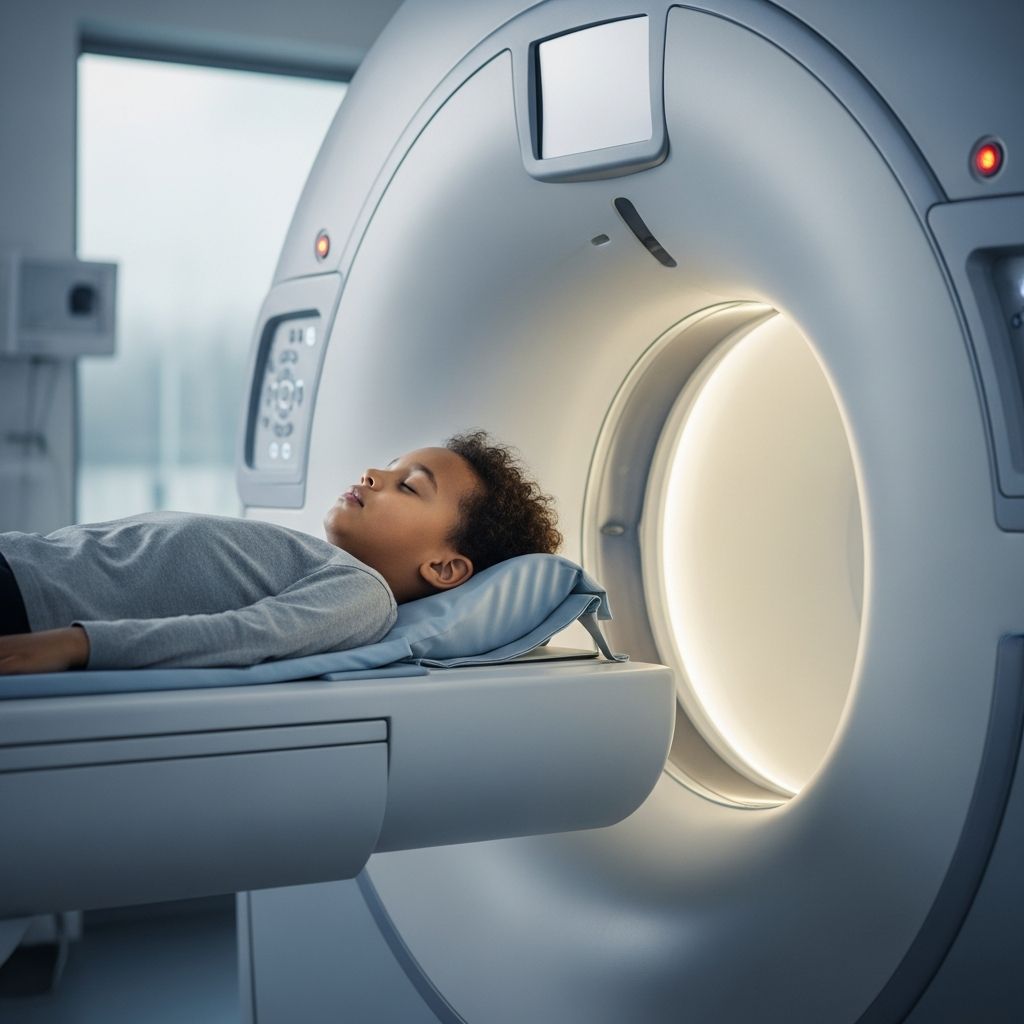
The procedure is quick and painless. Your child lies on a motorized table that slides into a doughnut-shaped scanner.
- Positioning: Head aligned (often chin tucked to avoid eye exposure), secured with straps/pillows for stillness.
- Scout scan: Initial low-dose image to plan the main scan, angled to Reid’s baseline.
- Main scan: X-ray tube rotates around the head (1-5 minutes); child holds still, may hold breath briefly. Noises like buzzing occur.
- Contrast if needed: IV dye injected for better vessel/tumor visibility; child feels warmth.
Scanning modes include axial (slice-by-slice) or helical (continuous spiral) based on equipment.
Radiation Safety in Pediatric Head CT Imaging
Radiation dose is minimized in children using protocols like low kVp/mA, optimized for small heads.
- Key practices: Limit coverage to skull base-vertex, use iterative reconstruction to reduce dose while maintaining quality.
- Benefits outweigh risks in indicated cases, per ALARA principle (As Low As Reasonably Achievable).
Studies show head CT doses are low (under 2 mSv typically), far below natural background yearly exposure.
After the Scan: Recovery and Next Steps
Children resume normal activities immediately unless sedated. Drink fluids post-contrast to flush dye.
Results: Radiologist reviews slices; 3D models possible. Doctor discusses findings, which may show normalcy or guide treatment.
Potential Risks and How They’re Managed
Risks are minimal:
- Radiation: Lifetime cancer risk tiny; protocols cut exposure.
- Contrast reaction: Rare allergy; monitored.
- Motion blur: Prevented by positioning aids.
Alternatives like ultrasound for infants or MRI reduce radiation when suitable.
Helping Your Child Cope: Tips from Experts
Age-appropriate explanations work best: “It’s like a superhero camera taking brain pictures.” Practice lying still at home. Child life specialists use videos/dolls.
For toddlers: Swaddling and feeding promote natural sleep.
Interpreting Common Head CT Findings in Kids
Normal scan: Symmetric ventricles, no bleeds/shifts. Abnormal: Epidural hematomas (lens-shaped), subdural (crescent), edema (low density).
- Trauma: Skull fractures, contusions.
- Tumors: Mass effects, calcifications.
- Hydrocephalus: Enlarged ventricles.
FAQs: Common Parent Questions on Pediatric Head CT
Is a head CT scan safe for my baby?
Yes, with child-specific protocols minimizing radiation; it’s safer than missing a serious issue like bleeding.
How long does the scan take?
Typically 30 seconds to a few minutes; faster than MRI.
Will my child need sedation?
Often not, due to speed; used rarely for uncooperative kids.
What if contrast is used—any side effects?
Warm flush common; serious reactions rare (1 in 1000).
Can I be with my child during the scan?
Yes, wearing a lead apron in many facilities.
Does CT show everything MRI does?
No, CT excels at bones/bleeds; MRI better for soft tissues.
This guide empowers parents with knowledge for informed decisions. Consult your pediatrician for personalized advice.
References
- Pediatric Routine Head CT Protocols Version 1.1 — American Association of Physicists in Medicine (AAPM). 2015-12-14. https://aapm.org/pubs/CTProtocols/documents/PediatricRoutineHeadCT.pdf
- Pediatric CT — RadiologyInfo.org (RSNA/Radiology Society of North America). Accessed 2026. https://www.radiologyinfo.org/en/info/pedia-ct
- Head CT scan — UCSF Benioff Children’s Hospitals. Accessed 2026. https://www.ucsfbenioffchildrens.org/medical-tests/head-ct-scan
- Brain CT scan — Mayo Clinic. Accessed 2026. https://www.mayoclinic.org/tests-procedures/brain-ct-scan/about/pac-20587837
- CT in Minor Head Injuries — Image Gently (Alliance for Radiation Safety in Pediatric Imaging). Accessed 2026. https://www.imagegently.org/Procedures/Minor-CT-in-Head-Injuries