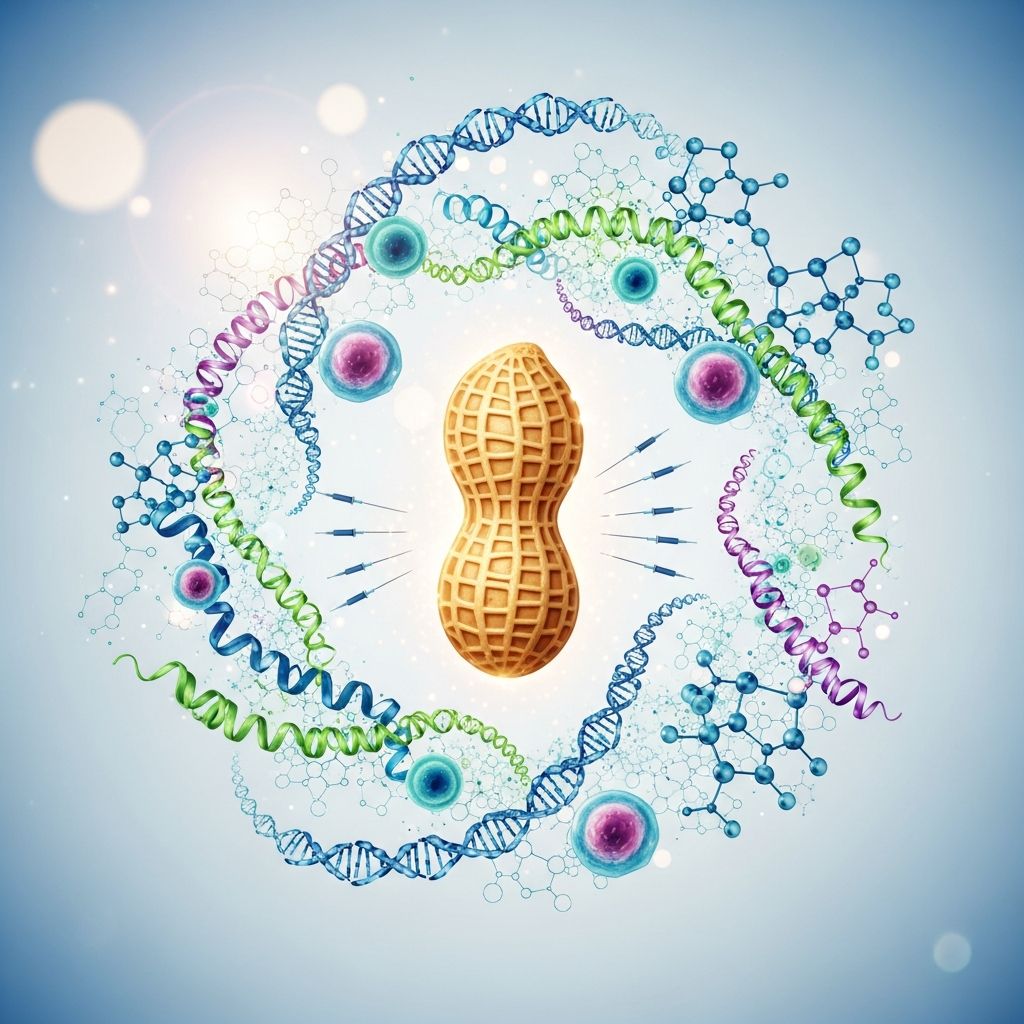
Peanut allergies affect millions worldwide, posing daily risks of severe reactions for children and families. Recent clinical advancements in immunotherapy provide new pathways to desensitization, potentially reducing anaphylaxis risks from accidental exposure.
Understanding Peanut Allergies and Their Impact
Peanut allergies trigger immune overreactions to peanut proteins, causing symptoms from hives to life-threatening anaphylaxis. In the U.S., about 2% of people have this allergy, with food allergies impacting 10% of children, often alongside conditions like eczema or asthma. Families live in constant vigilance, avoiding peanuts while hoping for effective solutions.
Traditional management relies on strict avoidance and epinephrine auto-injectors. However, accidents happen, leading to emergency visits. Innovations in desensitization therapies aim to build tolerance by controlled allergen exposure, shifting management from mere avoidance to proactive treatment.
Current FDA-Approved Options: PALFORZIA and XOLAIR
PALFORZIA, approved by the FDA in 2020, marks the first oral immunotherapy (OIT) for peanut-allergic children aged 4-17. It involves daily ingestion of escalating peanut protein doses under medical supervision to lessen reaction severity. Despite initial sales projections of $1.28 billion by 2024, uptake faced hurdles from COVID-19 and dosing complexity requiring clinic visits.
XOLAIR, from Roche and Novartis, offers another approved biologic option targeting IgE antibodies to prevent reactions. These therapies provide real progress but highlight needs for simpler, safer alternatives.
Promising Epicutaneous Innovations: Viaskin Peanut Patch
Viaskin Peanut by DBV Technologies delivers tiny peanut protein amounts through a skin patch (epicutaneous immunotherapy or EPIT), minimizing systemic reactions compared to oral methods. Applied daily between shoulder blades, it uses just 125 mg protein yearly to promote tolerance.
The Phase 3 VITESSE trial (NCT05741476), the largest food allergy immunotherapy study with 654 children aged 4-7, showed 47% of Viaskin users tolerating significant peanut exposure after 12 months versus 15% on placebo. Granted FDA Fast Track and Breakthrough designations, top-line results are expected Q4 2025, with resubmission planned for 2026.
Benefits include non-invasive application, lower anaphylaxis risk, and suitability for young kids. After one year, nearly 75% tolerated 1-5 peanuts, enhancing quality of life.
Oral Immunotherapy Advances for Young Children
Early peanut oral immunotherapy (epOIT) targets toddlers under age 3. A UVA Health study of 30 children starting at 14 mg peanut protein (under 5% of one peanut) achieved desensitization in all 27 completers to 500 mg daily—about two peanuts. One-third passed formal challenges for sustained tolerance. Mild side effects like hives were managed with antihistamines; no placebo was used due to ethical concerns.
CHOP’s trial with PALFORZIA involved daily home dosing with clinic up-dosing, desensitizing participants like Noah to reduce accidental exposure fears. Low-dose OIT studies confirm safety and tolerance gains with fewer side effects.
Pipeline Treatments on the Horizon
- PVX108 (Aravax): Peptide-based immunotherapy targeting T-cells for long-term tolerance.
- Remibrutinib (Novartis): Oral biologic inhibiting immune pathways in allergic responses.
- SLIT Tablet (ALK-Abello): Sublingual option for under-the-tongue allergen delivery.
Biologics like monoclonal antibodies and combination therapies pair with immunotherapy for faster, safer results. Projections show market growth to 2034 with diverse mechanisms.
Early Introduction Strategies for Prevention
Beyond treatment, prevention via early peanut exposure in high-risk infants cuts allergy risk by 27% and overall food allergies by 38%, per recent studies. Guidelines recommend introduction around 4-6 months alongside other solids.
Comparing Treatment Approaches
| Method | Age Group | Dosing | Success Rate | Side Effects |
|---|---|---|---|---|
| PALFORZIA (OIT) | 4-17 | Daily oral, clinic supervised | Reduces reaction severity | Gastrointestinal, requires monitoring |
| Viaskin Patch (EPIT) | 4-7 (trial) | Daily skin patch | 47% desensitized (Phase 3) | Mild skin reactions |
| epOIT (UVA) | <3 | Escalating oral doses | 100% to 500mg (completers) | Mild hives, rare anaphylaxis |
This table highlights trade-offs: patches offer convenience, early OIT high efficacy in toddlers.
Benefits, Risks, and Family Considerations
Treatments build confidence, enabling social activities without fear. However, risks include reactions during up-dosing, demanding commitment. Families must weigh benefits against logistics; success often requires years.
Younger starts yield better outcomes, emphasizing early diagnosis and intervention.
Future Directions in Allergy Research
Ongoing trials explore tolerance induction, not just desensitization. Multicenter studies and personalized medicine based on immune profiles promise broader access. By 2034, multiple approvals could transform peanut allergy from lifelong burden to manageable condition.
Frequently Asked Questions
Is Viaskin Peanut FDA-approved yet?
Not yet; Phase 3 success paves way for 2026 submission.
Can peanut immunotherapy cure allergies?
No, it desensitizes, reducing reaction risks but requires maintenance.
What age is best for starting treatment?
Earlier is better; studies show high success under age 3.
Are patches safer than oral therapies?
Yes, lower systemic reaction risk via skin delivery.
How does early peanut exposure prevent allergies?
Introduces allergen during immune window, cutting risk by 27%.
References
- Peanut Allergy Treatment Heats Up with New MoAs — DelveInsight. 2024. https://www.delveinsight.com/blog/peanut-allergy-treatment-landscape
- New Oral Immunotherapy Treatment for Peanut Allergy: Noah’s Story — Children’s Hospital of Philadelphia (CHOP). 2023. https://www.chop.edu/stories/new-oral-immunotherapy-treatment-peanut-allergy-noahs-story
- Peanut Allergy Treatment in Young Kids Proves Highly Successful — UVA Health. 2024. https://www.uvahealth.com/news/peanut-allergy-treatment-in-young-kids-proves-highly-successful/
- A Successful New Peanut Patch is Helping Improve Options for Allergy Treatment — CU Anschutz Medical Campus. 2024. https://news.cuanschutz.edu/medicine/a-successful-new-peanut-patch-is-helping-improve-options-for-allergy-treatment
- Peanut allergy patch succeeds in late-stage study — BioPharma Dive. 2024. https://www.biopharmadive.com/news/viaskin-peanut-allergy-patch-dbv-phase-3/808149/
- Early peanut exposure babies tied sharp drop food allergy diagnoses — Fox News. 2024. https://www.foxnews.com/health/early-peanut-exposure-babies-tied-sharp-drop-food-allergy-diagnoses