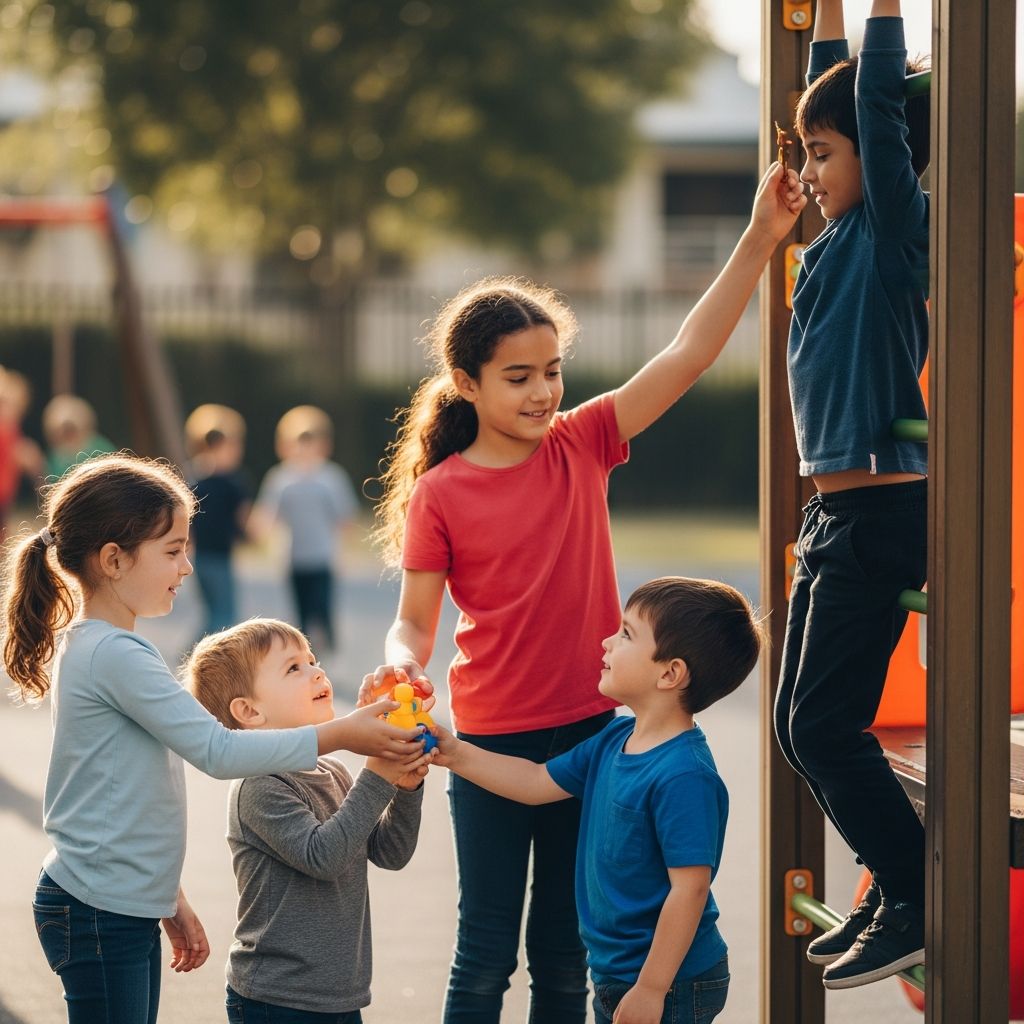
Every family is guided by values, whether or not they are spoken aloud. When parents intentionally clarify and live their values, children gain a stable inner compass that supports mental health, healthy relationships, and responsible behavior over a lifetime.
This article offers a peaceful parenting approach to defining, modeling, and teaching values so they become a lived daily reality, not a list of rules on the fridge.
Why Values Matter More Than Rules
Rules tell children what to do. Values help children understand why to do it and how to choose wisely even when adults are not present.
- Values guide decisions in new or complex situations where specific rules do not exist.
- Values support self-regulation by helping children pause, reflect, and choose actions consistent with who they want to be.
- Values promote long-term wellbeing, including kindness, responsibility, and respect, which are linked to healthier relationships and better mental health.
- Values strengthen family identity so children feel belonging and connection, a protective factor for emotional development.
In peaceful parenting, values are not enforced by fear or shame; they are cultivated through connection, guidance, and consistent example.
Clarifying Your Own Core Values as a Parent
Children learn most about values not from lectures but from how adults behave each day. Before you can consciously teach values, you need clarity about your own.
Questions to Help You Identify Core Values
Reflect on these questions and write down the words or phrases that arise:
- What qualities do I most hope my child will embody as an adult?
- When I feel proud of my child, what exactly am I proud of?
- Think of someone I admire. Which of their traits feel deeply important to me?
- What mattered most to me in the way I was raised—either positively or as something I want to change?
- In a conflict with my child, what principle do I most want to protect?
Typical family values often include words like kindness, honesty, responsibility, respect, courage, curiosity, perseverance, empathy, or fairness. Choose a small set—about 3–7—that feel most central for your family today. You can refine them over time.
From Abstract Words to Daily Behaviors
Values become meaningful when translated into specific, observable behaviors. You might ask:
- What does kindness look like at home?
- How does a person act when they value respect or honesty?
- What would responsibility look like for a 4-year-old? A 10-year-old?
Defining simple, concrete examples allows you to notice and affirm when your child is living those values and to gently coach them when they are still learning.
How Children Actually Learn Values
Research in developmental psychology and attachment science suggests that children internalize values primarily through relationships and emotional connection, not external control.
| Pathway | How It Teaches Values | Example |
|---|---|---|
| Modeling | Children mirror the behavior and emotional style they observe in caregivers. | Parent apologizes sincerely after losing their temper, modeling accountability. |
| Connection | A secure relationship makes children more open to guidance and internalizing parental values. | Regular play, listening, and affection create trust so limits feel safe. |
| Emotion coaching | Helping children name and manage emotions supports empathy and self-control. | Parent says, “You’re really frustrated; let’s take a breath and then figure this out.” |
| Collaborative problem-solving | Inviting children to solve conflicts together teaches fairness and responsibility. | Parent asks, “How can we make this fair for both you and your sibling?” |
| Natural consequences | Experiencing realistic outcomes of choices helps children understand impact, not just obedience. | Child who forgets homework experiences school consequence, with support, not punishment. |
Living Your Values in Everyday Parenting
Peaceful parenting emphasizes connection over control, guiding rather than punishing. This does not mean permissiveness. It means holding firm limits in a way that honors the dignity and feelings of both parent and child.
1. Using Connection as the Foundation
Children are more likely to adopt your values when they feel deeply connected to you.
- Build daily rituals of warmth: shared meals, bedtime chats, short play sessions that follow the child’s lead.
- Offer frequent physical affection if your child is comfortable with it—hugs, snuggles, high-fives.
- Use attentive listening: make eye contact, reflect feelings, and avoid multitasking during important conversations.
- Repair after conflicts: come back to your child, acknowledge your part, and reconnect.
Connection helps children experience your values as something loving and protective, not controlling.
2. Modeling the Values You Want to See
Children notice how adults treat others, manage stress, and handle mistakes. Your daily behavior is the most powerful values curriculum.
- If you want respect, speak respectfully—even when you are setting a firm limit or addressing misbehavior.
- If you value honesty, avoid “white lies” in front of children; model telling the truth kindly.
- If you believe in kindness, let your child see you being kind to neighbors, service workers, and yourself.
- If you emphasize responsibility, show how you follow through on commitments and admit mistakes.
You do not need to be perfect. In fact, acknowledging when you fall short can vividly teach humility, repair, and growth.
3. Setting Limits That Reflect Your Values
Values become real when they shape boundaries. Peaceful parenting advocates firm, clear limits without harsh punishment, threats, or shame.
When you set a limit, you can:
- State the boundary briefly: “I won’t let you hit.”
- Link it to a value: “In our family, we solve problems without hurting.”
- Offer an acceptable alternative: “You can stomp, squeeze this pillow, or tell me with words how mad you are.”
- Stay with the feelings: validate the frustration while holding the line.
Over time, children begin to connect the family’s values (kindness, safety, respect) with concrete limits and choices.
Teaching Values in Difficult Moments
Challenging behavior is not a sign that your child has no values; it is usually a sign that their emotions or skills have been overwhelmed. These moments can become powerful teaching opportunities.
Step-by-Step: Turning Conflict Into a Values Lesson
- Regulate yourself first. Take a breath, pause, or step away briefly if needed so you can respond rather than react.
- Connect with the child’s feelings. Name their emotion and show you understand, even if you cannot allow the behavior.
- Reinforce the limit. Calmly state what is not okay, grounded in a value (“We speak respectfully, even when upset”).
- Invite repair or problem-solving. Ask, “What can we do now to make this right?” or “How can we handle this better next time?”
- Affirm their effort. Notice any movement toward the value you are teaching, however small.
This approach supports both accountability and emotional safety—key ingredients for internalizing values instead of merely complying out of fear.
Values by Age: Adapting Expectations
Children’s capacity to understand and live values grows with brain development and life experience. Expectations need to be age-appropriate.
| Age Range | Developmental Focus | Realistic Values Work |
|---|---|---|
| Toddlers (1–3) | Impulse control is just emerging; strong emotions are frequent. | Model gentle hands, share through adult support, begin simple language like “kind” and “safe”; focus on prevention and redirection. |
| Preschoolers (3–5) | Growing empathy and imagination, but still egocentric. | Use stories, pretend play, and simple choices to teach fairness, taking turns, and beginning responsibility. |
| Early school-age (6–9) | Better perspective-taking, stronger memory and planning. | Talk explicitly about values, invite them into problem-solving, and offer small responsibilities at home and school. |
| Preteens (10–12) | Questioning rules, seeking independence, sensitive to peers. | Discuss real-life dilemmas, ask their opinions, and connect privileges to demonstrated responsibility. |
| Teens (13+) | Forming identity, capable of abstract and ethical reasoning. | Explore complex moral questions, encourage critical thinking, create space for disagreement while upholding core safety values. |
Common Obstacles When Teaching Values
Even with the best intentions, many parents struggle to live their values consistently. Being aware of common obstacles can help you respond with self-compassion instead of self-criticism.
1. Parenting From Exhaustion and Stress
When adults are depleted, they are more likely to yell, threaten, or give in—responses that may conflict with their values. Supporting your own wellbeing is not selfish; it is central to value-based parenting.
- Build small daily moments of rest and joy, even a few minutes at a time.
- Seek social support from friends, family, or parenting groups.
- Consider professional help if stress or past trauma greatly impacts your reactions.
2. Mixed Messages Between Caregivers
Children can be confused when adults hold very different standards. Perfect agreement is impossible, but a shared core of values is helpful.
- Have calm, private discussions with co-parents or other caregivers about which values are non-negotiable.
- Aim for consistency on major issues (safety, respect, non-violence), while accepting some differences in style.
- When disagreement arises, avoid criticizing the other adult in front of the child; focus on explaining your own choices.
3. Conflicts With Wider Culture
Media, peers, and social norms may promote competition, appearance, or material success over empathy and cooperation. You cannot control every influence, but you can:
- Talk openly about ads, shows, and online content, asking, “What do you think this is saying matters most? Do we agree?”
- Highlight examples of people acting with courage, fairness, or kindness in real life or stories.
- Encourage friendships and activities that reflect your family’s values when possible.
Practical Ideas to Weave Values Into Daily Life
Small, repeated actions leave a stronger imprint than rare, dramatic lessons. Here are gentle ways to keep values alive day to day:
- Value-focused praise: Instead of “Good boy/girl,” say, “You were really thoughtful to help your friend—that’s kindness.”
- Storytelling: Share short stories from your life or family history that illustrate courage, honesty, or perseverance.
- Rituals: Create tiny rituals that express a value, like sharing one gratitude at dinner to encourage appreciation.
- Reflection questions: At bedtime, ask, “When were you proud of yourself today?” or “When did you show kindness or honesty?”
- Family conversations: Occasionally discuss a simple dilemma and brainstorm possible responses together.
Frequently Asked Questions (FAQs)
If I don’t punish, how will my child learn right from wrong?
Research suggests that harsh punishment may reduce certain behaviors short-term but is linked to higher aggression and anxiety, and it does not necessarily promote internal moral understanding. Calm limits, natural consequences, problem-solving, and consistent modeling are more effective ways to foster genuine values and self-control.
What if my child rejects our values as a teen?
Questioning and testing limits are normal parts of adolescent development. Stay connected, keep communicating your values clearly, and be willing to listen to their perspective. Even when teens appear to push away, a history of respectful guidance and secure attachment remains a strong protective factor.
How many values should a family focus on?
Focusing on a small set—perhaps three to seven core values—makes it easier to be consistent. You will naturally express other positive qualities, but having a clear, shared core helps guide decisions, limits, and conversations in a coherent way.
What if I grew up with very harsh or inconsistent parenting?
Many adults are trying to parent differently from how they were raised. This can be challenging but also deeply healing. Learning about peaceful parenting, practicing self-compassion, seeking therapy if helpful, and surrounding yourself with supportive communities can all assist you in building new patterns aligned with your values.
Can values-based, peaceful parenting work with neurodivergent children?
The core principles of connection, respect, clear communication, and flexible problem-solving are beneficial for all children, including those who are neurodivergent. You may need to adapt strategies (for example, using visual supports or more concrete language), but the underlying commitment to dignity, collaboration, and understanding remains the same.
References
- About Peaceful Parenting — Grow Happy Kids. 2023-05-01. https://www.growhappykids.com/about-peaceful-parenting
- Peaceful Parenting Key Principles — Peaceful Parent Institute (Genevieve Simperingham). 2022-09-10. https://www.peacefulparent.com/peaceful-parenting-key-principles/
- Gentle Parenting and Montessori: Principles, Misconceptions, and the Path to Empowered Children — Little Gems Montessori. 2022-03-15. https://www.littlegemsmontessori.com/single-post/gentle-parenting-and-montessori-principles-misconceptions-and-the-path-to-empowered-children
- Powerful Possibilities of the Transformational Parenting Process — Jai Institute for Parenting. 2021-11-20. https://www.jaiinstituteforparenting.com/peaceful-parenting-method
- Peaceful Parenting: How-To, Benefits, Side Effects, and Examples — Healthline. 2020-07-27. https://www.healthline.com/health/parenting/peaceful-parenting
- Four Principles To Use In Raising Children and Creating Peace In Your Family — Attachment Parenting International. 2012-11-13. https://attachmentparenting.org/blog/2012/11/13/four-principles-to-use-in-raising-children-and-creating-peace-in-your-family/
- 3 Key Steps Towards Peaceful Parenting — Dr. Mari Kovanen. 2019-06-18. https://www.drmarikovanen.co.uk/3-key-steps-towards-peaceful-parenting-parenting-when-you-have-experienced-inadequate-parenting-and-bringing-up-children-who-will-change-the-world/