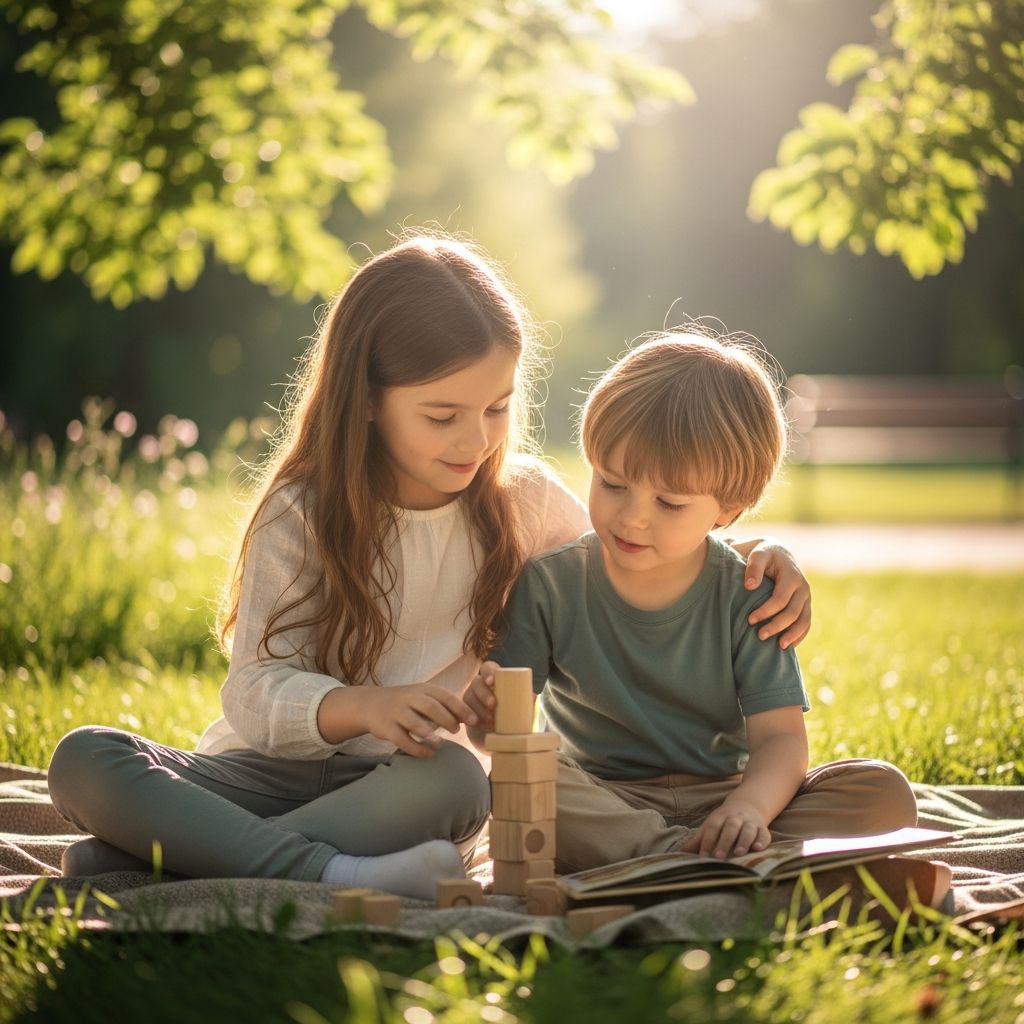
Siblings can be each other’s greatest comfort or constant source of stress. How parents respond to everyday quarrels, teasing, and competition plays a powerful role in shaping whether brothers and sisters grow into allies or adversaries.
This guide translates peaceful parenting principles into clear, practical tools you can use to ease rivalry, coach conflict skills, and help your children build a warm, lasting bond.
Why Sibling Conflict Is Normal — And Also an Opportunity
Siblings fight for many reasons: limited parental attention, differences in temperament, close ages, or simply sharing space and resources all day. Researchers consistently find that some conflict is a normal part of family life and can help children learn negotiation, empathy, and self-control when adults respond constructively.
The goal is not to eliminate all arguments. Instead, peaceful parenting focuses on:
- Keeping everyone safe while conflict unfolds.
- Coaching emotional skills rather than punishing feelings.
- Minimizing chronic rivalry so love and cooperation can grow.
- Teaching repair after hurtful moments.
The Parent’s Inner Work: Staying Calm When Kids Clash
Children borrow our nervous system. When we stay calm, they are more likely to calm down; when we escalate, they follow. Studies show that parents’ ability to self-regulate strongly shapes how effectively they guide sibling conflict.
Before jumping into a fight, quickly check in with yourself:
- Notice: “I’m getting triggered by the yelling.”
- Breathe slowly for a few seconds before speaking.
- Drop any impulse to blame or pick a villain.
- Adopt a lens of curiosity: “Two good kids, both struggling.”
This internal reset lets you act as a steady coach instead of a judge.
Understanding the Roots of Sibling Rivalry
When we grasp what’s driving the behavior, our responses become more compassionate and effective. Common underlying factors include:
- Competition for attention – Children may feel there isn’t enough time, affection, or praise to go around.
- Temperament differences – An intense child and a sensitive child will clash more easily.
- Developmental stage – Young children lack impulse control and advanced language, which increases physical or loud conflict.
- Perceived unfairness – Even small differences in treatment can lead to resentment if kids feel one sibling is favored.
- Stress outside the sibling relationship – Fatigue, school stress, or marital tension can spill into sibling behavior.
| Child Experience | Child Behavior | Peaceful Parent Response |
|---|---|---|
| Feels overlooked | Provokes sibling, seeks negative attention | Offer one-on-one time, name feelings, reinforce positive bids |
| Thinks rules are unfair | Argues, refuses to share | Explain reasoning, adjust expectations by age, invite problem-solving |
| Overwhelmed or tired | Meltdowns, hitting or shouting | Prioritize calming down, reduce stimulation, postpone complex talks |
| Feels compared to sibling | Insults, sabotages sibling’s success | Avoid comparisons, highlight unique strengths, reassure unconditional love |
Foundations of a Peaceful Sibling-Friendly Home
Prevention is easier than constant crisis management. These daily practices create a climate in which rivalry softens and cooperation grows.
1. Prioritize Connection With Each Child
Even 20 minutes of predictable, one-on-one time daily with each child is linked to lower rivalry and increased cooperation.
- Let the child choose the activity when possible.
- Put your phone away and offer full attention.
- Use their name, eye contact, and warm touch.
This helps each child feel, “I matter. I’m not in competition just to be seen.”
2. Reduce Comparison and Competition
Research on sibling relationships highlights that parental comparisons and competition intensify conflict and lower self-esteem.
Avoid:
- “Why can’t you be more like your sister?”
- Publicly ranking who is “the smart one” or “the athletic one.”
- Putting siblings in the same activity primarily to compare performance.
Instead:
- Notice each child’s unique strengths.
- Use language like: “In our family, everyone learns at their own pace.”
- Talk privately with each child about their goals and growth.
3. Use Routines and Clear Expectations
Predictable routines for chores, screen time, and sharing reduce arguments because kids know what to expect.
- Create simple visual routines for mornings, after school, and bedtime.
- Clarify rules for personal space, borrowing items, and shared toys.
- Involve children in creating rules; they’re more likely to follow what they helped design.
4. Treat Children Fairly, Not Identically
Fairness does not always mean the same. Children of different ages and needs may require different bedtimes, responsibilities, or support levels.
You can say:
- “You’re younger, so I stay closer to you at the playground. When you’re older, you’ll have more freedom too.”
- “Fair means everyone gets what they need to thrive, not that everything is exactly the same.”
When to Step In — And When to Step Back
Children learn vital conflict-resolution skills by working through disagreements themselves, as long as they are safe and not experiencing ongoing harm.
Let Them Practice When:
- The argument is about minor issues (who sits where, whose turn it is).
- Voices are elevated but not threatening.
- Both children seem relatively balanced emotionally.
Stay nearby, observe, and intervene only if needed.
Step In Immediately When:
- There is any physical aggression (hitting, pushing, throwing objects) or threats.
- One child is consistently victimized or intimidated.
- There is ongoing emotional or psychological harm (name-calling, humiliation, severe exclusion).
In these cases, prioritize safety, then teach. You may say calmly:
“I will not let you hurt each other. I’m stepping in to keep everyone safe. We’ll talk once everyone’s calmer.”
A Simple Coaching Framework for Sibling Disputes
Once everyone is safe and a little calmer, you can guide the conflict. A three-step coaching framework is helpful:
Step 1: Acknowledge Feelings Without Taking Sides
Children calm down when they feel understood. Reflect both children’s experiences:
- “You’re upset because your tower was knocked down.”
- “You’re frustrated because you felt shut out of the game.”
Use neutral language and avoid labels like “mean” or “selfish.”
Step 2: Set Clear, Non-Negotiable Limits
Peaceful parenting is not permissive. Boundaries keep everyone safe and teach respect:
- “Hitting is not okay. We use words, not hands.”
- “Everyone’s body and belongings need to be treated with care.”
Step 3: Guide Problem-Solving and Repair
Instead of dictating a solution, invite children to help create one. This builds problem-solving and empathy skills.
- Ask: “What ideas do you have to solve this?”
- Brainstorm several possibilities.
- Help them choose a plan both can accept.
After a conflict, gently encourage repair:
- Checking in: “Are you okay now?”
- Offering help: drawing a picture, helping rebuild a tower, or saying a sincere apology.
Fostering Teamwork and Appreciation Between Siblings
To balance the focus on conflict, intentionally build shared joy and teamwork. Evidence-based parenting programs emphasize reinforcing positive interactions to strengthen sibling relationships and reduce aggression over time.
1. Catch Them Getting Along
Notice and name moments of cooperation:
- “I saw you share the crayons without being asked. That was thoughtful.”
- “You waited for your brother to finish his turn. That shows patience.”
Specific, sincere praise builds a positive family culture and makes kindness more likely.
2. Create Opportunities for Collaboration
Plan activities that require siblings to work together rather than compete:
- Joint art or building projects.
- Cooking a simple recipe as a team.
- Shared responsibilities (tidying a play area together, caring for a pet).
The message becomes: “We’re on the same side.”
3. Build a Culture of Appreciation
Simple rituals can shift how siblings see each other:
- At dinner, invite everyone to name one thing they appreciated about a sibling that day.
- Keep a small “kindness board” where children can draw or dictate kind acts they noticed.
Respecting Personal Space and Differences
Living with siblings often means sharing rooms, toys, and parents. Too much forced sharing, however, can fuel resentment and conflict.
Personal Space and Possessions
- Ensure each child has at least a few possessions that do not have to be shared.
- Set clear rules about knocking before entering a sibling’s room or area.
- Consider visual boundaries (a shelf, box, or small area designated as “just mine”).
Respecting autonomy helps children feel less threatened by a sibling’s presence.
Honoring Temperament and Interests
Siblings do not need to enjoy the same activities to be close. In fact, pushing identical interests can invite comparison and rivalry.
- Allow each child to pursue their own hobbies and friendships.
- Avoid forcing siblings into the same teams, classes, or roles purely for convenience.
- Talk about differences as strengths, not problems: “You like quiet projects and your brother loves high-energy games—both are great.”
When Sibling Conflict Becomes Concerning
Most sibling disputes are part of normal development. However, some patterns signal the need for additional support.
Consider seeking professional help if:
- There is frequent or severe physical aggression.
- One child appears frightened of the other.
- Bullying (ongoing humiliation, threats, or destruction of belongings) is present.
- Conflict increases significantly after major family stressors (divorce, illness, financial strain) and does not improve.
Family therapists, child psychologists, or evidence-based parenting programs can offer tailored strategies to support both parents and children.
Frequently Asked Questions (FAQs)
How much sibling fighting is considered normal?
Occasional arguments, yelling, or brief physical scuffles are common in childhood, especially when children are close in age. It becomes concerning when aggression is frequent, severe, or one-sided, or when a child appears persistently fearful or distressed.
Should I always make the older child “be the bigger person”?
Expecting older siblings to constantly give in can breed resentment. While they may have more skills and responsibility, all children deserve fairness, boundaries, and empathy. Coach each child based on their developmental stage rather than automatically blaming the oldest.
Is it okay for siblings to say, “I hate you” in anger?
Strong words often signal big underlying feelings. Set limits on hurtful language (“In this family, we don’t speak to each other that way”) while acknowledging emotion (“You’re very angry right now”) and helping children express themselves more respectfully.
How can I be neutral when one child clearly hurt the other?
You can protect the hurt child and set firm limits without labeling one child as the “bad kid.” Focus on behavior: keep everyone safe, describe what you saw, and guide repair. Emphasize that both children’s feelings matter and that everyone is capable of learning healthier ways to handle conflict.
What if my kids say I have a favorite?
Rather than arguing, listen. Ask when they feel that way and what they notice. Clarify misunderstandings, adjust routines if needed (for example, one-on-one time), and reassure them privately that your love is not a competition. Children’s perceptions of favoritism are strongly linked to rivalry, so taking these concerns seriously can reduce tension.
References
- Nurturing Harmony: Addressing Sibling Rivalry Through Positive Parenting Techniques — Brighton Preschool. 2023-09-14. https://brightonpreschool.org/2023/09/14/nurturing-harmony-addressing-sibling-rivalry-through-positive-parenting-techniques/
- How to Help Siblings Get Along: Support Sibling Relationships — Peace at Home Parenting Solutions. 2023-05-01. https://peaceathomeparenting.com/positive-sibling-relationships/
- Sibling Conflict — Positive Discipline Association. 2021-06-01. https://positivediscipline.org/sibling-conflict-article/
- Raising Loving Siblings: Expert Parenting Tips to Stop Fighting and Build Lifelong Bonds — Montclair State University News Center. 2024-12-13. https://www.montclair.edu/newscenter/2024/12/13/raising-loving-siblings-expert-parenting-tips-to-stop-fighting-and-build-lifelong-bonds/
- Dr. Laura Markham on Peacefully Parenting Neurodivergent Siblings — Tilt Parenting Podcast, Episode 452. 2025-07-08. https://tiltparenting.com/2025/07/08/episode-452-dr-laura-markham-on-peacefully-parenting-neurodivergent-siblings/
- Stop Sibling Conflict — Focus on the Family. 2022-03-15. https://www.focusonthefamily.com/parenting/stop-sibling-conflict/