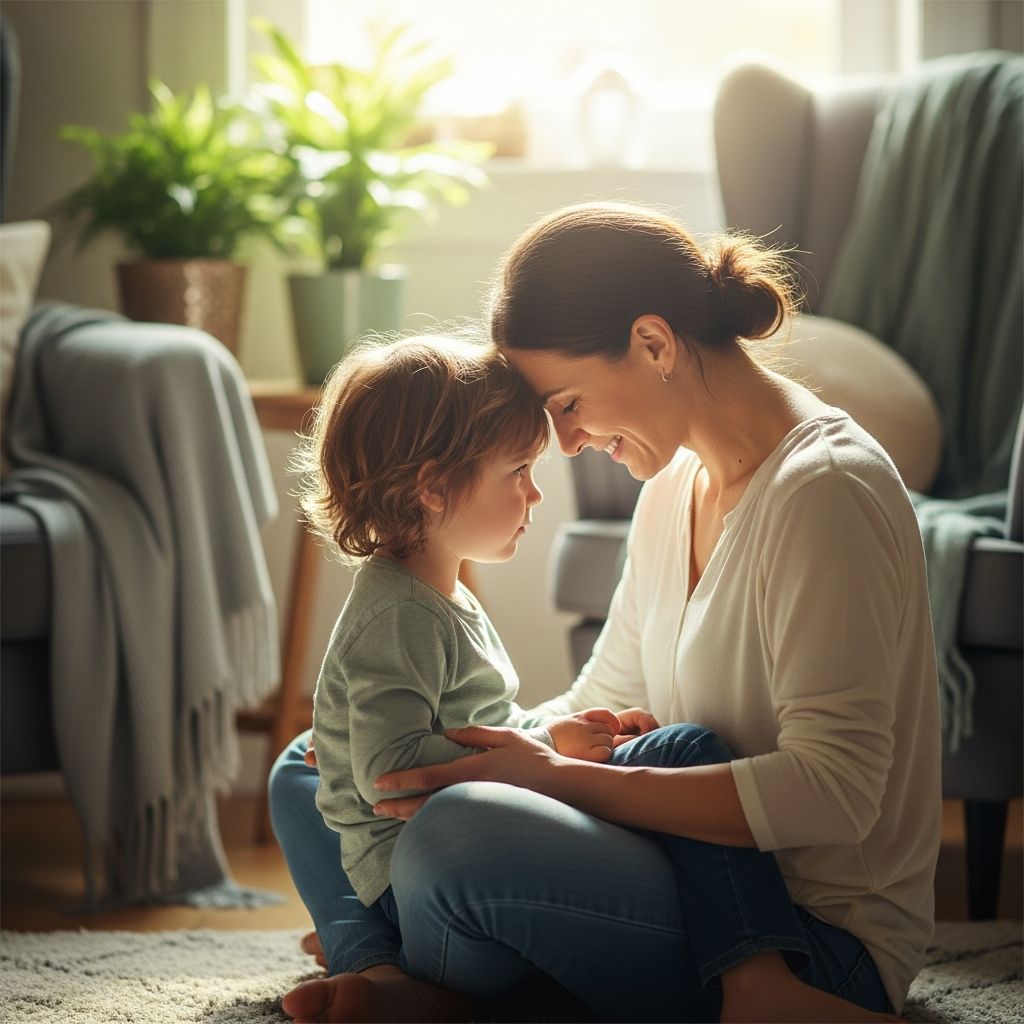
Peaceful parenting is not about being a perfect parent or raising a perfectly behaved child. It is a research-backed, relationship-focused way of parenting that emphasizes connection, emotional safety, and respectful guidance instead of fear, control, or harsh punishment.
This article offers a practical roadmap to help you reduce daily battles, deepen your bond with your child, and guide behavior in ways that support long-term emotional health.
What Peaceful Parenting Really Means
Peaceful parenting is a style of parenting where adults focus on three core pillars:
- Regulating yourself before responding to your child.
- Prioritizing connection over control.
- Guiding behavior through teaching, not fear or shame.
Instead of asking, “How do I make my child stop this behavior right now?”, peaceful parenting asks, “What does my child need, and how can I teach a better way?” This shift reduces conflict and supports healthier development, including better emotional regulation and problem-solving skills.
Why Peaceful Parenting Benefits Both Kids and Parents
| Area | For Children | For Parents |
|---|---|---|
| Emotional Health | Improved emotional regulation and coping skills. | Lower stress and less guilt after conflicts. |
| Relationships | Stronger attachment, trust, and cooperation. | Closer bond, more warmth, and fewer power struggles. |
| Behavior | Better problem-solving, more internal motivation. | Less yelling, more effective discipline without harshness. |
| Long-Term Outcomes | Healthier attachment and relationships later in life. | Greater parenting satisfaction and confidence. |
The Three Foundations of Peaceful Parenting
1. Your Calm Comes First
Emotional regulation in the parent is the starting point for peaceful parenting. Children learn how to handle big feelings by watching how adults handle theirs.
When you stay grounded, your child’s nervous system receives a signal of safety. Over time, this supports better self-control in your child as well.
Simple ways to steady yourself in tough moments
- Pause on purpose: In your mind, say “pause” before reacting. Take 3–5 slow breaths.
- Change your posture: Unclench your jaw, lower your shoulders, and deliberately soften your voice.
- Use a mantra: Quietly repeat a phrase like “My child is having a hard time, not giving me a hard time.”
- Step away briefly (when safe): Say, “I’m feeling upset. I’m going to take a quick breath and then we’ll talk.”
2. Connection Before Correction
Research on attachment and mindful parenting shows that children develop best when they feel seen, safe, and soothed during emotional storms. A child who feels emotionally connected is more open to guidance and less likely to rely on constant power struggles or attention-seeking behaviors.
Daily habits that build connection
- Special 1:1 time: Even 10 minutes a day of undistracted play (no phone, no agenda) can strengthen your bond.
- Eye-level communication: Kneel or sit so you are at your child’s eye level when you talk.
- Rituals of affection: Simple routines like a morning hug, bedtime chat, or after-school check-in.
- Curious questions: Instead of “Why did you do that?”, try “What was happening for you then?”
3. Teaching Instead of Punishing
Peaceful parenting does not mean letting children do whatever they want. It means keeping firm limits while focusing on teaching skills—like problem-solving, empathy, and self-control—rather than simply stopping behavior with fear.
Key differences in approach
| Control-Based Discipline | Peaceful Guidance |
|---|---|
| “Stop or you’ll be punished.” | “I won’t let you hit. Let’s find another way to show you’re upset.” |
| Focuses on immediate obedience. | Focuses on understanding, learning, and repair. |
| Relies on fear, shame, or rewards. | Relies on connection, natural consequences, and collaboration. |
Emotion Coaching: Helping Kids Handle Big Feelings
Children are not born with the ability to manage frustration or disappointment. They develop these skills over time, particularly when adults help them name, accept, and process emotions.
A simple 4-step emotion coaching script
- 1. Notice the feeling: “Your fists are tight and your face is red. I think you’re really mad.”
- 2. Validate the emotion: “It makes sense you feel angry; you really wanted that toy.”
- 3. Limit unsafe behavior: “It’s okay to be mad, but it’s not okay to hit.”
- 4. Offer a safe outlet: “You can stomp your feet, squeeze this pillow, or tell me how mad you are with your words.”
Over time, this approach promotes emotional intelligence and resilience—skills linked to better mental health and social outcomes in later life.
Setting Firm Limits with Empathy
Being a peaceful parent does not mean saying yes to everything. Children need clear, consistent limits to feel safe. The key is to hold those limits with warmth instead of anger or contempt.
Steps to setting respectful boundaries
- State the limit clearly: “We use gentle hands with people.”
- Acknowledge the desire: “You really want that toy; it’s hard to wait.”
- Offer a choice within the limit: “You can wait your turn or play with these blocks.”
- Follow through calmly if they can’t comply. You might move the child or the object while staying kind and firm.
Examples of limits with empathy
- Screen time: “The tablet time is over for today. I know you wish you could watch more; we’ll have another turn tomorrow.”
- Bedtime: “You don’t feel sleepy yet. It’s still time for bed. You can choose: one more short story or a quiet song.”
- Safety: “I can’t let you run into the street. I’ll hold your hand to keep you safe.”
Common Challenges and How to Respond Peacefully
When Your Child Has a Meltdown
Tantrums are a normal part of development as children learn to cope with overwhelming feelings. Your job is not to stop the feelings, but to keep everyone safe and offer calm presence.
- Stay nearby rather than sending them away in shame.
- Use few words; your calm body language is more powerful than long lectures.
- After the storm, gently talk about what happened and what they can try next time.
When You Lose Your Temper
No parent can stay calm all the time. What matters is what you do next. Repairing after you yell or overreact models accountability and empathy.
- Take responsibility: “I yelled earlier. That wasn’t okay. I’m sorry.”
- Describe, don’t blame: “I was feeling very stressed and I didn’t handle it well.”
- Reassure your child: “You’re not responsible for my feelings. I’m working on calmer ways to respond.”
When You Need Cooperation, Not Conflict
Children are more likely to cooperate when they feel respected, involved, and connected.
- Give advance notice: “In five minutes, we’ll need to clean up to get ready for dinner.”
- Turn tasks into games: “Let’s see how many toys we can put away before the song ends.”
- Offer limited choices: “Do you want to brush teeth first or put on pajamas first?”
- Notice positive behavior: “I saw you put your shoes by the door—that was helpful.”
Building a Peaceful Family Culture Over Time
Peaceful parenting is not a quick fix; it is a long-term approach that becomes easier as skills and habits develop. Small, consistent changes have big effects on the overall climate at home.
Daily practices that gradually transform your home
- Mindful minutes for you: A short daily practice—like breathing, stretching, or journaling—helps refill your patience reserves.
- Family feeling check-ins: At meals or bedtime, each person shares one feeling they had during the day.
- Problem-solving meetings: Once a week, briefly talk as a family about what’s working, what’s hard, and what ideas everyone has.
- Shared values language: Use phrases like “In our family, we… help each other / speak kindly / try again.”
Frequently Asked Questions (FAQs)
Does peaceful parenting mean I never say no?
No. Peaceful parenting includes clear, firm boundaries, especially around safety and respect. The difference is that you keep limits without yelling, shaming, or threatening. You say no with empathy and follow through calmly.
Won’t my child become spoiled if I validate their feelings?
Acknowledging emotions is not the same as allowing all behavior. You can say, “It’s okay to feel angry” and still prevent hitting or breaking things. Research shows that when parents validate and guide emotions, children develop better self-control and social skills, not worse.
Is peaceful parenting effective with older children or teens?
Yes. While patterns are easier to shape when children are young, connection, respect, and calm limits benefit kids of all ages. For teens, emphasizing collaborative problem-solving and open communication is especially important and supports healthier attachment and independence.
What if the other parent doesn’t use this approach?
You can still make a meaningful difference by changing your own responses. Even when parenting styles differ, children benefit from having one consistently safe and responsive caregiver. Over time, others may notice fewer conflicts and become more open to these tools.
Q: How long before I see changes in my child’s behavior?
Some shifts—like less escalation when you stay calm—can appear quickly. Deeper changes, such as improved emotional regulation and problem-solving, take time and repetition. Peaceful parenting is less about instant obedience and more about building lifelong skills and a strong relationship.
References
- The Peaceful Parenting Guide: Strategies for Calm and Connection — MamaZen. 2023-08-10. https://www.mamazen.com/post/peaceful-parenting-guide
- Peaceful Parenting: What It Is, Benefits, & Tips for Practice — Choosing Therapy. 2022-06-15. https://www.choosingtherapy.com/peaceful-parenting/
- 10 Peaceful Parenting Tips: Techniques to Soothe Your Child — SkillPoint Therapy. 2023-02-01. https://www.skillpointtherapy.com/peaceful-parenting/
- Powerful Possibilities of the Transformational Parenting Process — Jai Institute for Parenting. 2021-09-20. https://www.jaiinstituteforparenting.com/peaceful-parenting-method
- The Benefits Behind Peaceful Parenting — Coach Crystal. 2022-03-11. https://www.coachcrystal.ca/blog/peaceful-parenting
- Mindful Parenting: What It Is, Benefits & 10 Ways to Practice — Calm. 2021-05-05. https://www.calm.com/blog/mindful-parenting
- Peaceful Parenting: How-To, Benefits, Side Effects, and Examples — Healthline. 2020-10-07. https://www.healthline.com/health/parenting/peaceful-parenting
- What Is Peaceful Parenting? Benefits & How to Implement It — Marriage.com. 2022-09-12. https://www.marriage.com/advice/parenting/peaceful-parenting/