Paronychia is a common infection that affects the skin around a fingernail or toenail. It often looks like a red, swollen, and painful area near the nail, and in many cases it appears suddenly after a small injury. Understanding what it is, how to manage it safely, and when to seek medical help helps parents keep their children comfortable and prevent complications.
What Is Paronychia?
Paronychia is an infection of the skin that borders the nail, sometimes called the nail fold. When that skin is damaged, germs can enter and cause inflammation, pain, and occasionally a pocket of pus. The problem can occur on any finger or toe, but is most frequent on the fingers of children who use their hands constantly.
Doctors usually group paronychia into two broad types:
- Acute paronychia: Appears quickly over hours or a few days, usually after a specific injury such as biting a nail or pulling a hangnail.
- Chronic paronychia: Develops slowly and lasts for weeks or longer, often in children whose hands or feet stay wet or irritated much of the time.
Why Does Paronychia Happen?
The skin around the nail acts like a seal that blocks germs from entering deeper tissue. When that seal is broken, bacteria, yeast, or other organisms can slip in. Even minor injuries that seem unimportant to a child may be enough to start an infection.
Common everyday triggers
- Biting or chewing on fingernails or the skin around them.
- Picking at hangnails instead of trimming them with clean nail clippers.
- Overly aggressive manicures or trimming the cuticles too short.
- Getting a finger caught or pinched, breaking the skin near the nail.
- Repeatedly using harsh soaps, detergents, or hand sanitizers that dry and crack the skin.
Situations that increase the risk
- Hands that are often wet, such as from frequent dishwashing, swimming, or playing in water.
- Wearing tight shoes that rub against the toes and cause small cuts or blisters.
- Preexisting skin conditions like eczema that make skin more fragile.
- Chronic illnesses that weaken the immune system, making infections easier to start and harder to clear.
How to Recognize Paronychia in Your Child
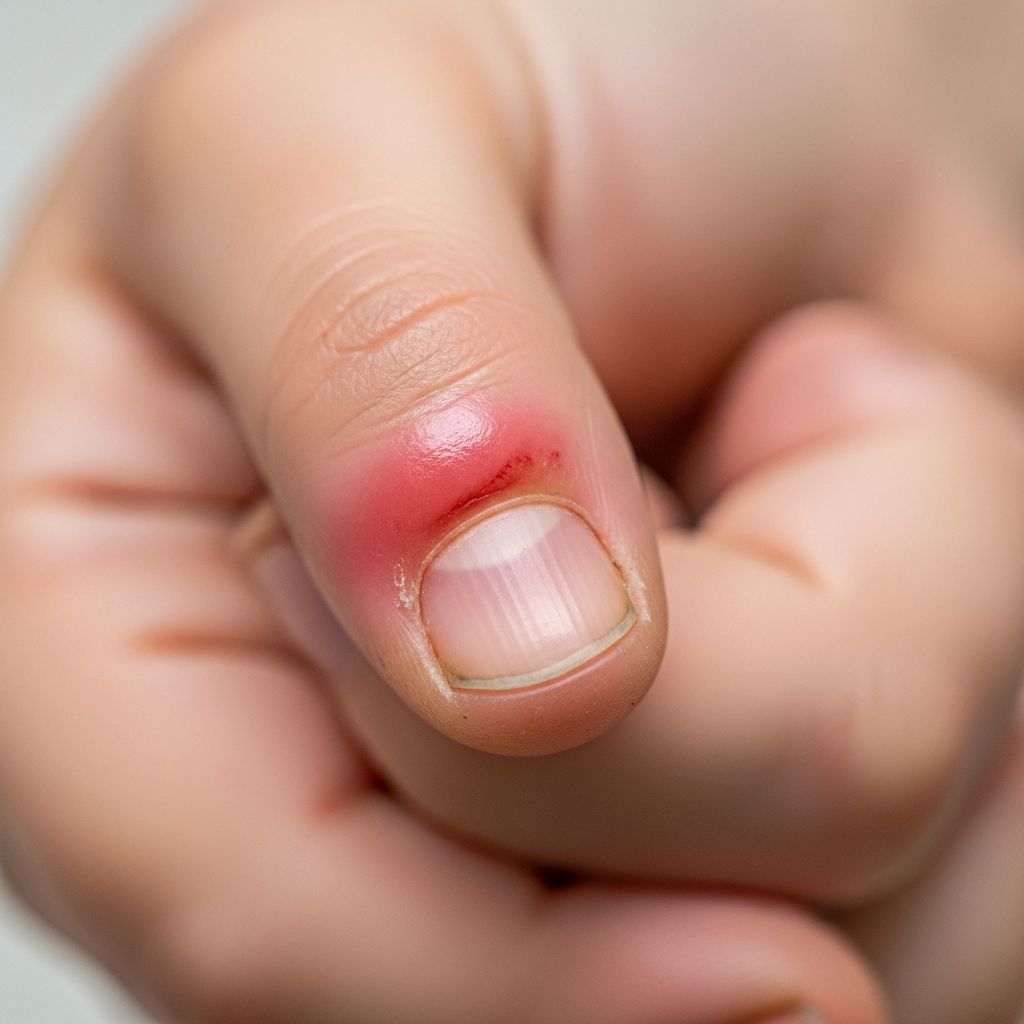
Parents usually notice paronychia because a child complains that a finger or toe hurts when touched, or because the nail area looks red and swollen. Sometimes the changes are subtle at first, but they often become more noticeable within a day or two.
Typical signs and symptoms
- Redness along one side or the base of the nail.
- Swelling that makes the skin look puffy or raised.
- Tenderness or pain when the area is pressed or bumped.
- Warmth around the affected nail compared with nearby skin.
- Difficulty using the finger or toe normally because it hurts.
In more advanced cases, a small yellow or white area may appear under the skin, indicating a collection of pus. This is often very painful, and children may avoid using that finger or limp if a toe is involved.
Acute vs. chronic: what parents might notice
| Feature | Acute paronychia | Chronic paronychia |
|---|---|---|
| Onset | Sudden, within hours or days after a clear injury | Slow, over weeks; often no single obvious injury |
| Typical cause | Bacteria entering a recent cut, bite, or hangnail | Repeated moisture and irritation; sometimes yeast |
| Symptoms | Marked redness, swelling, tenderness, possible pus pocket | Milder redness and swelling, nail changes, recurring discomfort |
| Duration | Usually short when treated properly | Can persist or flare for months without proper care |
How Doctors Diagnose Paronychia
Most of the time, a health professional can diagnose paronychia just by looking at the finger or toe and asking a few questions. The pattern of redness, swelling, and tenderness around the nail, combined with a story of recent injury or chronic irritation, provides strong clues.
In typical mild cases, no tests are required. In more complicated situations, especially if symptoms keep returning or do not respond to usual treatment, the clinician may:
- Gently press or open the area to drain pus and send a sample to the lab to see which germs are present.
- Review your child’s medical history to look for conditions that might affect healing.
- Check other nails and skin surfaces for signs of underlying skin problems or yeast overgrowth.
What Parents Can Do at Home
Mild paronychia that is caught early can sometimes be managed at home with simple comfort measures, as long as the child is otherwise well and there is no spreading infection. The goal is to reduce discomfort, encourage gentle drainage if recommended, and protect the area from further irritation.
Home care steps for minor cases
- Soak the affected digit: Use warm (not hot) clean water. Soak the finger or toe for about 10–15 minutes, 2–3 times per day, if your child’s doctor has said this is appropriate.
- Dry thoroughly: After soaking, pat the skin dry with a clean towel, paying attention to the spaces between the fingers or toes.
- Protect the skin: Keep the area clean and avoid applying harsh chemicals, strong antiseptics, or unapproved home remedies that can irritate the skin further.
- Limit trauma: Remind your child not to bite, pick, or scratch the area, and trim nearby nails smoothly to avoid catching on clothing.
- Pain relief: If advised by your child’s health professional, you may use an age-appropriate pain reliever and always follow dosing instructions carefully.
Home care is not a substitute for medical evaluation if symptoms are moderate, severe, or getting worse. If you have any doubt about how serious the infection is, it is safer to call your child’s clinician.
Medical Treatment Options
The treatment plan depends on how severe the infection is, whether pus has collected, and whether the problem is acute or chronic. The main goals are to control infection, ease pain, and restore healthy skin around the nail so the protective barrier can reform.
Approach to acute paronychia
- Topical treatment: For mild cases, a clinician may recommend medicated creams or ointments applied directly to the skin. These may contain antibiotics, anti-inflammatory medicines, or both.
- Oral medicines: If the infection is more advanced, oral antibiotics may be prescribed. The choice of medicine depends on likely bacteria and your child’s age and allergies.
- Drainage of pus: When a visible pocket of pus forms, relieving pressure can quickly reduce pain. A trained professional may numb the area and make a tiny opening so the pus can escape. This should not be attempted at home.
Approach to chronic paronychia
Chronic cases require more than just short-term treatment. They usually involve a combination of reducing moisture and irritation, controlling inflammation, and sometimes using medicines directed at yeast or other organisms.
- Keeping hands and feet as dry as possible, for example by changing out of wet socks promptly.
- Using protective gloves for older children who help with activities that involve detergents or prolonged water exposure.
- Applying prescription creams or ointments as directed over several weeks, even after symptoms begin to improve.
- Attending follow-up visits so the clinician can monitor nail growth and adjust treatment if needed.
Possible Complications and Warning Signs
Most children recover fully from paronychia without long-term problems, especially if the condition is recognized and treated early. However, like any infection, it can become more serious if ignored or if a child has other medical issues that affect healing.
Complications may include:
- Spread of infection deeper into the finger or toe, sometimes involving the bone.
- Temporary changes in the nail, such as ridges, grooves, or distorted growth.
- Persistent pain or repeated infections that interfere with daily activities.
Call a doctor right away if:
- Redness or swelling rapidly worsens or spreads up the finger, toe, hand, or foot.
- Your child develops a fever, feels very unwell, or has chills.
- The pain is severe and not improving with simple measures.
- You notice a large or growing area filled with pus.
- Your child has a chronic health condition or weakened immune system and develops any signs of infection.
Preventing Paronychia in Children
Good nail and hand care can significantly lower the risk of paronychia. Teaching these habits early helps children protect their skin and nails as they grow more independent. Simple, consistent routines make a big difference.
Healthy nail care habits
- Trim nails straight across and keep them short enough that they do not catch on objects.
- Use clean, appropriate-sized nail clippers and avoid tearing or ripping nails.
- Do not cut or aggressively push back cuticles; they serve as natural protection.
- Discourage nail-biting and picking at hangnails; offer a small nail file to smooth rough edges instead.
Daily protection tips
- After bathing or swimming, dry hands and feet completely, including between fingers and toes.
- Use mild soaps and moisturizers that are gentle on children’s skin.
- Choose comfortable, well-fitting shoes that leave room for the toes.
- Have older kids wear protective gloves when helping with chores that involve strong cleaners or prolonged water exposure.
Helping Children Cope with Nail Infections
Even minor infections can feel upsetting to a child, especially when they affect the hands or feet that are used constantly. Calm reassurance and simple explanations help children cooperate with care and medical visits.
- Explain in age-appropriate language that germs entered through a tiny opening and that treatment will help the body push them out.
- Allow your child to ask questions and express worries about pain or procedures like drainage.
- Use distraction during soaks or dressing changes, such as reading a story, listening to music, or playing a quiet game.
- Offer praise for small steps, like keeping the bandage dry or remembering not to pick at the area.
FAQs About Paronychia in Children
1. Is paronychia contagious?
Paronychia itself is not typically passed from child to child in the same way as a cold. However, the germs involved can spread if children share items that touch broken skin, such as clippers or sharp tools, or if hygiene is poor. Keeping nails clean and avoiding sharing personal grooming tools helps reduce this risk.
2. Can my child still go to school or daycare?
Most children with a mild nail infection can attend school or daycare as long as they feel well enough to participate. Covering the area with a small, breathable bandage may protect it from bumps and from contact with dirt. Your child should be encouraged to wash hands regularly and avoid showing the sore finger or toe to friends in ways that invite touching.
3. How long does it take for paronychia to heal?
The healing time depends on the severity and type of infection. Mild acute paronychia can improve significantly within a few days of proper care, while chronic paronychia may take weeks for inflammation to settle and months for the nail to fully grow out and look normal again. Following the full recommended course of treatment improves the chances of complete recovery.
4. Will the nail always look different afterward?
Temporary changes in the nail are common after an infection, especially if a pocket of pus formed or if the nail matrix, where new nail is made, was irritated. Over time, most children’s nails regain a normal appearance as new nail grows out. If the nail remains thickened, misshapen, or discolored after several months, it is a good idea to ask the clinician to reassess.
5. Can natural remedies cure paronychia?
Some home approaches, such as gentle warm water soaks, can help with comfort in minor cases, but relying only on untested home remedies can delay effective treatment. If your child’s nail area is very painful, swollen, or not improving, a health professional should evaluate the infection. Always discuss any alternative products or remedies with your child’s clinician before using them on broken or infected skin.
Key Takeaways for Parents
- Paronychia is an infection of the skin around the nail that most often follows a small injury such as a bite, hangnail, or repeated irritation.
- Typical signs include redness, swelling, tenderness, and sometimes a visible pocket of pus near the nail.
- Mild cases may improve with warm soaks and protection, but more serious or persistent infections require medical treatment.
- Good nail care, avoiding biting and picking, and protecting the skin from excessive moisture and harsh chemicals can help prevent paronychia.
- Early attention and a calm, supportive approach help children heal comfortably and regain full use of the affected finger or toe.