Paronychia is an infection of the skin right next to the fingernail or toenail, and it is one of the most common hand and foot problems seen in children.
Because kids bite nails, pick at hangnails, and run around barefoot, they are especially prone to this painful but usually mild condition.
What Is Paronychia?
Paronychia is an irritation or infection of the soft tissue that frames the nail, known as the nail fold.
This area acts like a tiny protective collar around the nail; when it is damaged, germs can sneak in and cause redness, swelling, and sometimes pus.
Acute vs. Chronic Paronychia
Doctors usually describe paronychia as either acute (sudden and short lived) or chronic (long lasting or frequently recurring).
- Acute paronychia: Develops quickly, often within hours or days after a small injury such as a hangnail being pulled or a nail cut too short.
- Chronic paronychia: Lingers for weeks or keeps coming back, usually where the skin is often wet or irritated, such as in children who frequently suck on fingers or have ongoing skin conditions.
Why Do Kids Get Paronychia?
Children’s hands are constantly busy: touching, picking, chewing, and exploring their surroundings.
Every small break in the skin near the nail is a doorway for bacteria, yeast, or other germs to enter.
Common Triggers and Risk Factors
- Nail biting or chewing on fingertips.
- Picking or tearing off hangnails instead of carefully trimming them.
- Cutting nails too short or trimming away the cuticle.
- Frequent finger sucking, especially of the same digit.
- Repeated contact with water and soaps, such as during swimming or long baths.
- Wearing tight shoes or having an ingrown toenail that irritates the skin.
Some children also have a higher risk due to conditions that affect circulation or the immune system, such as diabetes or other chronic illnesses.
What Causes the Infection?
Once the protective skin barrier is broken, different types of germs may enter and grow.
While the exact organisms can vary, two broad categories are common: bacterial infection and fungal (yeast) infection.
Bacterial Paronychia
Bacterial paronychia tends to start suddenly and can be very painful.
Everyday bacteria that live on the skin or in the mouth can enter through a cut, bite, or torn skin around the nail and quickly multiply in this warm, moist space.
- Often associated with nail biting, hangnail picking, or a fresh cut near the nail.
- More likely to produce a noticeable pocket of pus.
- Can occasionally spread beyond the nail fold if not treated.
Fungal (Yeast) Paronychia
Fungal paronychia develops more slowly and is commonly related to constant moisture around the nails.
Yeast such as Candida can thrive in damp skin, especially when the nail folds are frequently exposed to water or irritated by soaps and detergents.
- Usually causes milder, more chronic swelling and tenderness.
- Often seen in children who suck their fingers or have hands wet for long periods.
- May affect more than one finger or toe at a time.
How to Recognize Paronychia in Your Child
Parents often notice that a child complains of a sore finger or toe, or they see that the skin next to the nail looks angry and swollen.
Early recognition allows for simple treatments at home and may prevent the need for procedures like draining an abscess.
Typical Signs and Symptoms
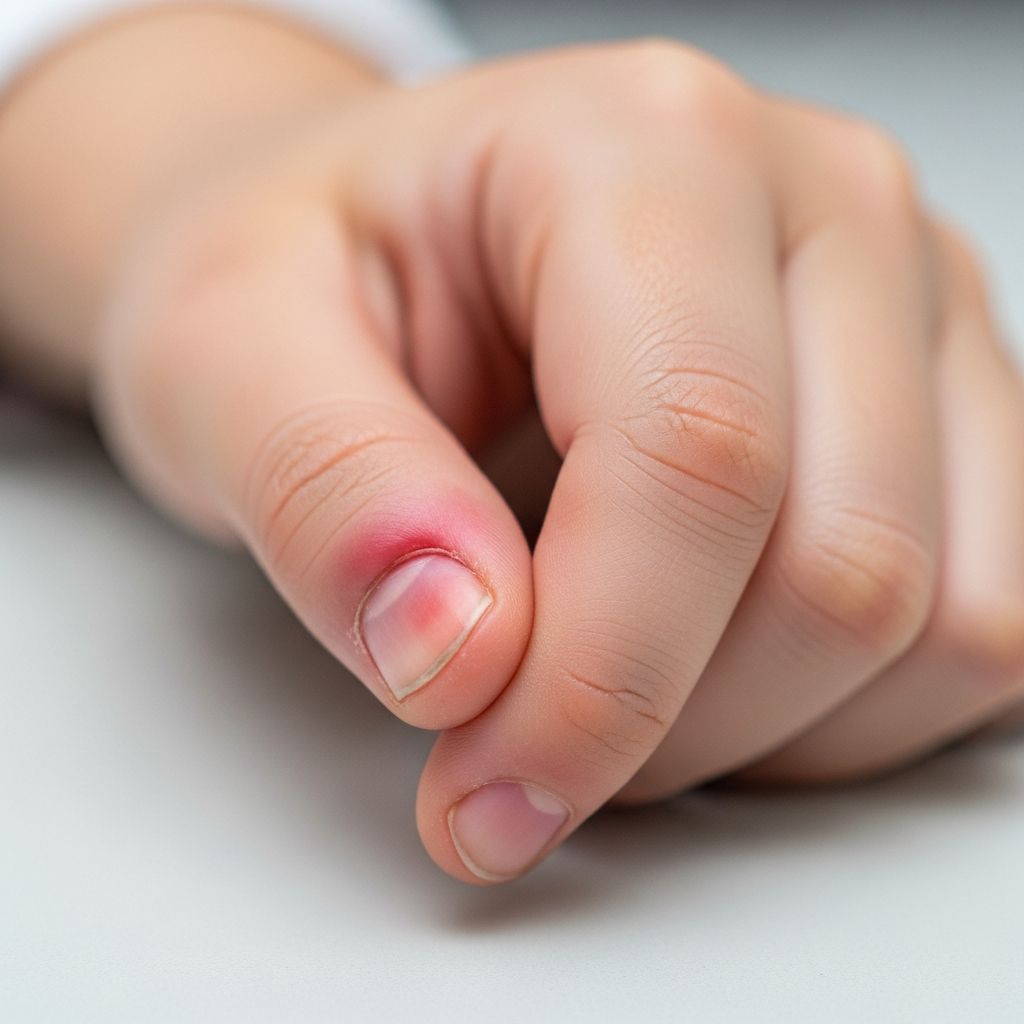
- Redness along one side or at the base of the nail.
- Swelling that makes the nail fold look puffy or raised.
- Pain or tenderness when the area is touched or bumped.
- Warmth of the skin compared with other fingers or toes.
- A visible pocket or blister filled with cloudy or yellow fluid.
In chronic cases, the skin may appear thickened or shiny, the cuticle may pull away from the nail, and the nail itself can become ridged, discolored, or slightly separated from the nail bed.
Warning Signs That Need Urgent Care
- Spreading redness traveling up the finger or toe.
- Severe pain that interferes with sleep or normal use of the hand or foot.
- Fever, chills, or a child who seems unusually tired or unwell.
- Red streaks moving up the hand, foot, or limb.
- Signs of infection in a child with diabetes or a weakened immune system.
Home Care: What Parents Can Do
Mild cases that are caught early may respond well to careful home care.
However, if symptoms are worsening, if there is a lot of pus, or if your child has underlying health issues, a medical evaluation is essential.
Soaking and Local Care
Warm water soaks help increase blood flow, soften the tissue, and encourage drainage of small pockets of infection.
- Use comfortably warm (not hot) water in a clean bowl.
- Soak the affected finger or toe for about 10 to 15 minutes.
- Repeat two to four times per day, as recommended by your child’s healthcare provider.
- Gently pat the area dry afterward and keep it clean.
Do not try to pop or squeeze any blister yourself, as this can worsen the infection or damage deeper tissues.
Protecting the Area
- Keep the finger or toe out of the mouth and away from nail biting.
- A small, breathable bandage can protect it from bumps, but change it daily.
- Avoid harsh cleaners, bubble baths, or prolonged soaking beyond what is recommended.
- Choose roomy, comfortable shoes for toe problems to reduce pressure.
When to See a Doctor
Any child with moderate to severe pain, visible pus, or symptoms that continue for more than a couple of days should be checked by a healthcare professional.
A doctor can confirm that the problem is paronychia and not another condition such as an ingrown toenail alone, a deeper finger infection, eczema, or a blister from friction.
What to Expect at the Visit
- The doctor will examine the affected nail and surrounding skin.
- You may be asked about recent injuries, nail-biting habits, or frequent water exposure.
- If there is pus, the provider may gently press or use a sterile instrument to release the fluid, often giving rapid pain relief.
- Occasionally, a small sample of fluid may be sent for testing if the infection is severe, recurrent, or not responding to typical treatment.
Treatment Options Prescribed by Healthcare Professionals
The treatment plan depends on whether the paronychia is acute or chronic, how severe it is, and whether it is likely caused by bacteria or fungus.
Most children recover quickly when treatment is started early and home-care steps are followed carefully.
Medications Commonly Used
| Type | Typical Use | How It Helps |
|---|---|---|
| Topical antibiotic ointments |