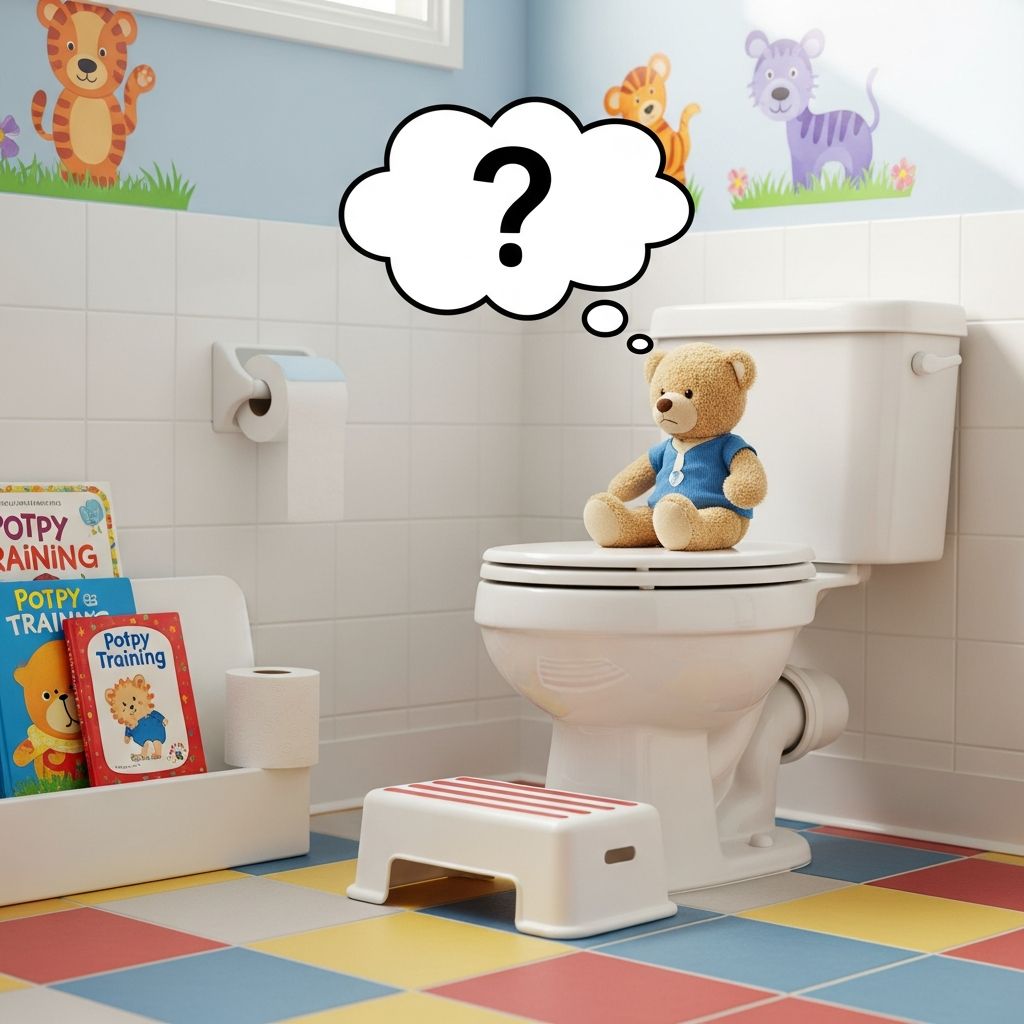
Many families discover that a child who is proudly potty trained at home suddenly refuses to use the bathroom at preschool. It can feel confusing, embarrassing, and stressful, especially when accidents start piling up or teachers suggest your child is not “ready.” This guide explains what is really going on and how to help your child move forward with confidence.
Why a Preschool Bathroom Feels So Different
At home, your child is in a predictable world: familiar smells, sounds, and people. At preschool, everything is louder, busier, and faster, and the bathroom can feel like a very public stage instead of a safe little room. When a child refuses to go at school, it is usually about comfort and control, not stubbornness.
Common ways the preschool environment can complicate potty training include unfamiliar routines, group expectations, and a bathroom that feels exposed or rushed. Understanding these pressure points makes it easier to respond with empathy instead of frustration.
- New bathrooms may sound loud and echoey, which can be scary for some toddlers.
- Children might worry about privacy when stalls are short or doors do not lock.
- Group bathroom breaks can feel overwhelming to kids who prefer one-on-one support.
- Different rules and language around toileting may confuse a child used to a certain routine at home.
Typical Reasons Kids Won’t Go at Preschool
Refusal to use the bathroom at preschool rarely has a single cause. Most children are reacting to a mix of emotional and practical factors. When you can identify the main drivers for your child, your plan to help them becomes more targeted and effective.
The reasons often fall into several overlapping categories: emotional discomfort, sensory issues, logistical challenges, and developmental timing. None of these mean you have failed; they simply point to where your child needs extra support.
Emotional and Social Concerns
- Fear of being watched: Some children worry that teachers or peers are looking or listening.
- Fear of accidents in public: A child who has been praised heavily for staying dry may be terrified of making a mistake in front of friends.
- Shyness: Very reserved children may find it hard to tell a teacher they need to use the bathroom.
- Separation anxiety: When a child is already anxious about being away from a parent, any added expectation can feel like too much.
Sensory and Physical Factors
- Loud flushing toilets: Automatic flushers or echoing sound can feel startling.
- Cold, unfamiliar seats: A different toilet height or seat shape may feel unsafe at first.
- Holding for too long: Kids who are busy playing may delay until it becomes an emergency, making the bathroom feel like a crisis zone.
Schedule and Routine Mismatches
- Bathroom breaks not aligned with your child’s patterns: If group trips don’t match when your child usually needs to go, accidents or refusal are more likely.
- Not enough time: Some kids need a slow warm-up period on the toilet, but classrooms often move quickly.
- Different expectations: Using the potty before going outside or before lunch at school may not match the looser rhythm at home.
Creating a Bridge Between Home and Preschool
The goal is not to “fix” your child overnight but to build a gentle bridge between their successful habits at home and the demands of preschool. Start by describing what potty time looks like in each setting and noticing where the experiences diverge.
Once those gaps are visible, you can adjust home routines slightly to resemble preschool and ask the school to adopt a few comforting elements from home. This back-and-forth adjustment often helps children feel more secure and willing to try.
| Aspect | Home | Preschool | Possible Bridge |
|---|---|---|---|
| Who helps? | Parent or familiar caregiver. | Teacher or assistant. | Introduce teacher as a “helper” at home in pretend play, and practice language your child can use to ask for help. |
| Timing | Flexible, based on your child’s cues. | Set group bathroom times. | Align home potty times more closely with the school schedule when possible. |
| Environment | Quiet, private bathroom. | Busy, shared space with stalls. | Visit school bathroom together after hours or during a calm moment to build familiarity. |
| Tools | Child potty seat, stool, familiar wipes. | Standard toilet and hand soap. | Send labeled wipes or a folding seat if allowed, and keep a similar stool at home and school. |
Step-by-Step Plan to Help Your Child Go at Preschool
A layered approach usually works best: begin with observation and communication, then gently add practice and support. Rushing or pressuring often backfires, so think in terms of weeks rather than days.
The steps below can be tailored to your child’s temperament and the culture of your preschool. Progress may be uneven, but forward momentum is more important than perfection.
1. Start with Calm, Honest Conversations
- Ask neutral questions like “What is the bathroom like at school?” instead of “Why won’t you go?”
- Reflect feelings: “It sounds like the loud flush bothers you” or “You wish I were there to help.”
- Avoid promises you can’t keep, such as “You’ll never have to use the school bathroom.” Focus on “We will figure this out together.”
2. Partner Closely with Teachers
- Share what works at home: specific words you use, songs you sing, or routines like “sit, wipe, flush, wash.”
- Ask how bathroom breaks are handled and whether flexibility is possible (for example, individual trips instead of only group ones).
- Agree on a consistent, low-pressure response to accidents: matter-of-fact cleanup and reassurance instead of visible frustration.
3. Reduce Pressure Around Accidents
- Pack extra clothes in a discreet bag so teachers can help your child change quickly and quietly.
- Use language like “Your body is still learning” instead of “You’re too big for this.”
- Avoid rewards tied strictly to staying dry all day; they can make children hide their needs or feel ashamed when they cannot meet the goal.
4. Practice Using the School Bathroom Gradually
For some children, the leap from “never” to “full independence” is too large. A gentle exposure plan can shrink that gap.
- Just walk by: Ask the teacher to casually pass the bathroom door and make it a normal part of the classroom tour.
- Step inside together: If allowed, visit the bathroom with your child during drop-off or pick-up so they can explore while you are near.
- Sit with no expectation: Encourage your child to sit on the toilet (pants up at first, if needed) for a short count, then celebrate the attempt.
- Try with support: When your child seems comfortable, invite them to sit with pants down and see if their body is ready to go.
- Fade your presence: Over time, step out of sight while the teacher stays nearby, then move toward more independence.
Rethinking Rewards, Bribes, and Praise
It is tempting to pile on stickers, toys, and treats when a child finally uses the preschool bathroom. While small incentives can help some kids, they can also increase pressure and make a child feel like they failed when they do not go.
Shifting the focus from performance (“Did you pee?”) to effort (“You sat and tried!”) helps build internal motivation and reduces anxiety. The goal is for bathroom use to become just another part of the day, not a high-stakes test.
- Use specific, low-key praise: “You listened to your body” or “You told your teacher you needed to go.”
- If you use a reward, keep it simple and short-term, and phase it out once your child seems more comfortable.
- Avoid comparing your child to classmates or siblings; each nervous system and timeline is unique.
How Long Is Too Long to Hold It?
Some preschoolers avoid school bathrooms by holding urine or stool until they get home. While a bit of holding is common, regularly waiting many hours can be uncomfortable and, over time, may contribute to constipation or urinary problems.
Monitoring patterns can help you decide when to involve a pediatrician. Keep a simple log of when your child uses the bathroom at home on school days versus non-school days and note any pain, straining, or crying.
- Signs that warrant a medical check include blood in the stool, frequent pain while urinating, or repeated urinary tract infections.
- If your child is chronically constipated, softening stools with pediatrician-approved strategies can make school bathroom use less scary.
- A health professional can also reassure your child that their body is safe and capable of using any toilet, not just the one at home.
When to Pause and When to Persist
Parents sometimes hear that they must “push through” resistance, while others are told to “back off entirely.” In reality, you can temporarily lower expectations in one setting (often school) while still protecting skills in another (home).
Temporary use of training pants at preschool, while keeping underwear at home, can give everyone breathing room without undoing all your progress. The key is to explain clearly to your child what will happen and avoid framing this as a failure.
- Use simple language such as “At school you can wear these for a while, and we’ll practice the bathroom together.”
- Check in with teachers regularly to see whether your child is showing more curiosity or readiness.
- Plan a time to gently try underwear again once your child’s anxiety seems lower and routines feel smoother.
Supporting Your Own Emotions in the Process
Few parenting tasks feel as publicly judged as potty training, and preschool expectations can amplify that. Parents may feel embarrassed, guilty, or angry when told that their child is “the only one” who still struggles.
Remember that your emotional state matters. Children pick up on tension, and calm adults make the learning process safer. Tending to your feelings is not selfish; it is part of helping your child succeed.
- Talk with trusted friends or family members who can normalize the struggle.
- Remind yourself that this delay does not predict future academic or behavioral problems.
- If you feel overwhelmed, consider a consultation with a child development specialist or parent coach for tailored support.
Frequently Asked Questions
How long should I wait before worrying that my child never uses the preschool bathroom?
If your child is otherwise healthy and using the bathroom comfortably at home, a few weeks to a couple of months of reluctance at school is typically within a normal range. The focus should be on gradual improvement and emotional safety, not on a specific deadline. If your child appears in pain, is severely constipated, or seems extremely distressed, reach out to your pediatrician regardless of the timeline.
Should I move my child back to diapers during the day?
Returning to full-time diapers can sometimes confuse a child who has already built strong potty skills at home. A more nuanced approach is to keep underwear where your child succeeds most (usually home) and use training pants or pull-on diapers only in the setting that is currently overwhelming. Explain this clearly so it feels like a support, not a punishment.
What if the preschool has a strict “must be trained” policy?
Some programs have firm rules about toilet independence, but even then, there is usually room for collaboration. Schedule a meeting to describe exactly what your child can do and where the trouble occurs, and ask whether short-term accommodations are possible while your child adjusts. If the environment remains rigid and shaming, you may reasonably consider whether it is the right fit for your child’s developmental stage.
Is my child manipulating me by holding it?
Refusal to use the bathroom is more about coping strategies than manipulation. Young children crave a sense of control over their bodies, especially in settings where many other things are decided for them. Treating the issue as a skill gap and a fear response, rather than a power play, usually leads to more progress and less conflict.
When should I seek extra help?
Consider additional support if your child’s fear of the bathroom is intense, long-lasting, or spreading to other situations; if there are medical concerns like chronic constipation; or if conflicts around toileting are dominating daily life. Child psychologists, occupational therapists, and pediatricians can work with families to untangle both emotional and physical pieces of the problem.
Key Takeaways for Busy Parents
Potty training that stalls at preschool is not a sign that you did something wrong. It is a message about how your child is experiencing a new environment and what supports are still needed. With patience, teamwork, and a willingness to adjust expectations, most children learn to use the school bathroom comfortably.
- Respect your child’s fears while still offering gentle, consistent opportunities to try.
- Collaborate with teachers to create predictable routines and low-pressure support.
- Protect your child’s dignity by responding calmly to accidents and avoiding shaming language.
- Remember that this is a season, not a permanent situation. With time, nearly all children get there.