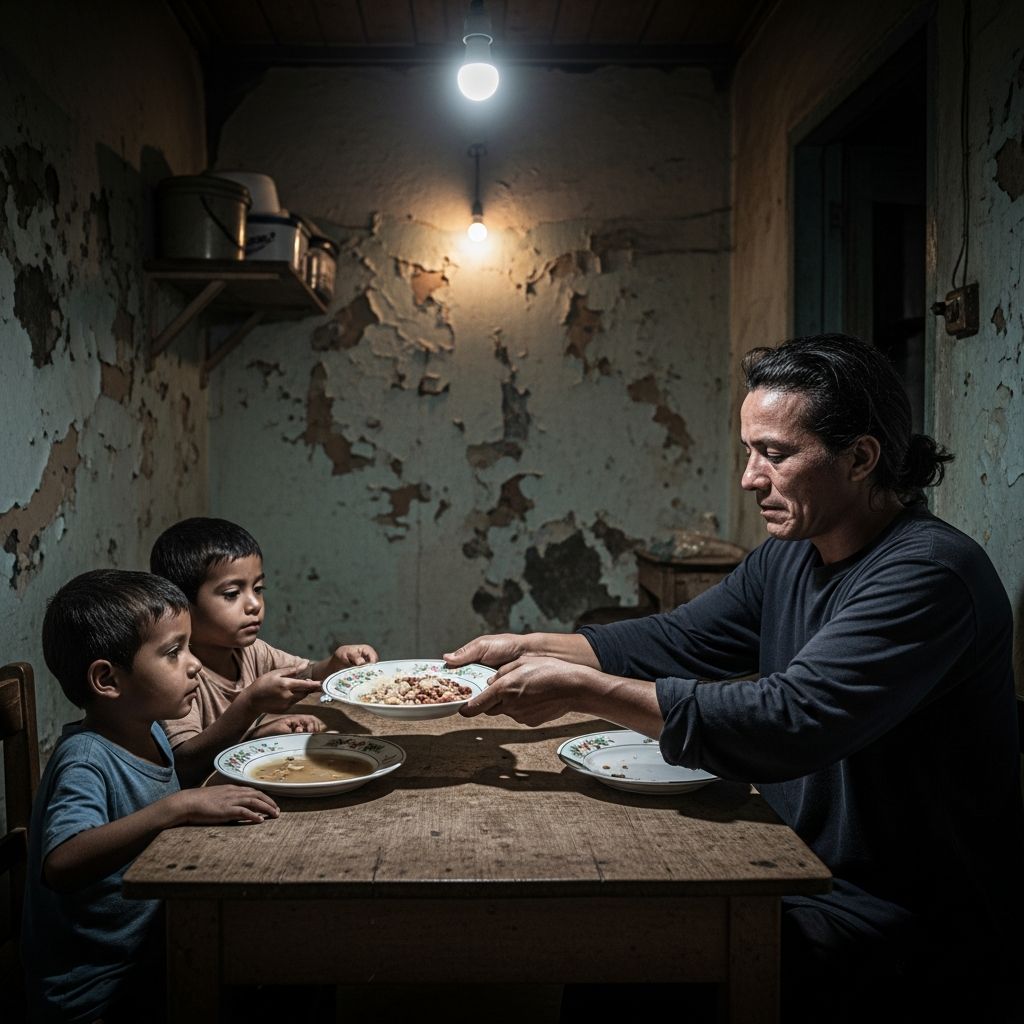
Across the United States, a silent crisis unfolds in households where parents quietly forgo their own meals to ensure their children eat. This act of profound parental devotion has surged during economic downturns, exposing vulnerabilities in the nation’s food safety net. Polls reveal that 37% of affected parents have skipped meals entirely for their kids’ sake, while 35% faced uncertainty about their next meal. Such sacrifices underscore not just immediate hunger but long-term effects on family health and child development.
The Scale of Food Insecurity in American Families
Food insecurity affects millions, with households containing children hit hardest. Before recent crises, over 35 million Americans grappled with inconsistent food access, a figure projected to climb to 50 million amid disruptions. A national poll of 2,000 individuals, including 1,500 with direct experience, found half lacked funds for basic groceries. Among households with children, 24.1% reported consuming expired packaged foods out of necessity.
This issue transcends urban areas, striking rural communities where resources are scarcer. Parents in these regions often ration portions or skip meals, shielding kids from scarcity’s full brunt. Yet, children perceive these struggles, impacting their emotional well-being and growth.
- 79% of respondents felt unsupported during food shortages.
- 63% were unaware their situation qualified as food insecurity.
- 6 in 10 noted expired federal aid worsened access.
Why Parents Choose Hunger Over Their Children’s
The decision to skip meals stems from instinctual prioritization. Surveys show parents view children’s nutrition as non-negotiable, even at personal cost. In one study, 13.7% of households with kids reduced portions or skipped meals due to shortages, with 23.6% facing this weekly. Economic pressures amplify this: job losses force tough choices between rent, medicine, and food.
Pre-crisis, summer posed challenges without school meals; disruptions extended this ‘longest summer,’ leaving kids without daily nutrition. Parents reported skipping bills or limiting meal variety—66% made do with fewer options, 39% deferred payments for food.
| Statistic | Whole Sample | Households with Children |
|---|---|---|
| Reduced portions/skipped meals (last 3 months) | 10.9% | 13.7% |
| Consumed expired foods | 23.0% | 24.1% |
| Weekly occurrences of skipping | 22.5% | 23.6% |
This table, drawn from a comprehensive U.S. study, illustrates the heightened burden on families with young ones.
Health Consequences for Parents and Children
Parental self-denial carries risks. Skipping meals leads to fatigue, weakened immunity, and poor decision-making, compounding family stress. Children, though protected physically, suffer psychologically—knowing parents hunger erodes security and heightens anxiety.
Nutritionally, inconsistent access stunts growth, impairs cognition, and raises chronic disease risks. Rural families on programs like SNAP stretch benefits thin, buying outdated goods or leftovers, yet hunger’s shadow persists. Nearly 40% encountered food insecurity for the first time during crises, signaling systemic gaps.
Community and School Responses to the Crisis
Schools pivoted rapidly, offering grab-and-go meals, bus deliveries, and multi-day pickups—waivers enabled broader reach, especially rural. These efforts revealed reliance: 70% of parents realized more kids depend on school nutrition than thought.
Nonprofits stepped up. Feeding America saw 60% more seekers, 40% first-timers. No Kid Hungry partnered with schools for continued feeding, addressing summer hunger spikes where 1 in 7 kids faced struggles pre-crisis, potentially 1 in 4 now.
- Extended school meal services via drive-thrus and deliveries.
- Community awareness grew from visible food bank lines.
- Organizations like No Kid Hungry ensure no child goes without.
Shifting Public Awareness and Calls for Action
Crises illuminated hidden struggles. Parents noted schools’ persistence changed views—many unaware of community hunger depths. Positively, 60% felt inspired to volunteer against insecurity.
Experts urge expanded safety nets: bolster SNAP, sustain school meals year-round, fund summer programs. Policymakers must address root causes like unemployment, ensuring no family chooses between adult and child nutrition.
Practical Strategies for Families Facing Shortages
While systemic change is vital, families can navigate now:
- Local Resources: Contact food banks via Feeding America network or No Kid Hungry tools.
- Budgeting Tips: Plan meals around sales, use apps for discounts, stretch proteins with beans/rice.
- School Programs: Enroll in free/reduced meals; check summer feeds.
- Community Gardens: Join or start for fresh produce.
- Government Aid: Apply for SNAP, WIC; track extensions.
These steps, combined with advocacy, build resilience.
Frequently Asked Questions (FAQs)
What percentage of parents skipped meals for their kids during crises?
37% reported skipping meals so children could eat, per a national poll.
How has food insecurity changed for families with children?
Households with kids saw 13.7% reduce portions or skip meals, higher than the general 10.9%.
Which organizations help combat child hunger?
Feeding America and No Kid Hungry lead efforts, partnering with schools for meals.
Why is summer particularly tough for food access?
Without school meals, hunger peaks; crises extended this gap.
Do children notice when parents skip meals?
Yes, it poses psychological threats to their development.
Long-Term Solutions for a Hunger-Free Future
Sustainable fixes demand investment: universal school meals, expanded benefits, job support. Public resolve—fueled by crisis visibility—offers momentum. By prioritizing child nutrition without parental sacrifice, society invests in healthier generations.
Stories abound of resilience: parents sharing triumphs over scarcity via community aid. Yet, data demands action—50 million at risk cannot wait.
References
- Hungry parents are skipping meals to feed their kids amid the pandemic — Mother.ly. 2020. https://www.mother.ly/life/hungry-parents-are-skipping-meals-to-feed-their-kids-amid-the-pandemic/
- Food insecurity among households with children during the COVID-19 pandemic — National Library of Medicine (PMC). 2021-08-27. https://pmc.ncbi.nlm.nih.gov/articles/PMC8403824/
- The Longest Summer — No Kid Hungry. 2020-07. https://www.nokidhungry.org/sites/default/files/2020-07/The_Longest_Summer.pdf
- Rural Children Know When Their Parents Skip Meals — Bread for the World. 2023. https://www.bread.org/article/rural-children/
- No Kid Hungry continues to feed kids during pandemic — PIX11 News (YouTube). 2020. https://www.youtube.com/watch?v=to1wPZG8ah8
- Feeding America & No Kid Hungry: Helping end child hunger — HopSkipDrive. 2020. https://www.hopskipdrive.com/blog/feeding-america-no-kid-hungry-child-hunger-covid/