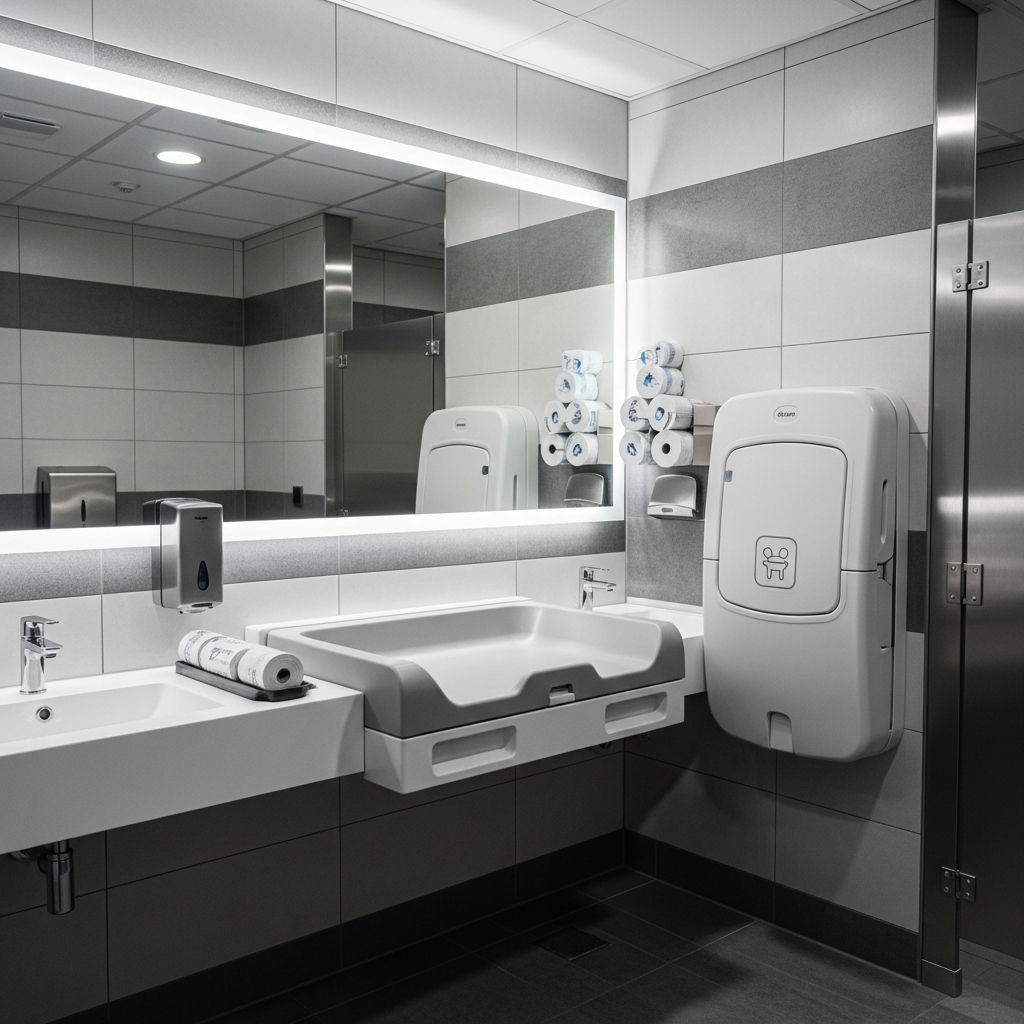
New York City has taken a significant step forward in supporting equitable parenting by updating its building code to require diaper changing tables in men’s restrooms across public facilities. This change applies to all new constructions and major renovations, ensuring that fathers, partners, and other male caregivers have safe, accessible options for baby care.
The Evolution of Public Restroom Standards
Public restrooms have long been designed with a binary focus, often prioritizing facilities in women’s spaces while overlooking similar needs in men’s areas. Diaper changing, a routine task for parents, was frequently relegated to makeshift solutions like floors or sink counters in men’s rooms—a practice that posed hygiene risks and discomfort.
The push for change stems from growing recognition of shared parenting roles. In recent years, fathers have increasingly taken active parts in childcare, with studies showing U.S. dads spending more time on daily child-rearing tasks than ever before. This NYC mandate reflects that shift, mandating at least one compliant changing station per publicly accessible floor in buildings with public bathrooms.
Key Provisions of the NYC Building Code Update
The updated code specifies that changing tables must be “safe and compliant,” meeting standards for stability, cleanliness, and accessibility. Building owners are required to install signage clearly indicating the location of these stations, eliminating guesswork for users.
- Mandatory Installation: Required in all new builds or substantially renovated structures with public restrooms.
- Gender Accessibility: Stations must be available to both men and women, often meaning placement in both restrooms.
- Floor-by-Floor Coverage: At least one station per public floor to ensure convenience.
- Signage Requirement: Clear directional signs posted by management.
- Compliance Standards: Must adhere to disability access laws, fire safety, and health regulations.
This isn’t just a local tweak; it’s part of a broader state-level initiative originating from New York State’s 2019 legislation, which influenced city codes. The law, effective from building projects post-January 1, 2019, extends to businesses like restaurants, retail stores, theaters, and government sites such as parks and DMVs.
Why This Matters for Fathers and Families
For dads, the absence of changing tables meant navigating awkward, unsanitary alternatives. Personal accounts from parents highlight frustrations: balancing infants over knees, using countertops amid splashing water, or worst, placing babies on restroom floors. This new requirement dignifies the role of male caregivers, affirming that parenting is a shared duty.
Beyond convenience, it promotes family inclusivity. Single fathers, gay parents, and grandfathers benefit equally. Public health improves too—proper stations reduce germ exposure, with surfaces designed for easy sanitization. Economically, businesses gain by attracting family customers who previously avoided venues lacking these amenities.
| Aspect | Pre-Mandate (Men’s Restrooms) | Post-Mandate |
|---|---|---|
| Availability | Rare or absent | Required per public floor |
| Safety | Improvised, risky | Compliant stations |
| Signage | Inconsistent | Mandatory clear signs |
| Accessibility | Limited to women’s areas | Gender-neutral |
| Business Impact | Family deterrence | Family-friendly boost |
Implementation Timeline and Enforcement
The mandate rolled out following New York State’s Assembly Bill A03940, signed into the 2019 state budget by then-Governor Andrew Cuomo. It targeted public buildings, emphasizing civil rights by adding Section 79-o to ensure diaper accommodations regardless of restroom gender designation.
Enforcement falls to local building inspectors during permitting and inspections. Non-compliance in new projects could delay approvals or incur fines. For existing structures, triggers include substantial renovations—defined typically as over 50% of the facility’s value. Retrofits in older buildings remain voluntary but are encouraged through incentives.
By 2026, compliance rates are high in urban areas like NYC, with chains like Starbucks and Target leading by installing stations proactively nationwide. State facilities, including lactation rooms in select buildings, complement this effort.
Broadening the National Conversation on Family Facilities
NYC’s policy aligns with a national wave. States like Illinois, Minnesota, and California have similar laws, often requiring changing tables in all public restrooms. Federally, the 2020 RESTROOMS Act proposed similar mandates but stalled; however, it spotlighted the issue.
Internationally, the UK and Australia mandate gender-neutral facilities in new public builds. These trends respond to data: A 2018 survey by the National Diaper Bank Network found 60% of fathers encountered missing tables, impacting outing frequency.
Business Perspectives: Costs vs. Customer Loyalty
Installation costs range from $200-$1,000 per unit, plus signage—modest against long-term gains. Family-owned businesses report 20-30% upticks in visits post-installation. Wall-mounted models save space, fitting tight urban restrooms.
Challenges include maintenance; stations need regular cleaning, but disposable liners simplify this. Some venues opt for unisex family restrooms housing stations, balancing privacy and access.
Health, Safety, and Accessibility Enhancements
Stations must comply with ADA standards: heights of 34 inches, weight capacities over 250 lbs, and smooth, non-porous surfaces. This aids caregivers with disabilities too. Hygiene features like antimicrobial coatings curb bacteria, vital in high-traffic spots.
Pediatric experts endorse this, noting reduced injury risks from unstable improvisations. It’s a public health upgrade, aligning with CDC guidelines on infant care environments.
Voices from the Parenting Community
“Finally, I can change my daughter without feeling like a spectacle.” – NYC father of two.
Social media buzzes with approval, though rural areas lag. Advocacy groups like Fathers’ Rights movements celebrate it as progress toward paternity equity.
Frequently Asked Questions
Does this apply to all NYC buildings?
No, only new constructions or substantially renovated ones with public restrooms. Existing buildings upgrade during major work.
What if a building has multiple floors?
At least one station per publicly accessible floor, with signage directing users.
Are there penalties for non-compliance?
Yes, building permits can be denied, and fines apply via code enforcement.
Does it cover private businesses?
Yes, restaurants, stores, theaters—any public-facing venue.
What’s next for family facilities?
Potential expansions to adult changing stations and more lactation spaces.
Looking Ahead: A More Inclusive Future
This mandate sets a blueprint for equitable public spaces, normalizing involved fatherhood. As families demand better, expect wider adoption. NYC leads, proving small changes yield big family wins.
References
- New York now legally requires changing tables in men’s restrooms — Mother.ly. 2019-01-01. https://www.mother.ly/news/new-york-changing-table-law-dads-change-diapers/
- New York law requires diaper changing tables in public men’s restrooms — Koala Bear. 2019-01-01. https://www.koalabear.com/news/new-york-law-requires-diaper-changing-tables-in-public-mens-restrooms/
- Baby Changing Tables In Men’s Restrooms Now Required In New York — Live 95.9. 2019-01-01. https://live959.com/baby-changing-tables-in-mens-restrooms-now-required-in-new-york/
- New Law Requires Baby Changing Stations In Men’s Restrooms In NYS — Secret NYC. 2019-01-01. https://secretnyc.co/law-requires-baby-changing-stations-in-mens-restrooms-in-nys/
- New NY law requires changing tables in men’s public bathrooms — ABC7NY. 2019-01-01. https://abc7ny.com/post/new-ny-law-requires-changing-tables-in-mens-public-bathrooms-/5000678/