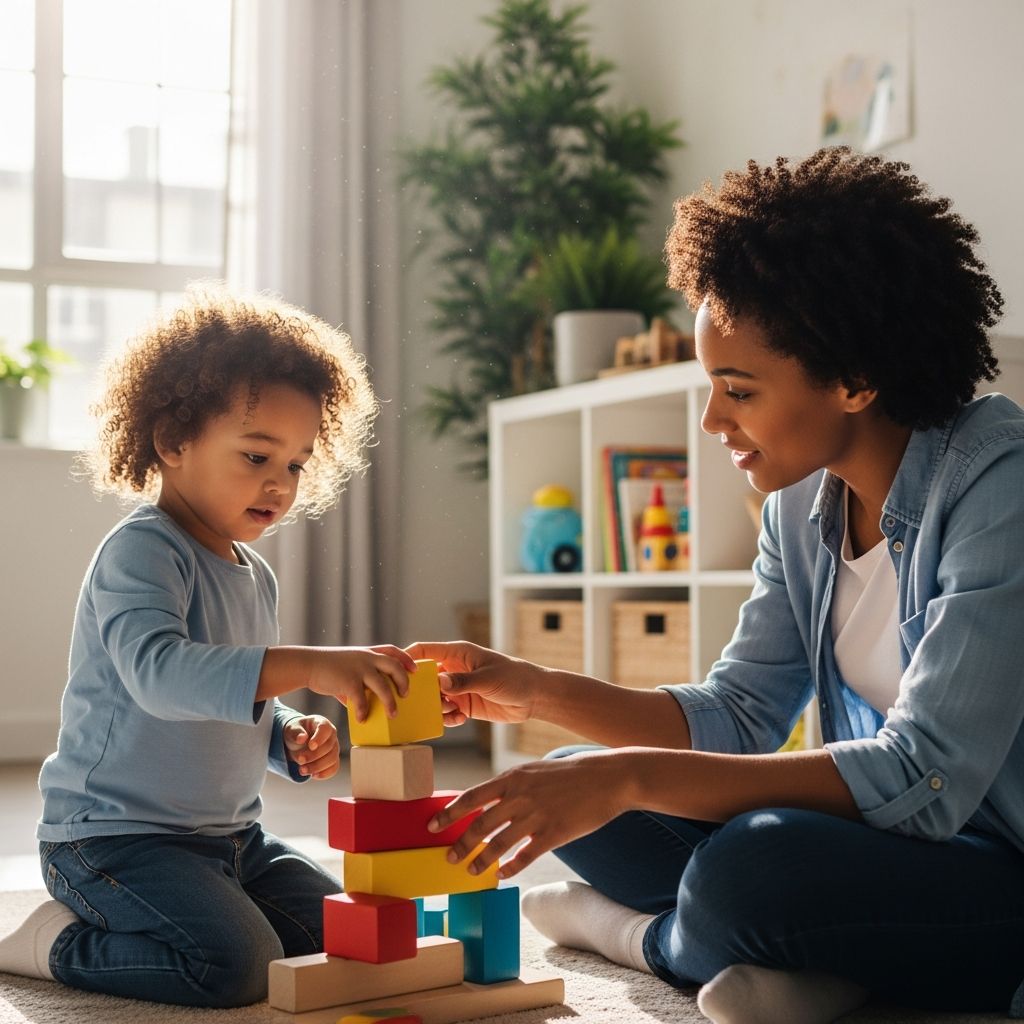
Preschoolers are magical, exhausting, hilarious, and unpredictable—often all in the same hour. Raising a 3–5-year-old means navigating big feelings, testing of limits, and rapid leaps in independence. This guide offers a complete, practical approach to parenting preschoolers with both warmth and firm boundaries, so daily life feels more cooperative and less like a constant power struggle.
Understanding the Preschooler Mind
Preschoolers live in an intense emotional world. Their brains are still developing the wiring needed for impulse control, empathy, and logical thinking, which means their behavior is often driven more by feelings than by reason. When parents understand this, misbehavior looks less like defiance and more like a signal that a child is overwhelmed, tired, disconnected, or unsure how to meet a need in a better way.
At this age, children are learning to manage frustration, share attention, handle transitions, and cope with disappointment. They rely on a secure relationship with adults to borrow calm when they feel out of control. Instead of asking, “How do I make this stop?” it is more helpful to ask, “What is this behavior trying to tell me?”
- They are still highly driven by the present moment and have limited sense of time.
- They take things personally and may interpret correction as rejection.
- They can know the rule and still fail to follow it when emotions run high.
Core Principles of Calm Preschool Parenting
A calm, connected approach to parenting rests on a few simple principles: connection before correction, limits with empathy, and consistency without rigidity. These principles help parents respond in ways that teach long-term skills rather than relying on fear, shame, or power struggles to control behavior.
When children feel safe and understood, they are more able to cooperate, recover from disappointment, and accept guidance. The goal is not perfect behavior, but a steady pattern of growth in emotional regulation, problem-solving, and respect—for self and others.
Key principles at a glance
- Connection first: A child who feels emotionally safe is more open to guidance.
- Respectful limits: Boundaries protect both your child and your relationship.
- Modeling: Children learn how to speak, argue, and repair by watching adults.
- Teaching, not punishing: Discipline means “to teach,” not “to make suffer.”
- Repair: When things go badly, coming back together is more important than what went wrong.
Why Connection Is Your Strongest Discipline Tool
Preschoolers depend on feeling deeply connected to caregivers. When they sense emotional distance—because of stress, distraction, or conflict—their behavior often becomes clingy, oppositional, or dramatic. Underneath these behaviors is a drive to reconnect and feel secure again.
Connection does not mean giving in to every demand. It means relating to your child as a human being whose needs, feelings, and perspective matter—even while you hold firm limits. When a child trusts that an adult cares and understands, they are far more willing to follow that person’s lead.
Simple daily connection rituals
- Offer five minutes of one-on-one play led by your child each day.
- Use small moments—like getting in the car—to make eye contact and share a quick joke or affectionate comment.
- Create goodbye and reunion rituals (a special handshake, a hug pattern, a silly rhyme).
Setting Loving Limits Without Harshness
Preschoolers feel safer when adults are clear and firm about limits. A lack of boundaries does not feel like freedom to a young child; it feels like chaos. The challenge is to hold limits in a way that is kind and steady, instead of angry or shaming.
Loving limits are clear, consistent, and predictable. They are expressed in simple language, backed by follow-through, and paired with empathy for the child’s feelings about the limit. This combination of firmness and warmth teaches that “all feelings are allowed, but not all behaviors are.”
Steps for setting an effective limit
- Get close: Move near your child, at their eye level, before stating the limit.
- State the boundary: Use brief, concrete language (e.g., “Hands stay on your own body”).
- Offer an alternative: Show what they can do instead.
- Hold steady: Expect protests and stay calm, repeating the limit as needed.
- Validate feelings: Acknowledge their disappointment, anger, or sadness.
Emotional Coaching: Helping Preschoolers Name and Tame Big Feelings
Preschoolers experience adult-sized emotions in a small body with limited skills for regulation. Emotional coaching means helping children notice, name, and eventually manage those feelings, rather than dismissing or punishing them. Over time, this develops emotional literacy and resilience.
When parents respond to big feelings with curiosity instead of criticism, children learn that emotions are safe to feel and talk about. As they grow, they internalize this calm, supportive voice and become better at comforting themselves and others.
Emotional coaching in three parts
- Notice: Pay attention to early signs of frustration, anger, or anxiety.
- Name: Put the feeling into words: “You look really frustrated that the tower fell.”
- Navigate: Offer strategies: deep breaths, asking for help, taking a break, or trying again.
Handling Tantrums With Calm Authority
Tantrums are a normal part of preschool development, not a sign of parental failure. They usually occur when a child’s emotional load is too heavy—after a long day, a big transition, overstimulation, or a limit they cannot accept. While it is tempting to argue, lecture, or give in, none of these responses actually teaches regulation.
During a tantrum, the goal is safety and calm, not reasoning. Once the emotional storm passes, children are more able to learn from what happened. Over time, consistent calm responses help tantrums become shorter and less intense.
What to do during a tantrum
- Stay physically close and emotionally present; avoid isolating your child unless they clearly want space.
- Keep your words minimal and soothing; long explanations will not be heard.
- Protect people and objects; gently block hitting or throwing without shaming.
- Afterward, briefly review what happened and brainstorm better choices together.
Gentle Responses to Aggression, Defiance, and Testing
Hitting, biting, shouting “No!”, and breaking rules are common ways preschoolers test boundaries and express emotions they cannot yet manage with words. Responding with harshness may stop the behavior in the moment but can increase fear and resentment, which often fuels more acting out.
A more effective approach is to view these behaviors as signals that a skill is missing: impulse control, problem-solving, or language for asking for what they need. The parent’s job is to keep everyone safe, stop the hurtful behavior, and then teach the missing skill when the child is calm again.
| Behavior | Possible Need or Skill Gap | Helpful Adult Response |
|---|---|---|
| Hitting, kicking, biting | Overwhelm, frustration, lack of impulse control | Block safely, name the feeling, teach words or gestures for “stop” and “I need space.” |
| Screaming “No!” at every request | Need for autonomy, power struggles, transition difficulty | Offer limited choices, give warnings before transitions, invite collaboration when possible. |
| Ignoring directions | Distraction, disconnection, unclear expectations | Move closer, gain eye contact, use short instructions, have the child repeat back. |
| Grabbing toys, not sharing | Immature sense of ownership, social skills still developing | Coach turn-taking, use timers, narrate what each child feels and needs. |
Building Cooperation Without Bribes or Threats
Many parents fall into patterns of “If you do this, you’ll get a treat,” or “If you don’t stop, you’ll lose your favorite toy.” While rewards and threats can work in the short term, they teach children to behave mainly for external consequences rather than inner values and connection. Over-reliance on these tactics can backfire as children grow, requiring bigger and bigger incentives.
Cooperation grows naturally when children feel respected, have some sense of choice, and understand predictable expectations. The goal is to invite cooperation instead of demanding obedience, while still being clear that some things are non-negotiable for safety and wellbeing.
Strategies that invite cooperation
- Use playful engagement: Turn tasks into games—races, songs, or pretend stories.
- Give choices within limits: “You can hop or tiptoe to the car. Which do you choose?”
- State what will happen, not what you will do to them: “When your shoes are on, then we can go outside.”
- Offer small responsibilities: Let your child carry a bag, push a button, or choose which story to read.
Routines, Transitions, and Preventing Power Struggles
Predictable routines help preschoolers feel secure in a world that often seems confusing and fast-changing. Knowing what comes next reduces anxiety and resistance, especially around daily flashpoints like bedtime, meals, and leaving the house. When the rhythm of the day is fairly consistent, children spend less energy fighting transitions and more energy exploring and learning.
Visual and verbal cues can make transitions smoother. Giving advance warnings, using songs or timers, and breaking tasks into small steps all help children move from one activity to another with less friction. The more predictable the pattern, the fewer power struggles tend to erupt.
Elements of a supportive routine
- A consistent morning rhythm (wake, dress, eat, brush, leave) in roughly the same order.
- Regular snack and meal times so hunger is less likely to fuel meltdowns.
- Daily quiet time or rest period, even if the child no longer naps.
- A predictable bedtime sequence that repeats night after night.
Discipline Tools That Teach, Not Harm
Effective discipline in the preschool years focuses on teaching skills: self-control, empathy, problem-solving, and making amends. Punishments that cause humiliation, fear, or pain may stop behavior quickly but do not build these inner capacities. In fact, they often teach children to hide mistakes and avoid responsibility.
Teaching-focused discipline uses natural and logical consequences, guided problem-solving, and opportunities to repair. The adult remains calm and in control, modeling the very self-regulation that is expected from the child over time.
Examples of teaching-focused discipline
- Natural consequence: If a child refuses a coat, they feel cold and learn to choose differently next time (as long as it is safe).
- Logical consequence: If water is splashed out of the tub after a clear limit, bath time ends early that night.
- Repair: If a toy is broken during a rage, the child helps fix it or chooses a way to help the person who was hurt.
- Do-overs: Practice saying the same message in a respectful tone, with coaching.
Supporting Your Own Regulation as a Parent
Staying patient with a screaming, kicking preschooler is incredibly hard, especially when adults are exhausted or stressed. Yet a parent’s nervous system is one of the most powerful regulators for a young child. When adults stay reasonably calm, children’s brains gradually learn to do the same.
Taking care of one’s own emotional and physical needs is not selfish; it is essential for healthy parenting. Small daily habits can significantly increase a parent’s capacity to respond thoughtfully rather than react impulsively.
Practical ideas for parental self-regulation
- Pause before responding—take a breath, unclench the jaw, and lower the voice.
- Use simple mantras such as, “This is not an emergency,” or “My child is having a hard time, not giving me a hard time.”
- Build small pockets of rest into the week: a walk, a short call with a friend, or a few quiet minutes after bedtime.
- Reach out for support when feeling overwhelmed—co-parent, relatives, friends, or professionals.
Frequently Asked Questions About Preschool Parenting
1. Is it okay to say “no” to a preschooler?
Yes. Preschoolers need adults to say “no” when safety, health, or core values are at stake. The key is how that “no” is delivered. A calm, firm “no” with a brief explanation and empathy teaches far more than either harsh scolding or endless negotiation. Saving “no” for truly important limits and using positive phrasing when possible keeps it meaningful.
2. Should preschoolers get time-outs?
Traditional time-outs that isolate a distressed child can increase shame and fear, especially if they are used primarily as punishment. A more helpful alternative is a “time-in” or calm corner where the adult stays near, offering comfort and tools for calming down. If a child truly wants space, a brief, supported break is fine—as long as reconnection follows.
3. How do I encourage sharing?
True sharing requires emotional maturity and the ability to delay gratification, which are still developing in preschool years. Instead of demanding immediate sharing, teach turn-taking with timers, use language like “first–then,” and model asking politely. Over time, children learn that they will get their turn and that generosity feels good, rather than seeing sharing as something forced upon them.
4. What about lying or sneaky behavior?
Preschoolers may experiment with untruths as imagination grows and as they try to avoid trouble. Reacting with outrage or harsh punishment makes them more likely to hide mistakes. A calmer approach—naming the value of honesty, gently clarifying what really happened, and focusing on problem-solving—teaches that telling the truth is safe and respected.
5. How can two parents stay on the same page?
Consistency is easier for children when adults generally agree on limits and consequences, but perfect alignment is unrealistic. Regular check-ins between caregivers about rules, routines, and discipline strategies can reduce conflict. When parents disagree, it helps to discuss it privately later, keeping interactions in front of the child as unified and respectful as possible.
Bringing It All Together in Daily Life
Parenting a preschooler means living in the tension between delight and difficulty. The same child who melts down over the wrong color cup can also offer breathtaking kindness and curiosity. By leading with connection, holding clear and loving limits, and focusing on teaching rather than punishing, parents create a home where both children and adults can grow.
No parent will respond calmly every time, and no child will cooperate consistently. What matters most is the overall pattern: frequent moments of connection, steady boundaries, and a willingness to repair when things go off track. With this approach, the preschool years become not just survivable, but a powerful foundation for lifelong emotional health and strong family relationships.