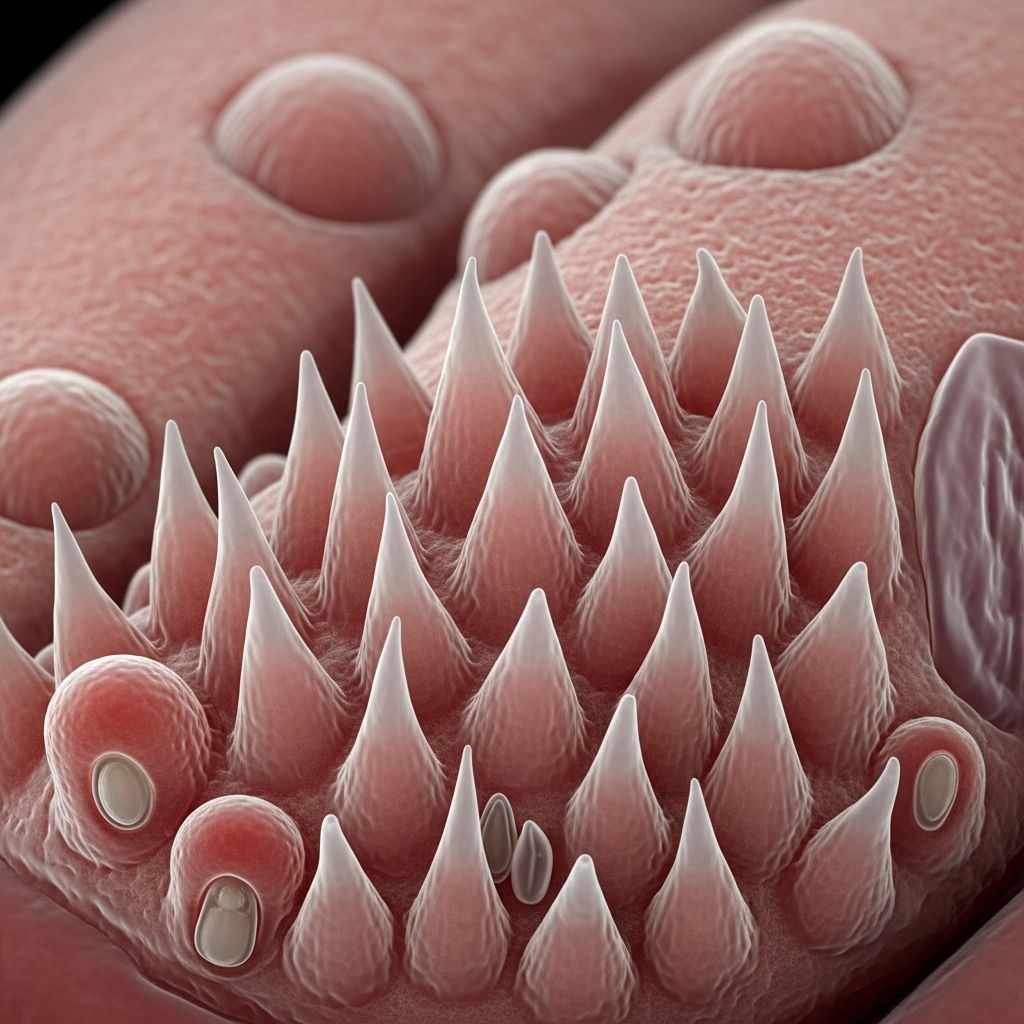
If you look closely in a mirror and stick out your tongue, you will see lots of tiny bumps covering the surface. Those little bumps have a big scientific name: papillae. Even though they are small, they are a very important part of how you eat, taste, and enjoy food.
What Exactly Are Papillae?
In medical science, a papilla (say: puh-PILL-uh) is a small, raised bump that sticks out from a surface of the body. When there are many of them, we call them papillae (say: puh-PILL-ee). The word comes from Latin and was first used to describe a shape that looks a bit like a nipple or tiny mound.
On your tongue, papillae are:
- Tiny and bump-like – they give your tongue its rough feel instead of being smooth.
- Soft tissue structures – made of the same moist lining (mucosa) that covers the inside of your mouth.
- Home to taste buds – many papillae contain the special sensors that let you taste different flavors.
Where Are Papillae Found?
You can find papillae on several parts of the body, but the ones you notice most are on your tongue. These are called lingual papillae, which means “tongue papillae.”
Papillae also exist in other places, such as:
- The skin, helping with touch in some areas.
- The gums, between teeth (called interdental papillae).
- Near the eyes (lacrimal papillae) and in other organs.
But for kids learning about taste and eating, the most important papillae are the ones on the top of the tongue.
How Papillae Help You Eat
When you bite into a piece of food, your tongue and papillae jump into action. They help with several steps:
- Gripping food: The rough surface from the papillae helps your tongue hold onto food instead of letting it slide around too much.
- Moving food: Your tongue uses those bumps to push food toward your teeth so it can be chewed.
- Mixing with saliva: As you chew, saliva (spit) mixes with food. The papillae help keep the food in place so everything mixes well.
- Preparing to swallow: Once the food is soft and broken down, your tongue shapes it into a small mass and pushes it to the back of your mouth to swallow.
Without papillae, your tongue would be smoother and it would be much harder to control pieces of food while you chew.
Papillae and Your Sense of Taste
Besides helping you chew, papillae are also closely connected to how you taste. Many papillae contain tiny structures called taste buds, which are groups of special cells that react to chemicals in your food.
These taste buds send messages through nerves to your brain, telling it what kind of flavor you are sensing. Thanks to this system, you can tell the difference between:
- Sweet – like ice cream, ripe fruit, or chocolate
- Sour – like lemons or sour candies
- Salty – like pretzels or salty popcorn
- Bitter – like some medicines or dark leafy greens
- Umami (say: oo-MAH-mee) – a savory taste found in foods like cheese, meat, and broth
Some papillae mostly help you feel the texture and temperature of food, while others focus more on taste.
Types of Papillae on the Tongue
Scientists divide the papillae on your tongue into different kinds, based on their shape and what they do.
| Type of papilla | Where it is on the tongue | Main job | Has taste buds? |
|---|---|---|---|
| Filiform | Front and middle areas, covering most of the surface | Helps with texture, touch, and gripping food | No taste buds |
| Fungiform | Scattered mainly on the tip and sides | Sense taste and some touch | Yes, many taste buds |
| Foliate | Along the back sides of the tongue | Important for taste, especially in children | Yes, taste buds in the grooves |
| Circumvallate (vallate) | In a V-shaped row at the very back of the tongue | Handle many taste signals, especially bitter flavors | Yes, many taste buds |
Filiform Papillae: The Texture Makers
Filiform papillae are the most common type on your tongue. They are thin, cone-shaped bumps that do not contain taste buds. Instead, they are very good at giving your tongue a rough surface. This roughness helps you:
- Feel how smooth or crunchy food is.
- Scrape bits of food from your teeth and mouth.
- Move food around so your teeth can chew it well.
Fungiform Papillae: The Little Mushrooms
Fungiform papillae get their name because they look a bit like tiny mushrooms under a microscope. They are scattered mostly near the tip and sides of the tongue. Many of them contain taste buds, so they help you notice flavors quickly when food first touches your tongue.
Foliate Papillae: Taste Folds on the Side
Foliate papillae are found along the sides near the back of your tongue and appear as small folds or ridges. They contain taste buds inside their grooves, which can be especially active in children. As people get older, some of these taste areas may become a bit less sensitive, but they still help with tasting.
Circumvallate Papillae: Big Bumps in a V-Shape
At the very back of your tongue there is a line of bigger, round papillae arranged in a V shape. These are the circumvallate papillae (sometimes just called vallate papillae). They have deep trenches around them, and inside those trenches are lots of taste buds. These papillae are especially important for noticing strong flavors, including bitter tastes.
How Papillae Work With Taste Buds and the Brain
When you eat something, several steps happen very quickly:
- Food touches papillae: Bits of food and drink land on your tongue and slide between and over the papillae.
- Chemicals reach taste buds: Molecules from the food dissolve in saliva and enter tiny openings in the taste buds that sit inside many papillae.
- Taste cells react: Special cells inside the taste buds respond differently to sweet, sour, salty, bitter, or umami.
- Signals travel to the brain: Nerves carry these signals from the tongue to parts of the brain that understand taste.
- Your brain decides the flavor: The brain combines information about taste, smell, and texture to decide how the food tastes overall.
All of this happens so fast that you notice the flavor almost the instant food enters your mouth.
Do Papillae Ever Change or Get Irritated?
Papillae can sometimes get bigger, irritated, or feel strange, especially if:
- You burn your tongue on very hot food or drinks.
- You scratch or bite your tongue by accident.
- You eat or drink something very spicy or sour that bothers the tongue for a short time.
Most of the time, these problems are mild and go away on their own as the tongue heals. Doctors use the word papillitis when papillae are inflamed or swollen. If a sore area on your tongue hurts a lot, does not go away after a week or two, or makes it hard to eat, it is important to tell a parent or caregiver and see a doctor or dentist.
Keeping Your Papillae and Tongue Healthy
Because papillae are part of your mouth, the same habits that keep your teeth and gums healthy also help your tongue.
Good habits include:
- Brushing your teeth twice a day with fluoride toothpaste.
- Gently brushing your tongue to remove leftover food and bacteria.
- Drinking water often to keep your mouth moist and rinse away food particles.
- Eating a variety of foods like fruits, vegetables, whole grains, and dairy that help your body grow and keep tissues healthy.
- Avoiding tobacco or vaping products, which can damage your mouth and taste.
Dentists and doctors can also look at your tongue and papillae during checkups to make sure everything looks normal.
Fun Facts About Papillae and Taste
- Your tongue has thousands of taste buds spread across papillae and other areas of the mouth.
- Not every papilla has taste buds. For example, filiform papillae have none, but they still help a lot with touch and texture.
- Smell and taste work together. When your nose is stuffed, food may seem to have less flavor because your brain is missing smell information.
- People do not have strict “taste zones” where only one taste appears on one part of the tongue. Different tastes can be sensed in many areas, though some regions can be slightly more sensitive.
Frequently Asked Questions About Papillae
Are papillae the same thing as taste buds?
No. Papillae are the bumps on your tongue that you can see. Many of them contain taste buds inside, but the taste buds themselves are tiny groups of special cells that sit within or between the papillae.
Why do my tongue bumps sometimes look bigger?
Papillae can swell or look larger if your tongue gets irritated, burned, or scraped. This is usually temporary. If the bumps hurt a lot or do not improve in a week or two, you should let an adult know and visit a doctor or dentist.
Do papillae grow back if they get hurt?
The surface of your tongue, including many of the cells in and around papillae, can repair itself over time. Minor injuries from hot food or small bites usually heal on their own as new cells replace old or damaged ones.
Can I see my own papillae?
Yes. If you look in a mirror, turn on a bright light, and stick out your tongue, the tiny bumps you see on the top surface are papillae. Some near the back may look a bit larger, especially the circumvallate papillae.
Do animals have papillae too?
Many animals have papillae on their tongues. For example, cats have very rough tongues with strong, pointed papillae that help them clean their fur and grip food.
References
- Lingual papillae — Anatomy overview including structure, types, and function. Updated 2023. https://en.wikipedia.org/wiki/Lingual_papillae
- Papilla — Taber’s Medical Dictionary, Unbound Medicine. Definition and types of papillae. 2022. https://nursing.unboundmedicine.com/nursingcentral/view/Tabers-Dictionary/734093/all/papilla
- Scientists Say: Papillae — Science News Explores. 2018-08-13. https://www.snexplores.org/article/scientists-say-papillae
- Papilla — Cambridge Dictionary, medical definition. Updated 2022. https://dictionary.cambridge.org/dictionary/english/papilla
- Papillae Definition – Anatomy and Physiology I Key Term — Fiveable. 2021. https://fiveable.me/key-terms/anatomy-physiology/papillae