Panner’s disease is an osteochondrosis affecting the capitellum of the humerus in the elbow, primarily in children aged 5 to 10, often linked to repetitive stress from sports like throwing or gymnastics.
Understanding the Elbow’s Anatomy in Growing Kids
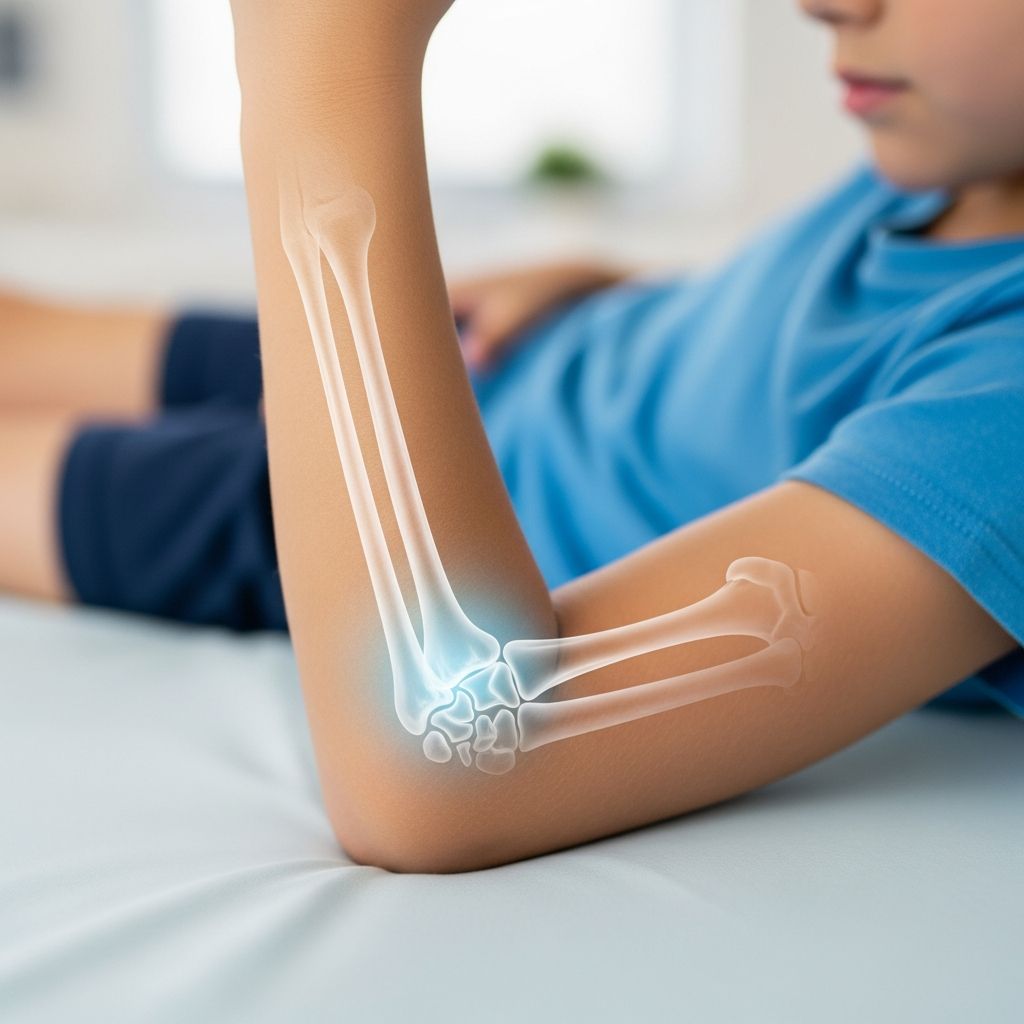
The elbow joint involves the humerus, radius, and ulna, with the capitellum—a rounded projection on the humerus’ distal end—articulating with the radius for forearm rotation. In children, this area features growth plates vulnerable to disruption. Repetitive valgus stress, where the elbow is forced outward, strains these structures, especially after age 5 when blood supply shifts to more fragile posterior vessels.
During growth, the capitellum ossifies from a single nucleus. Ischemia from vascular compromise leads to bone resorption, fragmentation, and irregular ossification, flattening the surface and causing pain.
Primary Triggers: Repetitive Overuse in Young Athletes
The leading cause is overuse from activities imposing valgus loading, such as baseball pitching, gymnastics, or handball. These create microtrauma, interrupting blood flow to the subchondral bone and halting normal endochondral ossification. Children under 10, especially boys with dominant arms, are prone due to immature vascularity.
- Common sports risks: Throwing sports (baseball, javelin), racquet games, cheerleading.
- Biomechanical factors: Repetitive axial loading or direct elbow trauma.
Less common contributors include endocrine issues, ischemia from other sources, or metabolic imbalances like calcium/phosphorus deficiencies, though evidence is limited. Unlike osteochondritis dissecans (OCD), Panner’s involves the entire capitellum epiphysis diffusely.
Recognizing Symptoms Early: What Parents Should Watch For
Symptoms emerge gradually over weeks to months, starting with lateral elbow pain worsened by activity and eased by rest. Stiffness follows, with 10-20° extension loss and occasional flexion limits. Swelling or effusion may appear subtly.
| Symptom | Description | Triggers |
|---|---|---|
| Lateral Pain | Dull ache outer elbow | Throwing, lifting |
| Stiffness | Reduced motion | Morning, post-activity |
| Swelling | Mild joint effusion | Overuse episodes |
| Weakness | Grip/arm fatigue | Repetitive tasks |
Pain intensifies with valgus stress, prompting children to avoid sports. Early detection prevents progression; delays risk chronic issues.
Diagnostic Approaches: From Exam to Imaging
Diagnosis combines history, physical exam, and imaging. Young age, dominant arm involvement, and activity-related pain raise suspicion. Exam reveals tenderness over the capitellum, limited extension, and possible crepitus.
X-rays show radiolucency, sclerosis, or capitellar fragmentation—subtle in early stages. MRI confirms edema, resorption, and differentiates from OCD or fractures, showing vascular disruption. Ultrasound detects effusion.
- Key radiographic signs: Irregular ossification, subchondral lucency.
Physicians assess for bilateral involvement or systemic signs to rule out rarities.
Conservative Management: The First-Line Strategy
Panner’s is self-limiting; 90% resolve with non-operative care focusing on rest and symptom relief. Halt aggravating activities for 4-12 weeks, avoiding throwing or heavy lifting.
Home care essentials:
- Ice packs 15 minutes every 1-2 hours, towel-wrapped.
- NSAIDs like ibuprofen for pain/inflammation, per dosing guidelines.
- Immobilization splint if needed, 1-2 weeks.
Avoid surgery initially; reserve for persistent pain post-conservative trial or loose fragments.
Role of Physical Therapy in Rehabilitation
PT restores motion and strength post-rest phase. Programs emphasize stretching for extension/flexion, progressive strengthening, and proprioception. Sessions 2-3x/week yield high success, preventing re-injury.
Sample PT progression:
- Week 1-2: Passive ROM, ice.
- Week 3-6: Active stretching, isometrics.
- Week 7+: Sport-specific drills, monitored return.
Recovery Timeline and Return to Play Guidelines
Healing spans 6-18 months; bone remodels as dead tissue resorbs and revascularizes. Pain subsides in 3-6 months with compliance; full remodeling follows.
Return-to-sport criteria: Pain-free ROM, symmetric strength, normal imaging. Gradual: 50% intensity first, build over 4 weeks. Monitor for recurrence.
| Phase | Duration | Goals |
|---|---|---|
| Rest | 4-12 weeks | Pain-free daily activities |
| Rehab | 3-6 months | Full ROM, strength |
| Return | 6-18 months | Sport resumption |
Potential Complications and When to Seek Urgent Care
Most cases heal excellently, but incomplete rest risks progression to OCD-like changes or avascular necrosis. Loose bodies or persistent loss of motion may need arthroscopy. Watch for worsening pain, locking, or instability.
Rarely bilateral; screen for overuse elsewhere.
Preventing Panner’s: Smart Training for Youth Sports
Prevention targets pitch/gymnastics limits: e.g., <75 pitches/game for 9-10 year-olds, proper mechanics training. Cross-train, enforce rest days, early fatigue screening. Parental awareness key.
Frequently Asked Questions About Panner’s Disease
Is Panner’s disease the same as OCD of the elbow?
No; Panner’s diffusely affects the capitellum in younger kids (<10), while OCD is focal and often in teens.
How long does recovery take?
Symptoms improve in months; full bone healing 1-2 years with rest.
Can my child play sports again?
Yes, most return fully after guided rehab; gradual to avoid relapse.
Is surgery ever needed?
Rarely; only for refractory cases or mechanical symptoms.
What home remedies help immediately?
Rest, ice, elevation, OTC pain relief.
This comprehensive guide empowers parents to navigate Panner’s disease effectively, promoting swift recovery and injury prevention in active kids. (Word count: 1678)
References
- What is Panner’s Disease? Symptoms and Treatment — Elgeadi Traumatologia. 2023. https://elgeaditraumatologia.com/en/panners-disease-treatment/
- Panner Disease Bristol TN | Elbow Pain Sullivan County — Dr. Jonathan Clark. 2023. https://www.drjonathanclark.com/panner-disease-orthopaedic-surgeon-bristol-tn/
- Panner’s disease: literature review and treatment recommendations — PMC (NCBI). 2015-03-01. https://pmc.ncbi.nlm.nih.gov/articles/PMC4340849/
- Panner’s Disease – Physiopedia — Physiopedia. 2024. https://www.physio-pedia.com/Panner’s_Disease
- Panner’s Disease (for Parents) — KidsHealth (Advocate). 2023. https://kidshealth.org/Advocate/en/parents/panners-disease.html