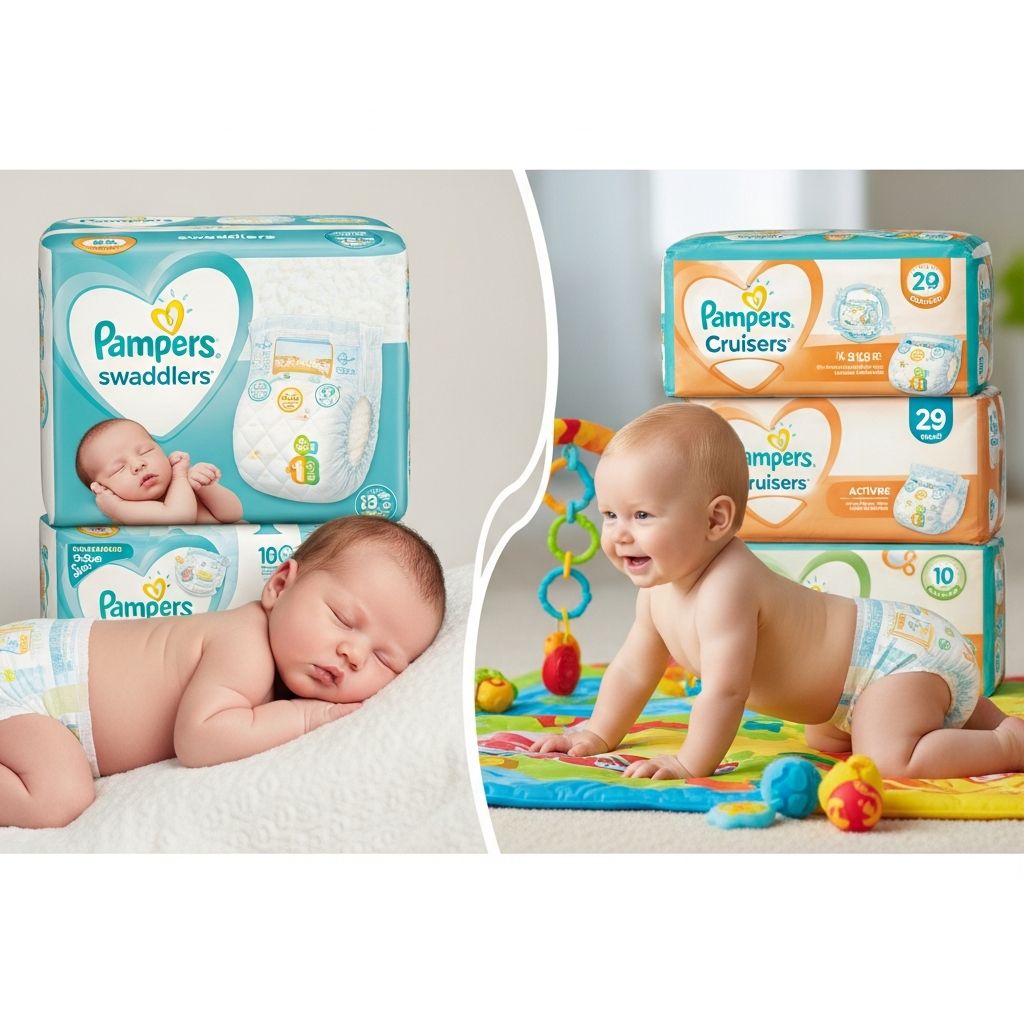
Choosing the right diaper can feel surprisingly complicated once you realize how many options exist for every stage of your baby’s growth. Pampers Swaddlers and Pampers Cruisers are two of the most popular choices, and each shines in different situations. This guide breaks down how they differ and how to know which one truly fits your baby’s needs.
This article explains the key differences in fit, absorbency, comfort, and sizing, then walks through common real-life scenarios so you can quickly decide whether Swaddlers or Cruisers makes more sense for your family.
Understanding the Basics of Each Diaper
What Pampers Swaddlers Are Designed For
Pampers Swaddlers are built with younger babies in mind, especially newborns and infants who spend most of their time lying down, feeding, and sleeping. The design focuses on softness and protecting delicate skin while offering solid leak protection.
- Available from newborn sizes through larger baby sizes, giving you a gentle option from the very beginning.
- Often chosen for hospital use because the material feels very soft against sensitive skin and provides early protection.
- Shaped to accommodate tiny tummies, making them especially friendly in the first weeks of life and early months.
What Pampers Cruisers Are Designed For
Pampers Cruisers target older, more active babies and toddlers who crawl, pull up, and walk. Instead of focusing only on softness, Cruisers emphasize flexibility, secure fit during movement, and leak protection when your baby is on the go.
- Offered in larger sizes that typically start where early baby sizes end, making them a natural next step after infant diapers.
- Built to stay in place when babies twist, climb, or bounce, with more emphasis on flexible waist and leg areas.
- Intended to give your child freedom to move comfortably without gaps that cause leaks during active play.
Key Differences Parents Actually Notice
Fit, Shape, and Flexibility
One of the biggest differences between Swaddlers and Cruisers is how they fit your baby’s body. Swaddlers tend to have a snug, cradling feel that works well for lying down, while Cruisers are shaped for bending, stretching, and constant motion.
- Swaddlers: Gentle, wraparound fit that lies flat against baby’s back, ideal for long naps and nighttime when there’s less movement.
- Cruisers: More contoured in the waist and legs to move with your baby’s hips, knees, and belly as they crawl and walk.
- Many parents notice that once babies start standing or cruising along furniture, Cruisers stay in place better during play.
Absorbency and Leak Protection
Both diaper lines are designed to keep moisture away from your baby’s skin, but they do it with slightly different priorities. With Swaddlers, the goal is gentle dryness for long stretches of sleep, while Cruisers are engineered to perform well even with lots of motion.
- Swaddlers tend to emphasize a soft, cushiony core that quickly pulls moisture away to help prevent irritation.
- Cruisers typically focus on distributing wetness in a way that keeps the diaper from sagging or bunching when your child is active.
- For many families, Swaddlers work beautifully in the early months, while Cruisers excel at keeping up with crawling and walking babies who are harder on their diapers.
Comfort Features for Different Stages
Babies’ bodies change dramatically in the first two years, and diaper designs follow those changes. What feels cozy and practical on a newborn can feel restrictive or leaky on a toddler.
- Swaddlers usually include features for very small babies, such as contoured fronts that avoid rubbing the healing belly button area.
- Cruisers focus more on stretch in the waistband and leg cuffs, so the diaper moves with jumps, squats, and tumbles.
- As bellies become rounder and legs more muscular, Cruisers often provide a more forgiving and flexible fit.
Size Ranges and When to Switch
Swaddlers Size Range
Swaddlers cover the earliest days of life and can continue into later infancy and early toddlerhood, depending on your baby’s growth. This makes it possible to stay within the same line for a long time if it works well for your baby’s skin.
- Includes newborn sizes specifically for tiny babies from the hospital stage.
- Gradually adds larger sizes so you can stay with the same style through many months if you like the fit and performance.
- Ideal if you prioritize consistency and don’t want to constantly experiment with different diapers early on.
Cruisers Size Range
Cruisers generally begin once your baby has outgrown the smallest sizes and is developmentally ready for more movement. The line is meant to carry babies through the high-motion months of late infancy and toddlerhood.
- Typically starts at mid-range baby sizes and continues through larger toddler sizes.
- Designed to fit babies who can sit, crawl, stand, or walk, even if they are still relatively small.
- Often becomes the everyday daytime option once crawling and cruising become regular activities.
Visual Size and Stage Guide (Table)
The following table offers a simplified, approximate guide to how the lines often align with developmental stages. Always follow package weight ranges and how the diaper fits your individual baby.
| Baby Stage | Typical Weight Range* | Common Diaper Line | Why It Often Works Best |
|---|---|---|---|
| Newborn (first weeks) | Smallest sizes listed on packs | Mostly Swaddlers | Gentle materials and shapes that respect new skin and tiny tummies. |
| Young Infant (up to early rolling) | Lower baby sizes | Primarily Swaddlers | Softness and simple fit for babies who spend most of their time lying down. |
| Crawler / Early Sitter | Mid-range baby sizes | Swaddlers or Cruisers | Families often transition in this window when movement and leaks increase. |
| Active Toddler | Larger baby/toddler sizes | Mainly Cruisers | Flexible fit and secure sides for climbing, running, and playground time. |
*Always check the weight and fit guidelines printed on packaging; this table is only a general starting point.
Comparing Features Side by Side
At-a-Glance Comparison Table
This table summarizes the major differences that parents usually care about when choosing between Pampers Swaddlers and Cruisers.
| Feature | Pampers Swaddlers | Pampers Cruisers |
|---|---|---|
| Main Focus | Softness and gentle protection for younger babies. | Flexible, stay-put fit for active babies and toddlers. |
| Stage | Newborn through growing infants and younger toddlers. | Crawlers, cruisers, walkers, and energetic toddlers. |
| Typical Fit Style | More cradling, ideal for a lot of lying and sleeping. | More contoured and stretchy for movement in all directions. |
| Leak Protection Priority | Great for overnight and long naps when baby is mostly still. | Strong performance during running, rolling, and climbing. |
| Best For | Delicate skin, early weeks and months, smaller sizes. | Daytime wear for mobile babies and toddlers. |
Skin Sensitivity and Comfort Considerations
Protecting Delicate Newborn Skin
Newborn skin tends to be more fragile, which is why many parents start with a diaper that emphasizes softness and gentle materials. The inner lining, stretch around the legs, and overall feel of Swaddlers are tailored with that in mind.
- The inner surface is typically very smooth to the touch, minimizing friction against fragile skin folds.
- The fit is designed to reduce rubbing on sensitive areas like the belly button area in the early weeks.
- When combined with frequent changes, Swaddlers can be a comfortable base for managing early diaper changes and preventing irritation.
Comfort for Wrigglers and Walkers
As babies grow, their comfort needs shift from pure softness to freedom of movement. Cruisers respond to this shift by focusing more on flexible sides and leg openings that stretch and rebound as your child moves.
- Stretchy side panels help the diaper move with jumps and squats instead of cutting into the skin.
- Designed to avoid gaping in the back or at the thighs, which can cause leaks or red marks with lots of motion.
- Often feels more like activewear than a traditional, bulky diaper once your baby becomes very mobile.
Daytime vs Nighttime: Which Works When?
Using Swaddlers and Cruisers During the Day
Both Swaddlers and Cruisers can serve as daytime diapers, but they shine in slightly different ways. In the first months, Swaddlers usually offer everything you need for daily wear; later, Cruisers may take over once your child spends more time on the floor and on their feet.
- Newborns and young infants: Swaddlers often provide plenty of absorbency and comfort for daytime feeds, naps, and tummy time.
- Crawling and walking babies: Cruisers tend to handle the twisting and turning of playtime without sagging or shifting.
- Some families use Swaddlers in the morning and Cruisers in the afternoon once babies become semi-active, depending on fit and personal preference.
Nighttime Strategies With Each Diaper
Nighttime use depends heavily on how long your baby sleeps, how heavily they wet, and whether they still wake for changes. Many families start with Swaddlers overnight and then experiment with other options once sleep stretches grow longer.
- In the early months, Swaddlers often handle nighttime needs because babies wake frequently and are changed often.
- Once babies sleep longer stretches, some parents switch to more absorbent versions within the Swaddlers family or use a larger size of their usual diaper.
- For older, very active toddlers, some caregivers find that Cruisers still work fine overnight, particularly if the child does not heavily soak through diapers.
Cost, Convenience, and Availability
Price and Value Over Time
Swaddlers and Cruisers are often priced in a similar range, though exact costs can vary of course by store, package size, and promotions. When comparing value, it helps to think in terms of cost per diaper and how many leaks you avoid.
- Buying larger boxes usually reduces cost per diaper, regardless of whether you choose Swaddlers or Cruisers.
- Using the right diaper for your baby’s stage can save money indirectly by reducing outfit changes, sheet washing, and wasted diapers due to poor fit.
- Watching for sales and combining store discounts with manufacturer coupons can significantly lower your monthly diaper budget.
Practical Convenience Features
Beyond price, small design choices can make your day smoother. Both Swaddlers and Cruisers typically include convenient touches that make diaper changes faster and less stressful.
- Wetness indicators on many sizes help you see at a glance when it may be time to change, reducing guesswork.
- Stretchy tabs or waistbands allow for quick on-and-off changes, especially useful with a wiggly baby.
- Consistent sizing across each line makes it easier to move from one size to the next without completely re-learning the fit.
How to Decide: Swaddlers or Cruisers?
Step-by-Step Decision Checklist
If you are standing in the diaper aisle or scrolling online wondering which to buy, use this quick checklist to guide your decision.
- Look at your baby’s age and activity level. Newborn or mostly still? Swaddlers is usually the better starting point. Constantly crawling or walking? Cruisers is often a better match.
- Check the weight range on the package. Choose the size that matches your baby’s current weight and switch lines when your baby is near the upper end and more active.
- Think about primary use. If you mainly need diapers for overnight and naps, softness and nighttime performance may matter more. If you need all-day playground coverage, movement and fit are key.
- Monitor your baby’s skin. If redness or irritation appears, consider whether a softer lining, looser fit, or a different size might help.
- Experiment with small packs. Try a small package of each line to compare fit, leaks, and your own preference before committing to a big box.
Frequently Asked Questions
1. Are Pampers Swaddlers better than Cruisers?
Neither is universally “better”; they are designed for different stages and needs. Swaddlers generally suit newborns and younger infants, while Cruisers are optimized for active babies and toddlers who move a lot.
2. When should I switch from Swaddlers to Cruisers?
Most parents consider switching when their baby begins crawling, pulling up, or walking and is approaching the upper weight range of the Swaddlers size they are using. Frequent leaks during active play or a diaper that looks tight at the waist or thighs are also clear signals to try Cruisers.
3. Can I use Cruisers on a younger baby?
Yes, as long as your baby fits within the listed weight range and the diaper seals well around the legs and waist. However, younger babies often benefit from the extra softness and newborn-focused features typically found in Swaddlers.
4. Which is better for overnight – Swaddlers or Cruisers?
In the newborn months, Swaddlers usually work very well overnight because babies wake frequently and their diapers are changed often. For older babies who sleep longer stretches, families sometimes experiment with more absorbent versions within the Swaddlers family, larger sizes, or continue using Cruisers if they hold up well to nighttime wetness.
5. Do I have to stick with one line only?
No. Many families mix and match based on time of day and activity. Some parents use Swaddlers for nighttime softness and Cruisers during the day once babies become more active. The best diaper is the one that fits, keeps your baby comfortable, and works for your routine.
6. How do I know if the diaper is too small or too big?
A diaper that is too small often leaves deep red marks at the thighs or waist and may leak because there is not enough coverage. A diaper that is too big can gap around the legs or back and sag when wet, also leading to leaks. Adjust the size and, if needed, the line (Swaddlers or Cruisers) until the fit is snug but comfortable.
Final Thoughts for Confident Parents
Choosing between Pampers Swaddlers and Cruisers is ultimately about matching the diaper to your baby’s age, weight, and activity level. Swaddlers tend to shine in the early months when softness and gentle protection matter most, while Cruisers become invaluable once your child starts exploring the world on hands and feet.
You do not have to commit forever to one option. Feel free to switch as your baby grows, mix lines for day and night, and rely on your own observations. The right diaper is the one that keeps your baby dry, comfortable, and free to grow, play, and sleep as happily as possible.