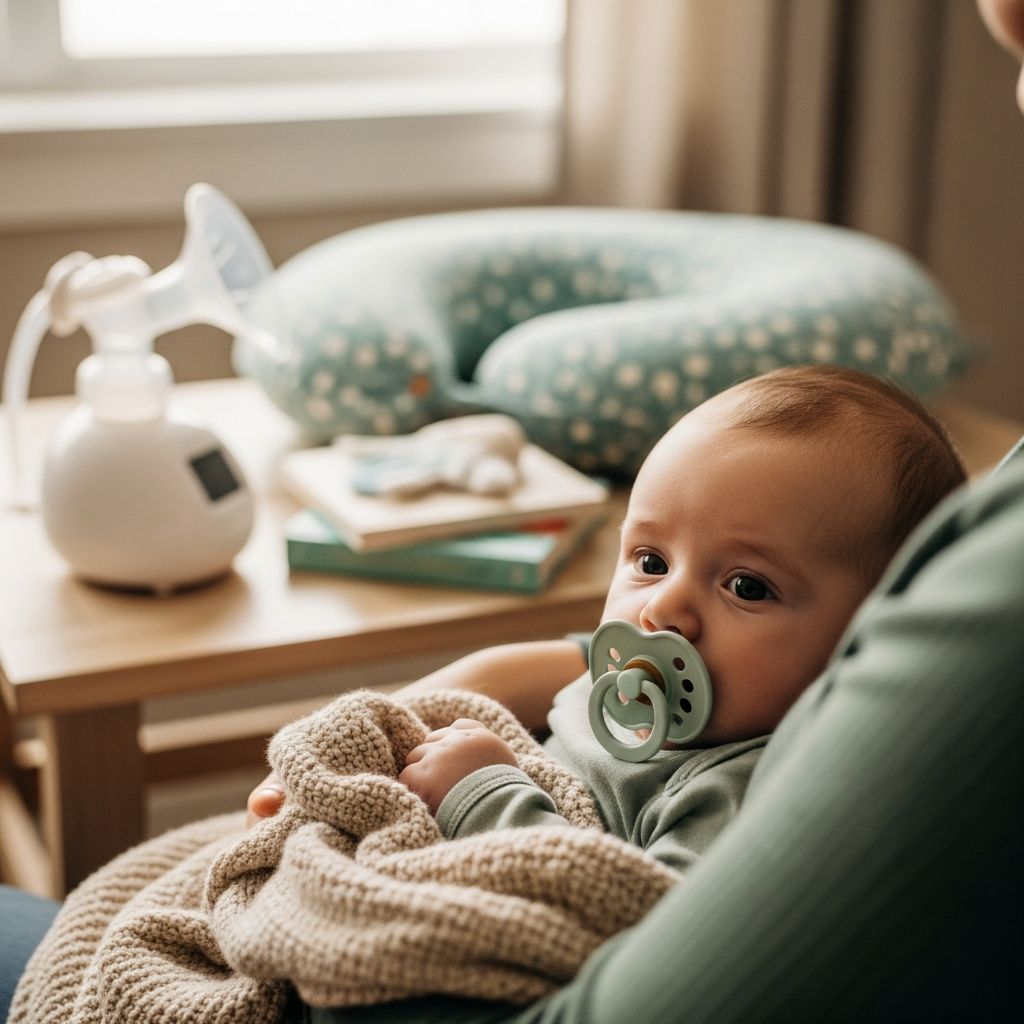
Pacifiers spark strong opinions, especially for parents who are committed to breastfeeding. Some families are warned that a pacifier will sabotage nursing, while others are told it is essential for soothing and even for reducing the risk of sudden infant death syndrome (SIDS). This guide walks through how to use pacifiers thoughtfully so you can protect breastfeeding while still benefiting from a powerful soothing tool.
Why Pacifiers Raise Big Questions for Breastfeeding Parents
Breastfed babies often nurse not only for nutrition, but also for comfort and regulation. Parents worry that a pacifier might replace time at the breast, leading to supply issues or early weaning. On the other hand, modern research suggests that pacifiers, when introduced at the right time and used in a balanced way, do not necessarily shorten breastfeeding and can offer real benefits.
The key is not whether a pacifier is inherently good or bad, but how, when, and why it is used. Thinking through these questions before you introduce one will make your decisions more confident and less reactive in the moment.
The Role of Non-Nutritive Sucking
Babies are born with a strong need to suck that goes beyond hunger. This type of sucking, called non-nutritive sucking, helps babies self-soothe, organize their nervous systems, and feel secure. Some babies satisfy this entirely at the breast, while others seem to crave extra sucking even after full feeds.
For some families, a pacifier becomes a tool to meet that extra need in a way that gives the breastfeeding parent a break. For others, frequent comfort nursing fits their lifestyle and preferences better. Both approaches can be compatible with healthy breastfeeding as long as hunger cues are respected.
Benefits of Pacifier Use for Breastfed Babies
When used intentionally, pacifiers can support both baby and parents in several ways. Understanding these upsides can help you decide whether and how a pacifier fits your family’s routine.
- Soothing and calming: Rhythmic sucking can help many babies down-regulate after stimulation, making it easier for them to fall asleep or ride out fussy periods.
- Sleep association: For some infants, a pacifier becomes a predictable cue that signals winding down for naps and bedtime.
- Potential SIDS risk reduction: Large observational studies have found an association between pacifier use during sleep and a lower risk of SIDS, especially when used at naps and nighttime alongside safe-sleep practices.
- Support in special situations: Preterm infants and babies in neonatal care sometimes use pacifiers for oral training and comfort when they cannot fully breastfeed yet, under professional guidance.
Potential Downsides and How to Minimize Them
Pacifiers are not risk-free. They can create new challenges if used as a default solution instead of a targeted tool. Knowing the main concerns helps you set healthy boundaries around pacifier use.
- Masking hunger cues: Offering a pacifier instead of a feed can reduce breast stimulation and, over time, may interfere with milk supply, especially in the early weeks.
- Dependence for sleep: Some babies come to rely on the pacifier to fall—and stay—asleep, leading to frequent night waking when it falls out.
- Dental and ear issues with prolonged use: Extended pacifier use, especially beyond toddlerhood, is linked with misaligned teeth and a higher risk of middle ear infections.
- Hygiene challenges: Pacifiers that are not cleaned and replaced regularly can harbor germs, contributing to oral thrush and other infections.
When to Introduce a Pacifier to a Breastfed Baby
Professional organizations generally suggest waiting until breastfeeding is well established before introducing a pacifier. For most full-term infants, this means waiting until around three to four weeks, when:
- Latching is comfortable and consistent.
- Weight gain is on track and monitored by your baby’s clinician.
- Your milk supply feels stable and you can recognize your baby’s hunger cues.
If you are supplementing, experiencing supply issues, or recovering from a complicated birth, talk with a lactation consultant or pediatric provider before introducing a pacifier. In some cases, they may recommend delaying longer or using other soothing strategies first.
Choosing a Pacifier That Works with Breastfeeding
Not all pacifiers are designed the same way. Certain features can make it easier for a breastfed baby to switch between breast and pacifier without confusion.
- One-piece construction: Pacifiers molded from a single piece of silicone minimize choking risk from detached parts and are easier to clean thoroughly.
- Soft, flexible nipple: A soft silicone nipple allows the baby’s tongue and jaw to move more naturally, closer to how they move at the breast.
- Symmetrical or orthodontic shape: These designs aim to support more natural tongue placement and reduce pressure on developing teeth.
- Ventilated shield: Air holes in the shield reduce skin irritation and allow better airflow around the baby’s mouth.
- Appropriate size for age: Using the right size improves comfort and reduces the risk of gagging or shallow sucking patterns.
Feature Comparison for Pacifiers
| Feature | Why It Matters | Best Practice for Breastfed Babies |
|---|---|---|
| Number of pieces | Multiple parts can break apart, creating a choking hazard and trapping moisture. | Choose a one-piece pacifier whenever possible. |
| Nipple material | Stiff materials encourage different mouth movements than breastfeeding. | Look for soft medical-grade silicone that yields to the baby’s suck. |
| Nipple shape | Shape influences tongue placement and jaw position. | Try symmetrical or orthodontic shapes that support a wide, deep latch-like movement. |
| Shield design | Poor airflow contributes to rashes and skin breakdown. | Pick shields with multiple air holes and a gentle curve that avoids pressing into the nose. |
| Size by age | Oversized or undersized nipples can change how the baby sucks. | Follow manufacturer age guidelines and monitor your baby’s comfort and seal. |
How to Introduce a Pacifier Without Undermining Breastfeeding
The way you first present a pacifier can set the tone for how it is used in your household. Consider these steps when you feel ready to introduce one:
- Confirm hunger first. If your baby might be hungry, always offer the breast before a pacifier. If the baby refuses the breast, watch closely to make sure hunger cues do not escalate once the pacifier is in.
- Pick a calm moment. Offer the pacifier when your baby is drowsy or only mildly fussy, not in the middle of a full meltdown.
- Gently encourage, don’t force. Touch the pacifier to the baby’s lips and wait for an open mouth and rooting response. If your baby spits it out repeatedly, take a break rather than pushing it back in.
- Limit early use to specific times. Many families start with naps, bedtime, or car rides to keep pacifier use from expanding into every waking moment.
- Reassess frequently. Watch your baby’s feeding patterns, weight gain, and diaper output to be sure breastfeeding remains on track as pacifier use increases.
Smart Pacifier Rules for Breastfeeding Families
Creating simple family guidelines can make pacifier use more intentional and less chaotic. You do not need rigid rules, but having shared expectations helps all caregivers respond consistently.
- Use the pacifier mainly for sleep, transitions, and particularly stressful situations rather than as the first line of defense for every fuss.
- Avoid using a pacifier to stretch time between feeds during the newborn period; cluster feeding is normal and supports milk supply.
- Keep at least two or three identical pacifiers on hand so there is always a clean backup.
- Replace pacifiers regularly when they show signs of wear such as thinning, cracks, or stickiness.
- Do not attach pacifiers to cords or strings long enough to pose a strangulation risk; use only safety-tested short clips.
Balancing Comfort Nursing and Pacifier Use
Many breastfeeding parents worry that any non-nutritive sucking should happen at the breast to protect supply and connection. It is true that frequent nursing sessions in the early weeks are crucial. However, as your baby grows, you can experiment with a mix of comfort nursing and pacifier soothing that works for your body, your schedule, and your mental health.
Some families reserve pacifiers for times when the breastfeeding parent genuinely needs a break—such as during an older sibling’s bedtime or while driving—while still allowing plenty of on-demand nursing. Over time, you will learn which scenarios truly require a pacifier and which can be managed with rocking, holding, or a quick snack at the breast.
Common Challenges and Troubleshooting Tips
Baby Refuses the Pacifier
Not every baby likes pacifiers. If your baby refuses one, it is not a failure, just a temperament clue. You can try a few strategies before deciding to move on.
- Experiment with different nipple shapes and sizes; some babies clearly prefer one style over another.
- Warm the pacifier in your hands or run it under warm water (allowing it to cool to a safe temperature) before offering it.
- Offer it when your baby is already calm and drowsy, rather than during peak fussiness.
Baby Loves the Pacifier Too Much
If the pacifier seems to be in your baby’s mouth constantly, or you notice feedings becoming shorter and less frequent, it may be time to dial back. Start by narrowing pacifier use to sleep and unavoidable transitions, and re-prioritize the breast when you are home and available.
If you feel unsure whether your baby is getting enough milk as you cut back pacifier time, track wet and dirty diapers and consult your baby’s clinician or a lactation specialist to check weight gain and feeding efficiency.
Nipple Confusion or Latch Changes
Some babies briefly alter their latch after starting to use a pacifier or bottle. If you notice more shallow latching or nipple pain, focus on reinforcing good breastfeeding technique: wait for a wide open mouth, bring baby quickly and closely onto the breast, and seek help if pain persists.
In many cases, careful positioning and a short period of extra attention at the breast will bring your baby back to a comfortable latch without needing to stop pacifier use altogether.
When and How to Wean Off the Pacifier
There is no single perfect age for pacifier weaning, but many professionals recommend beginning the process sometime in the second year of life to reduce dental and ear concerns. The exact timing depends on your child’s temperament and your family’s priorities.
- If your child uses the pacifier mostly for sleep, start by limiting it to the crib or bed and removing it once they are fully asleep.
- For toddlers who are strongly attached, a gradual plan—such as reducing daytime use first, then naps, then nights—can be less distressing than going cold turkey.
- Offer extra comfort and connection during the weaning period through cuddles, stories, and calming routines so your child does not feel deprived.
Frequently Asked Questions
Does using a pacifier mean my baby will breastfeed for a shorter time?
Current research suggests that when pacifiers are introduced after breastfeeding is well established and are not used to replace feeds, they do not necessarily shorten how long babies breastfeed. Many families successfully nurse for months or years while also using pacifiers in a limited, intentional way.
Can pacifiers cause nipple confusion?
Some babies move between breast, bottle, and pacifier without difficulty, while others are more sensitive to differences in sucking patterns. Waiting a few weeks before introducing a pacifier and paying close attention to latch quality can reduce the risk of problems. If latch issues appear after starting a pacifier, focus on positioning and seek breastfeeding support early.
Is a pacifier safer than thumb sucking?
From a dental and hygiene standpoint, pacifiers are generally easier to manage and eventually remove than thumb sucking. You can control when a pacifier is offered, clean it, and gradually phase it out, while thumbs are always available and harder to wean.
Should my baby use a pacifier for every sleep to reduce SIDS risk?
Studies have found an association between pacifier use during sleep and reduced SIDS risk, but a pacifier is only one piece of the safe-sleep puzzle. Always prioritize back-sleeping on a firm surface without loose bedding or soft objects. If your baby refuses the pacifier, you should not force it; safe sleep practices remain the foundation of SIDS prevention.
How often should I replace pacifiers?
Inspect pacifiers regularly for cracks, discoloration, thinning, or sticky texture. Replace any that show wear right away, and follow the manufacturer’s replacement recommendations even if there is no obvious damage, since repeated sterilization and chewing slowly weaken the material.
Key Takeaways for Breastfeeding Families
- Pacifiers are tools, not necessities. You can parent successfully with or without them.
- Waiting until breastfeeding is well established and continuing to prioritize hunger cues helps protect milk supply.
- Thoughtful limits—such as using pacifiers mainly for sleep and major transitions—can give you the benefits without many of the downsides.
- Regular check-ins with your baby’s clinician and, when needed, a lactation consultant provide reassurance that both pacifier use and breastfeeding are working well together.