Owl coloring pages are more than just a quiet-time activity; they can be the starting point for storytelling, science exploration, and hands-on crafts that children remember for years. This guide shows how to turn simple owl printables into a rich learning and bonding experience for kids and their grown-ups.
Why Owls Fascinate Children
Owls blend mystery, beauty, and a touch of magic, which makes them irresistible characters for young artists. Their big eyes, patterned feathers, and night-time lifestyle naturally encourage questions and imagination.
- Owls stay awake at night, which feels unusual and exciting to children who are usually in bed after dark.
- The variety of owl shapes, sizes, and feather patterns gives kids endless ways to experiment with colors and designs.
- Stories, movies, and picture books often portray owls as wise, kind guides, making them comforting characters to draw and color.
Developmental Benefits of Coloring Owls
Coloring owl pages may look simple, but the activity quietly supports multiple areas of a child’s growth. When children choose colors, follow outlines, and experiment with patterns, they build skills that transfer to school and everyday life.
| Skill Area | How Coloring Helps | Example with Owls |
|---|---|---|
| Fine motor control | Strengthens hand muscles and pencil grip. | Filling in tiny owl feathers and eyes with crayons or pencils. |
| Hand–eye coordination | Improves control of small, precise movements. | Carefully outlining the owl’s body or coloring within the branch lines. |
| Focus and patience | Encourages sustained attention on a calm task. | Coloring a detailed owl from top to bottom without rushing. |
| Color recognition | Reinforces knowledge of color names and combinations. | Choosing warm tones for a barn owl and cool tones for a snowy owl. |
| Emotional regulation | Provides a soothing, rhythmic activity. | Using coloring time as a quiet break after a busy or stressful day. |
Types of Owl Coloring Pages to Use
Choosing a variety of owl pages keeps the activity fresh, interesting, and appropriate for different ages and abilities. Mix simple outlines with more detailed designs so every child can find something comfortable and slightly challenging.
- Simple baby owls: Great for toddlers and preschoolers with large shapes and thick outlines.
- Realistic owls: Ideal for older kids who want to study feather patterns, beaks, and talons.
- Cartoon owls: Fun, expressive characters that work well for storytelling and pretend play.
- Seasonal owls: Owls in autumn leaves, winter snow, or under the stars for holiday-themed projects.
- Patterned owls: Mandala-style or zentangle owls to challenge detail-oriented artists and teens.
Preparing the Perfect Owl Coloring Station
With a bit of preparation, an ordinary table can become a small art studio that invites kids to sit, relax, and create. Clear organization also makes it easier to pull out owl coloring pages on busy days without any stress.
- Place crayons, pencils, and markers in small containers sorted by color families (warm, cool, neutral).
- Keep a folder or tray labeled “Owls” with printed pages at different difficulty levels.
- Lay out scrap paper for color testing and for catching marker bleed-through under thin pages.
- Add optional extras like glitter glue, child-safe scissors, stickers, and washi tape for decorating finished owls.
Creative Coloring Ideas Beyond Brown and White
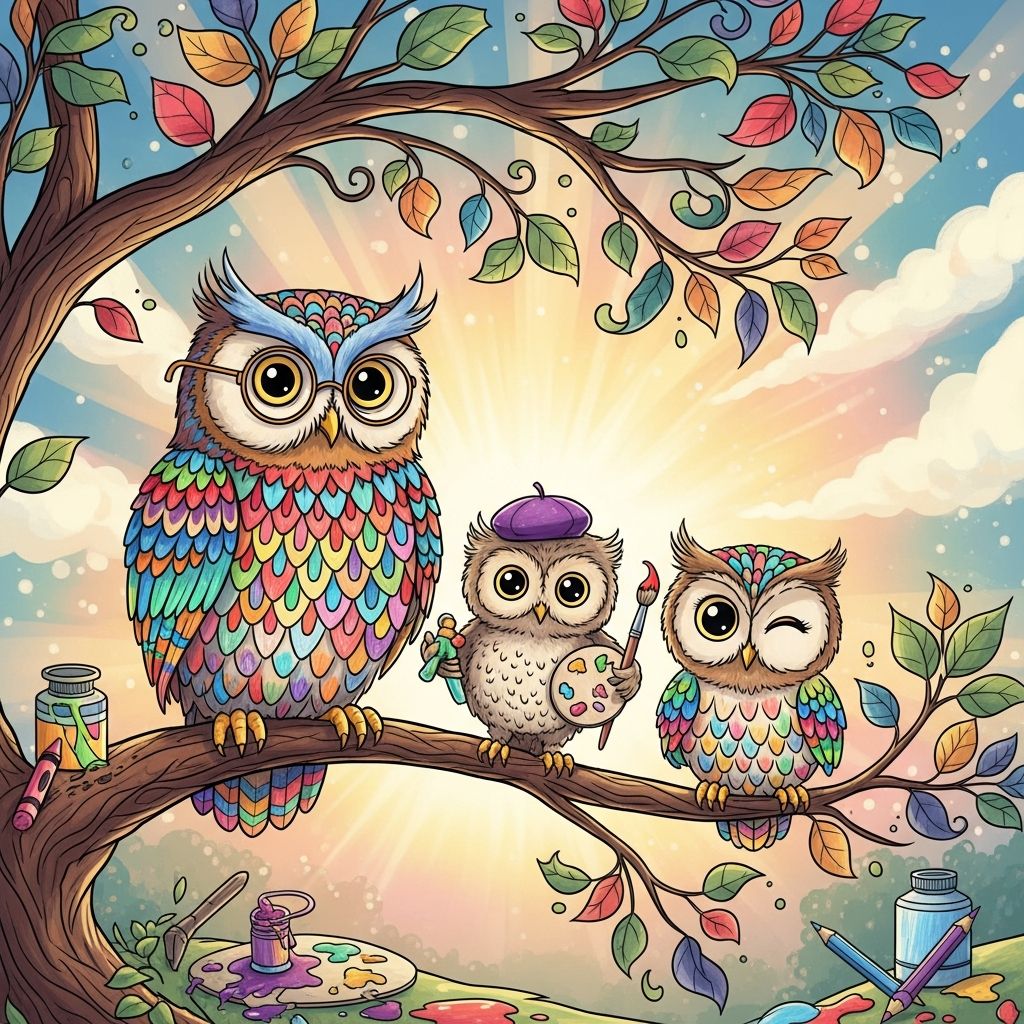
In real life, many owls are brown, gray, or white, but coloring pages offer a chance to break every rule and explore fantasy designs. Encouraging bold and unusual choices helps children trust their creative instincts.
- Invite kids to create a “rainbow owl” using different colors for each feather row or wing section.
- Suggest a “mood owl” where the colors match how the child feels that day.
- Try a “night sky owl” where blues, purples, and silver tones echo stars and moonlight.
- Use only two or three colors to practice working within a limited palette.
Owl Coloring Pages as Story Starters
Every owl drawing can become a character in a child’s personal story, which strengthens language skills while keeping coloring fun. Children naturally invent names, personalities, and adventures when adults prompt them with simple, open-ended questions.
- Ask, “What is your owl’s name, and where does it live?” and write the answers on the back of the page.
- Encourage kids to describe what their owl hears, sees, or feels during a nighttime adventure.
- Invite older children to write a short story or comic strip featuring their favorite colored owl.
Fun Learning Themes to Pair with Owls
Owls fit naturally into lessons about nature, science, and even math. Pairing coloring with a simple theme helps kids connect their artwork to real-world knowledge without making the activity feel like homework.
- Habitats: Talk about forests, deserts, or snowy tundras and add matching backgrounds to the coloring page.
- Food chains: Discuss what owls eat and have kids draw tiny silhouettes of insects or small animals near the owl.
- Time of day: Compare daytime birds to night-time owls and color the sky darker or lighter.
- Counting practice: Ask younger kids to count feathers, stars, or leaves on the page as they color.
Turning Colored Owls into Simple Crafts
Once an owl page is complete, the fun does not have to end. With scissors, tape, and a little imagination, finished pages can transform into decorations, toys, and keepsakes that kids proudly display.
- Owl masks: Cut out the face, add holes for the eyes, and tape to a craft stick or attach string.
- Bookmark buddies: Trim a colored owl into a tall rectangle and laminate or cover with clear tape.
- Room decor: String several small owls onto yarn to make a bedtime garland above the bed.
- Greeting cards: Fold cardstock and glue a cut-out owl to the front for birthdays or thank-you notes.
Age-Appropriate Owl Activities
Different age groups respond best to different levels of detail and structure in art projects. Matching owl coloring ideas to a child’s stage keeps frustration low and enjoyment high.
| Age Group | Best Page Style | Suggested Activity |
|---|---|---|
| Toddlers (2–3) | Large, simple owl shapes with thick outlines. | Use chunky crayons, focus on broad strokes and naming colors. |
| Preschool (4–5) | Owls with clear body parts and a few background elements. | Talk about body parts (beak, wings) and simple owl facts while coloring. |
| Early elementary (6–8) | Pages with patterns, branches, stars, or leaves. | Add stories, counting games, and craft extensions. |
| Older kids (9+) | Intricate owls, mandalas, or realistic species. | Encourage shading, blending, and light research about real owls. |
Tips for Beautiful Owl Coloring Results
Kids do not need perfection, but a few gentle techniques can help them feel proud of their finished owls. These tips work with crayons, colored pencils, or markers and can be introduced gradually over multiple sessions.
- Start with lighter colors and add darker tones on top to create soft shading.
- Use small circular motions instead of hard lines for smoother feather textures.
- Leave tiny white highlights in the eyes to make the owl look bright and lively.
- Blend similar colors (such as yellow and orange) where feathers overlap.
Making Owl Coloring a Family Ritual
Shared art time can become a regular family ritual that helps everyone unwind together. When adults sit down and color their own owls, children see that creativity is valuable at every age.
- Choose a weekly “owl hour” where the family colors, chats, and listens to soft music.
- Display a rotating “family owl gallery” on the fridge or a bulletin board.
- Invite grandparents or friends to join via video call while everyone colors the same design at home.
Organizing and Preserving Owl Artwork
Children create a lot of artwork, and owl pages can quickly pile up without a plan. Simple organization methods respect kids’ efforts while keeping your home tidy.
- Use a three-ring binder or expanding file labeled with each child’s name for favorite pages.
- Take clear photos of finished owls to create a digital album or yearly photo book.
- Invite your child to choose a few special pieces to frame or hang and recycle the rest together.
Frequently Asked Questions About Owl Coloring Pages
How can I use owl coloring pages for learning, not just play?
Combine coloring with short discussions about owl habitats, diets, and behavior to gently introduce science topics. You can also add simple math by counting feathers or stars and practice reading by labeling parts of the owl on the page.
What art supplies work best for young children?
For toddlers and preschoolers, thick crayons and washable markers are easiest to hold and clean. Older kids often enjoy colored pencils, fine-tip markers, and gel pens, which allow for more detailed work on feathers and backgrounds.
How do I keep kids interested in the same theme?
Rotate the type of owl pages you offer: some days choose cute cartoon owls, other days realistic or seasonal scenes. Add small challenges, such as using only three colors, inventing a new owl species, or turning today’s owl into a bookmark or card.
Is it okay if my child refuses to color “realistic” owl colors?
Yes, creative color choices are healthy and should be encouraged. A purple or rainbow owl shows that your child is experimenting and enjoying the process, which matters far more than accuracy at most ages.
How often should kids do coloring activities?
There is no fixed rule, but short, frequent sessions often work best. Ten to twenty minutes of relaxed coloring a few times a week can provide all the benefits without turning the activity into a chore.
Bringing Owl Magic into Everyday Life
Owl coloring pages can slip easily into daily routines—after school, on rainy days, or during quiet weekend mornings. With a little creativity, these pages become more than printables; they grow into stories, decorations, and memories that children cherish long after the crayons are packed away.