Understanding Ovulation Predictor Kits and Their Role in Fertility
Couples planning to conceive often explore various methods to identify their most fertile window. Among the tools available, ovulation predictor kits (OPKs) have become increasingly popular as a straightforward way to pinpoint ovulation timing. These at-home tests work by detecting the surge in luteinizing hormone (LH) that naturally occurs before ovulation, helping individuals time intercourse for maximum conception potential. Unlike other fertility tracking methods that rely on observation or calculation, OPKs provide objective biochemical data about hormonal changes occurring in the body.
How Ovulation Predictor Kits Function
OPKs operate by detecting luteinizing hormone, a key reproductive hormone that triggers the release of an egg from the ovary. Most kits use urine samples to measure LH concentrations, similar to how pregnancy tests work. When an LH surge is detected, it indicates that ovulation will likely occur within the next 24 to 36 hours, creating an optimal window for conception through timed intercourse.
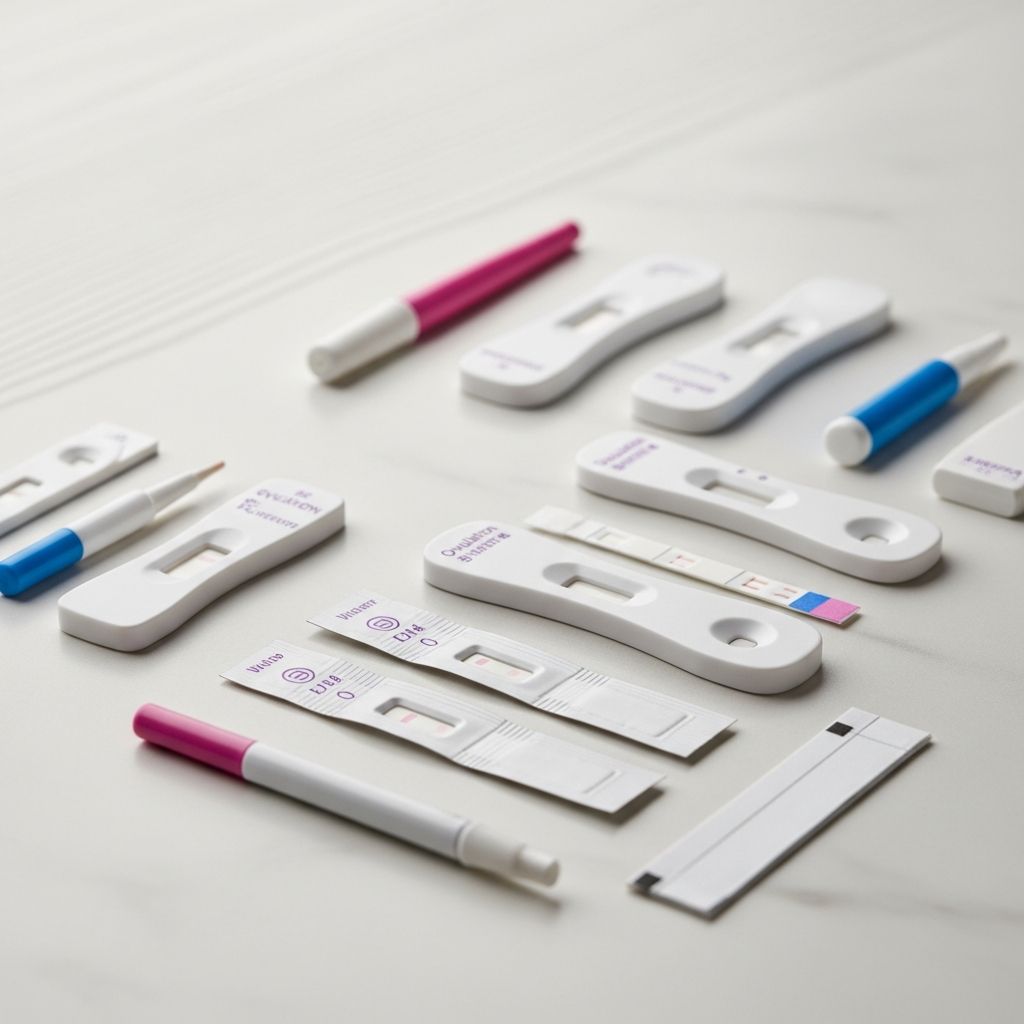
The hormone detection mechanisms in OPKs can vary in sophistication. Basic versions feature traditional test strips with indicator lines that must be visually compared to a control line. More advanced digital options automatically interpret results and display them with simple language or icons, eliminating the guesswork associated with line comparison. Some premium versions even track results over multiple days and sync with smartphone applications to provide comprehensive fertility predictions.
Accuracy Assessment of Modern Ovulation Tests
Recent research demonstrates that contemporary ovulation predictor kits have achieved significant reliability levels. A comprehensive study examining five commercially available at-home OPK brands found surge detection accuracy rates ranging from 91.75% to 96.90% compared to blood LH measurements, the clinical gold standard. The tested kits included Easy@Home, Wondfo, Pregmate, Clearblue, and Clinical Guard, with each demonstrating substantially similar performance despite price variations.
However, accuracy depends heavily on correct usage. The FDA notes that OPKs can detect luteinizing hormone reliably about 9 times out of 10, but precise adherence to instructions is essential. Testing at the appropriate time during the menstrual cycle, using adequate test sticks to capture the surge, and following preparation guidelines all significantly impact reliability.
One important consideration relates to sensitivity variations among different kits. Some tests excel at detecting the LH surge with greater sensitivity, meaning they identify hormone elevation more quickly, while others may require a more pronounced surge to trigger a positive result. This explains why some women might get positive results on one brand but not another.
Advantages of Using Ovulation Predictor Kits
OPKs offer several compelling benefits for individuals seeking to optimize conception timing:
- Objective hormone measurement: Unlike cervical mucus evaluation or basal body temperature tracking, OPKs provide quantifiable biochemical data rather than subjective observations
- Precise timing information: Detecting the LH surge allows couples to identify the most fertile 24 to 36-hour window, making intercourse timing more strategic
- Accessibility and convenience: Tests can be performed at home without medical appointments or professional supervision, fitting easily into daily routines
- Multiple kit options: Various brands, price points, and formats allow users to select tests matching their preferences and budgets
- Reduced guesswork: Digital versions eliminate ambiguity about interpreting faint test lines, providing clear positive or negative results
- Pattern recognition: Using kits across multiple cycles helps individuals understand their unique ovulation patterns and cycle length variations
- Reduced unnecessary medical testing: If conception attempts are unsuccessful, positive OPK results provide objective evidence of ovulation to share with healthcare providers, potentially directing investigation toward other fertility factors
Limitations and Challenges of Ovulation Predictor Kits
Despite their benefits, OPKs have important limitations that potential users should understand:
- False positives and negatives: OPKs can produce misleading results due to hormonal irregularities, excessive LH production, anovulation (absence of ovulation), or other reproductive dysfunctions. Some women naturally have elevated LH levels throughout their cycle, making interpretation difficult
- Insufficient test quantity: Some kits provide too few test sticks, potentially exhausting supplies before the LH surge occurs, leaving uncertainty about whether ovulation failed or additional tests are needed
- Inconsistent surge detection across brands: While recent studies show comparable accuracy, older research from 2018 found that two out of three digital home ovulation tests available in U.S. retailers failed to accurately predict ovulation in approximately half of women tested, with only one test achieving 95% reliability in surge detection. Though more recent products have improved, individual results may vary
- Technical challenges with line interpretation: Basic strip tests require careful visual comparison, and factors like lighting conditions, test strip handling, and individual interpretation differences can affect accuracy
- Expense over multiple cycles: For couples with longer cycle lengths or those requiring extended testing periods, cumulative costs can become substantial
- Timing misalignment: Starting tests at the wrong cycle phase may cause women to miss their surge entirely or waste tests before hormonal changes begin
- Stress and pressure: Reliance on testing schedules and interpreting results can create anxiety around conception timing and fertile window windows
Comparing Ovulation Kits to Alternative Fertility Tracking Methods
| Method | Mechanism | Accuracy | Cost | Ease of Use |
|---|---|---|---|---|
| Ovulation Predictor Kits | Detects LH surge in urine | 91-97% with proper use | $15-50+ per cycle | Moderate; requires daily testing |
| Basal Body Temperature | Tracks temperature rise post-ovulation | Confirms ovulation after occurring | Minimal; requires thermometer | Simple; confirms rather than predicts |
| Cervical Mucus Tracking | Observes consistency changes | Moderate; subjective assessment | Free | Requires education and consistency |
| Calendar/Rhythm Method | Calculates based on cycle history | Variable; less reliable for irregular cycles | Free or app-based | Very simple; app-assisted available |
| Transvaginal Ultrasound | Direct visualization of follicle development | 99%+ gold standard | Expensive; requires medical visit | Professional-dependent |
Choosing Between Ovulation Kits and Fertility Apps
Many fertility experts recommend starting with ovulation tracking apps as an initial approach, particularly for couples in early conception-planning stages. Apps work by recording menstrual cycle information and calculating expected ovulation dates based on historical patterns and average cycle lengths. This approach costs nothing and requires minimal effort beyond entering cycle data.
However, apps have important limitations. They rely on prediction rather than real-time hormonal detection and prove less reliable for women with irregular cycles, hormonal conditions, or those taking medications affecting cycle regularity. Healthcare providers suggest considering physical ovulation predictor kits if conception hasn’t occurred after six months of trying with app-based tracking alone, or if cycles are notably irregular.
Combining both approaches offers a practical strategy: use apps to identify the approximate fertile window, then employ OPKs during that period to pinpoint precise ovulation timing. This method maximizes the benefits of each tool while controlling overall fertility tracking expenses.
Quality Considerations When Selecting Ovulation Predictor Kits
Not all OPKs perform identically, despite similar-sounding claims. When evaluating options, consider these factors:
- Test strip adequacy: Ensure kits provide sufficient tests for your typical cycle length, accounting for occasional longer cycles. Running out of tests before detecting a surge defeats the purpose
- Digital versus traditional formats: Digital kits eliminate line-reading ambiguity but cost more. Traditional strip tests are economical but require careful visual interpretation
- Brand reliability history: Research independent study results and user reviews rather than relying solely on marketing claims. Recent comparative research shows highly accurate performance across major commercial brands
- Surge sensitivity: Some kits detect subtle LH elevation while others require more pronounced surges, affecting detection speed and window prediction
- App integration: Some advanced kits sync with smartphone applications, providing trend analysis and pattern recognition across multiple cycles
- Storage and handling requirements: Check whether tests require special storage conditions or have shelf-life limitations affecting long-term viability
Understanding Common OPK Result Scenarios
Users frequently encounter situations requiring interpretation beyond simple positive or negative results. Consistent negative results might indicate anovulation (absent ovulation), testing timing errors, or cycle irregularities requiring medical investigation. Multiple positive results across consecutive days could reflect naturally prolonged LH elevation or kit sensitivity variations rather than actual multiple surges. Faint positive lines present particular interpretation challenges—some manufacturers consider any line darkness a positive result, while clinical standards typically require darkness matching or exceeding the control line.
Women with hormonal conditions including polycystic ovary syndrome (PCOS) frequently experience persistently elevated LH levels, making OPK interpretation unreliable. Similarly, individuals taking fertility medications that directly contain or trigger LH release may experience misleading test results.
Timing Optimization for Maximum OPK Effectiveness
Successful ovulation predictor kit usage requires strategic timing of test initiation. For women with standard 28-day cycles, ovulation typically occurs around day 14, meaning LH surge testing should begin approximately 5-7 days before expected ovulation. Those with longer cycles require proportionally earlier testing initiation. Apps can provide personalized estimates based on individual cycle data, eliminating guesswork about when to begin testing.
Urine concentration also affects test reliability—testing with first morning urine after concentration overnight typically provides optimal results, though some advanced kits maintain accuracy with samples collected throughout the day. Hydration levels, recent beverages, and certain medications can affect hormone concentration and test interpretation.
When to Seek Professional Guidance Regarding Ovulation Testing
OPKs serve as helpful tools but shouldn’t replace professional fertility evaluation when conception challenges persist. Healthcare providers should be consulted if:
- Ovulation kits consistently show positive results without obvious surge pattern
- Cycles are notably irregular, making testing timing unpredictable
- Conception hasn’t occurred after one year of consistent OPK use and appropriately timed intercourse
- Medical conditions or medications might affect ovulation or LH detection
- Multiple kits provide conflicting results repeatedly
- Extreme stress, recent weight changes, or health alterations coincide with testing difficulties
Frequently Asked Questions About Ovulation Predictor Kits
Are all ovulation predictor kits equally accurate?A: Recent research shows that five major commercial OPK brands achieve similar accuracy levels (91-97%) in detecting LH surges. However, sensitivity varies slightly between brands, and individual results depend heavily on proper usage, cycle regularity, and hormonal patterns. Older studies found more variability, but current products have improved substantially.
Q: How many times per day should I test with ovulation predictor kits?
Standard recommendations suggest testing once daily with morning urine, though some users test twice daily to capture the surge more precisely. Testing more frequently doesn’t significantly improve accuracy but increases costs. Start testing several days before expected ovulation based on cycle history.
Can I use ovulation kits if I have irregular cycles?
OPKs can work with irregular cycles, but testing periods become less predictable and potentially more expensive since you cannot easily calculate expected ovulation timing. Combining app tracking with earlier test initiation helps, though medical consultation might be warranted for significantly irregular cycles.
What’s the difference between digital and traditional ovulation predictor kits?
Digital kits provide automatic result interpretation via electronic readers or app display, eliminating visual line comparison. Traditional strip tests require comparing test line darkness to control lines. Digital options are more convenient but typically cost more per cycle.
How much do ovulation predictor kits cost?
Costs vary significantly based on brand and format. Traditional strip tests may cost $0.50-$2 per test, while digital tests range from $3-$8 each. A typical cycle requires 5-10 tests, resulting in $5-$80+ per cycle depending on format and brand selection.
Can ovulation kits predict ovulation before it happens?
Yes, OPKs detect the LH surge that precedes ovulation by 24-36 hours, allowing advance planning for intercourse timing. This predictive capability distinguishes OPKs from basal body temperature tracking, which confirms ovulation after occurrence.
References
- Similar accuracy and patient experience with different one-step ovulation predictor kits — National Center for Biotechnology Information (NCBI), U.S. National Library of Medicine. 2025-03-01. https://pubmed.ncbi.nlm.nih.gov/39326629/
- Accuracy of prediction of ovulation by digital home ovulation tests — American Association for Clinical Chemistry (AACC). 2018-07-01. https://myadlm.org/media/press-release-archive/2018/07-jul/not-all-home-ovulation-tests-are-reliable-70th-aacc-annual-scientific-meeting
- Ovulation (Urine Test) — U.S. Food and Drug Administration (FDA). https://www.fda.gov/medical-devices/home-use-tests/ovulation-urine-test
- Using ovulation tools to predict fertility — Mayo Clinic Health System. https://www.mayoclinichealthsystem.org/hometown-health/speaking-of-health/using-ovulation-kits-to-predict-fertility