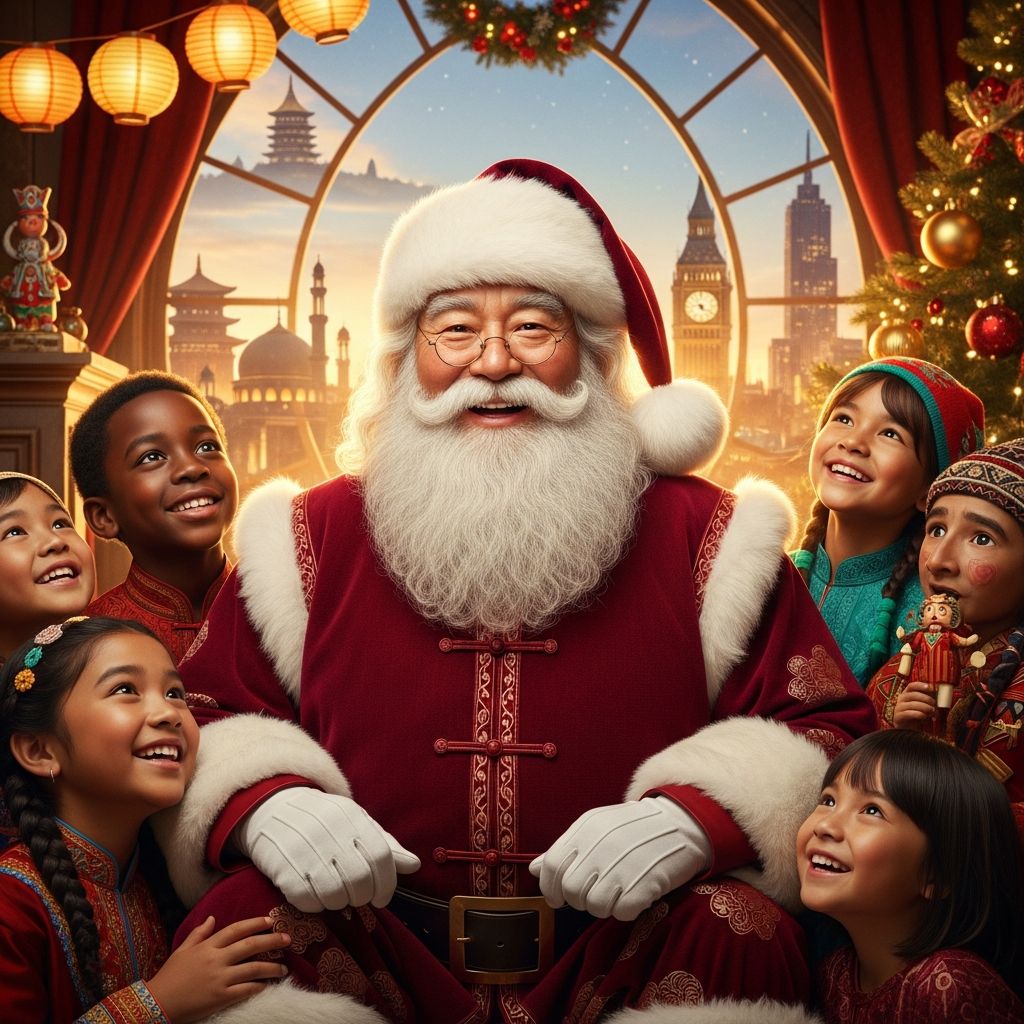
In an era where America’s population is increasingly diverse, traditional holiday figures like Santa Claus are under scrutiny. Less than 5% of professional Santas identify as people of color, despite nearly half of U.S. children under 15 being non-white, prompting brands like Old Navy to launch initiatives for broader representation.
The Evolution of Holiday Symbols
Holiday traditions have long been shaped by cultural narratives, often reflecting dominant societal images. Santa Claus, derived from historical figures like St. Nicholas and popularized by 19th-century illustrations, has typically been depicted as a jolly, white-bearded man. This image persists in media, malls, and homes, but it no longer mirrors the reality of modern families.
Demographic shifts underscore the need for change. Census data reveals that non-Hispanic white children make up less than half of those under 15, signaling a multicultural future where holiday icons must resonate with all. Brands responding to this include Old Navy, which introduced an ‘ALL-idays’ campaign to celebrate varied festivities and challenge stereotypes.
Old Navy’s Bold Move Toward Inclusion
Old Navy’s 2021 campaign featured a virtual Santa training program, known as Santa BOOTcamp, aimed at welcoming participants from all backgrounds. The 30-minute online session covered essentials like answering children’s questions, basic phrases in sign language and Spanish, and photo tips—skills any aspiring Santa could master regardless of appearance.
Scheduled for November 19, the free program at www.OldNavySantaBootcamp.com encouraged ethnic and cultural diversity. Old Navy also hired diverse Santas for flagship stores in New York, San Francisco, and Chicago on December 4, offering safe, distanced photo ops. This initiative emphasized that holiday spirit transcends physical traits, focusing on joy-spreading abilities.
| Campaign Feature | Description | Impact |
|---|---|---|
| Santa BOOTcamp | Virtual training on Santa basics | Opens role to diverse candidates |
| Store Appearances | Diverse Santas in major cities | Provides real-world representation |
| ALL-idays Theme | Celebrates multiple holidays | Promotes broader inclusivity |
Historical Roots of Santa’s Image
Santa’s modern look stems from Clement Clarke Moore’s 1823 poem ‘A Visit from St. Nicholas’ and Thomas Nast’s illustrations, which cemented the white, rosy-cheeked figure. St. Nicholas, the original inspiration, was from Myra (modern-day Turkey), suggesting a Middle Eastern heritage far from the Nordic portrayal.
This evolution highlights how traditions adapt. Early depictions varied, but commercialization standardized Santa as white. Today, global influences—like Black, Latino, or Asian Santas in respective cultures—offer models for U.S. adaptation.
Public Reactions: Backlash and Support
Inclusive efforts often ignite debate. Old Navy’s past ads featuring interracial families drew racist backlash on social media, with trolls flooding posts despite the brand’s innocent sales promotion. A 2015 ad with a Black woman, white man, and child amassed hate but also praise, trending #LoveWins as supporters celebrated multiculturalism.
- Racist responses highlighted lingering prejudices against diverse family portrayals.
- Celebrities and allies countered with positive messages, boosting the ad’s visibility.
- The model, Grace Mahary, voiced pride in representing interracial love and opportunity.
Similar dynamics emerged with the Santa campaign, though specifics focused more on training than ads. Critics clung to ‘traditional’ Santa, while advocates argued representation fosters belonging for minority children.
Why Representation Matters for Children
Children thrive when seeing themselves in cultural icons. Psychological studies show diverse role models boost self-esteem and cultural pride, especially for underrepresented groups. During holidays, a Santa matching a child’s background makes magic feel personal.
For non-white kids in majority-white settings, a uniform Santa can subtly alienate. Inclusive portrayals normalize diversity, teaching that joy is universal. Parents report greater excitement when Santa reflects family heritage.
Broader Industry Shifts
Old Navy isn’t alone. Retailers and media increasingly diversify holiday content. From inclusive Christmas cards to multicultural TV specials, the push counters outdated norms. Challenges persist, like a 2019 lawsuit alleging Old Navy ‘whitewashed’ a store for a Netflix filming, underscoring implementation hurdles.
Yet progress continues. Professional Santa organizations note growing diversity, with training emphasizing skills over stereotypes.
Practical Tips for Inclusive Holidays at Home
Parents can foster diversity without waiting for brands:
- Customize Santa: Use diverse figurines or family photos edited as Santa.
- Storytelling: Share global Santa variants, like Sinterklaas or Papa Noel.
- Community Events: Seek or host diverse Santa appearances.
- Media Choices: Select books and shows with varied representations.
These steps create affirming environments, extending brand efforts into daily life.
Challenges in Tradition vs. Progress
Balancing heritage with inclusion is tricky. Purists fear ‘erasing’ history, but evolution is inherent—Santa himself morphed from bishop to Coca-Cola icon. Data shows younger generations embrace change, with polls indicating support for diverse icons.
Brands navigate by honoring origins while expanding access. Old Navy’s approach—training-focused, not replacement—eases transitions.
Frequently Asked Questions
What percentage of U.S. Santas are people of color?
Less than 5%, contrasting sharply with child demographics.
Does Old Navy’s training change Santa’s traditional look?
No, it equips anyone to embody the role, prioritizing spirit over appearance.
Why did Old Navy face backlash before?
Ads with interracial families drew racist trolls, met with widespread support.
Can anyone join the Santa BOOTcamp?
Yes, it’s free and open to all backgrounds via their website.
How do diverse Santas benefit kids?
They enhance relatability, boosting holiday joy and inclusion.
Looking Ahead: A More Joyful Future
As demographics evolve, so must traditions. Initiatives like Old Navy’s pave the way for holidays where every child sees themselves in the magic. By prioritizing skills and cheer, Santa becomes truly universal.
This shift reflects societal growth, ensuring festivities unite rather than divide. Families, brands, and communities collaborating promise richer celebrations for generations.
References
- Old Navy Celebrates Inclusivity this Holiday Season with ALL-idays Campaign — Gap Inc. 2021-11-09. https://www.gapinc.com/en-us/articles/2021/11/old-navy-celebrates-inclusivity-this-holiday-seaso
- Less than half of U.S. children under 15 are white, census shows — Brookings Institution. 2019-06-13. https://www.brookings.edu/research/less-than-half-of-us-children-under-15-are-white-census-shows/
- National Santa’s Biography — National Santa. N/A. https://www.nationalsanta.com/national-santas-biography/
- This Old Navy Ad Started a Firestorm on Twitter — TIME. 2015-11-23. https://time.com/4314046/old-navy-twitter-interracial-family-racist/
- Old Navy Worker Says Store Got a ‘Whitewash’ for ‘Queer Eye’ — Courthouse News Service. 2019-07-12. https://www.courthousenews.com/queer-eye-kerfuffle/