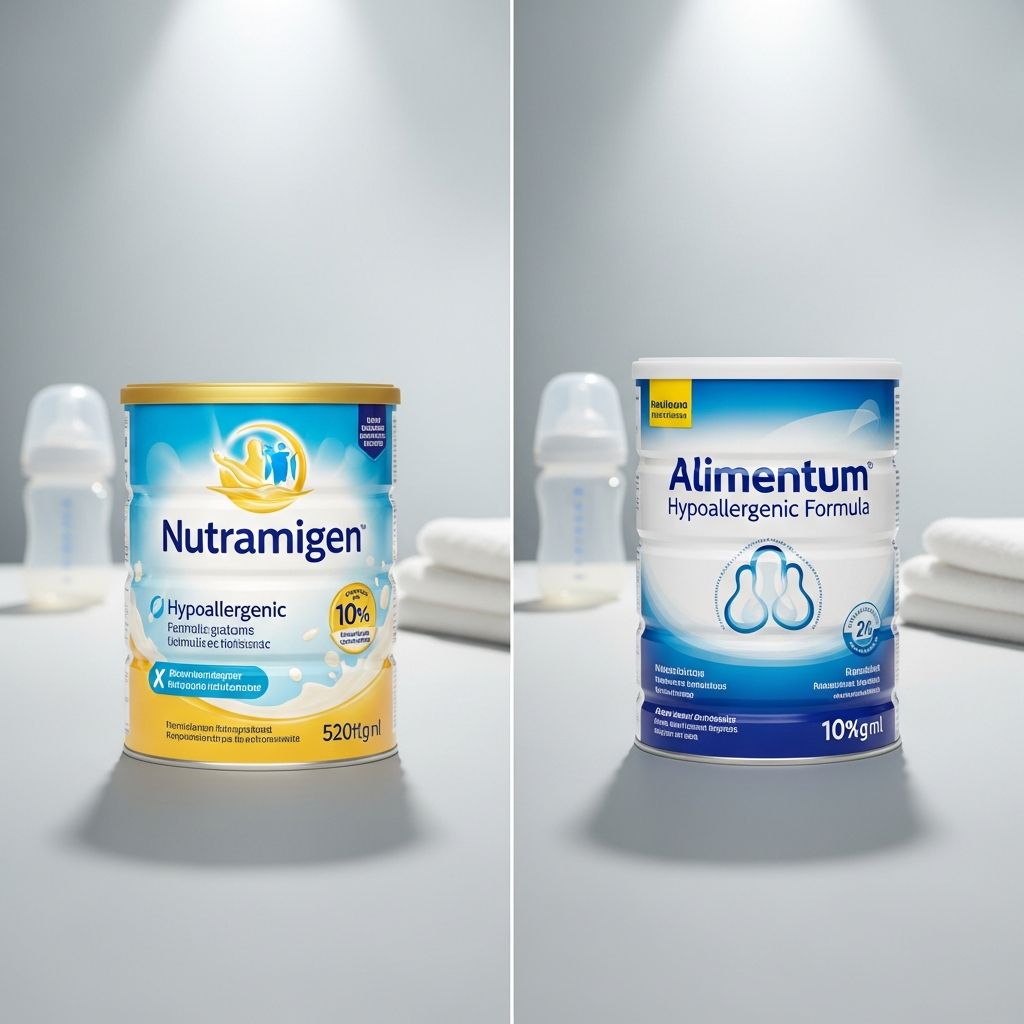
When your baby cries for hours with obvious discomfort, every feeding decision suddenly feels enormous. If your pediatrician suspects a cow’s milk protein allergy (CMPA) or a significant intolerance, they may recommend a hypoallergenic formula such as Nutramigen or Alimentum. Both are trusted options, but they are not identical—and understanding the differences can help you have a more informed conversation with your child’s doctor.
This guide explains how these formulas work, what makes them similar and different, and how to think through the choice based on your baby’s symptoms, medical history, and your family’s priorities.
Why Hypoallergenic Formulas Are Used
Most standard infant formulas are based on intact cow’s milk protein. Babies with CMPA or some types of severe formula intolerance cannot comfortably digest or tolerate these proteins, leading to symptoms such as:
- Persistent crying or colic, especially after feeds
- Reflux or frequent spitting up
- Blood or mucus in the stool
- Skin rashes or eczema
- Wheezing or respiratory symptoms in some cases
Cow’s milk protein allergy is one of the most common food allergies in infancy, affecting roughly 2–3% of children in the first year of life according to allergy and pediatric guidelines. Hypoallergenic formulas are designed to reduce or eliminate exposure to whole cow’s milk protein while still providing complete nutrition.
How Nutramigen and Alimentum Work
Nutramigen and Alimentum are both considered extensively hydrolyzed formulas (eHFs). In these formulas, casein (a major cow’s milk protein) is broken down into much smaller fragments called peptides. These smaller pieces are less likely to trigger an allergic immune response than whole or partially broken-down proteins.
In addition:
- Both are lactose-free and designed for babies who cannot handle intact milk sugar.
- Both are formulated to be nutitionally complete, similar to standard formulas, including protein, fats, carbohydrates, vitamins, and minerals.
- Both are typically recommended when a baby does not tolerate regular formula or when CMPA is suspected and breastfeeding with maternal diet modification is not possible or insufficient.
Most clinical guidelines suggest that babies with suspected CMPA who are not exclusively breastfed be offered an extensively hydrolyzed formula as the first-line alternative, with amino acid–based formulas reserved for the small group with severe or persistent reactions.
Nutramigen at a Glance
Nutramigen is a hypoallergenic infant formula produced by Enfamil. It is specifically designed to manage CMPA and related digestive troubles.
Key characteristics of Nutramigen
- Protein source: Extensively hydrolyzed casein (cow’s milk protein broken into small peptides)
- Allergen profile: Dairy-free and lactose-free; free of intact cow’s milk protein
- Probiotic component: Typically includes a well-studied probiotic strain (often labeled LGG), which is associated with gut and immune support in infants with food allergy in some studies.
- Nutrients: Contains DHA and other essential fatty acids used to support brain and eye development, and meets regulatory standards for infant formula nutrition.
- Formats: Commonly available in powder and ready-to-feed options for flexibility.
Potential advantages of Nutramigen
- Includes a specific probiotic strain that has been evaluated in CMPA and may help support tolerance development and digestive comfort in some infants.
- Formulated to manage colic and fussiness associated with cow’s milk protein allergy.
- Widely available in many pharmacies and supermarkets, and often included on hospital and clinic recommendation lists.
Possible downsides
- Taste and smell: Extensively hydrolyzed formulas often have a more bitter or sour flavor than standard formulas or breastmilk, which some babies take time to accept.
- Cost: Hypoallergenic products are substantially more expensive than standard formulas; families sometimes require insurance support or assistance programs.
Alimentum at a Glance
Alimentum is Similac’s extensively hydrolyzed formula designed for infants with CMPA or severe intolerance to standard formula.
Key characteristics of Alimentum
- Protein source: Extensively hydrolyzed casein, similar in concept to Nutramigen
- Allergen profile: Free from intact cow’s milk protein and lactose; designed specifically for cow’s milk protein sensitivity
- Digestion support: Often described as a “predigested” formula, meaning proteins are broken into smaller fragments to be easier on sensitive digestive systems.
- Nutrients: Contains DHA and ARA, long-chain fatty acids that contribute to brain and eye development, and is nutritionally complete according to infant formula standards.
- Formats: Available in powder and ready-to-feed forms; ready-to-feed is particularly valued when parents want a product that is typically free of certain carbohydrates like corn in some versions.
Potential advantages of Alimentum
- Designed to provide rapid symptom relief for many babies who have colic or digestive symptoms related to CMPA.
- Often chosen when a baby has reacted to multiple standard formulas, as its broken-down proteins can be more tolerable.
- The ready-to-feed product is popular with parents who prefer the convenience of pre-mixed formula and, in some versions, a formulation without specific carbohydrate sources like corn.
Possible downsides
- Like other hydrolyzed formulas, the taste can be challenging for some infants, especially those switching from breastmilk or sweeter standard formulas.
- Cost is also high compared with regular formula, and ongoing use can be financially stressful for families.
Nutramigen vs Alimentum: Side-by-Side Comparison
The table below summarizes some of the most important similarities and differences parents usually ask about. Specific ingredient details can vary by country and product version, so always read the current label and follow your pediatrician’s guidance.
| Feature | Nutramigen | Alimentum |
|---|---|---|
| Type of formula | Extensively hydrolyzed casein | Extensively hydrolyzed casein |
| Intended for | Infants with cow’s milk protein allergy or intolerance, colic, and reflux | Infants with cow’s milk protein allergy or intolerance, colic, and reflux |
| Probiotic inclusion | Contains a specific probiotic strain in many versions (e.g., LGG) | Generally does not focus on a named probiotic strain as a main feature |
| Lactose | Designed to be lactose-free | Designed to be lactose-free |
| DHA / ARA | Includes DHA; formula is designed to support brain and eye development | Includes DHA and ARA, both found in breastmilk and used for brain and eye development |
| Formats | Powder and ready-to-feed | Powder and ready-to-feed |
| Main appeal | Probiotic component and long clinical experience for CMPA management | Highly broken-down proteins and some versions marketed for rapid symptom improvement |
| Cost level | Premium-priced hypoallergenic formula | Premium-priced hypoallergenic formula |
How Quickly Should You Expect Improvement?
Families often hope for overnight relief, but each baby’s timeline is different. Clinical practice and expert guidance suggest that:
- Some infants show noticeable improvement within days of switching to an extensively hydrolyzed formula.
- Others may require 2–4 weeks of consistent use to fully evaluate response, especially for skin rashes or blood in the stool.
- Colic and fussiness can improve relatively quickly once the offending protein is removed, but overall feeding patterns and sleep may take longer to stabilize.
Because of this, allergy and pediatric guidelines usually recommend giving a therapeutic formula a structured trial period under medical supervision before deciding it is not working.
Factors to Consider When Choosing Between Them
Since both Nutramigen and Alimentum are viable options for CMPA, the decision often comes down to subtle differences and practical issues. Helpful questions to ask yourself and your pediatrician include:
- How severe are my baby’s symptoms?
Babies with very severe reactions may need an even more specialized amino acid–based formula. Your pediatrician or pediatric allergist can determine this based on growth, symptoms, and test results. - Has my baby tried either formula before?
If your child clearly does better on one brand or refuses the taste of another, that experience is important. - Is the probiotic feature important to us?
Some parents and clinicians prefer formulas that include a specific probiotic strain that has been studied in CMPA; others focus on simplicity or cost. - Which format is realistic for our lifestyle?
Ready-to-feed is convenient and often preferred during travel or overnight feeds, but is typically more expensive than powder. - Insurance and affordability:
In some regions, documented CMPA allows partial or full coverage of hypoallergenic formula. Availability, local pricing, and assistance programs can heavily influence the final choice.
Working With Your Pediatrician or Allergist
Decisions about hypoallergenic formula should never rest solely on online information. For babies with suspected or confirmed CMPA, professional recommendations generally include:
- Careful review of symptoms, feeding history, and growth patterns
- Considering an elimination and reintroduction trial under medical supervision to confirm CMPA, especially when diagnosis is unclear
- Choosing an extensively hydrolyzed formula as the first step if the baby is not or cannot be exclusively breastfed
- Monitoring progress over several weeks, with attention to weight gain, stool patterns, and symptom changes
- Escalating to an amino acid–based formula if symptoms persist or are severe despite eHF use
Always bring your questions, worry, and observations to your child’s health provider—they can interpret changes and adjust the feeding plan safely.
Tips for Transitioning to a Hypoallergenic Formula
Switching formulas can be stressful for both you and your baby. The following strategies are commonly recommended by pediatric dietitians and clinicians:
- Discuss timing: Ask your pediatrician whether to switch abruptly (often done when allergy is clear) or gradually mix old and new formula to help with taste acceptance.
- Offer when baby is calmer: Try introducing the new formula when your baby is hungry but not extremely upset, such as early in the day rather than during peak evening fussiness.
- Be patient with taste: It may take several feeds—or even a few days—for your baby to adjust to the new flavor. Gentle persistence within your doctor’s safety guidelines is usually needed.
- Track symptoms: Keep a simple diary of feeds, stool patterns, crying episodes, rashes, and sleep. This record helps your pediatrician evaluate how the new formula is working.
- Check preparation carefully: Always follow the mixing instructions on the can. Improper dilution can be unsafe and distort both nutrition and symptom response.
Frequently Asked Questions (FAQs)
Q: Are Nutramigen and Alimentum safe for newborns?
Yes. Both are designed as infant formulas that meet regulatory standards for nutrition in the first year of life. The choice should still be guided by your pediatrician, especially for babies younger than three months or with complex medical conditions.
Q: How do I know if my baby truly has cow’s milk protein allergy?
Symptoms such as blood in the stool, persistent vomiting, poor weight gain, eczema, or wheezing after feeds can raise concern for CMPA, but these signs can also have other causes. Most guidelines recommend a supervised elimination diet (removing cow’s milk protein via maternal diet or specialized formula) followed by cautious reintroduction to confirm the diagnosis.
Q: Can a breastfed baby ever need Nutramigen or Alimentum?
Sometimes. Exclusive breastfeeding is generally recommended when possible, and many babies with CMPA improve when the breastfeeding parent avoids cow’s milk protein in their own diet. However, if elimination is not effective or feasible, or if supplemental formula is needed, your pediatrician may recommend an extensively hydrolyzed formula.
Q: What if my baby does not improve on either Nutramigen or Alimentum?
If, after a reasonable trial period and correct preparation, your baby’s symptoms remain severe or worsen, contact your pediatrician promptly. Some infants require an amino acid–based formula, which contains individual amino acids instead of peptides and is even less likely to trigger allergic reactions.
Q: Is one brand clearly better than the other?
Current evidence and clinical practice show that both Nutramigen and Alimentum are effective options for many babies with CMPA. No single product is universally superior; the best choice depends on your child’s response, the importance of features such as probiotics or specific ingredients, availability, and cost. Your pediatrician’s experience with each formula in similar patients is also valuable.
References
- Guidelines for the diagnosis and management of cow’s milk protein allergy in infants — Fiocchi A, Brozek J, Schünemann H, et al. World Allergy Organization Journal. 2010-02-23. https://doi.org/10.1097/WOX.0b013e3181defeb9
- World Allergy Organization (WAO) Diagnosis and Rationale for Action against Cow’s Milk Allergy (DRACMA) Guideline update — Papadopoulos NG, et al. World Allergy Organization Journal. 2023-01-18. https://doi.org/10.1016/j.waojou.2022.100732
- Infant Formula: Safety Do’s and Don’ts — U.S. Food and Drug Administration (FDA). 2023-05-16. https://www.fda.gov/consumers/consumer-updates/infant-formula-safety-dos-and-donts
- Guide to Formula Equivalents — Cincinnati Children’s Hospital Medical Center. 2022-05-01. https://www.cincinnatichildrens.org/-/media/Cincinnati-Childrens/Home/news/2022/guide-to-formula-equivalents.pdf
- FDA Regulation of Infant Formula — U.S. Food and Drug Administration (FDA). 2022-09-20. https://www.fda.gov/food/people-risk-foodborne-illness/infant-formula-guidance-documents-regulatory-information