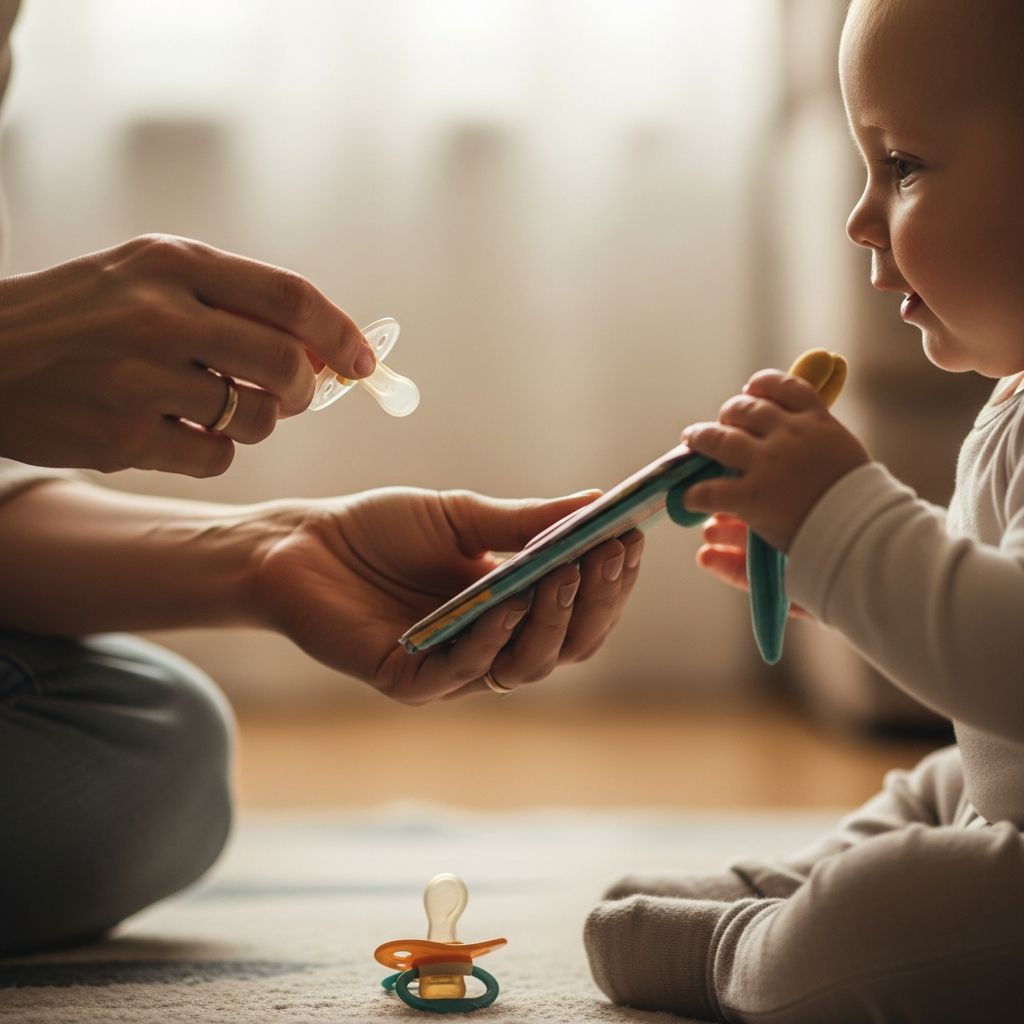
Paci, dummy, soother, binky — whatever your family calls it, a pacifier can feel like a tiny piece of plastic with huge emotional power. Many babies adore it, and many parents rely on it for quick, reliable soothing. At some point, though, every family reaches the same question: how and when do we say goodbye?
This guide walks you through the benefits and drawbacks of pacifiers, realistic timelines for weaning, and step-by-step strategies to help your child move on with as little stress as possible for everyone.
Why Pacifiers Feel So Essential
Pacifiers tap into a baby’s natural need to suck, which is calming and organizing for the nervous system. Sucking can slow the heart rate, steady breathing, and give a baby something predictable to focus on when the world feels overwhelming.
For many families, a pacifier quickly becomes part of the everyday toolkit for:
- Helping newborns transition to sleep.
- Soothing fussiness in public places, in the car, or on planes.
- Offering comfort during shots, medical visits, or teething discomfort.
- Giving another caregiver (partner, grandparent, sitter) an easy way to calm the baby.
Used thoughtfully and for a limited time, pacifiers can be a helpful support rather than a problem. The challenge is recognizing when this tool has outlived its usefulness.
When a Pacifier Starts Doing More Harm Than Good
There is no single “perfect” age when every child should stop using a pacifier, but most pediatric and dental organizations encourage weaning sometime in the second or early third year of life. That recommendation is based on a combination of factors, including oral development, speech, sleep, and emotional growth.
Think about the trade-offs in four main areas:
- Teeth and jaw: Long-term, frequent sucking can change how the upper and lower teeth meet and can reshape the palate, especially after age two and beyond.
- Language and communication: A pacifier in the mouth makes it harder to babble, experiment with sounds, and practice words.
- Emotional development: If a child relies on a pacifier for every big feeling, they miss chances to learn other coping tools.
- Daily function: Constant searching for a lost pacifier, early-morning wake-ups when it falls out, or childcare policies that limit pacifiers can all make life more complicated.
Signs It Might Be Time to Wean
- Your child needs the pacifier to fall asleep and to fall back asleep every time they stir at night.
- Speech is difficult to understand and the pacifier is often in the mouth during playtime.
- Front teeth look pushed forward or you notice a gap that widens when the pacifier is in use.
- Your child is starting preschool or daycare where pacifiers are not allowed outside of nap time.
- You, as a parent, feel drained by constant pacifier battles or nighttime searches.
Age-by-Age Overview of Pacifier Weaning
Every child is different, but this general timeline can help you plan ahead and set expectations.
| Age range | Typical pacifier use | Recommended approach |
|---|---|---|
| 0–6 months | Soothing, sleep support, brief calming during distress | Use flexibly; avoid forcing it. No need to wean yet unless you want to. |
| 6–12 months | Sleep association forming; occasional daytime use | Limit to naps and nights; offer comfort in other ways during the day. |
| 12–24 months | Strong attachment, especially for sleep and transitions | Begin a gentle plan to reduce use to sleep only; prepare for full weaning. |
| 24–36 months | Habitual and emotional attachment; may resist change | Actively work toward complete weaning; use clear boundaries and rituals. |
| 3 years and up | Mostly habit-based; social awareness increasing | Prioritize stopping; use firm, empathetic limits and a meaningful goodbye. |
Preparing Yourself Before You Start
Helping a child let go of a beloved comfort object is as much an emotional transition for parents as for children. Before changing your child’s routine, take stock of your own capacity and expectations.
- Choose a relatively calm period (no new sibling arriving this week, no house move, no major travel) if possible.
- Talk with any other caregivers so everyone follows the same rules and offers the same reassurances.
- Decide in advance which approach you will use and how firm you are willing to be, so you are not improvising in the middle of tears.
- Expect some protest and clinginess, and remind yourself that your child can handle this change with your support.
Two Main Approaches: Gradual vs. All at Once
There is no single right way to stop pacifier use. Most families choose between two basic strategies and sometimes blend pieces of both.
1. Gradual Reduction Method
This method slowly limits when and how long the pacifier is available. It can be helpful for very sensitive children or families who prefer a gentler, lower-drama process.
Step-by-step gradual plan
- Define “pacifier zones” and “pacifier times.” Start by allowing the pacifier only in certain places (such as crib and car seat) or during specific routines (sleep and long car rides).
- Phase it out of the daytime first. Once your child is used to this, remove it from short car trips and awake playtime. Offer a transition object (snuggly toy, blanket) instead.
- Introduce clear, child-friendly rules. For example: “Pacifier stays in the bed. It waits for you here until sleep time.” Repeat the rule calmly and consistently.
- Shorten pacifier time around sleep. Offer it only after your bedtime routine is almost complete, and remove it soon after your child falls asleep if they do not automatically spit it out.
- Choose a final goodbye date. Prep your child for several days beforehand using simple, positive language and a farewell ritual.
Pros of gradual reduction
- Often easier on highly attached children.
- Gives you time to build new soothing habits.
- Allows flexibility around illnesses, travel, or big life transitions.
Cons of gradual reduction
- Process can drag on if boundaries are not consistent.
- Some children become more focused on the pacifier when they sense it is being restricted.
- Parents may find it hard to resist “just this once” exceptions.
2. Immediate Goodbye Method
In this approach, the pacifier is removed completely on a chosen day. This can lead to more intense protests in the short term but may resolve the habit faster overall.
Step-by-step immediate plan
- Pick a meaningful occasion. Some families choose a birthday, a season change, or a special “big kid” day.
- Talk about it in advance. Keep explanations simple: “Soon, you won’t need your pacifier anymore. We’ll say goodbye together.”
- Involve a ritual. Ideas include leaving pacifiers for “the baby fairy,” trading them for a new toy, or “mailing” them to new babies in need (even if this is symbolic).
- Remove all pacifiers from sight. On the chosen day, gather every pacifier so there are no hidden ones to restart the habit.
- Offer extra comfort and structure. For the next several days, keep routines predictable and allow more snuggles, rocking, or reassurance at bedtime.
Pros of immediate goodbye
- Clear, simple message for the child: the pacifier is truly gone.
- Shorter overall process.
- Removes temptation for parents to “give in” during difficult moments.
Cons of immediate goodbye
- First few days can be intense with crying and bedtime resistance.
- Not ideal during times of major stress or change.
- Requires adults to be fully committed and emotionally ready.
Helping Your Child Cope Without the Pacifier
Removing a pacifier creates an emotional gap. To avoid simply taking something away, focus on what you will offer instead.
Build a new soothing toolkit
- Comfort objects: A soft blanket, stuffed animal, or pillow can become a new sleep companion.
- Sensory comfort: White noise, gentle music, a dim night-light, or a familiar bedtime scent (like a parent’s T-shirt) can help.
- Connection rituals: A short back rub, holding hands, or a special bedtime phrase can replace the calming role the pacifier once played.
- Breathing games: For older toddlers, blowing bubbles or pretend birthday candles teaches slower breathing in a playful way.
Language that reassures and empowers
Your tone matters more than perfect wording. Aim for calm, confident, and kind. Emphasize your child’s growing abilities rather than focusing on what they are losing.
- “You are safe. I am here with you.”
- “It’s hard to fall asleep without your pacifier. You’re learning something new.”
- “Your mouth is free now, so you can tell me all about your day.”
- “You did bedtime without a pacifier. That took a lot of courage.”
Common Challenges and Practical Solutions
Very few weaning journeys are perfectly smooth. Being ready for typical bumps in the road helps you respond calmly and consistently.
Bedtime battles
Nighttime is often the hardest time to let go of the pacifier because sleep is when children depend most on familiar comforts.
- Start bedtime a bit earlier for the first week; it often takes longer for a child to settle.
- Stay nearby at the start of the night for a few days if your child is very distressed, then gradually move farther away.
- Keep the bedtime routine exactly the same otherwise, so the only change is the missing pacifier.
Night wakings
Many pacifier-using children wake at night not because they are hungry or uncomfortable, but because they are missing the familiar sucking sensation.
- When your child wakes, respond with a consistent calming routine: quiet voice, a brief cuddle, and a reminder that they can fall back asleep without the pacifier.
- Avoid creating a new sleep association (like always rocking until fully asleep) that you will need to maintain long term.
- If your child is older, you can use a visual timer or night-light that signals “time to sleep” vs. “morning time.”
Regression after illness or travel
Even after successful weaning, you might be tempted to reintroduce the pacifier when your child is sick or during a long trip. Doing so can quickly re-strengthen the habit.
- Instead of returning to the pacifier, amp up other comforts: more cuddles, carrier time, or quiet story sessions.
- If you do decide to allow temporary pacifier use during a crisis, be very clear with yourself (and your child, if old enough) about when it will end.
Supporting Oral and Speech Development After Weaning
Letting go of the pacifier creates new opportunities for your child’s mouth, tongue, and lips to work in different ways. This is a perfect time to encourage healthy habits that support speech and dental health.
- Offer a variety of safe, age-appropriate foods with different textures for chewing practice.
- Engage in sound play: animal noises, silly rhymes, and simple songs.
- Talk face-to-face so your child can see your mouth moves while speaking.
- Keep up with dental checkups starting around your child’s first birthday or as recommended by your provider.
Sample Pacifier Weaning Timeline
Here is an example of how a family might approach weaning over about three to four weeks. Adapt it to your child’s age and temperament.
| Week | Main goal | Key steps |
|---|---|---|
| Week 1 | Limit pacifier to home and car | Remove from daycare bags and playground time; introduce “pacifier lives at home” rule. |
| Week 2 | Use pacifier for sleep only | Keep it in the crib; create a simple rule like “pacifier is for naps and nights.” |
| Week 3 | Prepare for final goodbye | Talk daily about the upcoming change; choose a goodbye ritual or special day. |
| Week 4 | Fully pacifier-free | Say goodbye through your chosen ritual; offer extra comfort and praise. |
Frequently Asked Questions About Pacifier Weaning
Is there a best age to stop using a pacifier?
There is a wide range of normal, but many professionals suggest aiming for complete pacifier weaning by around age two or shortly after. This timing helps reduce the risk of dental changes and encourages clear speech practice, while still respecting how soothing the pacifier can be in the early years.
Will my baby’s teeth go back to normal after weaning?
In many toddlers, mild changes in tooth position and the shape of the palate improve once pacifier use stops, especially if weaning happens on the earlier side. More pronounced or long-standing issues may need evaluation by a pediatric dentist or orthodontist over time. Early weaning reduces the chances of needing more involved treatment later.
Is thumb sucking worse than a pacifier?
Both habits can affect teeth and jaw development if they continue intensely and for many years. One key difference is that you can remove a pacifier but not a thumb. Some parents prefer to manage pacifier use because it feels more controllable; others worry that if they take away the pacifier too early, a child may switch to thumb sucking. Observing your child and discussing your specific situation with a healthcare provider can help you decide.
What if my child only uses a pacifier at night?
Limiting use to nighttime is a positive step, but nighttime sucking can still influence dental and speech development over the long term. If your child is older than about two and still very dependent on a pacifier for sleep, it is reasonable to begin planning for complete weaning, even if nights are currently the only time it appears.
How long does the crying and resistance usually last?
Most children show the strongest reaction in the first two to four nights after losing the pacifier. Daytime fussiness and bedtime protests are common but usually begin to ease as the new routine becomes familiar. Staying calm, consistent, and extra affectionate speeds up this adjustment.
Could stopping the pacifier suddenly be emotionally harmful?
For a well-supported child, pacifier weaning itself is not harmful. The key is how the transition is handled: predictable routines, kind explanations, and plenty of physical and emotional comfort before and after the change. Children are remarkably capable of adapting when they feel safe and connected to their caregivers.
What if nothing seems to work?
If you have tried both gradual and immediate approaches without progress, it may help to pause for a few weeks, regroup, and choose a clear plan with a specific start date. Consider talking with your child’s pediatrician, dentist, or a child development specialist, especially if there are additional concerns like sleep issues, feeding difficulties, or speech delays.
Key Takeaways for Parents
- A pacifier can be a useful short-term tool, but it is healthiest as a temporary support, not a long-term coping strategy.
- Weaning usually works best when parents feel emotionally ready and follow a consistent plan, whether gradual or all at once.
- Replacing the pacifier with new calming strategies and connection rituals helps your child feel safe during the transition.
- Some tears and frustration are normal, but with patience, reassurance, and clear boundaries, most children adjust far more quickly than their parents expect.