When a child is diagnosed with pectus excavatum (sometimes called funnel chest or sunken chest), families often want clear, practical information about treatment options. One of the most common surgical treatments is the Nuss procedure, a minimally invasive operation designed to lift the breastbone and reshape the chest wall.
What Is Pectus Excavatum?
Pectus excavatum is a condition in which the breastbone (sternum) grows inward instead of outward, creating a noticeable dip or hollow in the middle of the chest. The depth of the indentation can range from mild to severe, and may change as a child grows.
Some children with pectus excavatum have no symptoms other than the appearance of the chest, while others experience problems related to the heart and lungs. In more serious cases, the inward curve can crowd these organs and make it harder to exercise or take deep breaths.
- The condition is often noticeable in late childhood or early adolescence.
- It tends to become more obvious during growth spurts.
- Both boys and girls can be affected, but it is more frequently seen in boys.
Why Doctors Recommend the Nuss Procedure
The Nuss procedure is typically offered when the chest indentation is moderate to severe, especially if it affects breathing, exercise tolerance, or self-esteem. The goal is to push the breastbone forward and hold it in a healthier position while the chest continues to grow.
Doctors look at both physical and emotional factors when deciding whether the surgery is a good choice. Some children feel very self-conscious about their chest, which can affect social activities, sports, and willingness to participate in everyday life.
- Medical reasons may include shortness of breath, chest pain, or reduced stamina.
- Psychological reasons may include embarrassment, reluctance to wear swimwear, or avoiding activities that show the chest.
- Imaging tests and measurements help determine how much the breastbone presses on the heart and lungs.
How the Nuss Procedure Works
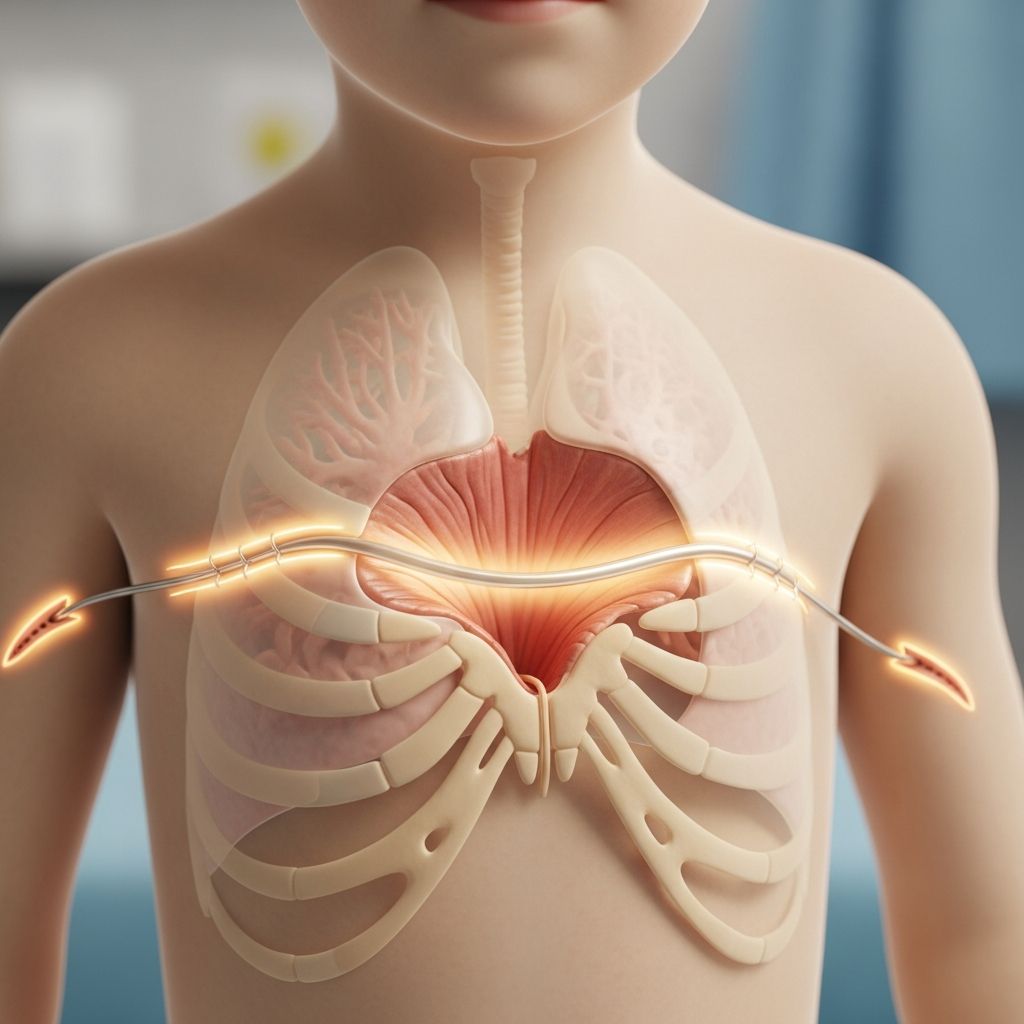
The Nuss procedure uses one or more curved metal bars to gently push the sunken breastbone outward. The bars stay in place for several years, giving the chest wall time to remodel and hold the new shape even after they are removed.
Instead of making a large incision across the chest, the surgeon uses a few small cuts on the sides. Through these openings, special instruments and a tiny camera are used to place the bar safely behind the breastbone.
Main Steps of the Surgery
- The child receives general anesthesia and sleeps through the entire procedure.
- Small incisions are made on each side of the chest, usually near the level of the deepest part of the indentation.
- A curved metal bar (or bars) is guided behind the breastbone with the help of a camera.
- Once in position, the bar is rotated so that it pushes the breastbone forward.
- The bar is secured to the ribs using stabilizers or sutures to keep it from moving.
Typical Timeline in the Operating Room
| Stage | What Happens |
|---|---|
| Anesthesia and preparation | Child is put to sleep, monitoring devices are attached, and the chest area is cleaned. |
| Incisions and camera placement | Small cuts are made on the sides of the chest; a tiny camera is placed to guide the surgeon. |
| Bar insertion | The curved bar is threaded behind the breastbone and in front of the heart and lungs. |
| Bar rotation | The bar is flipped to elevate the breastbone and correct the sunken appearance. |
| Stabilization | Stabilizers or sutures secure the bar to prevent shifting. |
| Closure | Incisions are closed with sutures or surgical glue, and dressings are applied. |
Benefits of the Nuss Procedure
Families choose the Nuss procedure because it can improve both the way the chest looks and the way the body functions. For many children, correcting the chest shape helps them feel more comfortable in their own skin and more willing to participate in sports and social activities.
In appropriate candidates, the surgery may also help the heart and lungs work more efficiently by creating more space in the chest. Not every child will notice dramatic changes in breathing, but many report better stamina and less discomfort with exercise.
- Smaller incisions compared with traditional open chest operations.
- Improved chest symmetry and contour.
- Potential relief from exercise-related chest pain or shortness of breath.
- Boost in self-confidence and body image.
Risks and Possible Complications
All surgeries carry risks, and the Nuss procedure is no exception. Most children do well, but it is important to understand possible problems so that parents and caregivers know what to watch for and when to seek help.
Surgeons work carefully to protect the heart and lungs while placing the bar, and special imaging tools help guide each step. Even so, complications can still happen, although serious ones are uncommon in experienced centers.
- Pain after surgery, sometimes requiring strong pain medicine in the first few days.
- Infection at the incision sites or around the bar.
- Movement or rotation of the bar, which may require another operation.
- Fluid or air buildup in the chest that needs to be drained.
- Rare but serious injury to the heart, lungs, or major blood vessels.
Preparing Your Child for Surgery
Good preparation helps reduce anxiety for both children and parents. Many hospitals offer preoperative visits where families can see the hospital environment, meet some of the staff, and ask questions about what will happen on the day of surgery.
Talking with your child ahead of time in age-appropriate language can make a big difference. Letting them know that the surgery is meant to help their chest and that they will be asleep and not feel anything during the operation often provides comfort.
- Follow instructions about fasting before surgery, including when to stop food and drinks.
- Discuss current medications with the care team; some may need to be paused or adjusted.
- Pack comfort items such as a favorite blanket, toy, or electronic device for the hospital stay.
- Prepare questions to ask the surgeon and anesthesia team during the pre-surgery visit.
Hospital Stay: What to Expect
Most children stay in the hospital for several days after the Nuss procedure so that their pain can be managed and their breathing can be monitored. The first day is often spent in a recovery or step-down unit where nurses can check on the child frequently.
As pain becomes more manageable and breathing improves, the child is usually moved to a regular hospital room. The team encourages getting out of bed and walking with help as soon as it is safe, because movement helps prevent complications like blood clots and pneumonia.
Common Parts of the Hospital Recovery
- Pain control with intravenous medicines at first, then switching to oral medicines.
- Breathing exercises using an incentive spirometer to encourage deep breaths.
- Help from physical or respiratory therapists to sit up, stand, and walk.
- Gradual return to eating and drinking as nausea improves.
Going Home and Early Recovery
When the child can walk, breathe comfortably on room air, and manage pain with oral medications, the team usually approves going home. Parents receive written instructions about wound care, medicines, activity limits, and signs that should prompt a call to the doctor.
The first few weeks at home are focused on pain control, gentle movement, and protecting the bar position. It is normal for children to tire more easily during this period and to need extra help with daily tasks.
- Keep incision areas clean and dry according to the surgeon’s instructions.
- Give pain medicine as prescribed and taper it only as the child becomes more comfortable.
- Encourage light walking several times a day, increasing distance gradually.
- Use good posture when sitting and standing to support the new chest position.
Activity Restrictions and Returning to Normal Life
While the bar is in place, there are certain activities that must be limited to keep it from moving. The exact timeline depends on the surgeon’s preferences and the child’s healing, but most children need to avoid heavy contact and intense twisting motions for several months.
School attendance often resumes within a few weeks, with adjustments such as avoiding carrying heavy backpacks or participating in strenuous physical education. Over time, many children are able to return to most of their usual activities.
Typical Activity Guidelines (Always Confirm with Your Surgeon)
- Avoid contact sports and rough play until the surgeon says it is safe.
- Do not lift heavy objects or perform intense upper-body workouts early in recovery.
- Use caution with bending or twisting movements of the torso.
- Ask for school accommodations, such as elevator passes or extra time to change classes, if needed.
Bar Removal: The Second Step
The metal bar is not meant to stay in the body forever. Once the chest wall has adapted to the new shape—usually after several years—the surgeon schedules a second, smaller operation to remove it.
Bar removal generally involves shorter operative time and a quicker recovery compared with the original surgery. Most children are able to return home sooner and experience less discomfort afterward.
- The timing of removal varies but is often between two and four years after the initial operation.
- Imaging and exams help confirm that the chest remains well-shaped before removal.
- After the bar is taken out, the chest usually maintains its corrected appearance.
Supporting Your Child Emotionally
Surgery affects more than just the body; it also affects emotions. Children can feel nervous, scared, or frustrated before and after the procedure, and parents may have their own worries about outcomes and recovery.
Creating space for honest conversations and validating your child’s feelings helps build trust. Encouraging them to ask questions during clinic visits and to share their fears openly can reduce anxiety.
- Explain what will happen in simple, truthful terms appropriate for your child’s age.
- Offer choices where possible (such as which comfort items to bring or which movie to watch in the hospital).
- Seek support groups, online communities, or counseling if your child seems very anxious or withdrawn.
- Celebrate small milestones, like the first walk down the hall or returning to school.
Frequently Asked Questions About the Nuss Procedure
1. How long does the Nuss procedure take?
The length of the operation varies, but it often lasts a few hours from the time your child goes to the operating room until they are moved to recovery. Much of that time is spent safely positioning the bar and checking that it is secure.
2. Will my child be in a lot of pain?
Pain is expected after this kind of chest surgery, especially during the first days. Hospitals use a combination of medicines and techniques to ease discomfort, and the care team adjusts the plan as needed so that most children can move and breathe deeply.
3. Are the bars noticeable from the outside?
The bars are usually not clearly visible under the skin, although some children may notice a slight outline or feel them when touching the sides of the chest. The appearance from the front typically shows a much flatter, more even chest.
4. What happens if my child grows after surgery?
The bars are designed to stay in long enough for the chest to grow and remodel around the new shape. Growth spurts after surgery are expected, and surgeons take age and predicted growth into account when planning the timing of both placement and removal.
5. Can the chest sink in again after the bar is removed?
Most children keep a good chest shape after bar removal, but there is always some risk of partial recurrence. Following the surgeon’s recommendations on timing and follow-up visits helps lower this risk.
6. Will my child be able to play sports again?
Many children return to sports and active play after the early healing period. The exact timeline depends on how your child recovers and what activities they want to do, so always discuss specific sports with the surgeon before resuming them.
7. Is the Nuss procedure the only option?
No, other approaches include different surgical techniques and, in selected cases, non-surgical treatments. A pediatric surgeon or chest wall specialist can explain the pros and cons of each option in relation to your child’s unique situation.
Key Takeaways for Families
The Nuss procedure is a widely used, minimally invasive surgery that can significantly improve the appearance of a sunken chest and, in some cases, enhance heart and lung function. It involves placing a curved metal bar behind the breastbone, leaving it in place for several years, and then removing it once the chest has stabilized.
By learning what to expect before, during, and after the procedure, families can approach this decision with more confidence. Close communication with the surgical team, careful attention to recovery instructions, and emotional support at home all play important roles in helping children heal and thrive.